Image Courtesy of Wigan Athletic
Ryan Lowe’s work at Bury and Plymouth had earned him a reputation as a progressive coach who liked his teams to play on the front foot. Even his time at Preston, while less popular with supporters, showed he could keep a team competitive in the Championship on a tight budget.
Fast forward to now, and frustration is starting to creep in. The football at Wigan has been functional at best, blunt at worst. The current focus on simply avoiding defeat has come at the expense of entertainment, and supporters are growing weary of long balls, hopeful crosses, and attacks that break down far too easily against organised defences. There’s a sense that the team lacks identity — something that feels a long way from the energetic, purposeful football many associate with Lowe’s better sides.
So the big question is obvious: how does Lowe turn this around?
To understand that, it’s worth looking back at what actually worked for him before. When Lowe arrived at Plymouth in 2019, he had Steven Schumacher with him — a partnership that proved crucial. Plymouth had just been relegated, but the pair rebuilt quickly, finishing third in League Two and securing promotion in 2019–20.
That side had a clear identity. They played with three at the back, focused on possession, quick circulation, and structured pressing. It wasn’t just “nice football” — it was organised, repeatable, and well-drilled. Players knew where they were supposed to be, how to move the ball, and when to press. The team controlled games rather than reacting to them.
The following season in League One was tougher. Budget constraints, a young squad, and the chaos of COVID all took their toll. Plymouth struggled defensively and often lost control late in games, eventually finishing 18th. Still, the foundations were there. Lowe left for Preston in December 2021 with Plymouth sitting fourth, and Schumacher would later take them to Championship promotion — a sign that the system worked when properly developed.
A big part of that success was the Lowe–Schumacher dynamic. Lowe set the vision, but Schumacher helped handle much of the detail: drilling pressing patterns, refining attacking movements, and turning theory into habit on the training ground. That relationship gave Plymouth their fluency.
At Preston, that dynamic disappeared. Lowe didn’t have the same kind of lieutenant translating ideas into execution. Add in a bigger squad, more pressure, and a more unforgiving league, and his football naturally became more cautious. The expressive, possession-heavy style gave way to something more pragmatic.
That said, it’s important to be fair. Preston weren’t built to dominate the ball, and their budget lagged behind much of the Championship. Despite that, Lowe kept them competitive, organised, and well clear of danger. They were hard to beat and often punched above their weight. From a results-based perspective, he arguably did a solid job — even if it wasn’t pretty.
Now at Wigan, he finds himself in a familiar bind. The Latics sit 18th in a tightly packed League One. They’re only a point above the relegation zone, yet just nine points off the playoffs. One good run changes everything — but one bad one could drag them under. That reality makes it difficult for Lowe to take risks or fully commit to a more expansive style.
Still, if Wigan are going to progress, something has to change. The squad needs more than survival football. The pressing needs structure. The attacking patterns need clarity. Movement off the ball has to improve. These were all hallmarks of Lowe’s best teams — and they don’t appear overnight. They come from repetition, coaching detail, and trust in a system.
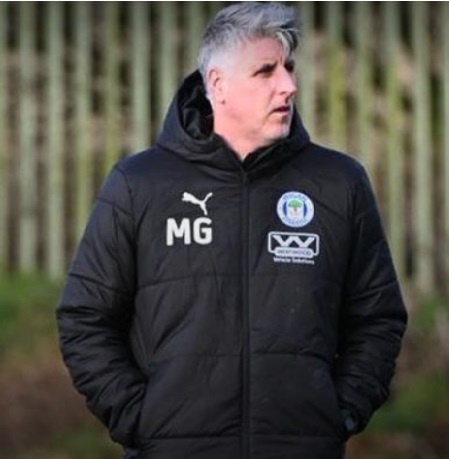
The January transfer window didn’t just bring new players — it also saw Mike Garrity join Wigan as a first team coach. Garrity spent around 13 years coaching within the Liverpool academy system, working with players across age groups before leaving in 2018. He then linked up with Neil Critchley at Blackpool in June 2020, initially as assistant head coach. After Critchley left for Aston Villa in June 2022, Garrity joined the coaching staff at Lincoln City and then reunited with Critchley as assistant head coach at Queens Park Rangers in December 2022. The pair returned to Blackpool together in 2023 but were dismissed in August 2024. Later that year they moved to Hearts, with Garrity serving as Critchley’s assistant before both departed in April 2025. Garrity’s CV also includes coaching experience internationally with Molde and with China.
The question is whether Garrity — along with the rest of the staff — can help bridge the gap between idea and execution at Wigan. Can they build patterns, improve the press, and give the team a clearer attacking identity? Can they do it quickly enough while still picking up points?
That’s the balancing act Lowe faces now. The table doesn’t allow for much experimentation, but without evolution, stagnation sets in. For now, survival may dictate caution — but long-term progress depends on rediscovering the principles that once made his teams so effective.
There’s no quick fix. Performances may remain scrappy for a while yet. But if Wigan are going to move forward, they need more than just resilience. They need an identity again — one that gives fans something to believe in, not just endure.
 LOS THREE AMIGOS
Sums the position up perfectly!! Lots of disgruntled fans shouting for Lowe’s head and who can blame them? The football is dreadful to watch and very inconsistent!! Things need to improve urgently and the players we have need to show their quality as a team!! We always taught kids that the best form of defence is attack!! We look so afraid of losing and that’s what happens!! We lose!!!