How good is Grigg?

This post was originally published a week ago. However, it did not reach our wider audience because it was not picked up by our main news aggregator. We are therefore republishing it. Apologies to those of you who might have previously received it.
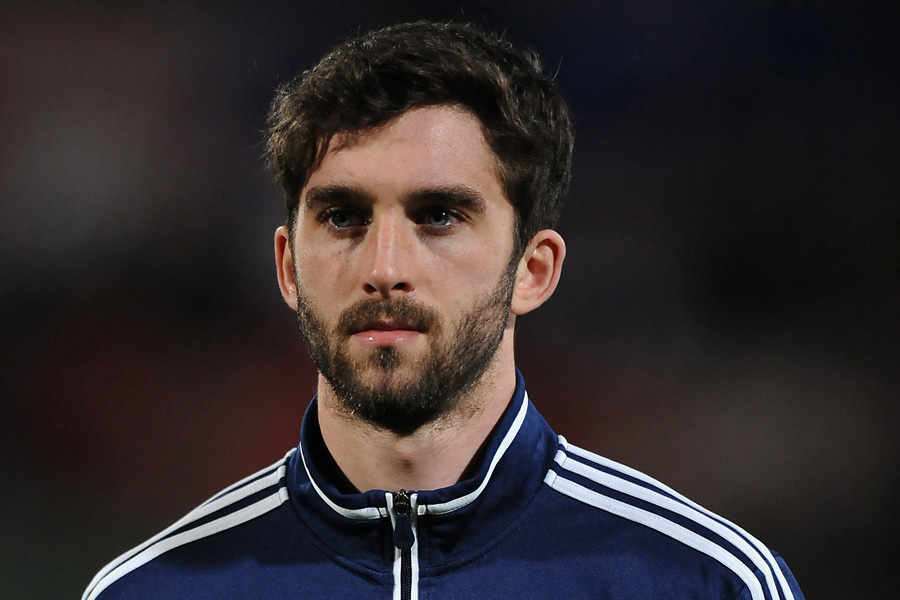
Grigg

In the past 20 years just four players have scored 20 goals in a season for Wigan Athletic. Nathan Ellington scored 24 and Jason Roberts got 21 when Latics were promoted from the Championship in 2004-05. Graeme Jones scored 31 when they gained promotion by winning Division 3 in 1996-97.

Will Grigg has scored 23 goals already this season, 20 in league games and 3 in cup competitions. His team is already practically odds-on for promotion. The goals of Ellington, Roberts and Jones were key to their team’s promotion successes. It looks like those of Grigg could prove to be the same.

It is the third time that Grigg has exceeded the 20 goal per season mark with a League 1 club. He first did it for Walsall in 2012-13, leading him on to win their player of the Season and Players’ Player of the Season awards. However, rather than build on his successes in the midlands Grigg moved on to Brentford, who at the time were then in League 1 under the management of Uwe Rosler.

The move from Walsall had been acrimonious. The player had been out of contract, but since he was under 24 a Football League tribunal required Brentford to pay a £325,000 fee plus add-ons. The Walsall manager Dean Smith said at the time that “If he were leaving to go to a better side I would have thought he would have done better than Brentford.” Ironically Smith now finds himself  manager at the West London club.

Given his success in League 1 it had seemed that Grigg would be moving up a level, to the Championship at least. His move to Brentford did not work out as he would have hoped and in the 2014-15 season he was sent off on loan to the MK Dons, an eventful move which put him in the limelight when he scored a brace to knock Manchester United out of the League Cup, scoring 20 goals in the league.

In June 2015 David Sharpe’s gave his guarantee that Wigan would have a 20 goal striker in their lineup this season.  In mid-July he got his man, paying Brentford  £900,000 for Grigg. It was a huge fee for a club in League 1 to splash out, particularly for a player who had never played at a level above League 1. Grigg was brought in to provide the firepower to get Latics out of League 1, but were Latics also looking beyond that? Were they expecting Grigg make it as a striker in the Championship?

At his best Grigg is a handful for any opposition defender. He has the ability to time his runs to create space when surrounded by the tightest of defences. His workrate cannot be faulted and he is a real team player. Grigg relies on his intelligent movement rather than sheer physical power to get past defenders. He is a genuine goal poacher, a dying breed in the modern game. Grigg also has a good temperament as evidenced by receiving just one yellow card in the season so far.  This is despite the rugged treatment he so often gets in a division where too much cynical and tactical fouling goes unpunished by referees.  Still only 24 years old his best is surely yet to come.

However, like any striker Grigg can have his off days. In the visit to Walsall in February he had at least five gilt-edged opportunities to score, but fluffed them all. Latics had to rely on a last minute winner from Yanic Wildschut to bring home the three points that their superior play had merited. But Grigg can opportunities with genuine aplomb, in the style of a “natural” goalscorer. There is finesse to Grigg’s game that suggests he can make it at a much higher level than the third tier of English football. As his confidence grows and he matures as a player he will put home an even higher proportion of the opportunities that come his way.

Grigg’s first season at Wigan did not start particularly well. In its first quarter Grigg had struggled to reach the goalscoring form that Caldwell would have hoped for. He had scored just three goals, two of which were penalties. After starting in the first six games he missed the match at Chesterfield through being on international duty for Northern Ireland. He came back as a 66th minute substitute at Port Vale, but was to pick up an elbow injury which kept him out of the next two games. He made his return as a 77th minute substitute, scoring the equalizer during added-on time against Millwall. Grigg returned to the starting lineup for the next game against Walsall, but was substituted after 70 minutes. However, international call up knocked on the door again and Grigg missed the last two matches at Crewe and Bury.

By Christmas Grigg had notched 8 goals for Latics. Since then he has scored 15 more. Grigg just does not seem to do so well in the earlier part of the season. In fact in his 20 goal season at Walsall he had only scored 5 by Christmas. At MK Dons he scored 9 by Christmas, followed by another 13 by time the season finished.

At Milton Keynes, Grigg had to play second fiddle to Benik Afobe until the latter’s 19 goals persuaded Wolves to pay serious money for him in January 2015. This and a loan move to Fleetwood of the Dons’ other main striker, Tom Hitchcock, opened up the door for Grigg to be the automatic choice as a lone centre forward. Grigg was to thrive on the consistency of having a regular first choice berth.

At 24 years of age, Will Grigg has a bright future ahead. His immediate target will be to score goals in the remaining five matches to help propel Latics back to the Championship. But the irony is that should that promotion come into effect and should Grigg continue to score goals, he will surely arouse the interests of the big clubs that dominate the English game.

Despite a slow start Will Grigg has become a key player in Wigan Athletic’s promotion push. Fans will be hoping he will continue to knock in the goals for the Latics for years to come.

How good is Will Grigg?

Grigg

In the past 20 years just four players have scored 20 goals in a season for Wigan Athletic. Nathan Ellington scored 24 and Jason Roberts got 21 when Latics were promoted from the Championship in 2004-05. Graeme Jones scored 31 when they gained promotion by winning Division 3 in 1996-97.

Will Grigg has scored 23 goals already this season, 20 in league games and 3 in cup competitions. His team is already practically odds-on for promotion. The goals of Ellington, Roberts and and Jones were key to their team’s promotion successes. It looks like those of Grigg could prove to be the same.

It is the third time that Grigg has exceeded the 20 goal per season mark with a League 1 club. He first did it for Walsall in 2012-13, leading him on to win their player of the Season and Players’ Player of the Season awards. However, rather than build on his successes in the midlands Grigg moved on to Brentford, who at the time were then in League 1 under the management of Uwe Rosler.

The move from Walsall had been acrimonious. The player had been out of contract, but since he was under 24 a Football League tribunal required Brentford to pay a £325,000 fee plus add-ons. The Walsall manager Dean Smith said at the time that “If he were leaving to go to a better side I would have thought he would have done better than Brentford.” Ironically Smith now finds himself  manager at the West London club.

Given his success in League 1 it had seemed that Grigg would be moving up a level, to the Championship at least. His move to Brentford did not work out as he would have hoped and in the 2014-15 season he was sent off on loan to the MK Dons, an eventful move which put him in the limelight when he scored a brace to knock Manchester United out of the League Cup, scoring 20 goals in the league.

In June 2015 David Sharpe’s gave his guarantee that Wigan would have a 20 goal striker in their lineup this season.  In mid-July he got his man, paying Brentford  £900,000 for Grigg. It was a huge fee for a club in League 1 to splash out, particularly for a player who had never played at a level above League 1. Grigg was brought in to provide the firepower to get Latics out of League 1, but were Latics also looking beyond that? Were they expecting Grigg make it as a striker in the Championship?

At his best Grigg is a handful for any opposition defender. He has the ability to time his runs to create space when surrounded by the tightest of defences. His workrate cannot be faulted and he is a real team player. Grigg relies on his intelligent movement rather than sheer physical power to get past defenders. He is a genuine goal poacher, a dying breed in the modern game. Grigg also has a good temperament as evidenced by receiving just one yellow card in the season so far.  This is despite the rugged treatment he so often gets in a division where too much cynical and tactical fouling goes unpunished by referees.  Still only 24 years old his best is surely yet to come.

However, like any striker Grigg can have his off days. In the visit to Walsall in February he had at least five gilt-edged opportunities to score, but fluffed them all. Latics had to rely on a last minute winner from Yanic Wildschut to bring home the three points that their superior play had merited. But Grigg can opportunities with genuine aplomb, in the style of a “natural” goalscorer. There is finesse to Grigg’s game that suggests he can make it at a much higher level than the third tier of English football. As his confidence grows and he matures as a player he will put home an even higher proportion of the opportunities that come his way.

Grigg’s first season at Wigan did not start particularly well. In its first quarter Grigg had struggled to reach the goalscoring form that Caldwell would have hoped for. He had scored just three goals, two of which were penalties. After starting in the first six games he missed the match at Chesterfield through being on international duty for Northern Ireland. He came back as a 66th minute substitute at Port Vale, but was to pick up an elbow injury which kept him out of the next two games. He made his return as a 77th minute substitute, scoring the equalizer during added-on time against Millwall. Grigg returned to the starting lineup for the next game against Walsall, but was substituted after 70 minutes. However, international call up knocked on the door again and Grigg missed the last two matches at Crewe and Bury.

By Christmas Grigg had notched 8 goals for Latics. Since then he has scored 15 more. Grigg just does not seem to do so well in the earlier part of the season. In fact in his 20 goal season at Walsall he had only scored 5 by Christmas. At MK Dons he scored 9 by Christmas, followed by another 13 by time the season finished.

At Milton Keynes, Grigg had to play second fiddle to Benik Afobe until the latter’s 19 goals persuaded Wolves to pay serious money for him in January 2015. This and a loan move to Fleetwood of the Dons’ other main striker, Tom Hitchcock, opened up the door for Grigg to be the automatic choice as a lone centre forward. Grigg was to thrive on the consistency of having a regular first choice berth.

At 24 years of age, Will Grigg has a bright future ahead. His immediate target will be to score goals in the remaining five matches to help propel Latics back to the Championship. But the irony is that should that promotion come into effect and should Grigg continue to score goals, he will surely arouse the interests of the big clubs that dominate the English game.

Despite a slow start Will Grigg has become a key player in Wigan Athletic’s promotion push. Fans will be hoping he will continue to knock in the goals for the Latics for years to come.

Latics fire off a warning to Burton – form ratings for Swindon 1 Wigan Athletic 4

Will Grigg scores the first goal. Photo courtesy of the Swindon Advertiser.

Will Grigg scores the first goal.
Photo courtesy of the Swindon Advertiser.

If the scoreline was impressive, the performance was even more so. Wigan Athletic have sent warning shots across the bows of their close challengers Burton and Walsall.

It was possibly Wigan’s best performance of the season. They were well organised in defence, tenacious in midfield and dangerous in attack. More than anything else it was the style of football that impressed most. Latics played a brand of football way beyond that one can expect in League 1.

Gary Caldwell springing a surprise is really no surprise at all. But playing with twin strikers would hardly be expected from a manager who prefers a lone centre forward setup. Rather than use his typical 3-4-3, Caldwell opted for a 3-5-2 with Will Grigg and Yanic Wildschut up front. The presence of three central midfielders in front of a back line of three was to give the wing backs the licence to attack with vigour.

Caldwell got his tactics spot-on. The twin strikers were able to harry Swindon’s back line of three, forcing them into launching long passes which more often than not were gobbled up by the Wigan defence. Moreover Wigan’s midfield trio could swarm forward and swamp an overrun Swindon midfield. Wigan’s movement off the ball was a joy to behold.

Grigg took his 15th minute goal with aplomb, evading two close markers to hit home Chris McCann’s superb cross. The Wigan wingbacks, McCann in particular, continued to look lively. Swindon’s attack was largely innocuous.

Latics could have possibly killed the game off in the first 45 minutes, given the chances they squandered, but their opening to the second half was stunning. Their high pressing reduced Swindon’s defence to jelly. Max Power’s stunning right foot shot from the left hand side after 47 minutes will rank as one of the goals of the season. Three minutes later Grigg’s deflected shot gave the Swindon goalkeeper no chance, then Sam Morsy hit home a fine drive from the edge of the box after 51 minutes.

Wigan could have had more goals in the 39 minutes of normal time still remaining, but their finishing was to let them down. As the game progressed they eased their foot on the accelerator, with a home match against Rochdale weighing on their minds. It resulted in a well taken goal for the division’s top goalscorer, Nicky Ajose, after 79 minutes.

The Good

Latics worked liked a well-oiled machine, for once the whole equaling the sum of its parts. They made Swindon look poor in comparison, remarkable in that the home side had lost only one of its previous eight games.

So often teams have tried to stifle Wigan’s playing out from the back by high pressing. This time Latics used it to their own advantage, Swindon being stymied by that tactic.

David Sharpe promised the fans a 20 goal per season striker before the start of the season. Will Grigg reached that mark yesterday, with 17 in the league and 3 in cup matches.

The Bad

With better finishing from Grigg and Wildschut, the scoreline would have been even more emphatic.

It is the norm in modern football for teams to take their foot off the gas when they have a comfortable lead, with another game looming closer. In particular Grigg looked less than delighted to be taken off in the 75th minute with a hat trick a distinct possibility.

It could be argued that a third goal for the centre forward could have been a big confidence boost for him. But Caldwell would surely counter that by saying that he needed a fully fit Grigg for the game on Monday. Such debates occur in all levels of today’s football.

Player Ratings

Jussi Jaaskelainen: 8 – solid and dependable, sound in distribution. Made an excellent save from an Ajose free kick  in the second half.

Reece Wabara: 7 – getting better. Worked hard running up and down the right flank.

Donervon Daniels: 7.5 – his physical presence proved important in keeping the home side at bay.

Craig Morgan: 7.5 – solid in defence and pragmatic with his passing.

Stephen Warnock: 7.5 – another very professional performance from a full back playing in a back line of three.

Chris McCann: 8 – excellent. A constant threat to the right hand side of the Swindon defence.

Sam Morsy: 8.5 – not only adds steel to the midfield, but intelligent in his passing and movement.

Max Power: 7.5 – an all-round player with the class to play at a level well above League 1. Showed superb technique in his goal. Taken off after 64 minutes.

David Perkins: 8.5 – a complete performance, tenacious in his covering. His performance made a mockery of criticisms that he cannot pass the ball.

Will Grigg: 8 – a danger throughout. He has scored 12 goals in his last 13 games. Once again squandered opportunities, but the good news is that he is getting into the right positions to score.

Yanic Wildschut: 7 – worked hard and was a headache for the home defence with his speed and physical presence. But finishing is not always his strong point. Substituted after 71 minutes.

Substitutes:

Tim Chow –  came on for Power after 64 minutes. Worked hard.

Craig Davies – came on for Wildschut after 71 minutes. A physical presence as always.

Haris Vuckic – on for Grigg after 75 minutes. Showed some nice touches.

Caldwell set to shuffle his pack

“It was a capitulation. That capitulation cost us the league. I knew that night we were gone. It’s an absolutely great example of complacency. It’s a disease.”

The words of Alex Ferguson after his Manchester United side let the Premier League title slip through their fingers in 2011-12. He pinpointed a 4-4 draw with Everton in late April when his team had let a two goal lead slip away. A week later they went down 1-0 at Manchester City, who went on to win the title thanks to a goal in stoppage time in the final game against QPR.

One way in which Ferguson dealt with complacency was by not putting out the same line up in consecutive matches.

In 1980-81 Aston Villa won the First Division title using only 14 players, seven of whom were all present in the 42 league matches. But Ferguson’s views on complacency have clearly resounded in the ears of today’s football managers.

Gary Caldwell too rarely fields the same line up in consecutive matches. Part of his rationale is surely influenced by complacency issues, but he also wants to keep opposition managers guessing about his line ups. Last weekend against Bradford City he did keep the same line up, but he changed their shape, making it less easy for his opposite number, Phil Parkinson.

Caldwell is very much the modern day manager. Guessing his starting line ups is never easy. It is also hard to predict the shape his team is going to employ at the start of the game, which might nevertheless change as play progresses. We have become used to surprises.

Some prefer the kind of approach used by Ron Saunders in the early eighties at Villa. You could more or less predict the starting line-up and they played with the same shape, week in, week out. Complacency was not an issue.

However, times have changed. Managers often talk up the ability of the opposition they are due to play. They have them watched beforehand so that their strengths and weaknesses can be assessed. It can be viewed as guarding against complacency among the players, although there are fans who feel that Caldwell too frequently offers the opposition too much respect.

Rather than the fixed team shapes and the settled line ups of Saunders’ days, Caldwell will talk about building partnerships between players. Probably the most crucial of those as Latics approach the nine game run-in towards automatic promotion is that in the centre of defence.

Craig Morgan and Jason Pearce have formed such a partnership over the past months, to the effect that Latics have never lost a match when they have started together. Sadly Pearce has been out injured for the past two games. Pearce’s play complements that of Morgan. The whole is greater than the sum of its parts in this case.

If Pearce is to be unavailable this weekend, Caldwell will be anxious to find a suitable replacement. Chris McCann is the obvious candidate, with his cultured left footed passing from the back. However, McCann lacks the physicality of Pearce. Caldwell is therefore likely to add the physically imposing Donervon Daniels to make a trio with Morgan and McCann. Stephen Warnock is the obvious choice at left back, but the position on the right is up for grabs. Reece Wabara is the current incumbent, but is likely to face competition from the fit-again Kevin McNaughton and from Daniels if he does not play in central defence.

Caldwell has the choice of three holding midfielders in Sam Morsy, David Perkins and Max Power. When playing with a back four Caldwell will use Morsy in the “Busquets role”, with Perkins and Power pushed further forward. Operating 3-4-3 means leaving one of them out. Power has been one of Latics’ best players this season but his form has dipped of late. It would be no surprise to see him rested in one of the games over the Easter weekend.

Haris Vuckic’s well taken goal against Bradford City might have gained him a place in the starting eleven at Swindon. His most likely position is on the right side of the attack, although he can possibly be more effective in the centre of an attacking midfield trio in the 4-2-3-1 formation that Caldwell can favour. Like many other players over recent years at Wigan, Vuckic has struggled to claim a regular place despite his obvious talent. Up to this point the Slovenian has made only five starts in league games, with four appearances off the bench. Importantly Vuckic is the kind of player who can link midfield and attack. He also has a good left foot and is likely to score goals cutting inside from the right. His lack of playing time so far is a mystery, although he did go through a period of injury problems in the first half of the season. Meanwhile the unwanted, and largely untried, Billy McKay has now scored 11 goals for a Dundee United side who sit in unfamiliar territory at the foot of the SPL table.

In the meantime Michael Jacobs is back in light training, but Caldwell is going to have to wait another 2-3 weeks before he will be challenging for a first team place. For the weekend Caldwell will be able to choose between Ryan Colclough, Conor McAleny (if fit), Haris Vuckic and Yanic Wildschut to form the attack with Will Grigg in the lone centre forward position.

Craig Davies is fitter than he has been for some months, but his time on the field is limited by Caldwell’s unwillingness to start with twin strikers. Davies has had just seven starts in league games, with his last being in the home defeat to Blackpool in mid-December. He has made 17 appearances off the bench. Some have been critical of Davies’ form over the past months, but being used as a late substitute to either lead a late rally or to hold up the ball in high pressure situations to kill off games is not an easy task. However, should Grigg become unavailable, Davies would be a dependable stand-in.

Latics lie level on points in second place with Walsall, six points behind Burton Albion, and five points above fourth placed Gillingham. Less than three weeks ago Walsall sacked Sean O’Driscoll as manager, replacing him with Jon Whitney. They have since won their last three matches. Despite a defeat at Bradford a couple of weeks ago, Burton bounced back, winning their next two games. Their 4-0 away win at Port Vale on Saturday was impressive against a side with a strong home record.

Walsall’s next match is at Sheffield United on April 2, their Easter matches being postponed due to players absent on international duty. Only time will tell whether this will prove a blessing or a curse for the Saddlers. Should Latics win both matches over Easter then Walsall will be under pressure making up a six point gap. But should they fail to do so it would give the midland club with the upper hand.

Wigan Athletic’s recent performances have been less than impressive, but they have nevertheless continued to maintain an average of two points per game over the last six matches. Two wins in three days over Easter is a tall order and Caldwell will need to rotate his team to keep players fresh.

The bottom line is that, despite injuries, Caldwell retains a squad that is more than capable of gaining more points than their rivals in the run-in. But he will need to instil a mentality where players treat every game remaining as a cup final.

As Ferguson said, complacency is a disease to be avoided. Making small, but regular, rotations in the starting line-up will be a ploy that Caldwell can use to guard against it.

Morgan and Pearce – a formidable partnership in the centre of defence

MorganPearce

Jason Pearce and Craig Morgan celebrate the Welshman’s last minute winner against Gillingham. Photo courtesy of http://www.bbc.com

Who would have thought that a couple of experienced old pros who have largely plied their trade in the lower divisions could fit in so successfully to a team striving to play possession football?

Between them the 30 year old Craig Morgan and the 28 year old Jason Pearce have amassed a total of over 800 senior appearances in their careers. Last summer Gary Caldwell picked up Morgan for nothing at the end of his contract at Rotherham. Pearce was signed by Malky Mackay from Leeds United in January 2015 for a bargain fee in the region of £300,000.

The two have formed a formidable central defensive partnership for Wigan Athletic this season. In fact Latics have not lost a game when the two have started together in the centre of defence. Their differing styles tend to complement each other.

Pearce is seemingly fearless, a player of total commitment who will put his own body on the line for the team’s sake. He is strong in the air, rugged in the tackle and rarely wastes the ball. Morgan too is strong in the air and relies on his timing and positioning to cut out opposition attacks. Unlike most central defenders with type of his career background, Morgan resists the hoof and is a fine passer of the ball from defence.

Both players have had injury problems this season, the result being that they have only played in the same starting lineup 16 times of the 41 matches played. Sometimes they have played together in a conventional back four, on other occasions being joined by a third central defender. Morgan has made 31 appearances this season, with a red card received against Bury in the League Cup and 6 yellows. Pearce has made 25 appearances with just 3 yellows, a low ratio for a player with a physical approach, revealing a level of self-discipline and maturity.

Before the season started Caldwell had a difficult choice between the two as to whom he would name club captain. Morgan had been captain at Peterborough at the age of 23 and skippered Rotherham to promotion from League 1 to the Championship and then holding their place there last season. Pearce had also been captain at the age at 23 at Portsmouth, going on to lead Bournemouth and Leeds. In the end Caldwell chose Morgan as captain with Pearce as vice-captain.

Both players are leaders on the field of play and their partnership in the centre of defence has been critical in Latics’ rise to contention for an automatic promotion place in League 1. Pearce missed the last game at Colchester after being forced off by injury at half time in the previous match at the DW Stadium against Peterborough.

With just 10 games to go Caldwell will be hoping that the two can steer clear of injuries and suspensions for what remains of the season. Their joint presence is critical in Wigan’s quest for promotion.