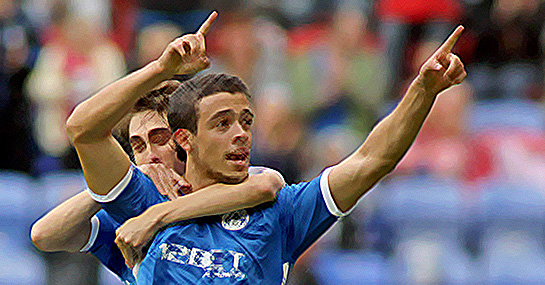
Wigan Athletic 2 West Ham 1 -Champagne football returns to the DW

The slim margin on the DW scoreboard betrayed a thoroughly dominant, flowing performance filled with invention and verve that might have ended up in a +3 or +4 margin on another day. Save for a scrappy opening six minutes, Wigan recreated the stylish, exciting form show in last season’s glorious final chapter.

The Good:

Almost everything. More than half the team put in their strongest performances of the season, with special praise reserved for Shaun Maloney who orchestrated almost every Wigan attack with clever flicks, darting runs, and eye of the needle through-balls. Maynor Figueroa recovered from a tired performance at Swansea with a masterful display at the back and some stunning passing. Ivan Ramis’ goal should be up there for goal of the season. James McArthur and James McCarthy were phenomenal and it is only a shame Jussi Jaaskelainen denied the latter a line amongst the goalscorers with an excellent first half save. Jean Beausejour and Emmerson Boyce, in different ways, were extremely effective on the day. And there was a return to form for Gary Caldwell.

The result was crucial. Microphones clearly picked up Roberto’s instructions to “keep it” with ten minutes to play, despite the ease with which Latics were cutting through West Ham’s back line. While many of us were craving that third killer goal, the manager knew that securing three points unspectacularly was more important. The win boosts the club’s points tally but more importantly provides a shot of confidence and a platform to build on. Not many teams will beat Wigan in that sort of home form.

The Bad:

The fact that the margin did end up so slim is a reminder that finishing must improve. Arouna Koné was energetic, skillful and always dangerous, but fluffed his lines on a couple occasions and should have put the game beyond reach. Franco Di Santo, playing a slightly deeper role, found himself shooting hopefully from outside the box when better options might have been available. Both had good games though — the partnership shows great promise.

Final Thoughts: 

What a shame Ryo Miyaichi was not on the bench for this one. The speed with which Wigan were breaking in those final 20 minute was impressive — he would surely have capitalized on the by then very leaky West Ham defence.

The fact that Ronnie Stam was on the bench for a league match raised a few eyebrows. Word on the street is that further Premier League appearances would activate a clause in his contract. Perhaps Roberto now believes he is ready to challenge Emmerson Boyce on the right, and may be worth the money such a clause might cost the club? Or perhaps it was a reminder to Boyce that his place is not automatic. Either way — it was nice to have him as an option, and Boyce responded with a strong performance.

Player Ratings: 

Ali Al-Habsi: 8 — Looked bright and confident, made one or two crucial saves.

Maynor Figueroa: 9 — Strong in the air and on the ground, and his passing was sensational.

Gary Caldwell: 8 — A return to form at the heart of the defence. A little shaky in the opening minutes as he tested the waters with Carroll, but dominant as the game went on.

Ivan Ramis: 9 — What a goal. Looks better every match.

Emmerson Boyce: 7.5 — Plays a much more defensive role than his counterpart on the left side, but was intelligent with his passing and movement when he did get forward. Did his part defensively — West Ham’s wingers were ineffective.

Jean Beausejour: 8 — Strong performance from the Chilean, who was unlucky not to score with a fine left-footed strike in the first half. Lost Tomkins for the consolation header but was impressive throughout.

James McArthur: 9 — How pleasing to see him take his goal so well. Worked his socks off as always, but has understated quality about his game too.

James McCarthy: 9 — Also fantastic in the centre of the park. Very pleasing to see him shooting with greater frequency, and getting forward more often. He doesn’t often have the opportunity to show his pace, but when Watson replaced Di Santo and McCarthy was pushed slightly further forward, he led the counter-attacking charge on more than one occasion.

Shaun Maloney: 9 — Outstanding. Has found his home.

Franco Di Santo: 8 — Very good work rate and hold up play, quality passing. Didn’t have any clear chances but the ovation he received upon being substituted shows how appreciated he is these days.

Arouna Koné: 7.5 — Tricky to grade this performance. He was a constant threat, constantly got past his man, but guilty of missing a  couple quality chances.

Subs:

Ben Watson: Looked almost surprised at how much time he had on the ball, so exhausted were the West Ham midfielders after being given the Jimmy Mac runaround for 80 minutes. Played some nice football in his time on the pitch and freed James McCarthy into a more attacking role.

Swansea City 2 Wigan Athletic 1: That sinking feeling

Without doing a terrible amount wrong, Wigan Athletic has found itself sinking into the all-too-familiar lower depths of the Premier League. We might be telling a very different tale if Arouna Koné’s headed equaliser had not been incorrectly disallowed for offside, but in the end those small margins told and it was another tight loss. There have been several of them in recent weeks against beatable teams — Fulham, Sunderland, and now Swansea — in which the side showed positives but failed to get the result. The good news is that fellow basement dwellers Southampton, Reading, Aston Villa, Norwich City and QPR look a weaker set of competition than last year’s pack.

Of the aforementioned strugglers, Norwich were the only team to secure three points this weekend with a shock 1-0 victory over Arsenal. Chris Hughton’s side deserve full credit for an excellent performance, but it is no coincidence they got the result following an international break. Like Swansea, Norwich looked fresh and full of zip — both squads have few internationals and benefitted from two weeks of focused training. Like Arsenal, a majority of Wigan’s starting XI had played two matches in the previous week, spread across the far corners of the world. Between Al-Habsi, Figueroa, Beausejour, Caldwell, McArthur, McCarthy and Koné (who admittedly did not play but had an eventful week nonetheless) — Latics players covered four continents and hundreds of thousands of miles before this fixture. Thank goodness Barbados wasn’t playing. Maynor Figueroa, whose Honduran national team secured qualification after thumping Canada 8-1, certainly looked like he was in a different time zone.

A detailed analysis of post-international results will follow next time there is an international break. But in the meantime, it seems fair to raise the question why Roberto is not leaning a little more heavily on his squad for these fixtures based on recent post-international break results?

The Good: 

Despite a sharp-looking home performance from Swansea, Latics kept them out in the first half, and looked the more incisive team on the counter. James McArthur showed some touches of real class and vision. Arouna Koné was very good, despite seeing relatively little of the ball. After Latics conceded and bodies were pushed forward, Shaun Maloney was excellent, getting on the ball, making things happen.

The Bad: 

Figueroa had a bad day. The marking for the second goal was non-existent — they appeared to stand still as Michu ran in to score. The team didn’t show real urgency or ambition until it was 2-0. All of which was a shame against a team that demonstrated their attacking threat but were defensively wobbly throughout. Opportunity lost.

Player Ratings: 

Ali Al-Habsi: 7 — Caught flat-footed on the first goal, but there was not much he could do about either. Made one or two decent saves before then.

Ivan Ramis: 6 — Solid until he lost sight of Michu for the second goal.

Gary Caldwell: 6 — Solid until Hernandez got the better of him for the first goal.

Maynor Figueroa: 5 — Not solid. Looked out of sorts, substituted to accomodate an attacking tactical change.

Emmerson Boyce: 6.5 — Brilliant improvised goal, but didn’t have an easy afternoon with Routledge in fine form.

Jean Beausejour: 7 — Cracking cross for Koné, which would have been the equaliser but for an errant offside call. Also played a delightful ball in for Koné, which the Ivorian couldn’t make the best of. Need him to get forward more often.

James McArthur: 7.5 — Some real quality from the Scot, who always puts the miles in defensively but rarely gets a chance to show his skill.

James McCarthy: 6 — Not his strongest performance.

Shaun Maloney: 7 — Always trying to make things happen. But his finishing should have been better with both a first half opportunity and a disappointing second half free-kick.

Franco Di Santo: 6 — Only got one chance and telegraphed it.

Arouna Koné: 7 — Strong performance that deserved a goal. His strength and pace are impressive, but he showed he can dribble and head the ball as well. The complete striker — just needs a bit more service and luck now. Took a heavy touch on a lovely Beausejour cross, mind.

Subs:

Ben Watson: N/A — His introduction saw a formation change, which resulted in more bodies forward and sustained pressure on the Swansea rearguard. It also left Latics’ defense a bit exposed.

Jordi Gomez: N/A — Went backwards too many times, to the support’s frustration. Played so well in the corresponding fixture last year, maybe he should have been brought on sooner — before goals were needed urgently. Urgency is not his strong suit.

Mauro Boselli: N/A — No service, barely touched the ball.

Swansea vs. Wigan Athletic: Goals guaranteed

Of all the clubs that voluntarily or otherwise replaced their managers over the summer break, the Swansea revolution has been the most intriguing. Steve Clarke’s positive start at West Brom has been surprising in its results, but not in approach or style. Norwich’s decline had been gloomily predictable, while their old boss Paul Lambert is going to need years and quite possibly a magic wand to steady Villa’s sinking ship. Andre Villas-Boas endured a rocky start but has started to show signs of the fast-paced attacking football that won him a treble with Porto a year and a half ago. All four of them were relatively known quantities or familiar faces.

Enter Michael Laudrup, and Swansea.

When Brendan Rodgers left to pursue a career in corny one-liners on “Being Liverpool,” many wondered if the style of play would go with him. It is often overlooked that it was not Rodgers, but our very own Roberto Martinez, that instilled such a style of play at Swansea long before Mr. Ok came along. That said, Rodgers deserves enormous credit for an excellent season brimming with possession-based, continental-style football. Until that magical final stretch for the Latics, watching Swansea last season had been like watching Wigan 2.0 — a new and improved version of our team with goals and clean sheets added.

In appointing Laudrup, they made a real statement. As successful as Brendan Rodgers was in Wales, he was never a big name. Appointing the Dane, such a stylish and well-travelled player, brings an air of prestige to the Liberty Stadium. And it opens up markets.

New signings Jonathan De Guzman, Michu and Chico admitted the Dane was the main draw in their respective moves to the Liberty Stadium, while Pablo Hernandez said he was his childhood idol. All four are proven performers in the Spanish league and Michu already looks like the signing of the season at 2 million pounds. Ki Sung-Yeung, signed from Celtic, has been described by the Swansea writer on ESPN FC network as “being able to do everything Joe Allen does at a third of the price.” Tidy business indeed.

And the style has changed. And not necessarily for the worse, from an entertainment perspective. They look a more potent threat in attack, committing more men forward, which in turn renders them a bit more susceptible at the back. Their results are extreme to say the least — starting with 5-0 and 3-0 wins before a 2-2 draw, then a three match losing streak, and another 2-2 draw. At home, they’ve won 3-0, lost 3-0, and drawn 2-2 twice. There appears to be a bit less tikki-takka and more direct attacking play. Still skillful and on the ground, but less patient, and more adventurous. The result is possibly an even more entertaining brand of football, but less reliable.

All of which should contribute to a mouthwatering fixture tomorrow. Wigan’s front three of Koné, Di Santo and Maloney showed tremendous movement and understanding against Everton and were unlucky not to win it for their teammates on the day. If Swansea take the initiative as one would expect playing at home, there should be space on the counter. The key will be who scores first. When Everton visited Liberty Park several weeks ago, Swansea were vulnerable on the break and conceded two more. Reading put two past them before a spirited second half fightback that rescued a point.

Wigan should expect to start with the same XI that faced Everton — unless anyone returns from international duties with injury or severe jet-lag. Maynor Figueroa will be buzzing after Honduras thumped Canada 8-1 to advance to the final phase of CONCACAF qualification. Jean Beausejour fared less well, with Chile losing both of their qualifiers. Ali Al-Habsi’s Oman beat Jordan to keep their dream alive, though Australia’s late winner against Iraq pegged them back on goal difference. James McArthur, Gary Caldwell and Shaun Maloney all featured for Scotland, while James McCarthy played two matches for the Republic of Ireland. Comparatively, Swansea lost few of their starters to international travel and may have an advantage there.

A difficult one to predict, but all signs point to goals galore. 2-2, anyone?

Wigan Athletic & Honduras: A love story

It was a chilly evening in Bloemfontein. The 2010 World Cup was in full swing, and while the rest of the world adjusted their TV sets for the decisive Group H match — Spain vs. Chile — my party set off for Free State Stadium amid a sea of blue and white stripes.

My wife Kat and I, fresh from a 12 hour drive from Port Elizabeth where we’d taken in England’s 1-0 win over Slovenia a couple days prior — wore Wigan Athletic shirts. My brother-in-law John, also dressed in Wigan from head to toe, had followed Honduras’ progress through the qualifiers and ensured we had tickets for the group match against Switzerland. Everyone else wore Honduras colours, but by the time we arrived at the stadium, the distinction was blurred.

On paper, the match was a drab 0-0 that dumped Switzerland out of the tournament (Honduras had already been knocked out after defeats against Spain and Chile). But for Hondurans, this was an historic night. Second World Cup, their first since 1982. And it might have been a first win but for some good goalkeeping from the Swiss. The draw was seen as a dignified way to bow out of an extremely tricky group, in their second World Cup appearance. Switzerland had defeated Champions-to-be Spain only a week prior — they were no slouches.

On the pitch, former Latics favourite Wilson Palacios bossed the midfield alongside Hendry Thomas, still a Wigan player at the time. They never got to play together at the JJB or DW, a shame based on the tenacity displayed that evening. Maynor Figueroa, heroic in previous matches despite the defeats, continued his fine form in defense. Current Latics target Roger Espinoza was on the bench. As Figueroa walked toward the tunnel at the end of the match, I shouted in Spanish, “Maynor, por favor quedate en el Wigan!” [Maynor, please stay at Wigan] As the words registered, he retreated back out of the tunnel, stuck his back out head out, and gestured a thumbs up my way. True to his word, he remains a fixture at Wigan Athletic to this day.

I’ve since learned that we were not the only Latics supporters following Honduras at that World Cup. For years now, a curious bond has formed between the Central American nation and the northern town of Wigan.

Having spent a large part of my childhood in Colombia, I know what it means for a Latin American country to see their footballer exports succeed abroad. My dad would pull me out of bed on Sunday mornings to watch Faustino Asprilla play for Parma, and later Newcastle. This was long before the days of Ivan Cordoba’s success at Inter Milan, or the present day golden generation of Colombians succeeding in Europe led by Radamel Falcao. There were two or three players plying their trade abroad, and their every movement was watched with pride.

In many ways, Wigan Athletic has become dear to Hondurans as Parma did to Colombians back in those days. If Roger Espinoza completes his rumoured move from the MLS upon the expiration of his contract, he will become the fourth Honduran to play for the Latics. It is no coincidence that Honduras qualified to their first World Cup in 2010, as their players found first team football in top level leagues. Wigan continue to give their players a stage, an opportunity to grow — and they are reaping the benefits. Needing a win to progress in CONCACAF qualifying yesterday, they annihilated Canada 8-1 and in turn leapfrogged them and Panama to win their qualifying group in the final fixture. Their excellent showing at the Olympics proved there is more talent coming through, Espinoza included. A second consecutive World Cup is a possibility.

And so, there is a real bond between Honduras and Wigan Athletic. Jet-lag aside, Honduras’ success in the qualifiers can only be good for the Latics. Maynor Figueroa has grown immensely over the years. Honduras was the first to use him as a left centre-half, and it wouldn’t be surprising if watching Honduras had persuaded Roberto Martinez to use him in the same way in Wigan. The experience these players gain in major tournaments ultimately strengthens their performances for the club. If Rodallega had been able to break into the Colombian team, he too, might have further developed. As it was, he fell down the pecking order and stagnated for both club and country.

So keep an eye out for our Honduran brethren in the final six-team CONCACAF group stage. With Mexico, USA, Costa Rica, Panama, and Jamaica for company — three automatic berths, and a playoff against Oceania — you may have another reason to travel to Brazil in 2014.

iSaludos a nuestros lectores en Honduras! Siguenos en Twitter y Facebook.

Di Santo comes into his own

A bit unusual at first, Roberto Martinez’s strategy in the transfer market has become quite familiar. He likes to shop in Scotland and Spain — markets he knows well and can compete with financially. He’s not afraid to dip into lower divisions, and values a season-long loan from a top club to boost competition for places in the squad. He is astute in his timing, snapping up players like Victor Moses and Nouha Dicko at cut rate prices when their clubs were in financial need. His buys normally fall in one of three brackets: young, upcoming but unproven; players who have fallen to the fringes and want to re-establish their careers; or foreign players seeking a stage on which to earn a move to a bigger club.

The policy has yielded strong results. Signing two young central midfielders from Hamilton Academicals and moulding them into a Premier League partnership that out-tackled and out-passed the midfields of Manchester United, Arsenal, Chelsea and Liverpool last season borders on genius. Ali Al-Habsi, a reserve at neighboring Bolton, has been nothing short of outstanding. And Shaun Maloney, rescued from a hiccuping career for Celtic, has been revitalised in blue and white stripes after a slow start. But of all his success stories in the market — and there are plenty more — one signing stands out as an exception to his regular policy.

Franco Di Santo arrived from Chelsea for 2 million pounds on deadline day at the beginning of the 2010-2011 campaign. The Argentine had been plucked from Chilean outfit Audax Italiano in 2008 after a decent scoring record in the Chilean League, the South American Copa Libertadores (Champions League equivalent), and the Copa Sudamericana (Europa League equivalent). Having failed to break into the first team, Di Santo spent time on loan at Sam Allardyce’s Blackburn, but finished it with a desperate strike rate of 1 in 23 appearances, having been stuck out on the wing in a kick and rush system that clearly would not have suited him.

The move was surprising because Latics had never before shopped directly from a top four club. Scott Sinclair had come in on loan the year before and it was largely assumed that Franco would follow the same path. The fact that Wigan bought him outright, at a bargain 2 million price, was taken by many to mean that Chelsea simply didn’t rate him. The consensus around the league, and in the media, was that he didn’t have the finishing to cut it in the Premier League.

His transformation has been a joy to watch, but didn’t happen over night. Indeed, the goals took a long time to come. In his first season with the club, Franco was largely starved of service. In hindsight, it is not surprising that he, along with Mauro Boselli and Jason Scotland before him, struggled to score when flanked by Charles N’Zogbia and Hugo Rodallega — players who more often than not wanted to finish the move themselves.

But there have been several turning points in the past year for young Franco. He started last season with a couple spectacular — if slightly fortunate deflected — strikes, which did his confidence a world of good. Then, in December, Roberto switched to the current tactical system employing wing-backs rather than wing-ers. The switch did more than change the shape of the team. It transformed the way the team attacked. Instead of the right-footed winger on the left, cutting in to shoot, we started seeing the wing-backs, left-footer on left and right-footer on right, bomb forward and launch crosses into the box. The higher number of crosses resulted in higher number of chances for the centre-forward, and Franco has benefited — as have Arouna Koné and Mauro Boselli in their appearances this season. The strike rate per minute on pitch of all three strikers if you include league and cup matches this season, is higher than any Latics striker in the Roberto Martinez era. They are the top three.

The third and most recent catalyst, was the most recent tactical switch following Victor Moses departure and Arouna Koné’s arrival. Di Santo now has a strike partner, whose threat has freed up space for his clever running, and two of Di Santo’s three strikes this season have been assisted by the Ivorian. Di Santo now has service, confidence, and space — and his finishing has been been top class.

If he can keep up this level of finishing, there is nothing to stop Di Santo’s progress. His technique is excellent, he has pace and strength, excellent work rate, fantastic hold up play and is an intelligent passer of the ball. But it is more than his attributes on the pitch that catch the eye. Sometimes, when players take the step down from a larger club, their egos get in the way. When you watch Di Santo play, his enthusiasm is clear, and his body language is that of a man proud to play for the club. His enthusiasm is infectious, and no doubt an important element in the dressing room. Martinez likes to speak about bringing in not only the right talent, but the right personalities. In Franco, he has a winner who also seems a genuinely nice guy happy to be there.

As with many young prospects before him, this has not happened overnight. The club is only now starting to reap the benefits of the striker’s steep learning curve. But it has been a joy to watch his come into his own — long may it continue. At Wigan Athletic.