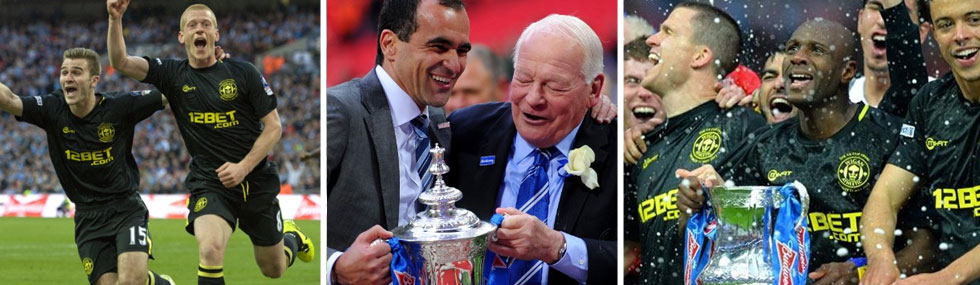
Wigan 2 QPR 2: Frustration setting in

Another opportunity squandered as Latics failed to convert a string of chances to put this game beyond Harry’s energized, but sloppy troops. Wigan were still missing seven senior players against a team with a new manager in desperate circumstances, but frustration is starting to set in as the season shapes closer to another relegation battle than a than a cozy mid-table finish.

The Good:

James McCarthy’s finishing — he was unlucky not to score three — confirmed what we already knew: the lad has everything. Ronnie Stam put in another good display down the right. The team’s response after a poor first half was once again very strong and resulted in an equaliser, although it probably should have resulted in two or three more goals as well.

The Bad:

The result and the scrappy nature of the team’s play at times. The worrying lack of composure from those charged with putting the ball in the back of the net. Koné was poor, and desperately needs a goal. Boselli came on far too late — this game would have suited him as Latics had a lot of possession in the opposition’s box. When Maloney came on, he looked out of place in a left-midfield role instead of around the box where his incision was needed.

Player Ratings:

Ali Al-Habsi: 6 — Made a couple great saves and could not be blamed for any of the goals.

Emmerson Boyce: 7.5 — Once again a strong performer on the right of the back three.

Adrian Lopez: 6 — Ryan Nelsen lost his mark for the first goal and a sloppy pass from the Spaniard led to the second. He was very good otherwise, but…

David Jones: 7 — Called upon to fill the left centre-half position and did his best. Got forward occasionally too, deserves credit.

Jean Beausejour: 6 — Despite providing the cross for the second goal, this was not one of his stronger performances.

Ronnie Stam: 7.5 — Full of running and endeavour down the right. May be one to keep his place when all the injured players return to the squad.

James McArthur: 6 — Ok on the ball, but not as dominant as usual.

James McCarthy: 9 — Excellent. Drove the team forward in the second half. Capable of scoring regularly — sadly will end up at one of the big clubs if he does.

Jordi Gomez: 6.5 — Poor first half, faded in and out of second, but looked to be the only attacking player with the composure to score. Latics’ biggest threat and was unlucky to hit the crossbar.

Franco Di Santo: 6.5 — Some good running with the ball, was fouled a lot, but didn’t ever look like scoring.

Arouna Kone: 5 — His touch let him down on numerous occasions, and he failed to get his shot off when through in the second half. Needs a goal.

Subs:

Shaun Maloney: N/A — Brought on in a strange left midfield role and looked a little off the pace. Still, if he made it through without injury setback

Mauro Boselli
Meet Roger Espinoza — the inside scoop on Latics’ Honduran target

2012-roger

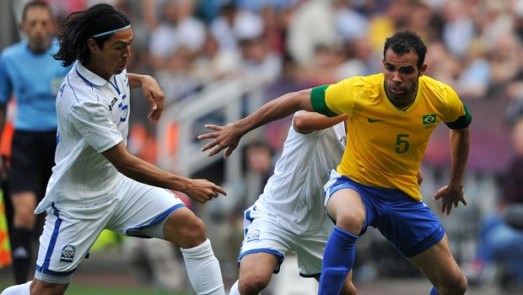
As today’s news reports have all but confirmed the signing of Honduran Roger Espinoza, we thought we’d seize the opportunity to introduce him through a Kansas-tinted lens. Though familiar on this side of the pond for his star turn in the summer olympics, the midfielder is a far cry from Wigan’s typical Latin American recruits.

Born in Puerto Cortes, Honduras, Espinoza moved the United States at the age of 12, where he has resided since — becoming a citizen in the process. He played collegiate (university-level) football for Yavapai College before transferring to the much bigger Ohio State Buckeyes, where he was identified as a talent and selected in the “draft” by the Kansas City Wizards.

He has since made more than 100 appearances over a four-season span for the club — now known as Sporting Kansas City — and amassed 25 for his native Honduras since his first call-up in 2009, not including the four for the olympic squad this past summer.

Not only will Espinoza become the fourth Honduran to don Wigan Athletic colours — strengthening the ever growing bond between our club and the central american country — he also arrives with fluent English, a huge advantage over his countrymen. As one Wigan supporter humorously, if somewhat inaccurately pointed out, he will be the first “American-sounding” player at the club since Jason de Vos.

When I reached out to the independent supporters club, the KC Cauldron, their response was warm and swift. Latics supporters know a thing or two about losing quality players for little or no money, and the feeling in Kansas is not unlike what we have experienced so many times in the past — sadness and resignation, mixed with pride and genuine wishes for the player to succeed on the big stage.

Without further ado, the words of James Starritt, who writes and speaks about Sporting Kansas City on the web and local radio, on sportingtimes.net and kicktheball.us — and has been thoroughly impressed by Roger in his four years at the club.

A frenzy of crunching tackling and combative running

Roger is a fantastic player who has shown enormous capacity to grow over the last few years. As is typical for MLS he was played out of position for a while — on the flanks early — before being converted to full-back. He didn’t do well, and was a fairly average presence until Honduras popped him into central midfield, and he immediately carved out some fantastic performances. An injury crisis in the middle in 2011 forced a similar move shortly afterwards from Sporting Kansas City, and in his first game he simply dominated the entire midfield, scoring a goal, and breaking up opposition possession in what I can only describe as a frenzy of crunching tackling and combative running. He has never looked back.

If you watched Paul Ince, David Batty or Roy Keane back the days, he is cut from that mold. He is passionate and dominant when he is on his game, and he leaves everything he has on the field. He thrives on the competition, and seems to get stronger as games go onwards. He is very, very consistent. If he can play … he is on.

He is very dangerous around either area, breaking up possession in front of his defense and winning it back around the top of the opponents box. He is ideal sitting right between a defensive midfielder and an attacking/creative one — at least at this level. He can drop back into defensive midfield comfortably, however. He is not terribly dynamic going forward but he does create chances for other players to play around him simply by winning the ball and pressuring people into mistakes, he won’t make goals, you’ll still need players to capitalize on the possession he wins for that. If he can raise his game to BPL levels, Wigan should see more of the ball just having him out there. He is a decent passer, he won’t score many goals, but I think he will only improve with better players around him.

The transfer will go through, goodbyes have been said – I see no reason that he will not pass the medical. He may be a little beaten up after a long season but nothing stands out as problematic long-term that should prevent this going through. Pay will not be an issue either as he is on less than £80,000 currently … annually. The only question is whether he can handle the step up in level … what you get with Roger is a guy who will die trying. He is 26 now but players start later in MLS (they go to college/university and then play…) he is still learning and growing and doesn’t have 8 years of time on his legs. He’ll earn his share of yellows and reds… it is just the nature of his play, he isn’t malicious or dirty but if he dives in, he is going all in. You’ll get no histrionics, no diving – he goes down and bounces right up and gets right back into the game, not much complaining, no drama off the field, and he is a nice guy to talk to – he won’t have problems fitting in with the squad unless he struggles to feel at home within Wigan itself.

If he can handle the BPL I think he has the capacity to be a bit of a fan favorite, maybe not a huge star but a good solid pro who you’ll miss when he isn’t out there. We certainly will.”

Defensive crisis deepens as Fig’s penalty karma catches up with him

The first goal is important enough in matches like these between teams on the same points tally, but when it comes with a red card to one of your centre-backs away from home, it’s game, set and match. Especially when your three first choice centre-backs are already missing through injury.

The foul itself was nothing much and may not even have been given in other circumstances. But it also wasn’t egregious enough to launch any kind of appeal, which means Wigan will be without yet another defender for the upcoming home fixture against QPR. The second goal knocked the stuffing out of Latics, but despite a spirited start to the second half, the game was done and dusted with a wonder strike against the run of play.

The Good:

Latics’ second half response was very good. Despite being down to 10 men, Roberto’s men looked the better team until the third goal flew in. Ronnie Stam’s attacking performance in the second half was outstanding and he was the team’s most creative player. Adrian Lopez, introduced at half-time for an off-the-pace Gary Caldwell, enjoyed another good performance and will surely start against QPR unless there are multiple recoveries in the interim. No injuries.

The Bad:

Maynor Figueroa has been lucky with 50-50s in the box this season and his penalty karma finally caught up with him. It may not have warranted both penalty and red card, but it effectively lost his team the match.

Ali Al-Habsi’s confidence is a worry. It is harsh to blame him for the second goal, although he could have parried the ball away from the onrushing Demba Ba. But he looked uncharacteristically wobbly throughout.

Latics’ at times looked shellshocked and clueless. While this was most frustrating in the first half, there was a moment in the second when a free-kick in a promising position was played sideways, then backwards, ending up at Ali Al-Habsi’s feet. Even the Newcastle crowd didn’t know what to make of it. We Martinez’s instructions, at that point (3-0 down), simply to keep the ball and limit the severity of the defeat?

Gary Caldwell’s return was more than a little bit wobbly, and he was fortunate not to have been sent off for a clumsy tackle in the first half. He’ll need to be stronger if he is to lead a makeshift defence for the next few fixtures.

Player Ratings:

Ali Al-Habsi: 5 — His weakest form I can remember. The mistake against Reading was bizarre, but ultimately not a problem. The mistake against City was less severe but more important, tipping the encounter in City’s favour. Today’s performance was jittery. Some will argue the second goal was his fault. He needs a couple big saves to regain composure.

Emmerson Boyce: 7 — One of the better performers, didn’t let anyone down at right centre-half.

Gary Caldwell: 5 — One to forget. Was probably rushed back due to the defensive injury list. Substituted at half-time for Adrian Lopez.

Maynor Figueroa: 4 — His red card and penalty so early in the game left Latics with too steep a mountain to climb.

Ronnie Stam: 8 — A bright attacking performance from the Dutchman. Served a peach of a ball into the box that Di Santo watched sail by. Got past his man with intelligent movement and trickery, and was involved in all of Latics’ positive attacking play.

Jean Beausejour: 5 — Played most of the game at left centre-half, which was a big ask. Sloppy in possession.

James McCarthy: 6 — Had a lot of work to do but got frustrated and let it affect his football.

Dave Jones: 6 — Passed the ball well and threaded a nice ball through that Kone was unable to control.

Jordi Gomez: N/A — Substituted after the red card to allow tactical re-shuffle.

Franco Di Santo: 6 — Some bright running in first half and his usual work-rate, but was nowhere near any Stam’s crosses.

Arouna Kone: 5 — On his own most of the time, but took heavy touches more than usual and never managed to thread Krul.

Subs:

James McArthur: 7 — Neat in possession, good tackling — had a decent match.

Adrian Lopez: 7 — Looked comfortable and no fault in the third goal.

From the magic sponge to tailored fitness programmes — a history of injuries at Wigan

2012-injuries

Photo shows Larry Lloyd’s 4th Division promotion winning team of 1981-82. Lloyd centre second row, Graham Barrow fourth from left back row, Alex Cribley third from right back row. Kenny Banks, trainer, extreme left, back row. Photo from WiganWorld.

Kenny Banks is a name that  more senior Wigan Athletic supporters will remember with great affection. I never saw him play, but I saw him perform miracles as Latics’ trainer from the early 1960s. A player would go down injured — no histrionics in those days, real injuries — and Banks would sprint on to the pitch with his magic sponge. Invariably dressed in a tracksuit, he was as fast as any player on the pitch, despite his age. In those days there were no substitutes — if you went off your team played with 10 men — so Banks’ sponge was of critical importance. Indeed, to an impressionable teenager Kenny Banks was a magician. Even in the coldest nights of winter he would come on and splash the player with his sponge. Somehow the player would rise to his feet and get on with the game.

With seven of their senior players out injured for the Manchester City game on Wednesday, Latics could have used some of Kenny Banks’ magic. Why is it these days that there are so many injuries in the Premier League? Is English football more physical than it used to be?  In Banks’ time as a player — he made 183 appearances for Latics between 1952 and 1958 — and as a trainer spanning two decades at the club, the game was quite brutal at times. In 1962, Latics had a winger – Billy O’Loughlin – who was lightning fast. At times the crowd would say he was ‘fricky’, scared of the rugged slide tackles of those bruising opposition full backs in the old Lancashire Combination. Billy was just streetwise, trying to survive in a tough environment.

In 1980-81, Aston Villa won the First Division. In those days there were 22 teams in the division, so there were 42 games to play. However, they won the league in style, using 14 players all season! Compare that to Wigan Athletic of the present time. In Wednesday’s game against the League champions they were without Alcaraz, Caldwell, Crusat, Maloney, Miyaichi, Ramis and Watson – all injured. This is not to suggest Wigan get more injuries than other teams. In the last 10 games of last season they stayed relatively injury-free with only 13 players being used in their starting lineups.

The most recent posting on the Physioroom website shows that Wigan, Aston Villa and Newcastle are currently having the worst recent injury problems in the Premier League. None of the these three clubs has played up to the level expected of them this season. In contrast, one notes that currently over-performing West Bromwich have the least number of injuries according to the stats.

Injuries affect the form of all teams, irrespective of the size of their squad. The elite clubs have superb squads, which enable them to compete in Europe as well as the Premier League. They typically rotate their teams so that all players keep some degree of match fitness. Most clubs are not in that position and tend to put forward their strongest starting eleven in each match. This means that when they get injuries they have to bring in players lacking in the kind of match fitness that will serve them in a Premier League game. It usually takes them a game or two to get back to the levels required. Ben Watson and David Jones have both proved themselves to be up to the Premier League level this season, although initially they were not at their best. Rotation of the squad is not something that Roberto Martinez has felt confident enough to practice, except in cup ties.

There has been a lot of debate on why there are so many injuries in the Premier League. Oliver Sparrow identifies various factors that might contribute towards such levels of injury. Any player in the fast and furious Premier League will get injured sometime. As a consequence clubs have improved their medical facilities and sports science has come to the fore. Wigan Athletic’s Head of Sports Science, Richard Evans, came from Swansea with Roberto Martinez. According to the club’s website Evans “combines his knowledge of physiotherapy and sports science to help improve the overall fitness of the squad. This role involves designing specific fitness programmes for improvement and to help the rehabilitation of any players that pick up injuries. Evans also fronts the medical staff on match days and can often be seen pitch side.”

Things have changed since Kenny Banks’ days. Footballers now have to be super-fit, stretching their physical limits on a regular basis. Injuries can often come in waves and Wigan Athletic are currently experiencing a spate of them. Fortunately this is the best squad that Wigan have ever had, with strength in depth. However, Roberto Martinez will still breathe easier when all his front-line performers are available once again.

Barry Horne, Jordi Gomez and Wigan’s Plan B

It is 10:00 o’clock in the evening in Jakarta and I am about to watch Wigan Athletic’s home match against Reading. I am hoping to enjoy the commentary on the game. When I hear the monotone voice of Barry Horne, I wince. He announces that this is the third consecutive Wigan game he has been allocated — it sounds like a punishment.

With Wigan Athletic losing to a headed goal in the first half I felt a certain degree of frustration. Latics were not taking their chances, they gave away a poor goal to an unchallenged header. A sense of déjà vu? On top of that I had to listen to Horne’s dreary voice and his “expert commentary”. His main issue with Martinez and his teams is that they do not have a “Plan B”. When things don’t go according to plan and Latics fall behind, Horne suggests that there is no immediate tactical response.

On the face of it, Horne has a valid point. When Wigan fall behind there is no increase in tempo, as one would expect from most teams in English football. This was evident on Saturday, when Latics seemed languid after giving away a soft opening goal. The Englishman in me got frustrated, but then I know Martinez’s teams do not follow the usual national pattern. Watch Barcelona fall behind and you see no change in their brand of football: they will eventually grind you down and beat you. The Barcelona style is clearly an inspiration for the Latics’ Catalan manager, but he is savvy enough to know that Latics don’t have the wherewithal to go with it fully.

Watching Wigan Athletic from afar has its ups and downs. There is nothing I love more than being at the DW Stadium, listening to the buzz of the crowd. Wiganers are resilient people and keep up their hopes in times of adversity. The “I’m A Believer” support in the latter part of last season was absolutely superb and helped inspire the team stay up. However, the buzz can dissipate when things are not going so well. When I am there, I seem to get locked into debates with Darksiders who want an English manager who will have his team ‘get stuck in’ and show real commitment. Although in a minority there are still those who would like to oust Roberto Martinez. Jordi Gomez is identified as a player in whom the manager has had faith beyond the norm. It is not only the Darksiders who have had their fill of Gomez. Normal, rational lovers of good football also tend to be polarized when the name of Gomez is mentioned.

The anti-Gomez lobby has been strong. After the Chelsea match, sheltering from the pouring rain outside, I was privy to a conversation where a group of Latics supporters came to the consensus that having Gomez in the team was like playing with ten men. Given his past performances, their comments had some justification, but the consensus was going a little too far. Yes, Gomez as a midfield player was not providing defence-splitting passes, nor was he scoring the goals he could from the good positions he got into. On Saturday Gomez sent a message to his detractors, with not just a fabulous hat trick, but also some fine midfield play. In one fell swoop he vindicated his manager’s trust in him.

As a midfield player Barry Horne was well known for his abrasive tackling, rather than an elegant passing style. He played for 10 clubs in his professional career and 59 times for Wales. Like many football analysts who we listen to on television he can be put in the position of “expert” for the duration of the match. Although I do not enjoy his commentaries very much, maybe he has a point about ‘Plan B’? Are Wigan Athletic capable of taking their game up a gear when going behind? Or is it a case of “Don’t panic, we’ll get there in the end”? One wonders if Jordi Gomez is his type of player? He is now in his fourth year at Wigan and his manager clearly thinks he is the right kind of player for the club. After that stunning second half display against Reading, Gomez deserves a fresh start in the eyes of Wigan Athletic supporters. Let’s get behind him.