
Maloney’s summer recruitment nears completion- but what can we expect?

I’m really happy with what people in the background have done, we’ve all worked extremely hard to get the squad to where it is now. I don’t see too many more coming in, maybe one or two.”

It has been a difficult summer recruitment exercise for Shaun Maloney and his staff. The previous recruitment team were shed in the upheavals over the previous months. Moreover, the Guardian newspaper reported that the EFL had decreed that the club would not be allowed to pay transfer fees until the summer of 2024.

Having rescued Latics from impending liquidation Mike Danson has kept faith in the manager, but has made it clear that he expects the club to be run in a more sustainable manner. That presents a considerable challenge to Maloney and will induce a major shift in expectations from the fan base.

Since Dave Whelan bought the club in 1995 it has never been run in a sustainable manner.

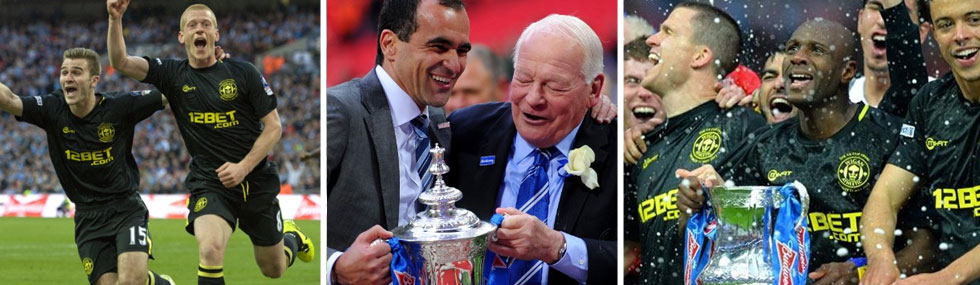
Whelan invested a large sum of money to help the club climb up to the Premier League in 2005. The first season was a great success, but Latics came so close to relegation in the second, an away win at Sheffield United on the last day of the season saving them. Steve Bruce took over from Paul Jewell in 2007 and stabilised things, albeit at a financial cost. Roberto Martinez was presented with a reduced budget when he took charge in 2009 and did incredibly well to keep the club in the division for four more years, winning the FA Cup in the relegation year of 2013.

Despite the huge increase in revenues Latics had continued to struggle financially in the top tier, with Whelan subsidising considerable losses. With large sums coming into the club from parachute payments and some £20m incoming transfer fees the return to the Championship could have been profitable. However, poor decisions were made in the hiring and firing of managers and recruitment of players. David Sharpe had replaced his grandfather as chairman in March 2015, but the net result was the frittering away of two years of parachute payments and relegation to League 1 The following season saw Latics winning League 1 but the heavy wage bill to do so largely wiped away the parachute payments coming in.

After more years of financial losses, the Whelan family sold the club to IEC in November 2018. The mysterious happenings under IEC saw the club go into administration in July 2020, before being bought by Phoenix 2021 in March 2021. Like IEC, the Bahraini ownership had poured funds into the club, but their overspending in the 2021-22 season was to become a millstone around their necks. Somewhere between £40-50m had been put into the club over those years by IEC and the Bahrainis.

Football clubs below the elite levels of the Premier League are rarely going to be good investments, as IEC and Phoenix 2021 discovered. Dave Whelan was a massive benefactor to Wigan Athletic, allowing the club to live beyond it means. He never required it to be run in a sustainable manner, constantly bankrolling it: some would say it was a series “gifts” from the local-born millionaire.

However, Mike Danson, another local-born owner, is not prepared to support the club in the Whelan way.

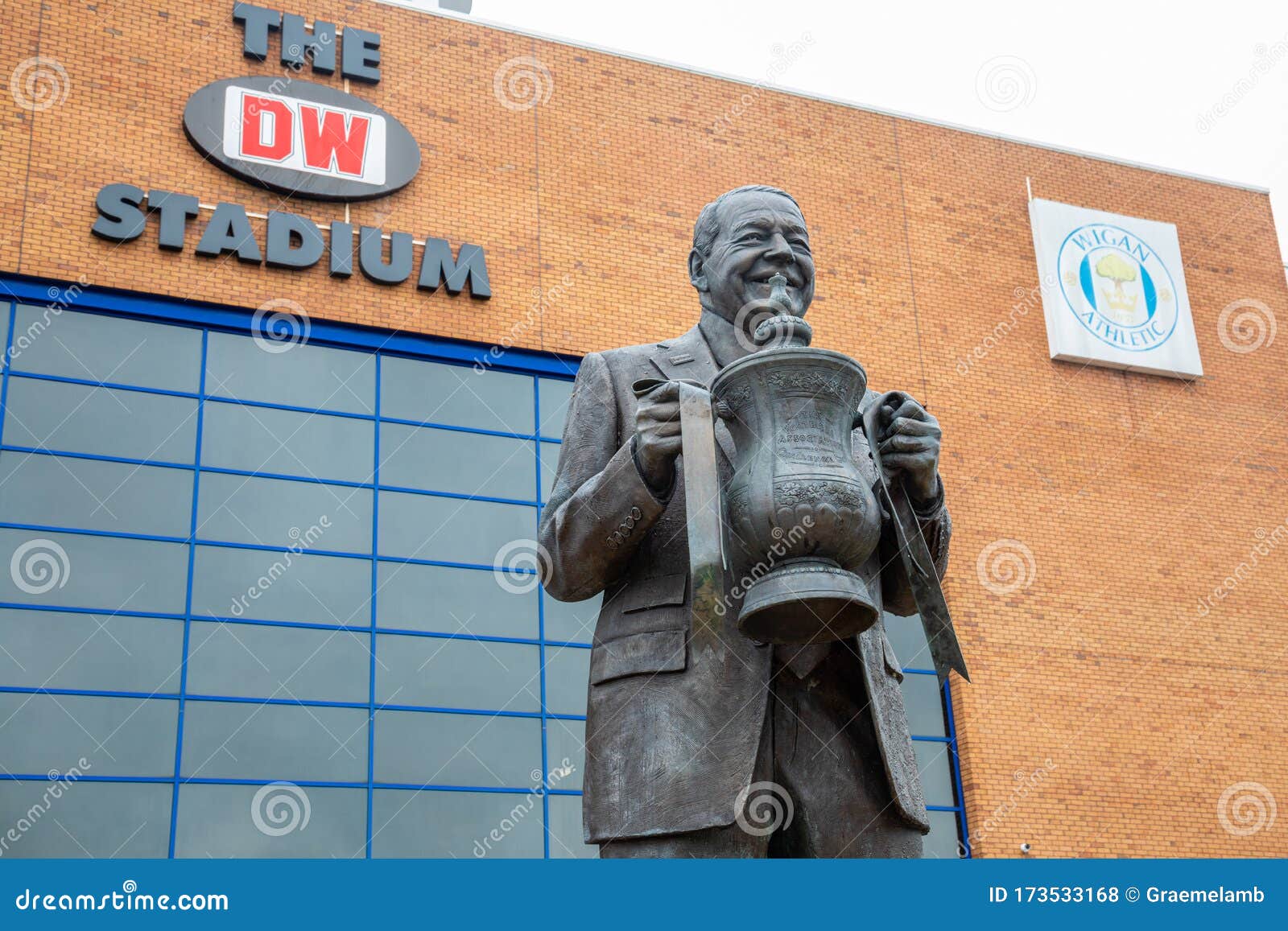
Most fans realise that without Danson the club could have ceased to exist. They are both relieved and appreciative, currently accepting his plans on running the club sustainably. However, with the billionaire due to take over full control of Wigan Warriors in November there are concerns of what will happen with the same person owning both the football club and the rugby league club. There are questions about whether the DW Stadium, currently under football club ownership, will be regarded as a separate entity, owned by neither club, but by Danson himself.

Given the number of players remaining at the club on bloated salaries given them by Phoenix 2021 it is unlikely that Latics will break-even financially this season. Reports suggested the budget will be set at around a third of that of least season, bringing to a figure around £6m, well over the average for the division.

Given the situation Maloney has been facing, with little wiggle room in the budget and a transfer embargo from the EFL, he has had to look for free agents add loan players. His main squad currently comprises:

Goalkeepers: Ben Amos (32), Sam Tickle (20).

Full backs/wing backs: Sean Clare (26), James McClean (34), Tom Pearce (25), Luke Robinson (21).

Central defenders: Charlie Hughes (19), Jason Kerr (26), Sean Morrison (20), Jack Whatmough (26).

Midfielders: Thelo Aasgaard (21), James Balagizi (19), Jamie McGrath (26), Liam Shaw (22), Matt Smith (22), Scott Smith (22),

Wide players: Jordan Jones (28), Callum Lang (24), Callum McManaman (32), Jonny Smith (25).

Strikers: Stephen Humphrys (25), Josh Magennis (32), Josh Stones (19), Charlie Wyke (30)

Several of those players can play in various positions in addition to the ascribed above. I have included Josh Stones in the senior squad because he appears there on the club website. The situation regarding Jamie McGrath remains uncertain, with him not having taken part in pre-season games. Reports suggest the return of central defender Kell Watts on loan, with rumours suggesting that Jack Whatmough will soon be leaving for a fee. With only one specialist right back/wing back in the squad, Sean Clare, Maloney will be looking for backup. Rumours link Latics with the experienced Josh Emmanuel (25) a free agent, ex-Grimsby Town.

Against Everton Latics played a fluid 4-4-2 system, with Callum Lang and Charlie Wyke up front and Stephen Humphrys and Callum McManaman playing wide. One expects that Maloney’s preferred formation will be 3-4-3 with Clare and McClean as wing backs and a mobile, interchanging front line of three. However, he will switch to the likes of 4-2-3-1 or 4-4-2 when a tactical change is needed.

Maloney’s squad is close to being complete. On paper it is not a strong as previous squads that have won the division. However, the manager will continue to work on a style of play that will help his players develop professionally. The latter is so important for the long-term survival of the club with Latics grooming young players to have significant sell-on value, unlike so many in last season’s squad.  

Morale among the fan base is fairly high at the moment, but we need to expect some hiccups along the way. The Whelan years spoilt us to a large degree, but now we are getting closer to what the economics of the club will be like without him. Some fans, weaned on that era, have particularly high expectations, but will need to temper those with the reality of the present.  

Restructuring at Wigan Athletic: can it bring more stability and hope for the future?

Can Talal steady an unsteady ship?

“As an ownership group we have invested well in excess of £20m since we came on board in 2021. Clearly mistakes have been made and this investment has not been spent in the right areas meaning finances this season have been difficult to sustain. This latest payment will ensure our wage obligations are secured until we finalise a sustainable budget for next season.

Clearly mistakes have been made and this investment has not been spent in the right areas meaning finances this season have been difficult to sustain. This latest payment will ensure our wage obligations are secured until we finalise a sustainable budget for next season.

“There will also shortly be announcements made regarding board and staff re-structures which will help us deliver this. I finally again want to reassure all staff, players and fans that Mr. Al Jasmi and I are fully committed to the club with manager Shaun Maloney at the helm.”

Talal Al Hammad’s announcement was long overdue, but it did provide a glimmer of hope for what is to follow. The Wigan Athletic Chairman has been subjected to some vile attacks by fans on social media over these past weeks, a far cry from the adulation he was receiving this time last year after Leam Richardson’s team had secured the League 1 title.

Following administration, the senior squad was down to just a handful of players and a massive recruitment process had to be undergone. At the time the recruitment looked impressive, with relatively little spent on transfers and experienced players brought in on free transfers. There had been stories in the national media of Latics offering salaries that few other clubs in the division would or could match, but they were somehow downplayed by the club. Unbeknown to the fans those “competitive” salaries were to become the root cause of the club making a £7.7m loss for the season.

In terms of achieving promotion to the Championship the recruitment had done the trick. However, over the summer fans were getting increasingly concerned about the lack of Championship-level quality in the squad. Recruitment was minimal and Latics line-up in the opening game showed no new faces. Richardson was to rely on the players who formed the backbone of the team in 2021-22. Although fans had been buoyed by the results of the previous season there were those who questioned whether the manager’s physical – some would say outmoded – style of football would work in the Championship. It did at first, until the cracks started to appear when the momentum provided by the successes of the previous season was slipping away. By the time Richardson was sacked the football had become dire to watch.

The recruitment drive of summer 2021 had left the club with so many players on long-term contracts. Moreover, the squad was one of the most aged in the division, containing so many players with minimal “resale value”. Having already incurred a significant financial loss the previous season, Phoenix 2021, had to cut back on recruiting new players. Nevertheless, Latics sources were quoting their wage bill to be the 12th or 13th highest in the Championship.

The overspending by Phoenix 2021 is by no means rare in the Championship but it raises a red flag to a fan base that has been through the trials of administration: one that worries about the continued existence of the club. The ownership itself can surely not have envisaged the kind of investment made to get the club promoted, then to see it drop back down to the third tier. It is a lesson they have learned the hard way.

We will probably never know the reasons why staff salaries were paid late on so many occasions. One can only assume it has been caused by liquidity issues with the owner seemingly unprepared for the sums of money needed over the course of the season. The whole thing has been so unsettling to all associated with the club. However, it is of key importance that Phoenix 2021 have already wiped out £20m of debt by buying shares.

There are complications in having an owner and chairman who are based overseas. It means that the directors and CEO have a key role to play. Mal Brannigan’s sacking was no surprise given the losses made, but who was overseeing the CEO himself? It would be no surprise to see locally-based representatives at director or CEO level in the restructuring that Talal is considering. It would be a wise move on a PR level as a means of rebuilding trust with fans and the wider community.

For a number of weeks, it has been rumoured that Gregor Rioch will take over a new role as Director of Football. The creation of such a position is something that has been mooted by fans for several years. If there had been one when Roberto Martinez left would a DOF have agreed to bring in Owen Coyle, whose long-ball approach was diametrically opposed to that of the Catalan? Creating an all-encompassing footballing ethos around the club will surely give it more direction. One of Phoenix 21’s prime goals has been to bring more home-grown talent into the senior squad. It was Kolo Toure who gave Charlie Hughes his EFL debut and how he has shone since. Previous managers had resisted bringing in the club’s academy players, preferring to rely on senior professionals or bringing youngsters from other clubs, except in the season of administration when they simply had to.  

Al Hammad and Maloney will need to bring down the running costs of the club to a sustainable level. Rumour suggests that there are dissatisfied players at the club: those whose contracts are expiring and those remaining under contract. Given the problems with late pay it is to their credit that they put in the effort for so long. The chairman and manager must reassure those who they want to keep that the club’s future is secure and those late payment are a thing of the past.

The club is once again at a turning point. If the restructuring is handled well, it could provide Latics with more direction for the future. The restructuring together with the continued financial support of Abdulrahman Al-Jasmi can help steady an unsteady ship.

Wigan Athletic: Mackay and Joyce could not avoid relegation. Can Kolo Toure?

The January transfer window was approaching and Wigan Athletic had just lost their fifth game out of seven under their latest manager. They were second from bottom of the Championship with 20 points from 24 games, but just three points behind the pack above the relegation zone.

That was in the 2014-15 season and the manager was Malky Mackay. A couple of seasons later they were in another precarious position in early January with 19 points from 25 games, six points behind that pack. Warren Joyce had been appointed manager on November 2, 2016. He was dismissed on March 13, 2017 after achieving 6 wins in 24 matches.

In both instances the club had appointed new managers in November following a run of poor results. They made sweeping changes in their playing staffs during the month of January, but the results did not improve, and relegation was not going to be avoided.

Kolo Toure too was also appointed in the month of November and faces an uphill task as did Mackay and Joyce.

The “fire sale” of January 2015 was a means of drastically slashing the wage bill. There was surprisingly little uproar from the fans at the time, with cup final heroes being dispatched at bargain prices. People had been so disillusioned by a perceived lack of effort from the players that many did not question that a big shake-up was required. The fans were not over-concerned about the outgoings of January 2017, many players in the squad being labelled as League 1 players, not of Championship standard.

Changes of manager during the course of a season is always a gamble. Sometimes it works, sometimes it doesn’t. The newcomer typically wants to bring in his own men, supposedly to fit into the style of football he prefers, but also to rid himself of players loyal to his predecessor who are not fully supportive.

A run of three 4-1 defeats has been a hammer blow following what we had seen in Toure’s first two games. A composed display at Millwall brought in a well-deserved point. Latics were not expected to get a good result against a high-flying Sheffield United side, built upon a budget dwarfing that of Wigan. But after going two goals behind after 56 minutes Latics began to show the kind of “bravery on the ball” that Toure was seeking. “Hopeful long balls” from defence were minimised and the quality of their football was of a level that we had not seen for a long time. However, the visitors’ first half goal was gifted by woeful marking from a set piece. Sadly, the marking got worse in the following three games which resulted in resounding defeats.

Toure continues to work on a transformation in style and approach that would have ideally been worked on in pre-season. However, his more immediate priority is to tighten up his defence, stopping those “soft” goals being conceded. Although he may have a clear vision of what type of football he wants his team to play, he must also be pragmatic. Expansive, aesthetically pleasing football might be a delight to watch, but with his team under threat of relegation he must put an emphasis on solid defence. This does not imply a return to the hoofball we saw too often over the past year, which would concede possession and invite the opposition to put more pressure on the Wigan defence. But the transition from long ball/hoofball to building up moves from the back must be phased in.

Toure has made it clear that he is looking towards bringing in new players who can fit into the style he wants to implement. However, before bringing in new players he must shed some from his current squad to balance the books.  There are almost certainly players in the squad who are uncomfortable with the demands of the new manager and will ask to be released this month. However, the departure of Graeme Shinnie on loan to Aberdeen was a surprise. Of all the midfielders in the squad Shinnie looked like the one who would fit best into Toure’s scheme. However, the Scot clearly did not feature in the manager’s plans. Shinnie’s departure coincided with strong rumours that Latics are interested in Conor Wickham, recently released from Forest Green Rovers by mutual consent. Wickham is a big target man, 32 years old, who has a less than impressive career strike record. Is this simply a rumour??

There will certainly be incomings and outgoings over the month of January. However, history at the club has shown that too much change can be counterproductive. The fire sale of January 2015 was followed by further upheaval in January 2017: neither led to an improvement in the playing staff or performances.

Toure recently stated that:

“If we want to sign players, then they need to improve us and make us much better than we are at the minute.”

Let’s hope the manager and the recruitment team can do a better job than was done in 2015 and 2017. Failure to do so will most likely mean that Kolo Toure will be following in the footsteps of his predecessors, Malky Mackay and Warren Joyce.

Kolo Toure’s New Year Shopping List

The dust of Leam Richardson’s shock departure has practically settled. Kolo Toure has already made a positive impact, but can he succeed in keeping Wigan Athletic in the Championship division?

Yesterday’s defeat at Middlesbrough was not a surprise against a team in a rich vein of form. What was disturbing was the manner is which the home team’s goals were conceded.

In the space of just three games Toure has revolutionised the way Latics play when they have the ball: now when a player goes forward, he has so many more attacking options. The manager was brought in to modernise the way the team plays football and he has already made rapid progress. But although they look so much better on the ball, there are concerns about closing the opposition down when they have possession.

The Wigan defence looked porous yesterday. There were big gaps in midfield in front of them, leaving the centre backs and full backs exposed. Moreover, the absence of Jack Whatmough was a blow to Toure, given that he was already short of centre backs with Jason Kerr being ruled out for the season.

Whatmough has had a tough season adjusting to the Championship, too often losing his man on opposition set pieces, guilty of launching so many hopeful long balls which the opponents would gobble up.  The arrival of Toure has required him to be braver on the ball, to search for an accurate pass rather than take the easier “going long” option. However, Whatmough has the potential to be a top player at Championship level: he is strong in the tackle and in the air, with pace to match most opposition central strikers. If he can improve on his concentration and his passing of the ball, he will be a key player in Toure’s team.

The Toure style of play certainly requires defenders who can play their way out of trouble without conceding possession. It also needs midfielders to provide adequate cover to those defenders. Tom Naylor was a key cog in Leam Richardson’s machine, playing an important protective role in front of defence. Naylor’s tackling and intercepting was excellent, as was his height and heading ability from set-pieces. However, so often he would make a simple pass sideways or backwards, with Max Power taking on the responsibility of being the more creative central midfielder. Power thrived on that in League 1, his crossing providing so many goalscoring opportunities. However, on his return to the Championship he has found it difficult to replicate the accuracy of his passing and crossing, particularly against teams playing a high defensive line.

Much has been said over the course of the season about the recruitment over the summer. The critics will say not only that the board did not back Richardson sufficiently in the transfer market, but also that too many players in the existing squad were always going to struggle in the second tier. In hindsight there has been speculation that the board already had reservations about the style of football and were reluctant to make major investment in players that would fit into Richardson’s scheme.

January is not the best time for bargains in the transfer market. Clubs are loath to lose key players for the second half of the season. However, in January 2021, with Latics under administration, Leam Richardson managed to bring in a group of seasoned professionals that would play a key role in avoiding relegation to League 2.

Given the Kerr injury at least one more central defender needs to be found. The left back position has proved problematic and will surely be a priority. Some fans will advocate for sweeping changes in the squad: goalkeeper, right back, a speedy winger, a mobile central striker, a box to box midfielder. For major changes to occur some of the existing squad would need to be shipped out.

It remains early for Toure to make instant decisions on what positions are priorities for recruitment. If he is to directly replace players, he will need to find now ones who are better than what he already has, or at the very minimum, would fit into his style of play. He will need to make decisions on possible recalls of Stephen Humphrys, Jordan Jones and Jamie McGrath, who the previous manager sent on loan to Scottish clubs. They might not have fitted into the Richardson style of football, but would they fit into the Toure version?

For the moment the new manager will continue to give opportunities to senior squad members who were starved of opportunities in the previous regime.

But whether Toure ultimately brings in a host of new players or whether he largely sticks with the hand he has been dealt; it will take time for the team to adapt to the more modern style of football that we are to see. As Mal Brannigan recently said:

“There’s an awful lot of games still to be played, including hopefully a few games in the cup. and we’ll know a lot more about where we are, maybe after the games in January.”

Leam Richardson: a much-loved but frustrating figure at Wigan Athletic

“In Leam we trust”

Few football managers are referred to by their first name by their fan base, yet at Wigan Athletic, the above phrase has become something of a mantra to be rolled out on social channels at any hint of critique of the current manager’s ability to keep the Latics on course.

Indeed, Leam Richardson is among the most-loved in the long line of Wigan Athletic managers since the club’s origins in 1932. When so many others fled a sinking ship, he stayed on and not only kept things afloat but did so with admirable dignity and positivity. He cut a determined figure through those gloomy times — the glue that held it all together motivating a hodge-podge of experienced journeymen and youth players week in and week out as the club literally faced an existential crisis. On the pitch, through wise recruitment in January 2021 and excellent man-management in the subsequent months, he managed to steer the club away from an immediate drop to League 2. He then oversaw a massive recruitment drive in the summer of 2021 and took the club back to the Championship. Somewhere in the middle of all of that he saved his centre forward’s life. Which to any neutrals may sound like hyperbole, but is exactly what happened, just as Simon Kjaer heroically did for Cristian Eriksen the summer prior.

Furthermore, Richardson is a terrific club ambassador – a genial presence characterised by rare decency and humility, with an unwillingness to criticise opposition or match officials. He’s the kind of manager who shakes every last player’s hand after a match, be it his own players or the opposition.  To say there is an emotional bond between Wigan Athletic and Richardson is an understatement; and the club has made appropriately meaningful gestures of gratitude in response, renaming the South Stand at the DW Stadium the Leam Richardson Stand, and extending his contract a further three years.  

Football moves fast, however. While the decision to renew Richardson’s contract was likely taken some weeks ago, in recent weeks Latics have plummeted down the league table, losing five on the bounce and mired in the relegation places. Poor form and results has a cruel way of exposing weaknesses that have been there all along but compensated for in other ways. What we’ve witnessed in recent Latics performances is reminiscent of the darkest days of Warren Joyce-led Latics in a similar Championship position several years ago – but shouldn’t come as a total surprise.

For all of Richardson’s incredible talents in man-management, his success in League 1, and his inspirational character traits as a human being and leader, his tactical approach has never been sophisticated. Even in League 1, where Latics could overpower most opposition, there were struggles against ball-playing sides who played with flair and the ball on the ground. Effort, physicality, strength from set pieces defined his team in League 1, and define his team in the Championship.

The problem of course, is that there is a large gulf in quality between League 1 and the Championship, and you either have to level up the playing talent, the tactical approach, or both – but neither has happened as yet. Whereas Latics could steamroll teams in League 1—a division in which James McClean could breeze past his fullback in the 80th minute—they get steamrolled in the Championship, with speedy ex-Premier League wingers breezing past the Irishman. Concerns over a shortage of skilful football last season were largely assuaged by positive results, but the pattern was clear. When Latics struggled, they’d hoof and hope.

An EFL season of 46 games is a long and physically draining marathon. Latics struggled near the end as the games came in thick and fast, the players looking jaded, but they eventually limped through to the title with a 3-0 win at Shrewsbury in the final encounter. Richardson had once again showed himself to be a motivational manager with the players consistently giving their all despite the fatigue and niggling injuries that made things more difficult for them. However, the manager’s reluctance to rotate the squad meant that so many players were struggling to reach their previous levels because of fatigue.

The  long ball had always been a feature of Richardson’s football, but so often it lapsed into hopeful punts upfield, resulting in loss of possession and increased pressure on the defence by the opposition. Richardson’s squad was far superior to most in the division enabling them to grind out wins even when not playing well. However, they struggled playing against teams who played skilful, possession-based football. Both Sheffield Wednesday and Sunderland did the double over Latics. Milton Keynes Dons might have had a smaller budget, but their silky football made them a real challenge for Richardson’s team.

Recruitment in summer 2021 was more focused on getting Latics out of League 1, rather than building a side that could hold its own in the Championship. Most of the contracts offered were for two years, running out next summer. According to transfermarkt.co.uk Wigan have 16 players whose contracts run out at the end of this season, 3 of whom are on loan from other clubs. There are 6 whose have contracts until June 2024 and those of Callum Lang and Anthony Scully expire in June 2025.

Having so many player contracts due to expire at the end of the season makes it by no means easy for the manager. Being uncertain as to his near future at the club is unsettling to a player. Moreover, the current squad has 16 players who are aged 28 years or over. Whether Latics manage to avoid relegation or not there will be a significant amount of recruitment to be done in summer.

Throughout his time at Wigan the manager has relied heavily on his senior professionals and those who have previously commanded a regular place in the team. Riding on the confidence afforded by their League 1 title win those players got Latics off to a good start to the season, with their form away from home being impressive. However, their displays at the DW Stadium were distinctly muted. As the games came in thick and fast the energy within that core of players diminished, with the manager stubbornly sticking to those he felt he could trust, the new signings being used sparingly.

The trio of Will Keane, James McClean, Max Power have started in all of the 18 games played so far. Jack Whatmough missed just one through injury. Stats provided by soccerway.com show that Power has spent 1620 minutes on the field, not having been substituted in any game so far. Of the new signings Nathan Broadhead has played 706 minutes, compared with Josh Magennis 794. Ryan Nyambe has played 567 minutes, Ashley Fletcher 34, Anthony Scully 16 and Ramani Edmonds-Green 16 minute

Although Richardson remains well loved by so many fans for what he has done for the club the current situation is giving them much cause for concern. Many are asking why the manager was given a new three year contract with the standard of football played by his team being so poor. On Wednesday Latics were facing a Stoke team that had lost its previous three matches and was only just above the relegation zone. Playing with three centre backs and three holding midfielders was never likely to provide entertainment value for the home fans. When the team sheet was announced before the game the inference was that Richardson was playing not to lose, hoping for a goal from a set piece or bringing on his big target men in the latter stages with the scores tied.

Following a Stoke goal that was gifted to them by an inept Wigan rear guard the manager introduced both Charlie Wyke and Josh Magennis for the last 20 minutes. The football produced during that time ranked among the worst I have seen from Latics over decades of following them. It was totally depressing.

The praise that Richardson has received from Latics fans in the past has been very much merited. He is still held in high regard on a personal level, but there have always been flaws in his tactical approach. Having a squad that was superior to most in League 1 meant that the cracks were papered over. However, they are fully exposed in a Championship division against superior players and managers with more tactical nous.

The frustration among the fans is very much influenced by a run of poor results, but it is the manager’s stubborn resistance to changing the way he sets up his team that can truly aggravate  people. Richardson must adapt his tactical approach and install a modern footballing philosophy to replace an archaic approach that is simply not going to work in the second tier.