How good is Caldwell’s team?

Walsall delay Wigan’s promotion” the headline said.

Trawling the internet for football news can be often entertaining, if sometimes frustrating. We are so drawn in by headlines. The spurious premise of this headline drew me in and I opened the article.

It told us that had if Walsall had not beaten Shrewsbury last night, Latics would have been promoted. Mathematically true it could be said. But the realists among us know that Walsall stood as much chance in making up the 22 goal difference gap between the two clubs as one might have winning a lottery. Why did I bother opening the article?

Gary Caldwell’s thoughts must be all over the place at the moment. He will be keen to win the League 1 title by his team being victorious in  one of its last two games – mathematically speaking of course, in case Burton make up the 17 goals by which they trail Latics. The probability is that Wigan Athletic will win at least one of the two; the likelihood is that they will win both. But as much as winning the division is important surely Caldwell’s mind will be looking on next season, back in the Championship division.

It is a nice feeling to win a division. The last time Wigan Athletic did it was in 2002-03 when Paul Jewell’s expensively assembled team won the League 1 title in his second season at the club. His first season had not been easy. Latics were to drop from a playoff position the previous season to 10th place. But Jewell managed to clear out much of the deadwood that was blocking the club’s progress and had been able to bring in players on salaries well above the norm of the division.

Jewell’s team amassed 100 points, 14 ahead of second placed Crewe. They scored 68 goals, conceding 25.  The following season they were to finish 7th in the Championship, scoring 60 goals, conceding 45. The players were largely the same that won League 1, buoyed by the arrival of Jason Roberts from West Bromwich in January.

Should Caldwell’s team win their last two games their points total will be 90. They already have 71 goals, although they have conceded 36. Jewell’s team had been based on a solid defence with John Filan, Nicky Eaden, Matt Jackson and Jason De Vos making a combined total of 204 appearances in league and cup games that season.

Inevitable comparisons have been made regarding the merits of the players in the teams of 2002-03 and 2015-16. Nathan Ellington’s 22 goals in 48 appearances were pivotal as have been Will Grigg’s 26 goals in 41 displays in the current season to date. Ellington went on to score goals in the Championship. Caldwell will be hoping Grigg will make a similarly successful transition.

Six of Jewell’s 2002-03 squad – John Filan, Leighton Baines, Matt Jackson, Jimmy Bullard, Gary Teale and Lee McCulloch – were to go on beyond the Championship to play in the Premier League in the 2005-06 season. Are there players in Caldwell’s squad who could reach that level?

Caldwell and his recruitment team have certainly done a fine job since last summer. Neither Max Power (22 years old) nor Sam Morsy (24) have played above League 1 level. They were signed for bargain fees and have looked a class above the third tier. Donervon Daniels was signed for free, but has made 43 appearances this season. Daniels is still only 22 and can play in the centre of defence or on the right. Like so many young defenders Daniels can lose concentration at times, but he has great physique and has a surprisingly good touch on the ball for a man his size.

Will Grigg (24), Reece James (22) and Yanic Wildschut (24) were signed for fees that were considerable for a club in League 1, but they are young and have made major contributions to Latics’ promotion. Yet none has yet reached his true potential. Michael Jacobs is still only 24, signed for a bargain fee from Wolves. Jacobs has played in the Championship before, but not with the success he would have liked. Jacobs has been a key player in Caldwell’s system and shows genuine quality. Will these players be able to step up to the mark next season in a more competitive division?

Caldwell has wisely resisted the opportunity to spend serious money on experienced players who are nearing the end of their careers. The players aged or 30 or over that he picked up were on free transfers, signed on short term contracts. However, together with experienced players already at the club, they have provided a balance that has enabled Caldwell to bring in players in their early to mid-twenties who have genuine potential.

Making realistic comparisons between the League 1 squads of Caldwell and Jewell is simply not possible, given how much the game has changed in those past thirteen years. However, Caldwell will certainly try to emulate Jewell’s success. Jewell was a great motivator, but his teams were all built around 4-4-2. Caldwell is very much the modern manager who is tactically aware and ready to change his tactical approach according to the state of play.

For the moment Wigan Athletic supporters will be focusing on winning the League 1 title. Should this happen, as expected, they will certainly celebrate as many of them will have done in May 2003. It was Paul Jewell’s first success as a Latics manager and he went on to make many more.

Can Gary Caldwell follow in his footsteps, albeit in a very changed environment?

Blowing away Southend

When Wigan Athletic played at Southend in late November it was a cold and windy day in the seaside town. Latics had lost at home to Burton four days prior and they were to face one of the form teams in League 1 at the antediluvian Roots Hall ground. The portents were ominous.

Wigan had not played badly against Burton, but had got caught by a goal from a counterattack from a team with a well organised defence and a strong work ethic. A win over the Brewers would have seen them move into third place behind Coventry and Gillingham, but it was not to be. Following the disappointment of the 0-1 reverse they were keen to do better against Southend.

Getting a good result at Roots Hall was made difficult by the cold, blustery wind swirling around the tight pitch. It was not going to be a day for good football. Latics simply had to slug it out with the home team to come away with any points. In the end they came away with a well -earned point, thanks to the effort they put in.

Strangely enough Southend United are the visitors to the DW Stadium today following on from Wigan’s 1-1 draw at Burton on Tuesday. Gary Caldwell’s team have a pragmatic side to them which enables them to grind out results when they are not playing well. Although the Brewers were in a run of poor form they were going to be formidable opposition on the tight pitch at the Pirelli Stadium. Burton’s pitch is actually 72 yards wide, compared with Southend’s 74 yards, although both are 110 yards long. Once again Latics had put in a backs-to-the-wall performance on a small pitch to get a result.

Playing away on small pitches is a very different prospect to playing at the DW with a relatively expansive playing area measuring 115 yards by 74. Those extra few yards can make a difference to the style of football on display. The larger pitch surely suits Caldwell’s style of possession football and Latics have produced some sparkling displays over the season on their home ground.

However, it has not always been the norm. So often visiting teams will either “park the bus” or use pressing tactics to stop Wigan building up their moves methodically from the back. Moreover lenient and close to incompetent refereeing has too frequently allowed visiting teams the licence for tactical fouling of Wigan’s most skilful players. The end result has been sporadic flashes of the champagne football that Caldwell’s team is capable of producing. In fact the last three home matches have resulted in tight 1-0 wins for the Latics.

Wigan Athletic fans will be primarily looking at getting a positive result today, but a sparkling performance would be particularly welcome too. With adequate refereeing and a “get at them” approach from Latics from the onset a goal fest would be a distinct possibility. The alternative is a cagey approach, dominated by the promotion jitters that have hit so many of the League 1 promotion hopeful teams in recent weeks.

The swirling wind and the bumpy pitch made it difficult to play good football at Southend. But strong winds are not forecast for Wigan today and the DW pitch has performed well in recent weeks. Latics fans will be hoping their team will take the initiative from the get-go, blowing away Phil Brown’s Southend United in the process.

How good is Grigg?

This post was originally published a week ago. However, it did not reach our wider audience because it was not picked up by our main news aggregator. We are therefore republishing it. Apologies to those of you who might have previously received it.

Grigg

In the past 20 years just four players have scored 20 goals in a season for Wigan Athletic. Nathan Ellington scored 24 and Jason Roberts got 21 when Latics were promoted from the Championship in 2004-05. Graeme Jones scored 31 when they gained promotion by winning Division 3 in 1996-97.

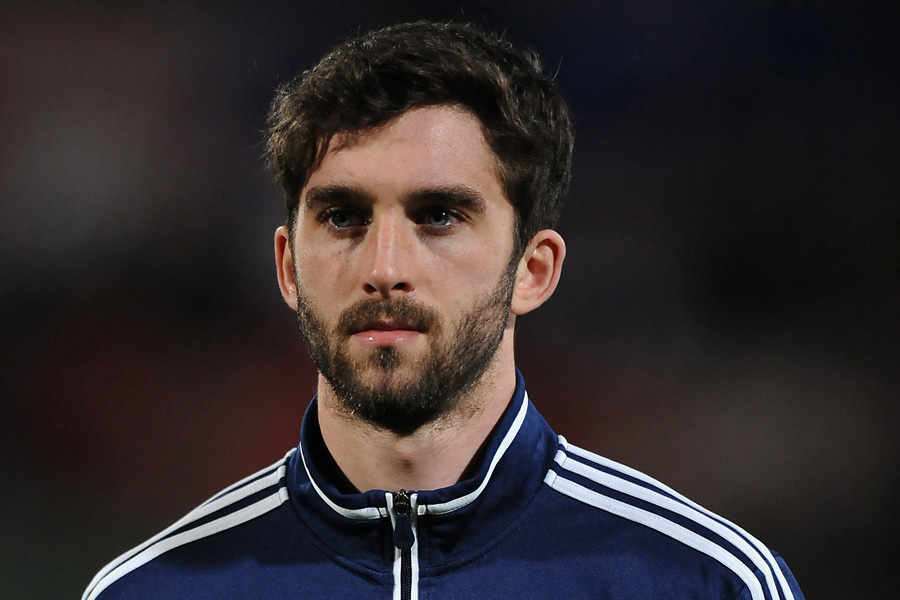
Will Grigg has scored 23 goals already this season, 20 in league games and 3 in cup competitions. His team is already practically odds-on for promotion. The goals of Ellington, Roberts and Jones were key to their team’s promotion successes. It looks like those of Grigg could prove to be the same.

It is the third time that Grigg has exceeded the 20 goal per season mark with a League 1 club. He first did it for Walsall in 2012-13, leading him on to win their player of the Season and Players’ Player of the Season awards. However, rather than build on his successes in the midlands Grigg moved on to Brentford, who at the time were then in League 1 under the management of Uwe Rosler.

The move from Walsall had been acrimonious. The player had been out of contract, but since he was under 24 a Football League tribunal required Brentford to pay a £325,000 fee plus add-ons. The Walsall manager Dean Smith said at the time that “If he were leaving to go to a better side I would have thought he would have done better than Brentford.” Ironically Smith now finds himself  manager at the West London club.

Given his success in League 1 it had seemed that Grigg would be moving up a level, to the Championship at least. His move to Brentford did not work out as he would have hoped and in the 2014-15 season he was sent off on loan to the MK Dons, an eventful move which put him in the limelight when he scored a brace to knock Manchester United out of the League Cup, scoring 20 goals in the league.

In June 2015 David Sharpe’s gave his guarantee that Wigan would have a 20 goal striker in their lineup this season.  In mid-July he got his man, paying Brentford  £900,000 for Grigg. It was a huge fee for a club in League 1 to splash out, particularly for a player who had never played at a level above League 1. Grigg was brought in to provide the firepower to get Latics out of League 1, but were Latics also looking beyond that? Were they expecting Grigg make it as a striker in the Championship?

At his best Grigg is a handful for any opposition defender. He has the ability to time his runs to create space when surrounded by the tightest of defences. His workrate cannot be faulted and he is a real team player. Grigg relies on his intelligent movement rather than sheer physical power to get past defenders. He is a genuine goal poacher, a dying breed in the modern game. Grigg also has a good temperament as evidenced by receiving just one yellow card in the season so far.  This is despite the rugged treatment he so often gets in a division where too much cynical and tactical fouling goes unpunished by referees.  Still only 24 years old his best is surely yet to come.

However, like any striker Grigg can have his off days. In the visit to Walsall in February he had at least five gilt-edged opportunities to score, but fluffed them all. Latics had to rely on a last minute winner from Yanic Wildschut to bring home the three points that their superior play had merited. But Grigg can opportunities with genuine aplomb, in the style of a “natural” goalscorer. There is finesse to Grigg’s game that suggests he can make it at a much higher level than the third tier of English football. As his confidence grows and he matures as a player he will put home an even higher proportion of the opportunities that come his way.

Grigg’s first season at Wigan did not start particularly well. In its first quarter Grigg had struggled to reach the goalscoring form that Caldwell would have hoped for. He had scored just three goals, two of which were penalties. After starting in the first six games he missed the match at Chesterfield through being on international duty for Northern Ireland. He came back as a 66th minute substitute at Port Vale, but was to pick up an elbow injury which kept him out of the next two games. He made his return as a 77th minute substitute, scoring the equalizer during added-on time against Millwall. Grigg returned to the starting lineup for the next game against Walsall, but was substituted after 70 minutes. However, international call up knocked on the door again and Grigg missed the last two matches at Crewe and Bury.

By Christmas Grigg had notched 8 goals for Latics. Since then he has scored 15 more. Grigg just does not seem to do so well in the earlier part of the season. In fact in his 20 goal season at Walsall he had only scored 5 by Christmas. At MK Dons he scored 9 by Christmas, followed by another 13 by time the season finished.

At Milton Keynes, Grigg had to play second fiddle to Benik Afobe until the latter’s 19 goals persuaded Wolves to pay serious money for him in January 2015. This and a loan move to Fleetwood of the Dons’ other main striker, Tom Hitchcock, opened up the door for Grigg to be the automatic choice as a lone centre forward. Grigg was to thrive on the consistency of having a regular first choice berth.

At 24 years of age, Will Grigg has a bright future ahead. His immediate target will be to score goals in the remaining five matches to help propel Latics back to the Championship. But the irony is that should that promotion come into effect and should Grigg continue to score goals, he will surely arouse the interests of the big clubs that dominate the English game.

Despite a slow start Will Grigg has become a key player in Wigan Athletic’s promotion push. Fans will be hoping he will continue to knock in the goals for the Latics for years to come.

How good is Will Grigg?

Grigg

In the past 20 years just four players have scored 20 goals in a season for Wigan Athletic. Nathan Ellington scored 24 and Jason Roberts got 21 when Latics were promoted from the Championship in 2004-05. Graeme Jones scored 31 when they gained promotion by winning Division 3 in 1996-97.

Will Grigg has scored 23 goals already this season, 20 in league games and 3 in cup competitions. His team is already practically odds-on for promotion. The goals of Ellington, Roberts and and Jones were key to their team’s promotion successes. It looks like those of Grigg could prove to be the same.

It is the third time that Grigg has exceeded the 20 goal per season mark with a League 1 club. He first did it for Walsall in 2012-13, leading him on to win their player of the Season and Players’ Player of the Season awards. However, rather than build on his successes in the midlands Grigg moved on to Brentford, who at the time were then in League 1 under the management of Uwe Rosler.

The move from Walsall had been acrimonious. The player had been out of contract, but since he was under 24 a Football League tribunal required Brentford to pay a £325,000 fee plus add-ons. The Walsall manager Dean Smith said at the time that “If he were leaving to go to a better side I would have thought he would have done better than Brentford.” Ironically Smith now finds himself  manager at the West London club.

Given his success in League 1 it had seemed that Grigg would be moving up a level, to the Championship at least. His move to Brentford did not work out as he would have hoped and in the 2014-15 season he was sent off on loan to the MK Dons, an eventful move which put him in the limelight when he scored a brace to knock Manchester United out of the League Cup, scoring 20 goals in the league.

In June 2015 David Sharpe’s gave his guarantee that Wigan would have a 20 goal striker in their lineup this season.  In mid-July he got his man, paying Brentford  £900,000 for Grigg. It was a huge fee for a club in League 1 to splash out, particularly for a player who had never played at a level above League 1. Grigg was brought in to provide the firepower to get Latics out of League 1, but were Latics also looking beyond that? Were they expecting Grigg make it as a striker in the Championship?

At his best Grigg is a handful for any opposition defender. He has the ability to time his runs to create space when surrounded by the tightest of defences. His workrate cannot be faulted and he is a real team player. Grigg relies on his intelligent movement rather than sheer physical power to get past defenders. He is a genuine goal poacher, a dying breed in the modern game. Grigg also has a good temperament as evidenced by receiving just one yellow card in the season so far.  This is despite the rugged treatment he so often gets in a division where too much cynical and tactical fouling goes unpunished by referees.  Still only 24 years old his best is surely yet to come.

However, like any striker Grigg can have his off days. In the visit to Walsall in February he had at least five gilt-edged opportunities to score, but fluffed them all. Latics had to rely on a last minute winner from Yanic Wildschut to bring home the three points that their superior play had merited. But Grigg can opportunities with genuine aplomb, in the style of a “natural” goalscorer. There is finesse to Grigg’s game that suggests he can make it at a much higher level than the third tier of English football. As his confidence grows and he matures as a player he will put home an even higher proportion of the opportunities that come his way.

Grigg’s first season at Wigan did not start particularly well. In its first quarter Grigg had struggled to reach the goalscoring form that Caldwell would have hoped for. He had scored just three goals, two of which were penalties. After starting in the first six games he missed the match at Chesterfield through being on international duty for Northern Ireland. He came back as a 66th minute substitute at Port Vale, but was to pick up an elbow injury which kept him out of the next two games. He made his return as a 77th minute substitute, scoring the equalizer during added-on time against Millwall. Grigg returned to the starting lineup for the next game against Walsall, but was substituted after 70 minutes. However, international call up knocked on the door again and Grigg missed the last two matches at Crewe and Bury.

By Christmas Grigg had notched 8 goals for Latics. Since then he has scored 15 more. Grigg just does not seem to do so well in the earlier part of the season. In fact in his 20 goal season at Walsall he had only scored 5 by Christmas. At MK Dons he scored 9 by Christmas, followed by another 13 by time the season finished.

At Milton Keynes, Grigg had to play second fiddle to Benik Afobe until the latter’s 19 goals persuaded Wolves to pay serious money for him in January 2015. This and a loan move to Fleetwood of the Dons’ other main striker, Tom Hitchcock, opened up the door for Grigg to be the automatic choice as a lone centre forward. Grigg was to thrive on the consistency of having a regular first choice berth.

At 24 years of age, Will Grigg has a bright future ahead. His immediate target will be to score goals in the remaining five matches to help propel Latics back to the Championship. But the irony is that should that promotion come into effect and should Grigg continue to score goals, he will surely arouse the interests of the big clubs that dominate the English game.

Despite a slow start Will Grigg has become a key player in Wigan Athletic’s promotion push. Fans will be hoping he will continue to knock in the goals for the Latics for years to come.

Latics fire off a warning to Burton – form ratings for Swindon 1 Wigan Athletic 4

Will Grigg scores the first goal. Photo courtesy of the Swindon Advertiser.

Will Grigg scores the first goal.
Photo courtesy of the Swindon Advertiser.

If the scoreline was impressive, the performance was even more so. Wigan Athletic have sent warning shots across the bows of their close challengers Burton and Walsall.

It was possibly Wigan’s best performance of the season. They were well organised in defence, tenacious in midfield and dangerous in attack. More than anything else it was the style of football that impressed most. Latics played a brand of football way beyond that one can expect in League 1.

Gary Caldwell springing a surprise is really no surprise at all. But playing with twin strikers would hardly be expected from a manager who prefers a lone centre forward setup. Rather than use his typical 3-4-3, Caldwell opted for a 3-5-2 with Will Grigg and Yanic Wildschut up front. The presence of three central midfielders in front of a back line of three was to give the wing backs the licence to attack with vigour.

Caldwell got his tactics spot-on. The twin strikers were able to harry Swindon’s back line of three, forcing them into launching long passes which more often than not were gobbled up by the Wigan defence. Moreover Wigan’s midfield trio could swarm forward and swamp an overrun Swindon midfield. Wigan’s movement off the ball was a joy to behold.

Grigg took his 15th minute goal with aplomb, evading two close markers to hit home Chris McCann’s superb cross. The Wigan wingbacks, McCann in particular, continued to look lively. Swindon’s attack was largely innocuous.

Latics could have possibly killed the game off in the first 45 minutes, given the chances they squandered, but their opening to the second half was stunning. Their high pressing reduced Swindon’s defence to jelly. Max Power’s stunning right foot shot from the left hand side after 47 minutes will rank as one of the goals of the season. Three minutes later Grigg’s deflected shot gave the Swindon goalkeeper no chance, then Sam Morsy hit home a fine drive from the edge of the box after 51 minutes.

Wigan could have had more goals in the 39 minutes of normal time still remaining, but their finishing was to let them down. As the game progressed they eased their foot on the accelerator, with a home match against Rochdale weighing on their minds. It resulted in a well taken goal for the division’s top goalscorer, Nicky Ajose, after 79 minutes.

The Good

Latics worked liked a well-oiled machine, for once the whole equaling the sum of its parts. They made Swindon look poor in comparison, remarkable in that the home side had lost only one of its previous eight games.

So often teams have tried to stifle Wigan’s playing out from the back by high pressing. This time Latics used it to their own advantage, Swindon being stymied by that tactic.

David Sharpe promised the fans a 20 goal per season striker before the start of the season. Will Grigg reached that mark yesterday, with 17 in the league and 3 in cup matches.

The Bad

With better finishing from Grigg and Wildschut, the scoreline would have been even more emphatic.

It is the norm in modern football for teams to take their foot off the gas when they have a comfortable lead, with another game looming closer. In particular Grigg looked less than delighted to be taken off in the 75th minute with a hat trick a distinct possibility.

It could be argued that a third goal for the centre forward could have been a big confidence boost for him. But Caldwell would surely counter that by saying that he needed a fully fit Grigg for the game on Monday. Such debates occur in all levels of today’s football.

Player Ratings

Jussi Jaaskelainen: 8 – solid and dependable, sound in distribution. Made an excellent save from an Ajose free kick  in the second half.

Reece Wabara: 7 – getting better. Worked hard running up and down the right flank.

Donervon Daniels: 7.5 – his physical presence proved important in keeping the home side at bay.

Craig Morgan: 7.5 – solid in defence and pragmatic with his passing.

Stephen Warnock: 7.5 – another very professional performance from a full back playing in a back line of three.

Chris McCann: 8 – excellent. A constant threat to the right hand side of the Swindon defence.

Sam Morsy: 8.5 – not only adds steel to the midfield, but intelligent in his passing and movement.

Max Power: 7.5 – an all-round player with the class to play at a level well above League 1. Showed superb technique in his goal. Taken off after 64 minutes.

David Perkins: 8.5 – a complete performance, tenacious in his covering. His performance made a mockery of criticisms that he cannot pass the ball.

Will Grigg: 8 – a danger throughout. He has scored 12 goals in his last 13 games. Once again squandered opportunities, but the good news is that he is getting into the right positions to score.

Yanic Wildschut: 7 – worked hard and was a headache for the home defence with his speed and physical presence. But finishing is not always his strong point. Substituted after 71 minutes.

Substitutes:

Tim Chow –  came on for Power after 64 minutes. Worked hard.

Craig Davies – came on for Wildschut after 71 minutes. A physical presence as always.

Haris Vuckic – on for Grigg after 75 minutes. Showed some nice touches.