A couple of weeks ago Wigan Warriors met the Catalan Dragons in a televised match at the DW Stadium. The events that followed have once again brought to the surface the latent frictions between followers of the two codes, the ground-sharing issue once again being hotly debated.
The pundits said that the rugby match would have been postponed had it not been on television. The DW pitch was already in poor condition after the constant rains that had fallen over recent months. Allowing a rugby game to be played in atrocious conditions caused so much further damage that a couple of days later David Sharpe was to take drastic action by installing a brand new surface within the week that followed.
The social media message boards were buzzing. Some Latics fans advocated evicting the rugby club; others questioned why towns like Huddersfield and Hull don’t have the same types of problems with their pitches. However, it is understood that the control of the DW Stadium rests in the hands of the Whelan family, not Wigan Athletic itself. Moreover we are told that the rugby club was given a 50 year lease on using it.
Theories abound as to why the pitch has been so problematic since the opening of the stadium in 1999. The common view is that it was built on marshy, reclaimed land close to a river and a canal, so how could we expect any better? Another claim is that there is a large cesspit beneath it, from which gases rise over the winter months, poisoning the grass above.
The bottom line is that Sharpe has invested a significant amount of money in providing a new pitch for the short term, with more work to be done over the summer. The new pitch looked remarkably good for the Oldham match last Saturday, although the players will have found some difficulty adjusting to the longer grass, which could not be cut to normal length at the time because of its newness.
Sharpe’s investment will surely help Gary Caldwell’s players in their quest for promotion. Having to play on a quagmire would have seriously damaged Latics’ promotion chances, given their preferred style of possession football. But more rugby games are coming up as the football season continues.
The recent announcement that the Warriors home game with Salford has been moved forward a day to Thursday, February 25th has brought indignation from their fans. Latics have a home game with Bury on Saturday, the 27th. Warriors’ chairman, Ian Lenegan, eloquently discusses the fixture schedule complications that caused the rearrangement of the match on YouTube.
The intention was to examine the more recent history of both Wigan Athletic and Wigan Warriors, looking at attendance trends in particular.
From 1932 to 1978 a look at attendances would appear to an outsider that rugby was the dominant force in the town, although a significant number of Wiganers would typically travel to Liverpool and Manchester to watch top flight football. After achieving Football League status in 1978, Latics’ average attendance went up five fold in that first season, the average of 6,701 eclipsing the 4,505 average of their rugby counterparts for the first time.
However, it was Latics’ entry into the Premier League in 2005 that was to give them dominance in terms of attendance. Even after relegation to the Championship their attendances held up in the first year, only to fall below the rugby last season
Football season
Rugby season
Wigan Athletic
Wigan Warriors
2005-06
2006
20,160
14,464
2006-07
2007
18,159
16,040
2007-08
2008
19,045
13,995
2008-09
2009
18,350
14,080
2009-10
2010
17,848
15,181
2010-11
2011
16,976
16,125
2011-12
2012
18,634
16,043
2012-13
2013
19,375
13,556
2013- 14
2014
15,176
14,102
2014-15
2015
12,882
13,980
Can a small town like Wigan support two aspiring clubs?
In terms of attendance the highest ever aggregate of the two clubs’ attendances was 34,677 in the 2011-12 football season/2012 rugby season. The contrast with 1977-78 season is stunning, with the rugby club averaging 5,544 and Latics 1,334 in their last season in the Northern Premier League.
Latics current average attendance of in League 1 of 8,679 will surely be eclipsed by the Warriors this year. However, should promotion back to the Championship occur, history suggests that they would compete on an even keel with the rugby team next season.
In terms of attendances it appears that both clubs can co-exist. It is the prickly question of ground-sharing that is the more urgent issue. Questions remain whether the pitch can withstand constant use over the course of a year and as to whether the Super League can play its part in ensuring that the rugby club’s fixtures complement those of their football counterparts.
Ground-sharing in a small town makes economic sense. Let’s hope the frictions can be reduced by dealing with the key issues.
Figures can help provide startling comparisons, causing us to question underlying trends. Recent information and figures from Wigan and Horwich have once more caused questions to be raised.
Wigan Athletic lost £3.9m last season. Having to pay agents a total of £1,461,088 was a contributory factor towards the loss, which had come after three consecutive years of making a profit.
The last time Bolton Wanderers announced a profit was in 2006. Referring to their loss in 2014 the club stated that ”Net loss improved by £41.6million, down to £9.1million year on year.” A couple of weeks ago Wanderers were issued a winding-up petition by the HMRC, which goes to court on January 18th. Owner Eddie Davies has loaned the club £185m over recent years, but is not prepared to continue to pump money in. In the meantime they are looking for ways to pay their players and staff.
The scale of Latics’ loss for 2014-15 came as a surprise to most of us, although it is small compared with those suffered by other Championship clubs last season, not just Bolton.
In the summer of 2014 Dave Whelan made a calculated gamble in a bid to get Latics back into the Premier League. Is David Sharpe about to follow in his footsteps?
“The continued financial support of the Whelan family has allowed the club to continue pursuing long-term strategic goals and although the financial results for the year ended 31 May 2015 mirrored the disappointments on the field, the owners remain committed to developing and improving Wigan Athletic to enable the club to return to the highest level of English football.”
The words of Jonathan Jackson to Wigan Today after announcing last season’s financial loss.
It is certainly reassuring to hear that the owners – the Whelan family – remain committed towards getting the club back into the Premier League. The question is how they will be able to develop and improve things at the club to make it a possibility. Will the Whelan family remain the benefactors to Wigan Athletic that they have been in the past?
Last season Dave Whelan had given major backing in the transfer market to Uwe Rosler, who had taken Latics to the FA Cup semi-final and the Championship playoffs. £7.3m was brought in through the sales of James McArthur and Callum McManaman. But £10m was spent on transfers into the club, the majority on Andy Delort, Adam Forshaw, Emyr Huws and Oriel Riera. Other signings were made at lesser prices, with some being free agents. But not only was it the shelling out of money on transfer fees that was to cost the club, but Rosler had brought in eleven new players. The large squad that resulted was to eat away at the budget week by week.
Sadly things went pear-shaped for Rosler, who was sacked in November. Seeing his financial gamble starting to look less viable, Whelan was to embark on a huge cost cutting exercise in January. The hapless Malky Mackay was to be the manager who oversaw a fire sale that resulted in swathes of players leaving in the January transfer window.
But that too turned into a gamble that turned sour on Whelan as Latics’ severely pruned squad just did not have the quality to hold their own in the Championship under a manager who could not deliver.
With hindsight one could say that Whelan’s appointment of Malky Mackay caused more damage to the club on and off the field than anything previous in the club’s history. The January sales certainly helped rebalance the finances. If those players had stayed the budget would have been propelled much further into the red, anathema for a club that had prided itself on balancing its books. It could be argued that those players had lost the will to fight for the club and were happy to sit pretty on their inflated salaries at a time when the going was tough.
But it was the scale of the January clear out that was staggering. More than anything else it was a cost-cutting exercise, which helped reduce a potentially large budget loss for the season.
Did the January sales leave Latics in better shape for the future? The reality is that they were a major factor in the club losing its place in the Championship division. Getting back there is not going to be easy and if Latics cannot gain promotion from League 1 this season or the next they will be in trouble. Parachute payments help provide a huge competitive advantage over other clubs but they will be at an end in the summer of 2016.
For the moment the hope is that the purge within the club and the advent of a young duo at the helm will bring forward a shining new era. But even if the dynamic duo of Gary Caldwell and David Sharpe can get Latics back into the Championship division, what would be the chances of them going further?
At the end of last season Championship clubs were over £1.1bn in debt, an average of £48.5m per club. The desire to reach the riches of the Premier League continues to drive so many clubs severely into the red. Having a benefactor owner is the key to getting out of the division. But there are clubs in the division who make every effort to live within their means, not an easy matter with the profligacy around. If Latics were to get back there, in which category would they stand?
Benefactor owners have made their mark even in League 1, where clubs live within their means much better than in the division above. Last year’s champions, Bristol City, have been bouyed by the funding of Steve Lansdown. Second place Milton Keynes Dons are owned by Pete Winkleman, who moved Wimbledon FC to Milton Keynes in 2001. Playoff winners Preston North End are supported by Trevor Hemmings, who has reduced their debt by more than £50m since 2010. During the 2013-14 financial year, he waived £18.7m of debt and £15m through a share issue.
Wigan Athletic will look towards breaking even financially on the current season. They are likely to continue to shed higher wage earners this January, as they did just over a year ago and in summer. Players on Championship-level salaries will be encouraged to leave. Squad size could also diminish.
A few miles away in Horwich, Bolton Wanderers will surely do something similar but on a larger scale. They have to drastically cut their costs and a fire sale like that one in Wigan just over a year ago is on the cards. They will surely be heading towards League 1 next season, but will they meet their local rivals there?
Whether Gary Caldwell can achieve promotion this season remains to be seen. Perhaps it will be next season, or perhaps Latics will be marooned in a division where they will no longer have a financial advantage over the rest.
But in the current climate of English football the level of elevation will depend on the funding of a benefactor. But Dave Whelan’s role in Wigan Athletic’s rise was not solely as a benefactor. He was a visionary who made it possible through his hard work, knowledge and dedication.
David Sharpe has a hard act to live up to. But he has already revealed a vision that can take the club forward, impressive for such a young man.
But is Sharpe capable of being the chairman who can not only run a balanced budget this season, but provide the benefactory backing for the club to eventually get back into the Premier League?
The Whelan family have done so much for Wigan Athletic over the past two decades. How much more can we expect from them?
“You can mark down 25 June 1978 as the day Scottish football conquers the world.”
It was Ally MacLeod’s most famous quote. The date was that of the World Cup Final in Buenos Aires.
MacLeod was nothing if not optimistic. After successful stints at Ayr United and Aberdeen he was appointed Scotland manager in May 1977. He introduced himself to the squad by saying “My name is Ally MacLeod and I am a winner.” Within a few months he had beaten England at Wembley and he was to lead Scotland to qualification to the Argentina World Cup.
The more rational of Scotland supporters had their doubts whether MacLeod’s team could win the World Cup. But MacLeod had a kind of buoyant enthusiasm that lifted people along with him. He really believed his team could bring back the trophy. True it was the most gifted Scotland squad in living memory, which included the likes of Kenny Dalglish, Alan Hansen, Joe Jordan, Graeme Souness and Archie Gemmill.
Spirits were high before Scotland left for Argentina. Comedian Andy Cameron’s rendition of “Ally’s Tartan Army” reached number 6 in the UK singles chart and 25,000 people turned up at Hampden Park to see the squad parade around in an open-top bus. Prestwick airport was packed with well-wishers as they went to catch their plane. When asked what MacLeod would do after the World Cup, his answer was “Retain it”.
Sadly MacLeod’s motivational powers were to prove not enough to help Scotland succeed. They lost their first match 3-1 to Peru, then drew 1-1 with Iran. Needing a victory by three clear goals against Holland they ahead 3-1 before the Dutch pulled a goal back. It finished 3-2 and Scotland were knocked out in the group stages on goal difference. Needless to say, MacLeod’s popularity rating immediately plummeted. He lasted one more game in charge before he resigned.
Despite the final outcome MacLeod certainly lifted the spirits of the Scottish public and is remembered with affection by many.
“When I get the key players in I believe we’ll have a side you will be proud of that will be champions in May.”
Gary Caldwell exudes positivity and a determination to succeed. He wisely qualified his ambitious statement at the recent Fan Forum with the proviso of “when I get the key players in”.
David Sharpe certainly set the parameters by saying things like:
“I don’t just want to win this league. I want to smash it and get 100 points.”
“I guarantee we will have a goalscorer who scores us 20 goals next season,”
Some fans are already saying that the young chairman is setting himself up to have egg on his face. But then again weren’t similar comments made about his grandfather when he said that Latics would be a Premier League club within ten years? Sharpe certainly cannot be accused of lacking ambition for the club, even if he can tend to stick his neck out too far at times.
Having a young rookie chairman and a young rookie manager can be viewed as both a recipe for disaster and as a new broom coming in to herald a new era.
Given two relegations in two years a more experienced chairman/manager partnership would be more likely to look for consolidation in that first season in League 1. A mid-table finish would halt the slide, with building a promotion side being viewed as something to be achieved over two seasons. Rather than talk about “Smashing League 1” it would be more like “There are good teams in League 1 and we aim to be amongst them.”
However brash Caldwell and Sharpe might have been so far in their public statements to there can be no doubting the uplifting effect they have had on the club’s support.
Wigan Athletic fans have had the most miserable past twelve months, during which there have been three managers and performances on the pitch that have beggared belief. The club seemed to be drifting, without clear direction. Perhaps the most shocking of all was in January when the club started to plan “just in case” relegation happened. The net result was thirteen players leaving and the resultant squad lacking in quality.
David Sharpe took over as chairman in March, but the hapless Malky Mackay continued as manager despite an horrendous record of results. While Mackay was manager relegation was getting closer and closer. When Sharpe finally removed Mackay there were only five matches left and Caldwell could not work miracles with a weak squad.
However, it was clear from Caldwell’s very first match in change that good football was returning to Wigan, if not the results, in what remained of the season.
Caldwell will play possession football, but looking at his signings so far, one can see a combative edge will be present. The players signed up to this point have been bargain basement. However, there is already a sense that Caldwell’s vision will come to fruition. Latics have a considerable advantage over their competitors in the division through the parachute payments, highlighted by Sharpe’s assertion that their budget will be will be “five times higher than anyone else’s”. They are therefore able to offer salaries well above par for the division, attracting end of contract players looking for a better deal.
The news that Latics have made a bid of £1m for Nadir Ciftci of Dundee United is no surprise in its magnitude. Sharpe had already stated that “I was brought up on Ellington and Roberts scoring every week. To have that you have to pay good money and I’m prepared to do that”.
Latics will face competition from Celtic in securing Ciftci. The fact that they are in League 1 and Celtic are champions of the Scottish League is going to make it difficult to persuade the young Turkish player to come to Wigan. Can Latics offer a salary well beyond that of Celtic to induce the player to come? One doubts that.
Transfer money will largely be spent on strikers, although there is a clear need for a creative midfielder who can provide the strike force with the right ammunition. Nicky Law of Rangers has been mentioned and he is a possibility.
When Paul Jewell was at Latics he made the famous comment to the effect of “I can’t get anyone to come here”. Latics were the new kids on the block at the time and nobody knew how long they would be able to stay in the top echelons. Players were cautious about joining the club in those days. But times have changed. Together with Sheffield United, Latics are the “big clubs “of League 1. They can more than compete with the other clubs in the division for players. However, competing against clubs like Celtic and those in the Championship is going to be difficult, a “big sell “for Caldwell and his recruitment team.
Both Sharpe and Caldwell are to be commended for their optimism and lifting the spirits of the fans. They have set themselves high targets. But there is a lesson to be learned from the past.
Owen Coyle was appointed in the summer of 2013 with the brief of getting Latics back into the Premier League in a year. It proved too big a challenge. Working under the pressure of such an expectation would not have been easy for either him or his players. Sharpe and Caldwell and the new Latics squad will face a similar risk.
Only time will tell if the young duo can deliver what they promise. Like the Scotland supporters in 1978, the Wigan Athletic fans’ spirits have been lifted. We can only hope that Sharpe and Caldwell will have more luck than MacLeod had in Argentina.
Ally MacLeod sadly passed away in 2004, but there are still Scots who remember him with affection as the man who really believed in his country and the ability of its footballers.
It takes courage to stick your neck out and you might well fail. But then again you can lift others through your belief and you can succeed.
Sharpe and Caldwell are certainly not afraid to stick their necks out. Let’s hope things go better for them than MacLeod.
The honeymoon period for the new chairman is coming to an end as a storm rages over Emmerson Boyce’s contract.
“There is nothing more difficult to take in hand, more perilous to conduct, or more uncertain in its success, than to take the lead in the introduction of a new order of things.”
David Sharpe should take heed of Machiavelli’s words.
A club that was tipped to win the Championship by the highly rated FourFourTwo magazine ended up being relegated. The mistakes of the past two seasons have dragged the club down and there is real danger of the slide continuing.
Is the youthful Sharpe capable of steadying things up and leading the club back to the Promised Land? What clues is Sharpe giving when one reads between the lines of his comments? Where are Latics really heading?
The young chairman is working on the creation of a new order at Wigan Athletic. The upheaval continues amid a climate of uncertainty. What kind of club will Latics be a year from now? What kinds of realistic expectations can fans have of the future?
Sharpe has certainly stepped into a difficult situation, but he continues to put on a brave face in his dealings with the media. Sharpe invariably paints an optimistic picture, whilst acknowledging that mistakes have been made in the past.
However, the initial gloss is now starting to wear off and fans are starting to read between the lines of what Sharpe has said. The sceptics will say that his comments are no more than window-dressing, that the Whelan family is no longer willing to put money into the club and that without it the club will languish in its “natural” position in the lower tiers of English football.
Fans who have been shell-shocked by the events of the past season were dealt a further jolt yesterday with the news of Emmerson Boyce’s impending departure.
“Our ambition is to regain our Championship status as quickly as possible and we would like Emmerson to be a part of the team this coming season because we feel he could continue to help us . However, the reality of our current situation is that we are in League One and we have to maintain a wage structure in line with our status.”
The Boyce issue was always going to be a tricky one for Sharpe. After nine years at the club the player had become a legend, with massive fan support. According to Boyce the deal he was offered was “laughable”. Sharpe acknowledges that he would like Boyce to continue but clearly his view of a suitable deal differs greatly with the aspirations of the player.
However, by taking a tough stand in the case of out of contract players, Sharpe has set a precedent for the future. The deals he offered to Gaetan Bong and Kim Bo-Kyung were also not acceptable to the players, who will be moving on.
The Boyce scenario is not going down well with the majority of fans who hold the player in such high esteem, but the figures involved in the offer are unlikely to be publicly revealed. Without them it is difficult to take the side of either club or player. However, even if Boyce were to be offered a regular contract it would be on a salary commensurate with League 1, not with one of the Championship or the Premier League to which he had been accustomed. Moreover Boyce will be 36 in September, probably the reason why the club was offering a pay-as-you-play deal. The player made only 26 league starts compared with 50 the previous season.
We await the news regarding a contract renewal for Jermaine Pennant. The winger made an impression through three spectacular goals from free kicks, although he never managed to complete in full 90 minutes in a match since joining in January. Moreover he does not have the pace to pass his full back. However, Pennant does have experience, class and technique. But given the salaries he has earned in the past will he be tempted by an offer commensurate to that of a League 1 club?
Last Friday Sharpe talked about the return of Andy Delort, Rob Kiernan, Oriol Riera and James Tavernier from loan spells:
“They’ll all be in for the start of pre-season on June 25, and they’ll all be big players for us next season.”
The sceptics were quick to dismiss Sharpe’s statement as mere posturing, that most of the four would be gone by the end of August. They were backed up by the Daily Mail reporting on that same day that Cardiff City and Reading were in a battle to sign Kiernan for £100,000.
The retained list published on Monday confirmed that:
“ …..the four remain contracted to Wigan Athletic beyond June 2015, and unless that situation changes, will be returning to pre-season training with the rest of the squad on June 25.”
It was quite a turnaround within the space of three days. Dreams of a Delort-Riera partnership are now appearing less than realistic.
It was also confirmed that Latics have 18 players contracted beyond June 2015, excepting the seriously ill Juan Carlos Garcia. However, as in the case of the four players sent out on loan, the club communique once again includes that proviso “and unless that situation changes” . Contracts will also be offered to the young players Jordan Flores (19 years old), Tim Chow (21), Matty Hamilton (19) and Ryan Jennings (19).
In April Sharpe had stated that Latics were going to need at least ten new players for next season. But a couple of days ago he raised that figure:
“There could be, in the end, up to 15 players we bring in, and that means every day is a challenge.”
Clearly he is expecting more players to leave than he was a month ago.
Should Latics have a squad of 24 senior players, with 15 players of them new, only 9 will remain from last season. Whatever the mathematics it is clear that Sharpe expects at least half of the players with contracts beyond June 2015 to depart.
Sharpe continues to reiterate that the recruitment team of himself, Gary Caldwell, Jonathan Jackson, Graham Barrow and Matt Jackson are meeting on close to a daily basis to look at future acquisitions. He states that:
“There’s probably a list of five or six players in each position who we’re looking at. But the deal’s got to be right for the player and the football club.”
He refers to the wage structure. For the deal to be right for the player and the club, the recruitment team is clearly focusing on players whose salary aspirations would fall within the new wage structure. Typically they would be from clubs in the lower reaches of the Championship, from League 1 or League 2 clubs, or Scotland.
Sharpe also expresses his preference for “young, hungry players between the ages of 24-27, ones who have done it before, who know what it’s like to win promotion, who are willing to learn and put in the hours, and buy into Gary’s brand of football.”
Bringing in 15 new players is a mountain of a task, but media reports suggest that deals are already in motion. They include midfielders John McGinn, 20 years old, from St Mirren and the 21 year old Max Power from Tranmere. It is also rumoured that they have made a £500,000 bid for 24 year old Chesterfield left winger Sam Clucas. The media also reports interest in the rugged 30 year old Rangers central midfield player Ian Black, the 25 year old Bristol City striker Jay Emmanuel Thomas, the 31 year old Australian striker/attacking midfield player Scott McDonald from Celtic and the 31 year old goalkeeper Andy Lonergan from Bolton.
The honeymoon period for David Sharpe has come to its end. Should Boyce depart from the club, as it seems he will, Sharpe will be unpopular with supporters who will feel he could have done more to keep the player at the club. Some have mentioned a possibility of a player/coach position, as was offered to Caldwell. However, at least one media report last summer suggested that Caldwell’s new contract had been on a salary 50% lower than before.
However, Sharpe is already showing the kind of toughness that is going to be required to get the club back on track. Moreover, up to this point, he has shielded rookie manager Caldwell from the brunt of criticism and backed him in reversing the decision regarding Tim Chow’s contract.
The club faces a further period of upheaval, but the hope is that Sharpe and his team can put together an infrastructure that will serve the club for years to come.
Given the current focus on the comings and goings of the playing staff it is not surprising that the matter of the Charnock Richard facility has taken the back burner. Will the club be going ahead with the original plans, even if it is in League 1?
Sharpe’s honeymoon period is over, but he is taking charge of introducing a new order of things at Wigan Athletic. It will be a rough ride for the young chairman.
The question remains whether his new order will be sufficient to elevate Latics back into the higher divisions or whether it will merely provide the sustainability for the club to exist in the lower divisions of the Football League.
Bristol Rovers were in dire straits in late January 2002. It was their first-ever season in the 4th tier of English football and they were doing badly, occupying the 87th place of the 92 league clubs.
A trip to a Premier League club in the FA Cup sounded like a recipe for disaster. But Rovers’ 3-1 victory at Pride Park was to prove the showcase for a young striker whose hat-trick destroyed Derby that day. Nathan Ellington was only 20 at the time, but was heading towards twenty goals for the season in a struggling side.
At the time Wigan Athletic were hovering around mid-table in League 2, the 3rd tier. Latics had finished in the top six the previous three seasons and manager Paul Jewell had spent freely in a bid to get promotion.
In summer he had paid Dundee United £500,000 for Jason de Vos, £750,000 to Wolves for Tony Dinning and £300,000 to Watford for Peter Kennedy. He had followed that up in December with the signings of John Filan from Blackburn for £600,000 and Gary Teale from Ayr United for £275,000.
However, Latics were just not scoring enough goals. They had scored a paltry 53 in 46 league matches the previous season and desperately needed someone who could put the ball in the back of the net.
Jewell’s signing of Ellington for £1.2 million a couple of months later raised eyebrows in the English football world at the time. It was an enormous fee for a club in the third tier, with an average attendance of around 6,000, to pay to one in the tier below them. However, in the following season Ellington’s 22 goals propelled Latics to winning the division. Ellington was to go on to form that wonderful partnership with ex-Bristol Rovers teammate, Jason Roberts, that was to help Latics reach the Premier League.
It had been Wigan’s sixth season in the third tier when Ellington was signed in 2002, but just over thirteen years on Wigan Athletic are contemplating life back there. But it is a different club now than it was then and the Financial Fair Play protocol has come into play. Can Latics once again get out of the third tier, albeit within a differing economic climate?
There have been many theories put forward as to why Latics were relegated this season. But, no matter what was going off the pitch, scoring only 39 goals in 46 league games was the main contributory factor. Dave Whelan had splashed some £8 million during the summer transfer window in signing strikers Andy Delort and Oriol Riera together with Adam Forshaw and Emyr Huws, who were expected to provide some creativity in midfield.
Sadly the gamble did not come off and none of the four was to play in the second half of the season. Forshaw was sold, Huws injured and the two strikers sent back to their home countries on loan. Given the failed investment made by Whelan, will his grandson and new chairman, David Sharpe, be brave enough to follow a similar path this summer by making major investments in players?
Whelan had splashed money around in both the 2001-02 and the 2014-15 seasons in bids for promotion. However, in 2001-02 there was little hope of a return on his investment. Over two decades he was to pour around £100 million into the club with little hope of getting any of it back. Not only was getting promotion to the Premier League at a considerable financial cost to him, but he had to keep pouring money into for the club to stay there.
In 2007 following the departure of Jewell and an unfortunate spell under Chris Hutchings, Whelan brought back Steve Bruce to steady the ship. Bruce did exactly that. Hutchings had presided over six successive defeats, taking Latics into the bottom three. Bruce arrived in November and managed to steer Latics into 14th place, well clear of relegation. In the 2009-09 season that followed they finished 11th. But Bruce’s success had come at a financial cost. The result was Wilson Palacios and Emile Heskey leaving in January and Antonio Valencia in July. Nevertheless Latics had made losses of £11.2 million and £5.8 million over the two seasons with Bruce in charge.
Roberto Martinez was appointed in the summer of 2009 with the brief of slashing the wage bill, but maintaining Wigan’s Premier League status. Even before the season had begun Lee Cattermole had been sold for £3.5 million. Martinez was to guide Latics into 16th place, with the operating loss for the season cut to £4 million.
The 2010-11 saw Latics finish in 16th place once again, with a loss of £7.2 million. But in the 2011-12 season they were to turn things around financially, finishing 15th with a profit of £4.3 million. A profit of £822,000 was made the following season when they won the FA Cup but were relegated from the Premier League.
Relegation to the Championship saw the club cut its cloth according to its changed circumstances. Wages for 2013-14 were cut from around £50 million the previous season to £30 million. A profit of £2.6 million was announced.
However, profit and loss statements do not tell the full story of a club’s finances. Accountancy uses the concept of amortisation, which tends to distort the picture. In simple terms transfer fees are spread over the term of a player’s contract.
Let’s say that Wigan paid a £2.8 million transfer fee to sign Andy Delort in 2014, who was given a four year contract. The amortised value is therefore £700,000 per year. On the accounts for this year the transfer fee would therefore appear as an amortisation of £700,000. Delort’s amortised book value after one year would therefore be £2.8 million, less £700,000, equalling £2.1 million.
Now let’s say that Delort is sold for £2.0 million after being at the club for two years. After two years his amortised book value is £1.4 million, so the accounts for 2016-17 would show a profit on the sale of £2.0 million less £1.4 million, that is £0.6 million. Let’s also say Delort’s annual salary was £1million. For that year’s accounts Latics would actually show a profit improvement of £2.3million due to lower wage costs of £1 million, lower amortization costs of £0.7 million and the £0.6 million profit on the transfer.
The use of amortization in accounting for football club profits and losses is an art unto itself. However, the declared profits shown by Wigan Athletic in the last three years of reporting suggest that the club has been heading in the right direction. In simple terms its long-term sustainability depends on nothing less than making sure that incomings outweigh outgoings.
The higher than usual level of transfer activity and changes in wage costs over the course of the season just finished will certainly keep the club’s accountants busy. However, in layman’s terms the transfer fees received through the sales of such as James McArthur and Callum McManaman outweighed those spent. Moreover the January sales and departures enabled the club to drastically its wage bill.
Wigan Athletic today announced its new season ticket prices, David Sharpe stating that:
“Gary Caldwell and his staff will work tirelessly to get things right on the pitch, and I’m sure that our loyal supporters will support the players as they always do. We want to reward our supporters after a difficult season and by reducing prices by 5% we are demonstrating how much we appreciate the support we have received. Our fans will play a massive part in the new era of the club. Our season cards continue to be the most cost effective way of watching Wigan Athletic and remain extremely competitive compared to other clubs. We are committed to making the cost of watching football affordable to all.”
The club’s admission prices were among the lowest in the Championship division, where average attendance dropped to 12,882 from 15,176 the previous season. A further drop in attendance would appear inevitable, even if the club has a successful season. The prospective fall in attendances, together with reduced admission prices, means a significant further drop in gate receipts.
The average attendance in League 1 this year was 7,061. It was the larger city clubs – Sheffield United, Bradford City and Bristol City – who averaged over 10,000. Over their previous six seasons in the third tier Wigan Athletic averaged 5,841, with the highest yearly average of 7,287 in the promotion season 2002-03 and the lowest yearly average of 3,967 in the first season 1997-98.
With gate receipts becoming a more critical factor, Sharpe will be hoping he can maintain average attendances at least around the 8,000 mark. After their successes in the past decade in particular, Latics now have a greater fan base than before. However, he will be aware that he has to keep admission prices relatively low to compete with the local rugby club for support and not alienate fans who have loyally stuck by the club in the most horrendous of seasons that just passed.
For the next couple of years gate receipts will not be the main source of revenue, given parachute payments of £8 million per season. On the face of it Latics will have a significant financial advantage over the other 23 clubs in the division, none of whom have parachute payments. However, FFP protocols differ greatly between League 1 and the Championship. The Salary Cost Management Protocol (SCMP) system, operated in League 1, allows owners to inject funds in ways that would not be possible in the Championship.
League 1 winners Bristol City have been losing money steadily over recent years. In 2013-14 they lost £3.9m after being relegated to League 1. They had lost £12.9 million in the Championship the previous season, with big losses in the years prior to that. In January 2014 their major shareholder, Steve Lansdown, turned £35 million of debt into equity to keep the club afloat. Despite their lack of profitability they have been able to put funds into the redevelopment of their Ashton Gate ground, due to be completed in 2016-17.
In contrast Yeovil have not had that kind of financial support from their owners. Sadly they have suffered successive relegations and will play in League 2 next season. In March chairman John Fry claimed that their budget of £1.4 million was the 14th highest in League 1, the highest they had ever had in that division. They had started the season with a loss of £5 million hanging over them from the previous year in the Championship division. Fry has repeatedly stated his view that the SCMP penalises smaller clubs like his own, whose gate receipts cannot compete with those of bigger clubs.
David Sharpe continues to reiterate his desire to get immediate promotion back into the Championship. Parachute payments notwithstanding, is he willing to give Gary Caldwell the kind of financial backing that his grandfather gave Paul Jewell more than a decade ago?
If he is then maybe we will see a young striker coming into the club who can make a difference in the way that Nathan Ellington did from 2002-2005.
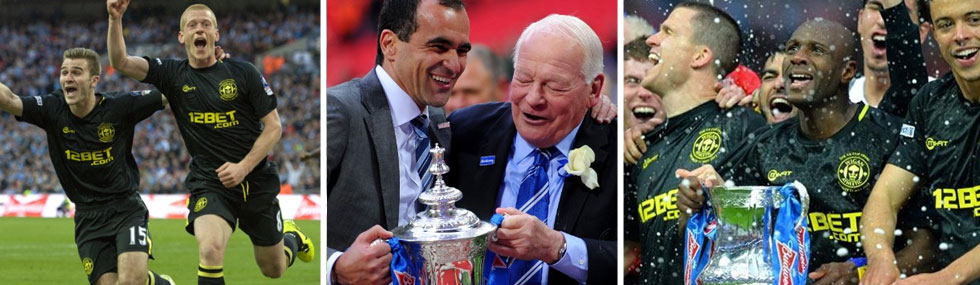


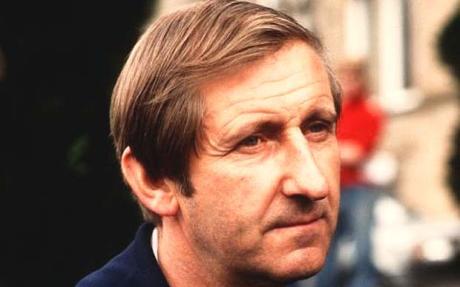


 LOS THREE AMIGOS