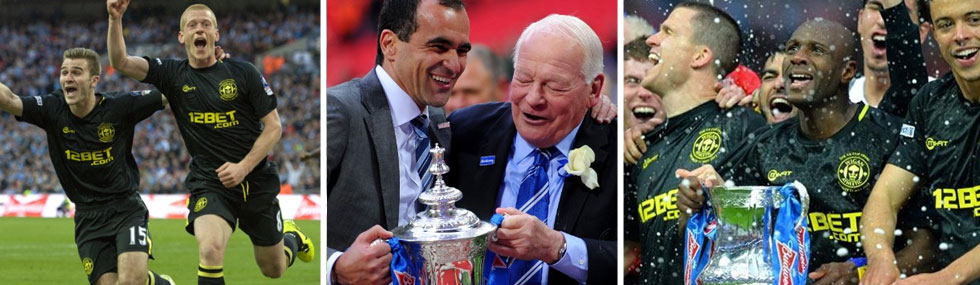
The financial side of a bounce back for Wigan Athletic

Sharpe

David Sharpe offers the club new direction, but he has major challenges ahead of him.


“You will no doubt have heard the news by now that we will be kicking off next season in Sky Bet League One. Everyone associated with Wigan Athletic is suffering this morning but the reality is that this is where we find ourselves and I wanted to write to all of you with a personal pledge that nothing else but an immediate return to the Championship will suffice. We will bounce back.

The words of David Sharpe after Rotherham had put the final nail in Wigan Athletic’s coffin by beating Reading on Tuesday night.

Since taking over as chairman Sharpe has injected a breath of fresh air into the morale of Latics fans. The unthinkable actually happened – from winning the FA Cup to League 1 just two years later. But Sharpe’s enthusiasm for the task of getting the club back into the top echelons is infectious. After the club drifting for months like a rudderless ship Sharpe has come in and provided not only direction, but hope.

He has installed a bright young manager in Gary Caldwell, insisting that it is a long-term appointment. During just four games in charge Caldwell has already turned the style of play from the hoofball prevalent under Malky Mackay to what Sharpe calls “the right brand of football”. Sharpe continues to reiterate the club’s desire to produce a top class academy. He also plans to put in place an effective department of recruitment, something the club was lacking even in the Premier League days.

Sharpe has been impressive in his dealings with the media. Rather than look like a 23 year old novice in the role of club chairman, he has clearly enunciated his vision for the club and looked calm and confident when interviewed. Moreover he is from a generation that is skilled in the use of electronic and social media.

Dave Whelan too started off with a vision when he first took over as chairman some two decades ago. His was to propel Latics out of League 2 into the Premier League in ten years. His achievements are legendary. However, Whelan was already in his late fifties when he took over, with huge business acumen and experience. During those twenty years he was to pump around £100m into the club for them to hold their own in the upper tiers of English football.

DW is a hard act to follow. Does the young chairman not only have the vision, but also the business acumen and sheer determination needed to follow in his grandfather’s footsteps? More importantly is the Whelan family still willing to help support the club financially?

Sharpe is by no means alone in dealing with the financial side of the football club. His grandfather remains the owner and will surely be in regular contact with him. Moreover he has the capable Jonathan Jackson, a Chief Executive with a strong business background, steeped in the tradition of the club since birth.

However, the two of them, together with Head of Football operations, Matt Jackson, have a huge task on their hands over the coming weeks. No less than 13 players left the club in January. A comparable exodus is impending as Latics need to cut their cloth according to the financial realities of League 1 status.

In their last season in the Premier League Wigan Athletic had a staffing budget of around £50 million. Relegation and a huge drop in TV revenues meant that wages had to be drastically reduced, despite a parachute payment of £26 million. To keep a team in mid-table in the Championship typically involves a wage bill in excess of £20 million. Whereas to get into the top six  comes to around £30 million, which is precisely what it cost Latics last season.

With parachute payments dropping to £16m this season that the club once again needed to reduce its wage bill. The departures of ex-Premier League players Jean Beausejour, Jordi Gomez and James McArthur helped. However, manager Uwe Rosler was to bring in nine new players over the summer. Although some were younger players, not on high earning contracts, the competition in the transfer market forced the club to offer more tempting salaries to the rest. The result was a squad that was larger than the club needed with a wage bill close to that £30 million of the previous season.

The January fire sale, in which 13 players left the club, helped to put Latics back on track financially. Apart from the transfer fees received the wage bill was reduced significantly, to probably around £20 million on an annual basis. Sadly the selling of much of the family silver left Latics with a threadbare squad, short on quality. Only two permanent signings were made, coincidentally both being players who had prior experience in League 1. The squad was supplemented by young loanees and players on short term contracts.

For the coming season Latics will receive £8 million in parachute payments, plus around £2.5 million from TV money. The rest will need to come from gate receipts and commercial revenue. The club will have gone from a wage bill of £50 million to £30 million to around £10 million in the space of just three years.

Assuming the current wage bill approximates to around £20 million on an annual basis it means that it will need to be halved over the summer.

Wigan Athletic currently have 19 players under contract until 2016 and beyond. None of those were previously on Premier League contracts. However, having been signed when Latics have been in the Championship division many of them will be on salaries that are way above the norm in League 1.

Excluding loanees there are 8 players out of contract in June. The list includes goalkeeper Lee Nicholls, although rumours suggest that he is being offered a contract extension.

Given the situation Sharpe will look at selling off those contracted players on the highest salaries. Many of the most saleable assets departed in January, but players with prior Premier League backgrounds remain who will be targeted by other clubs. The most likely to attract sizeable transfer fees are Scott Carson, James McClean and James Perch. Moreover Oriol Riera has already shown in his return to Spain that he is a player who will be in demand, likely to bring in a transfer fee.

So many players have been tainted by the low morale and low confidence among the squad this season and their performance levels have dipped. With a fresh start next season and playing in a lower division, many of them are capable of significantly raising those performance levels. However, the financial reality is that around half of them will need to be persuaded to find other clubs, with their contracts terminated by mutual consent.

A few weeks back Sharpe mentioned that Latics were going to need at least ten new players for next season. With around ten retained from the current squad, ten new additions and a handful of players brought up from the development squad it would bring the club close to the squad size of 24 stipulated for League 1 clubs. Up to half of the new additions are likely to be players on loan.

Persuading such a large number of players to move on, helping them to find them new employment, is no easy matter. It will be easier in some cases than others. Some may need to move to clubs offering lower salaries, but in higher divisions than Latics. Players who have been in the Premier League not so long ago will be reluctant to damage their future career prospects by dropping down to League 1.

Caldwell will know which players he wants to retain. However, he might not be able to be so selective. Those returning from long-term injury are unlikely to be sought out by other clubs until they have proved they are fit again. Emyr Huws, Aaron Taylor-Sinclair and Grant Holt fall into that category. Holt is not only recovering from an anterior cruciate ligament knee injury, but will be 34 years of age when the season starts. Moreover he is one of the highest earners. Caldwell’s hands will most likely be tied and he will need to find ways of enabling the big Cumbrian to fit into his style of play.

Caldwell might want to keep at least some of the players whose short term contracts are about to expire. Harry Maguire is on Premier League wages at Hull and the salary expectations of ex-top flight players such as William Kvist, Kim Bo-Kyung and Jermaine Pennant will be high. Caldwell also needs to make a decision on his old teammate Emmerson Boyce. At 35 years of age, Boyce does not have the pace of before. However, Caldwell could choose to use him in a back line of three, where his experience could be useful. But then again, it would also depend on his wage expectations.

Despite Sharpe’s assertions about producing a top class academy the club has not made any recent statements about the development of the Charnock Richard site. There are fans who remain skeptical about whether the project will be brought to its conclusion. We await further news.

The framework governing Financial Fair Play in League 1 differs greatly from that of the Championship. Clubs in Leagues 1 and 2 have to operate under the Salary Cost Management Protocol (SCMP). It limits the wages that a League 1 club can pay out to a maximum of 60% of its turnover. There is no consideration given to clubs coming down from the Championship except that the salaries of players signed before September of the previous season, on contracts of three year or more, are not included in the calculations.

That would be the case of those signed by Owen Coyle prior to the 2013-14 season. However, although the retention of those players would not be contributory to breaking the SCMP protocols, the club will be reluctant to continue to pay salaries of approaching £1 million per year to the higher wage earners. In certain cases, such as that of Holt, its hands may be tied.

Over the coming weeks we will discover which players are moving on. Caldwell faces a tough decision whether to retain a handful of high earners, who would take up around half of the total wage bill, or whether to ditch as many as he can to sign up-and-coming players from the lower divisions or maybe Scotland. It could be argued that if he were to keep some of those high earners they would provide a strong backbone for his team. It could also be said that so many of those players underperformed this season and the club is better off without them.

Sharpe has made it clear that he wants promotion this season. In reality it might be too much to ask of a rookie manager in his first full season with so many new players to bed-in. However, the parachute payments only continue for two more years and after that Latics will compete on an even keel with the other clubs in the division. Promotion in the second year would become a real priority.

Turnover usually includes not only match day revenues, TV money and sponsorship deals. But interestingly the Football League also includes donations from the owners of clubs and the injection of equity. It basically leaves the door open for a rich owner to take over a club and pump money into it in a bid for promotion. Moreover there is no direct restriction on the amount of money the club can spend or receive in transfer fees.

Unlike so many clubs Wigan Athletic have been well managed financially in recent years and made profits in the past three seasons. Whether they make one this year remains to be seen, although the transfer fees received and staffing cuts made in January will help. However, the long term question is whether the Whelan family, through Sharpe, is willing to inject further funds into the club. Funds will be needed for the foundation of a top class academy and if Latics cannot gain promotion in the next couple of years the parachute payments will be gone and they will have no financial advantage over the general morass of clubs in League 1.

Sharpe has made an inspirational start to his tenure as chairman of Wigan Athletic. But the coming weeks are going to test his abilities to remain calm and level-headed, whilst being determined in realizing his vision for the club.

Then there remains the big question about injection of further funds into the club by the Whelan family, which has already given so much.

Gary Caldwell – the right man for the job


In February 2007 the 33 year old Roberto Martinez gave up his playing career to take over from Kenny Jackett as manager of Swansea City. Despite his lack of experience Martinez’ appointment was viewed favourably by the majority of the fans. He had left Swansea for Chester the previous summer after falling out of favour with Jackett. Martinez had spent three years with the Swans as a player, captaining them to League Two promotion 2005, also lifting the LDV Vans Trophy and the FAW Premier Cup twice.

David Sharpe’s bold move in appointing the 32 year old Gary Caldwell as manager bears a strong parallel to those events at Swansea. Caldwell was an outstanding captain and the club’s Player of the Season in 2011-12 when Latics miraculously escaped relegation by winning seven of their last nine Premier League games, beating Arsenal, Liverpool and Manchester United in the process. His play always epitomized one hundred percent effort, with a never say die attitude. Moreover Caldwell was the general on the field of play who cajoled his teammates into following the manager’s game plan.

Sadly Caldwell’s career at Latics was dogged by a serious hip problem. Despite signing a new contract as a player-coach this season Caldwell has not been able to play. According to an article in the Scotsman last month Caldwell admitted that he had been struggling for years with the hip problem and that even training had become painful. There is little doubt that Caldwell had been putting his body on the line on numerous occasions for Latics when not fully fit. At times he made calamitous errors, incurring the wrath of the fans, but few could doubt his commitment on the field of play and the way he marshalled his teammates into playing out of their skins against some of the world’s top footballers.

For so many months the club seemed to have no direction and leadership. But within a short amount of time Latics have a new chairman and a new manager, both young and hungry for success. Sharpe has wisely opted for a manager who believes in playing football the “Wigan way”. Moreover his expectation is that Caldwell will stay in the position long-term.

Caldwell’s first task will be to get a good result at Fulham on Friday. It will be interesting to see if he opts for the 3-4-3 formation that Roberto Martinez used to great effect. Moreover will some players be brought back who were out of favour with Mackay?

The doom and gloom at Wigan Athletic has suddenly been lifted. Even if relegation happens there is now light at the end of the tunnel. Who knows what a dynamic young duo of Sharpe and Caldwell might achieve?

The period of drifting is over. Wigan Athletic are now heading down a firm track.

Mackay sacking – a month too late.

Sharpe

David Sharpe announced Malky Mackay’s departure tonight.


What a sad day.

The loss to Derby County puts Latics with practically no chance of avoiding the drop. The thought of relegation is hard to bear but what is even more depressing is that the two Davids – Sharpe and Whelan – did not remove Mackay at least a month ago. The lack of vision and decisiveness from above is worrying.

Less than 18 months ago Owen Coyle exited Wigan Athletic as a much derided figure. By coincidence his last game in charge had been a home loss to Derby. Coyle was sacked because it looked like he could not get Latics into the playoff zone. Moreover the stylish, if not always successful, football of the previous era had lapsed towards ‘hoofball’.

Uwe Rosler came in and enjoyed considerable success in his first season. His services were dispensed of when it looked like he was losing player support and failing in the quest to make Latics a serious candidate for promotion.

Little did we know what depths the team would plumage towards under his successor. Mackay’s appointment did great damage to the club’s image as portrayed by the national media. Moreover the team did not rise on the bounce effect of a new manager, as is so often the case. In fact they got worse. They did not win a single home game during his tenure and he might well go into Wigan Athletic history as their least successful manager.

When Mackay took over he stuck by an “old guard” who had clearly been underperforming under Rosler. Neither did they perform well under him. His revenge was sweet, with no less than thirteen players dispatched out of the club in the January window. Given the departure of so many players who had proved themselves in the Premier League it was no surprise that the standard of football was to plummet close to rock bottom. The hoofball that had become evident under Coyle, which Rosler could not eradicate, soon became the order of the day under Mackay.

Mackay’s tactics involved having two big strikers who could fight for those long balls. The most successful at retrieving those long balls was Marc-Antoine Fortune. Without him Latics seemed lost. With him they had a player adept at chasing seemingly lost causes and gaining possession. They also had a striker with an appalling goalscoring record. Forwards of lesser physical stature, such as Billy Mckay and Martyn Waghorn, were never going to be included in Mackay’s system, despite their proven career record as goalscorers.

The conspiracy theorists will say that Mackay was brought in as a short-term alternative, with his main task being to cull the dead wood within the playing staff. It could be said that he did that. Perhaps some of the players from the Martinez era had become complacent and were causing divisions within the camp. But the cull, together with a reluctance to provide Mackay with sufficient cash to find adequate replacements, left the club so short of quality players that relegation was always going to be a possibility.

Mackay was to replace the departed players with those on short term contracts or young loanees green behind the ears. It was a recipe for disaster.

So many fans will be relieved that Mackay will not be at the club next year, even if it is in League 1. But it should not hide the lack of foresight and decisiveness by Sharpe who has surely left it too late for hope of salvation in the Championship division.

It is to be hoped that Sharpe will also take a look at the coaching staff. Too many players have been written off this season despite arriving at the club with good credentials. There has been a disconnect between recruiting and coaching. The former has taken the brunt of criticism and Sharpe has enunciated his reorganisation of recruitment services. In the meantime it defies belief that the coaches could not have done more with so many of those new signings.

The challenge for Sharpe is to emulate his grandfather in appointing a manager capable of lifting the club out of this trough. Moreover lovers of good football will hope that he does not go for someone of the ilk of Coyle or Mackay. Between the two of them they caused so much damage.

It is to be hoped that the departure of Mackay will lead to a successful new era for the club.

Much of that will depend on Sharpe’s vision and leadership. It is a lot to expect from such a man so young.

An academy and an identity

David Sharpe: "Having a top-class Academy is something I’m so passionate about" Photo courtesy of Sky Sports.

David Sharpe: “Having a top-class Academy is something I’m so passionate about”
Photo courtesy of Sky Sports.

“We strive to keep the way of playing football recognizable; attractive, offensive-minded, creative, fast, fair and preferably far away from the own goal on the opponents’ half.”

One could only wish the statement applied to the Wigan Athletic of today. In these times of fightball, rather than football, it seems light years away. But there is no reason why the club could not take on such an identity in the future.

The statement actually comes from Ajax of Amsterdam. Together with a 4-3-3 formation it sets the direction for football at all levels of the club, from academy to first team.

The Ajax youth system produced great players of the past like Dennis Bergkamp, Johan Cruyff, Edgar Davids, Frank and Ronald de Boer, Patrick Kluivert, Frank Rijkaard and Clarence Seedorf. Its academy has continued to produce top class players and both the club and the Dutch national team reap the benefit. Brazil World Cup players Nigel de Jong, John Heitinga, Wesley Sneijder, Martin Stekelenberg, Gregory van der Wiel and Rafael van der Waart all came through the Ajax academy.

Johan Cruyff was one of the best players the world has known. Ex-Barcelona president Juan Laporta once said that: “As a player he turned football into an art form. Johan came along and revolutionised everything. The modern-day Barca started with him, he is the expression of our identity, he brought us a style of football we love.”

It was Cruyff who inspired Barca to develop a football academy to mirror that of Ajax. La Masia has since become the most famous football academy in the world. Its class of 1987 is its most famous, containing Cesc Fabregas, Lionel Messi, Gerard Pique  and Pedro Rodriguez. In 2010 it became the first academy to produce the three finalists for the award of the Ballon d’Or in Xavi Hernandez, Andres Iniesta and Lionel Messi.

The original La Masia was an old Catalan farmhouse where Barcelona housed young players who came from outside Barcelona. The academy was actually moved to a purpose-built facility in Ciutat Esportiva Joan Gamper in 2011.  But the name La Masia remains synonymous with the Barcelona youth academy.

More than 500 young players have been housed at La Masia over the past 30 years. Lionel Messi was one of the three Argentinians who left his family for La Masia. He was 13 years old when he arrived. Although youngsters from Brazil, Cameroon and Senegal have come through La Masia, they were a minority. More than half have come from Catalonia, the rest from other parts of Spain.

La Masia costs around £5 million a year to run, most of the cost being the dormitory. Around 10% have made it into the first team. In 2000 coach Louis Van Gaal was laughed at for his dream of a Barcelona winning the Champions League with a team of La Masia players. But nine years later there were eight of them in the squad that was to win the trophy.

Operating a facility like those at Ajax or Barcelona is clearly way beyond the means of Wigan Athletic. But there are surely basic principles that can be applied in Wigan’s case.

On taking over from his grandfather David Sharpe commented:

Having a top-class Academy is something I’m so passionate about, we have to start making and creating our own players. We’ve only really produced two down the years in Leighton Baines and Callum McManaman, and the plan is to see more Wigan boys playing for Latics.”

The new facility at Charnock Richard remains in the future. We await further news from the club on when it will be completed. In the meantime reports suggest that Gregor Rioch and his team of coaches continue to make good progress in bringing up the level of the Academy. It is to be hoped that Rioch will not be poached by one of the big clubs and that he will continue to lead the youth programme.

The purchase of the golf club and its conversion into a football academy is a costly business, but a significant investment in the club’s future. The critics will say it should have happened years ago and question the ability of the club to finance it. However, the club has received funds from transfers that can help fund the capital investment required. It is the year to year operating costs that will be more of an issue, since a figure of £2 million per year would not be unrealistic. Much will depend on whether Latics will be scouring the country for young talent in addition to bringing in local youth or those from Manchester and Liverpool, as has been their wont in the past. Residence costs for those from outside the area, maybe also including overseas, will remain an expensive item.

However, no matter what the scale of the eventual academy at Charnock Richard there are lessons to be learned from both Ajax and Barcelona.

Both clubs have a well-defined style of play which permeates through all levels at the clubs. This helps players develop their roles and the skills that they need to be successful.

Wigan Athletic were approaching something like that in the Martinez era. The style of play was revolutionised during his time of the club. The Martinez style was not popular with all supporters. There were those who wanted a more direct style of play, which has become increasingly evident since he left. However, players at all levels of the club from academy to senior squad, knew what kind of football to strive to achieve. It was successful to the degree of winning the FA Cup on merit, overcoming an immensely talented Manchester City side with style and skill.

The tragic mistake that Dave Whelan made was in appointing a successor who was out of tune with tiki taca, more an adherent of the long ball. The Martinez legacy has since disappeared without trace over the course of the current season. Fightball has supplanted football.

In the meantime we can dream of a successful academy, underpinned by a shared vision of what constitutes good football. With coaches groomed for management from within, like Liverpool of the 1980s, when Bob Paisley and Roy Evans built success on the groundwork provided by Bill Shankly.

Look at what happened at Barcelona following Van Gaal’s dream of Champions League success with a team of players raised in La Masia.

Maybe David Sharpe’s dream of a top-class academy and Wigan boys playing for Latics is another which will become reality.

However, it is unlikely to do so unless the style of play that the club seeks is identified.

What a delight it would be to see Latics adopt a statement of intent similar to that of Ajax.

Bowing out gracefully


“Dave Whelan: Racism row forced me to quit.”

So said the Daily Express headline yesterday. Sadly another example of gutter journalism, of which we have seen far too much over recent months in the national press.

That newspaper, along with others, was once more ready to condemn a man who has done so much for English football over the years.

They neglected to mention his record as a chairman over the past two decades:

  • Bought the club in February 1995. Finished in 14th place in Division 3. Average attendance for 1994-95 season was 1,748.
  • Summer 1995 – arrival of The Three Amigos – Diaz, Martinez and Seba.
  • Division 3 champions in 1996-97.
  • Plans for new stadium announced in 1997.
  • Beat Millwall 1-0 at Wembley to win Auto Windscreens Shield in 1999.
  • JJB stadium inaugurated in August 1999 with a friendly against Manchester United.
  • Division 2 champions 2002-03.
  • Won promotion to the Premier League in 2004-05.
  • Reached League Cup final in 2005-06, finishing 10th in Premier League, average attendance 20,609.
  • Eight seasons in the Premier League from 2005-2013. .
  • Second half of 2011-12 season rally with first win against Manchester United and away victories at Liverpool and Arsenal –all won on merit.
  • FA Cup Semi-Finals  in consecutive seasons 2012-2014.
  • FA Cup winners in May 2013.
  • Community Shield appearance in August 2013.
  • Group stages of the Europa League with trips to Belgium, Russia and Slovenia in 2013-14 – also reaching FA Cup semi final and championship playoffs.

Listening to Whelan’s interview by the club brought tears to the eyes. He even brought up the matter of the broken leg a couple of times. It contrasts with that on Sky Sports where the interviewer was clearly intent on treading the beaten path of the racism saga.

However, during that Sky interview Whelan was able to blow away much of the recent uncertainty about the club’s future by saying:

“Contrary to some suggestions, there are no plans to sell the club, which will remain in family hands and I have every confidence that (grandson) David (Sharpe), along with chief executive Jonathan Jackson, will lead us forwards with wisdom.”

Following in the steps of a Wigan icon like Dave Whelan would be hard for anyone, let alone a 23 year old like Sharpe. However, the young man got himself off to a good start by handling his interview with Sky with considerable aplomb.

It is the end of an era.

Dave Whelan has gone out as gracefully as he could, given the pressure from the national media.

He leaves behind a remarkable legacy, the like of which was unimaginable two decades ago.