
Wigan Athletic’s decision to part company with Shaun Maloney came after one win in eight matches had dragged the club down to 15th place, just six points above the relegation zone, and the mood among the fans had turned increasingly sour. When the club cited a failure to provide the “entertainment that supporters expect,” it was a telling choice of words — suggesting the issue ran deeper than the league table alone.
That same phrase now feels uncomfortably relevant again.
Under current head coach Ryan Lowe, Wigan find themselves 18th in League One, one point clear of trouble, with just one win in their last seven league outings. Performances have done little to ease growing fan frustration, and the sense of déjà vu is hard to ignore. Results have dipped, confidence has drained, and the football itself has struggled to inspire.
Supporters are once again asking familiar questions. Not just about results, but about identity. What is this team trying to be? Where is the attacking intent? And perhaps most importantly, where is the sense of progress?
The club’s ownership now faces a decision similar to the one they made with Maloney. Do they act decisively in response to mounting pressure, or do they hold their nerve and give Lowe the time to steady the ship? If patience is the chosen path, Lowe will need to address the same concerns that proved fatal for his predecessor — a lack of cutting edge, a shortage of excitement, and a feeling among supporters that the football simply isn’t delivering what they expect from their club.
Fan frustration with Ryan Lowe has been building around a few familiar themes. Supporters feel Wigan lack attacking threat and creativity, with performances often slow, cautious and short on ideas. There is a growing sense that the team plays not to lose rather than to win, particularly in games where greater ambition is expected.
A key criticism has been Lowe’s reluctance to change his system. Fans feel he has become too wedded to one formation, even when it clearly isn’t working, and that his in-game adjustments come too late or have little impact. This has fed into a broader belief that he hasn’t fully grasped what the club and its supporters expect in terms of style, intensity and front-foot football.
Over time, this has led to wider doubts about identity and direction. Results have struggled, but it’s the lack of entertainment and visible progress that has really tested patience — leaving many supporters questioning whether Lowe truly understands the club he’s managing or how to get the best out of it.
Yesterday’s game against Bolton was a big one for Lowe and his players, but their response was as poor as what happened last time the teams played each other.
The season had started positively until that inept performance in a 4-1 trouncing at Horwich in last September. Latics had just one shot on target and received just one yellow card in a derby game. Up to that point Lowe had adopted a 3-1-4-2 system, with Matt Smith playing the deep midfield role, the wing backs and more advanced midfielders providing a quartet behind the two strikers. As time moved on Lowe’s tactics, particularly away from home, became more a more defensive 3-2-4-1, a striker being omitted to pack the midfield. More recently it has morphed into a 3-4-3 system, with Callum Wright being pushed forward into an attacking role on the left of the front three.
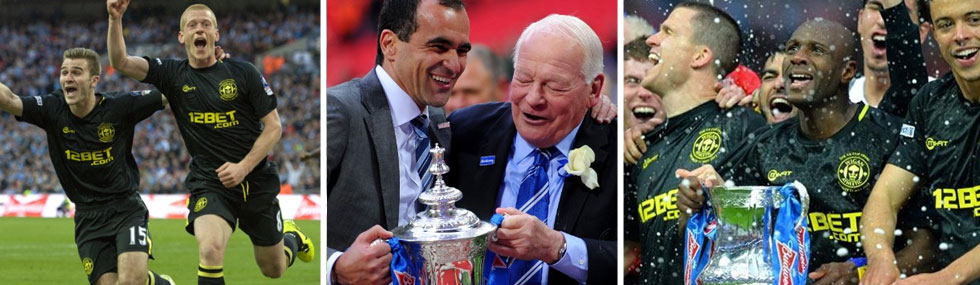
When Roberto Martínez switched Wigan to a 3-4-3 halfway through the 2011–12 season, the club was rock bottom of the Premier League and staring relegation in the face. It looked risky at the time, but it turned out to be inspired. Emmerson Boyce was pushed into a wing-back role, David Jones filled in on the left, until the January signing of Jean Beausejour — a natural wing-back for Chile — gave the system real balance.
What followed was remarkable. Wigan climbed to 15th, won seven of their final nine games, and picked up famous victories away at Arsenal and Liverpool, plus a home win over Manchester United. The FA Cup win over Manchester City the following season came using the same shape, even with players filling in out of position due to injuries.
Yet even then, not everyone was convinced. Some fans never warmed to the back three and longed for the old 4-4-2 they’d seen under Paul Jewell. That group of supporters never really went away — and many of them were pleased when Ryan Lowe arrived promising two strikers and a more attacking outlook. The dull, ugly football at the end of last season was tolerated because people believed something better was coming.
So far, that hasn’t really happened.
In truth, Lowe’s football has been no more entertaining than what came before it. If anything, it’s drifted into something even more functional — combative, cautious, and increasingly reliant on long balls. The idea of a more front-foot team hasn’t materialised.
There’s a common belief among football fans that playing three at the back automatically means defensive football. That isn’t really true. Plenty of teams use a back three to play expansive, attacking football. The problem at Wigan isn’t the system itself — it’s how it’s being used.
Under Lowe, the wing-backs now sit far too deep, as do the two holding midfielders. The result is a huge gap between defence and attack, leaving centre-backs with no real passing options. Too often the only solution is to go long, which just hands possession away. It’s not a design flaw as much as a lack of intent.
What’s frustrated supporters most is Lowe’s reluctance to change things when they’re clearly not working. Many have called for a switch to a back four, but he’s stuck stubbornly to his shape. That hasn’t helped by the fact that none of the regular wing-backs had much experience playing there before this season, making the system even harder to execute properly.
Despite all this, sacking Lowe now would feel like repeating the same old cycle. The club has churned through too many managers already, and constant upheaval hasn’t helped anyone. He should be given until the end of the season to try and fix things — but that comes with conditions.
There needs to be more attacking intent, less aimless long ball football, and more flexibility in how the team sets up. Lowe has to show he can adapt, trust his more technical players, and get more out of the squad than he has so far.
If he can’t do that, then a change in the summer would be justified. There’s enough quality in this group to stay up, even if it’s tight — but only if the football improves.
 LOS THREE AMIGOS
He’s too far gone with the fans. He’s got to go.
Been reading Los Three Amigos since Martinez I believe when it was published every week or so. Very incisive and well written newsletter. wish it were again weekly but not very much to write about with this team.
Your comments are much appreciated. You are right: it has been harder to write balanced articles over the past two or three years, which have been difficult for all of us as Latics fans. But the club does not need more turmoil and we have to hope that Lowe can get things right by the end of the season.