Time to “Believe” Again? Wigan Athletic, loyalty and the road ahead.

Photo courtesy of fansonline.net

“I’m not sure I’ll renew my season ticket this year.”

It’s a sentence quite a few Latics supporters have uttered over the past few weeks.

Some will have said it after another disappointing season. Others because the uncertainty surrounding the proposed sale of the club makes it difficult to know what the future holds.

For many, it’s simply the feeling that, after years of stability, progress has stalled. We’ve waited patiently for signs that the club is ready to move forward again, but the next step has proved frustratingly elusive.

Whether everyone who voices those doubts actually follows through is another matter.

Football supporters are emotional. The disappointment of May has a habit of giving way to the optimism of July. A couple of encouraging signings, a decent pre-season performance and suddenly the fixture list can’t arrive quickly enough.

But the debate itself matters.

Not simply because of the money.

Because of what it represents.

Whenever I hear those words, “I’m not sure I’ll renew,” I find myself thinking about someone who walked through the turnstiles for Latics’ very first league match in 1932.

Latics’ team for their debut match in 1932 against Port Vale Reserves,
Thanks to Ron Hunt and WiganWorld for photo.

I’ll come back to him later.

More Than a Season Ticket

A season ticket/card is far more than a guaranteed seat for twenty-three home league matches. It represents a commitment to the club and a belief that, despite the frustrations, the journey is still worth taking. For many supporters, renewing isn’t simply buying football. It’s saying,

“This is still my club.”

From the club’s perspective, season ticket holders remain its financial backbone. They provide guaranteed income before the season begins, create the atmosphere that makes the Brick Community Stadium feel like home and continue to support the club throughout the year by buying food, drink and merchandise.

Supporters living further afield, some overseas, continue to play their part too. Many still buy shirts, follow every development and renew their Latics TV subscriptions because distance has never diminished their affection for the club. Their loyalty is every bit as genuine, even if season tickets remain the club’s single biggest source of supporter income.

Unlike pay-on-the-day receipts, season ticket money arrives before a ball has been kicked. It gives the club certainty, improves cash flow and allows budgets to be planned with greater confidence. No manager signs a player because one extra season ticket has been sold, but a successful renewal campaign gives the club a stronger financial platform from which to operate.

The loss of a few hundred renewals would not threaten the club’s future.

The loss of confidence behind those renewals would be far more significant.

Every season ticket sends a message to the club, potential investors and prospective sponsors:

The supporters still believe.

A Loyalty Few Clubs Can Match

That belief is easy to overlook because, like so many things in football, we quickly start taking it for granted.

Think back over the last decade.

Administration, ownership crises, points deductions, relegations, a succession of managers and years spent in League One have tested the patience and loyalty of every supporter. Many clubs would have watched their crowds steadily decline under those circumstances.

Latics haven’t.

To continue attracting around 10,000 supporters after everything the club has endured is no small achievement. It says far more about the people in the stands than it does about league tables.

We often describe the academy, the training ground and the continued use of a 25,000 capacity = stadium as the club’s greatest assets.

Perhaps we’ve been overlooking another one.

The supporters themselves.

That loyalty deserves appreciation, but it also deserves progress.

Where It All Began

The supporter I mentioned earlier was my father.

Regular readers may remember an article I wrote some years ago about him.

His first Latics match wasn’t simply his first game; it was the club’s first ever league fixture in 1932.

From that afternoon onwards he followed Wigan Athletic for the rest of his life. Without ever intending to, he ensured that I would do exactly the same.
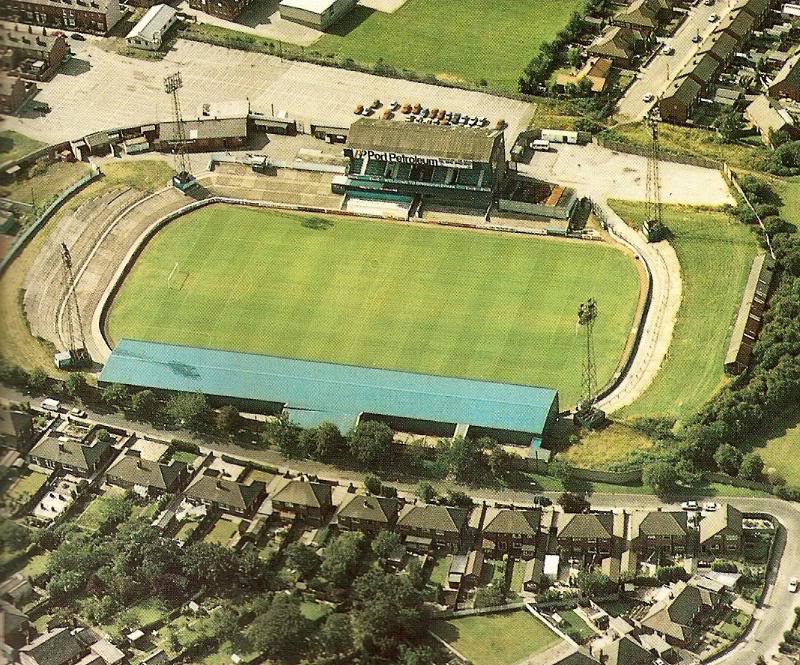
My own earliest memories are from Springfield Park in the early 1960s. They aren’t dominated by league tables or results. They are filled with the atmosphere that surrounded a Saturday afternoon. The smell of meat pies drifting across the ground. The marching band before kick-off. Standing in the paddock waiting for the familiar clip-clop of the players’ boots as they emerged from the tunnel. Even the unmistakable smell of oil of wintergreen as the players came out of the tunnel on to the pitch.

Those memories have stayed with me for more than sixty years.

I can still remember discussing the team with my dad before kick-off. Would Johnny Ball pick the experienced Peter Higham or the young Harry Lyon at centre forward? At the time it felt like the biggest decision in football. Looking back, the conversation itself mattered far more than who actually wore the number nine shirt.

The result of those matches has largely faded from memory.

Those afternoons never have.

Perhaps that’s what football really gives us. Not just results or league tables, but memories that become woven into our lives. Somewhere along the way the club stops being something we watch and becomes part of who we are.

Supporting Latics has never been the easy option.

Hope has always been part of the deal.

From Survival to Sustainability

When Mike Danson took control, the priority wasn’t promotion.

It was survival.

Without financial stability, nothing else mattered.

Since then, he has advanced around £30 million to keep Latics operating, funding the losses that are common throughout League One.

Crucially, that funding has come from the owner rather than banks or commercial lenders.

That distinction matters. Bank borrowing comes with interest, repayment schedules and pressure. Owner funding has provided breathing space while the club rebuilt and has allowed Latics to emerge from years of financial uncertainty.

Of course, those loans don’t simply disappear. Any future sale will inevitably involve discussions about how they are treated. Add to that the fact that Mike Danson also owns the Brick Community Stadium and it becomes clear why selling the club is more complicated than many supporters appreciate. Modern football increasingly relies on hospitality, conferencing and other non-matchday income, making the relationship between club and stadium an important part of any investment.

None of this makes Latics unattractive.

It simply makes them more complex.

The important point is that the conversation has changed. Not long ago supporters were wondering whether the club would survive.

Today we’re asking how it can grow.

That is progress

The Next Step

Growth, however, isn’t just about what happens between three o’clock and five o’clock on a Saturday afternoon.

Winning football matches will always be the biggest driver of attendances, commercial income and optimism. Nothing replaces success on the pitch.

But football has changed dramatically over the last two decades. Clubs are no longer judged solely by league position. They are media businesses, community organisations and brands. The most successful clubs build relationships with supporters every day of the week, not just on matchdays.

Commercial income has become increasingly important. Sponsorship, hospitality, conferencing, retail, digital advertising, partnerships with local businesses and community events all contribute to a club’s financial strength. Every additional pound earned commercially is another pound that can be invested in the football operation.

Success undoubtedly makes that easier.

But it’s not the whole story.

A club’s image matters too.

Potential sponsors want to be associated with organisations that are visible, ambitious and professionally presented. Supporters want to feel connected. Prospective investors look for evidence of momentum both on and off the pitch. In today’s football world, a strong digital presence has become almost as important as the experience inside the stadium.

This is one area where many supporters feel Latics still have room to improve.

That isn’t meant as criticism of the staff, many of whom may work incredibly hard with limited resources. Rather, it reflects how expectations have changed. Modern supporters expect behind-the-scenes content, academy features, player interviews, podcasts, videos and stories that keep them engaged throughout the week.

These things don’t replace winning football.

They reinforce it.

Every engaging video, every well-told story, every community initiative that is properly promoted strengthens the club’s reputation. It gives sponsors greater value, encourages businesses to become involved and reminds potential investors that this is a club moving forward.

Football clubs don’t just build financial capital.

They build reputational capital too.

That reputation takes years to create, but it can become one of a club’s greatest assets.

Reasons to Believe

It is easy, particularly after a disappointing season, to focus on what Latics lack.

Sometimes it’s worth reminding ourselves what the club already has.

  • The use of a modern stadium and a more than adequate training ground.
  • A productive academy.
  • An FA Cup-winning history and eight seasons in the Premier League
  • A loyal supporter base that many League One clubs would envy.
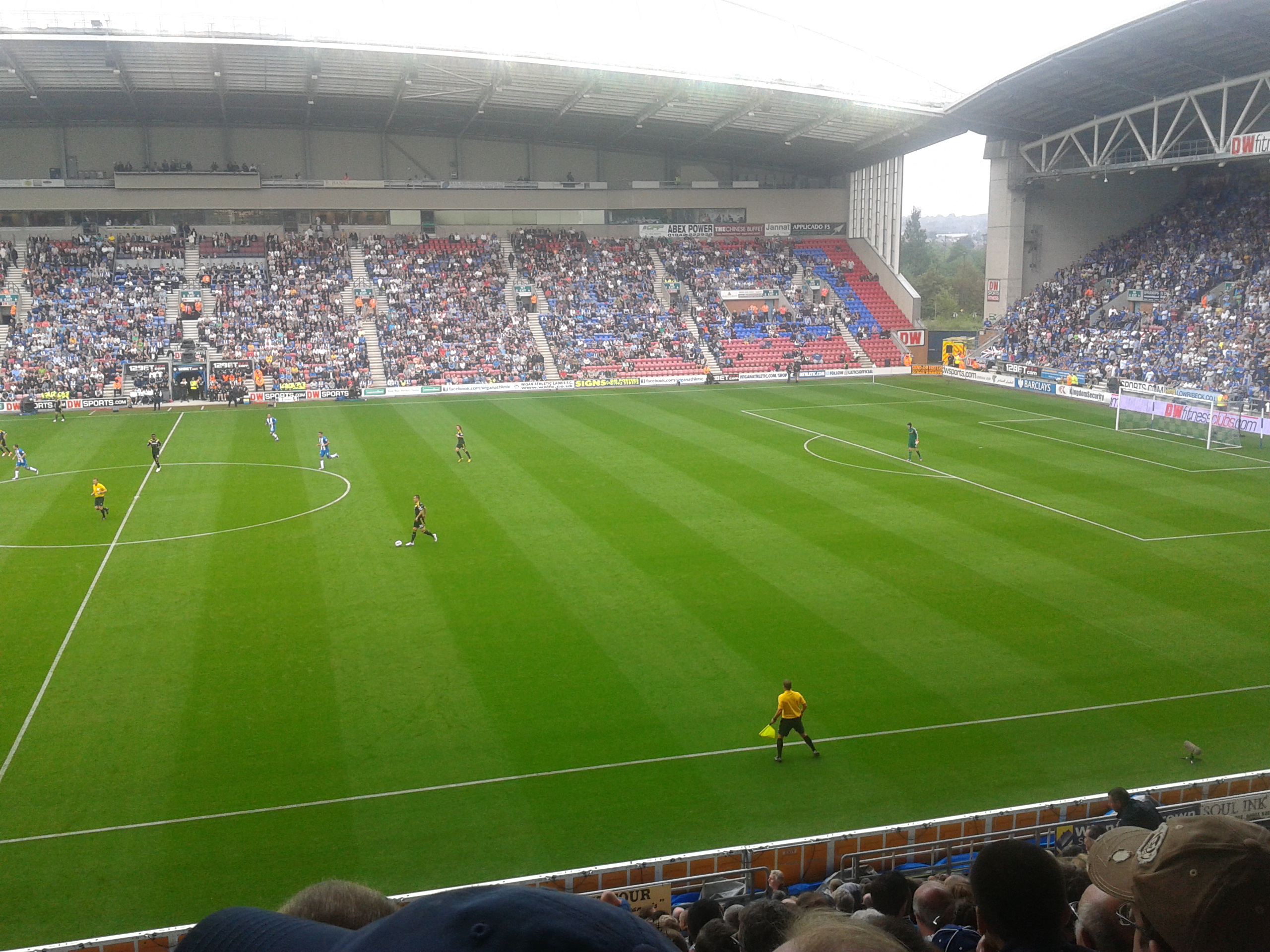
Those are solid foundations.

The challenge now is building upon them.

The Choice

Every supporter will make their own decision this summer.

Some won’t renew. Many who currently say they won’t probably will.

That’s football.

No one should feel guilty for making the decision that is right for them or their family. Football has become an expensive pastime, and supporters are entitled to expect value for their money.

But perhaps this year’s decision is about more than buying another season ticket.

Perhaps it’s about recognising that, after years spent securing the club’s future, the next chapter must be about fulfilling its potential.

Promotion will depend on the players, recruitment and good decisions in the boardroom. Commercial growth will depend on ambition, imagination and presenting Latics as the progressive football club we all know it can become.

But every successful chapter in the club’s history has begun with supporters who believed before everyone else did.

When my father walked through the turnstiles for Latics’ first ever Football League match in 1932, he couldn’t possibly have imagined where the journey would lead. Promotions and relegations. Springfield Park and the Brick Community Stadium. The Premier League. Wembley. The greatest day in the club’s history. Administration. Survival. Recovery.

Through all of it, I have never stopped believing there would be another season worth looking forward to.

Looking back, I realise that some of my happiest memories were never just about the football. They were about Saturday afternoons spent with my dad, sharing hopes, disappointments and conversations that have stayed with me for a lifetime.

The scorelines have blurred.

Those memories never have.

Perhaps that’s why supporting Latics has never been just about results.

It’s about belonging.

A season ticket doesn’t guarantee promotion.

It doesn’t even guarantee a good season.

What it represents is hope.

The future isn’t guaranteed.

It never has been.

But for the first time in a long while, there are genuine reasons to look forward.

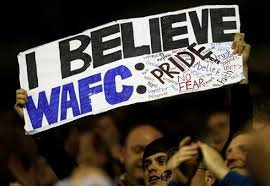
Perhaps it’s time to “believe” again
Beyond the League Table: how will history judge Mike Danson’s Wigan Athletic legacy?

Image courtesy of itv.com

Whenever Mike Danson eventually sells Wigan Athletic, the debate over his legacy will begin almost immediately.

For some supporters, the judgement will be straightforward. Three years in League One, no sustained promotion challenge, managerial changes and football that has too often been cautious rather than exciting. Given the expectations created by Danson’s arrival and his personal wealth, many will argue that Wigan Athletic should have progressed much further.

That frustration is understandable.

Football supporters do not judge owners by balance sheets, financial reports or improved governance. They judge them by what happens on a Saturday afternoon. They want to see better players, better performances and a team that appears to be moving towards the Championship rather than simply trying to find stability.

By those standards, the Danson era has been disappointing.

However, there is another side to the story.

Those who view his ownership more positively will point back to the situation he inherited in 2023, when Wigan Athletic was facing serious financial uncertainty. They will argue that before talking about promotion, recruitment or ambition, the first responsibility was to ensure there was a club capable of having those conversations in the future.

Both views contain an element of truth. The difficulty is deciding which one will matter most when history looks back. Because the legacy of a football owner cannot always be judged by the league table alone.

The real question may not be whether Mike Danson took Wigan Athletic back to the Championship.

It may be whether he leaves the club in a stronger position than the one he found.

The Club Danson Inherited

When Danson took control of Wigan Athletic in 2023, he was not buying a club that was one or two quality signings away from promotion.

He was inheriting a club whose foundations had been badly damaged.

Years of financial problems had created uncertainty around almost every aspect of the club. Supporters had endured unpaid wages, ownership turmoil and the constant fear that another crisis was just around the corner. The reputation of Wigan Athletic had suffered, and confidence among supporters, creditors and the wider football community had been badly affected.

The priority was not promotion.

It was survival.

Danson’s first task was therefore not to assemble an expensive squad or make a statement signing. It was to restore stability, rebuild trust and make sure the club could operate normally again.

Those achievements rarely create excitement. Nobody celebrates a football club paying its bills. Nobody buys a shirt because suppliers have regained confidence.

But without those things, everything else becomes irrelevant. A club cannot plan for promotion when it is constantly fighting fires behind the scenes.

The irony is that supporters quickly moved from worrying about whether Wigan Athletic would survive to debating whether the football was good enough. In many ways, that was evidence that the immediate crisis had passed.

The problem was that once survival was no longer the main concern, expectations naturally returned.

And that is where the criticism began.

The Spending Debate and the New Reality of League One

The most common criticism of Mike Danson’s ownership has been a straightforward one. Why has a wealthy owner not invested more heavily in the playing squad?

It is a question supporters are entitled to ask. Football is ultimately judged by results, and after three seasons in League One without a sustained promotion challenge, many fans feel that Wigan Athletic has not progressed as quickly as expected.

The frustration is understandable. Supporters saw the arrival of a successful businessman, remembered the club’s Premier League years and hoped that financial stability would quickly be followed by investment on the pitch. They wanted better players, better performances and a realistic push towards the Championship.

Instead, progress has been slower.

Recruitment has not always delivered. Managers have come and gone. Performances have often lacked the creativity and consistency supporters want to see.

However, the financial landscape of lower-league football has changed significantly, and that needs to form part of the discussion when judging any modern owner.

For many years, the traditional route to success in the lower divisions was relatively simple. A wealthy owner could choose to cover losses, increase the wage bill and invest heavily in the playing squad. If they were prepared to put more money into the club, they could usually spend more money on players.

That model is becoming increasingly restricted.

League One and League Two clubs now operate under the EFL’s Salary Cost Management Protocol (SCMP), which is designed to prevent clubs from building unsustainable squads based on spending that cannot be supported by their own income.

One of the most significant changes is how additional football income can be used.

Previously, money generated from sources such as cup runs, prize money or transfer fees received could largely be reinvested into improving the playing squad. Under the revised rules, that flexibility has been reduced. League One clubs can now use 60% of this additional football income on player-related expenditure, while League Two clubs are limited to 50%.

The impact is important.

Even a wealthy owner investing significant sums into a club cannot simply convert all of that money into transfer fees and wages. A League One owner could invest £100 million into their club, but spending on the playing squad would still be restricted by the SCMP rules.

That does not prevent owners from investing. They can still commit unlimited funds to areas such as infrastructure improvements, training facilities, community projects and other non-player-related costs.

The purpose of the changes is to encourage clubs to become more sustainable and less dependent on owners continually increasing their financial support.

For clubs like Wigan Athletic, this changes the nature of the challenge.

A wealthy owner remains a major advantage, but money alone is no longer the complete answer. Increasingly, successful clubs will be those that can grow their own income and create greater room for investment within the rules.

Commercial partnerships, sponsorship, hospitality, ticket sales, academy development and better use of facilities all become more important because they directly influence what a club can spend on its squad.

That changes the question facing Wigan Athletic.

Instead of asking only:

“Why hasn’t Mike Danson spent more?”

perhaps the bigger question is:

“Has Mike Danson helped create a club that can generate and spend more sustainably in the future?”

This does not mean supporters should ignore the shortcomings of the last three years. They are right to demand better football, stronger recruitment and greater progress.

But the judgement of Danson’s ownership should also consider the environment in which the club now operates.

The successful clubs of the future are unlikely to be those with the richest owners alone. They will be those that build the strongest businesses.

And for Wigan Athletic, that may be the foundation on which the next chapter of the club’s history is built.

The Stadium Question

That brings us to the issue that could define the next stage of Wigan Athletic’s future: The Brick Community Stadium.

The stadium is owned separately from Wigan Athletic and remains under Mike Danson’s control alongside his ownership of Wigan Warriors. Naturally, this has become one of the biggest talking points surrounding any possible investment or sale of the football club.

There has been speculation that some potential buyers would prefer the stadium to be included in any deal, while Danson may want to retain control. Exactly how significant this issue has been in discussions is known only by those directly involved.

However, the reason the stadium matters is clear.

In modern football, a stadium is much more than four stands and a pitch. It is a commercial asset.

The difficulty is that stadium ownership is not always as straightforward as supporters might imagine. Outside the Premier League, stadiums are often expensive businesses rather than guaranteed sources of profit. Maintenance, utilities, staffing, insurance, safety requirements and ongoing repairs all create significant costs.

The Brick Community Stadium also has a unique challenge because it serves two professional clubs. Wigan Athletic and Wigan Warriors both rely on it. Both clubs help make the stadium more financially viable. That creates a difficult balancing act.

If Danson continues to own Wigan Warriors, it is understandable that he would want to protect the rugby club’s long-term future and ensure it has security over its home.

Equally, anyone buying Wigan Athletic would understandably want certainty over where the football club plays and how it can benefit from the commercial opportunities connected with the stadium.

Neither position is unreasonable.

The solution is likely to require compromise.

A long-term lease could provide Wigan Athletic with security without requiring a complete transfer of stadium ownership. A partnership arrangement could allow both clubs to benefit from future development.

The important thing is that the stadium becomes an asset supporting both clubs rather than an issue preventing progress.

Finding the Right Successor

Perhaps the biggest lesson from the Danson era is that the next owner cannot simply be judged by personal wealth.

Wigan Athletic does not need another short-term gamble.

The club needs someone who understands modern football. Someone with ambition, but also patience. Someone who recognises that success is not created by spending alone.

The ideal owner will need to grow revenues, maximise the potential of the stadium, strengthen recruitment structures and build a sustainable model capable of competing under the EFL’s financial rules.

The next owner will not be arriving to rescue Wigan Athletic. They will be arriving with the opportunity to build it.

How Will History Judge Mike Danson?

Ultimately, Mike Danson’s legacy may depend less on what happened while he was owner and more on what happens after he leaves.

If Latics remain stuck in League One, supporters will understandably question why greater progress was not achieved.

But if the next owner inherits a financially stable club, resolves the stadium issue, grows revenues and eventually takes Wigan Athletic back towards the Championship, history may view the Danson era very differently.

Perhaps the most important part of his legacy will be the foundations he has helped put in place, giving Wigan Athletic a stronger platform from which future success can be built.

Mike Danson may not be remembered as the owner who completed the journey back to the Championship.

But he may be remembered as the owner who ensured that Wigan Athletic was still capable of making that journey.

And perhaps that is the true measure of his legacy.

Not simply where the club was when he left.

But whether he left behind a club with a future.

Wigan Athletic’s Crisis Goes Beyond Managers — Here’s What Must Be Done

Why the club’s crisis goes beyond managers — and what must be done to rebuild a football identity that lasts.

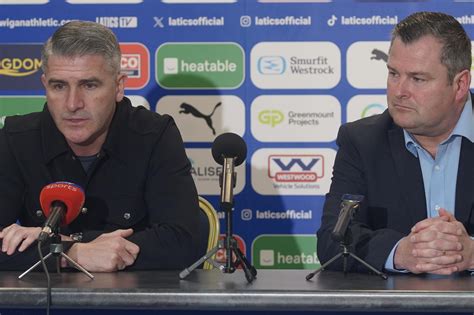
Wigan Athletic have officially parted ways with Ryan Lowe, ending an appointment that promised high-tempo, overachieving football but delivered little more than chaos. It was an inevitable decision: the team struggled to gel, results plummeted, and Latics now sit in the relegation zone. But while Lowe leaving makes the headlines, it really just highlights a bigger problem — Wigan Athletic don’t have a clear football identity, and until they sort that out, this cycle of instability is going to keep repeating.

Lowe came in with a reputation for overachieving, having impressed by pushing intensity and tempo above what this squads on paper could handle. That seemed to fit Wigan’s situation. In reality, that reputation was conditional. At Plymouth, his notable success was built on a solid tactical framework, where Steven Schumacher played a huge, if often overlooked, part. Without that kind of support and with a squad that wasn’t built for his style it quickly fell apart.

The fallout was messy: a squad built for multiple systems and suited to none now sits in the relegation zone. Following Lowe’s style was always going to need big changes and a long-term recruitment plan. He had a three-and-a-half-year contract, supposedly enough to lay the groundwork for a promotion push. But his preferred three-at-the-back system needed specialist wing-backs —key players the club never brought in, neither over the summer nor in January. As a result, his various formations, variations on 3-4-3, 3-1-4-2, 3-2-4-1, were rarely going to work.

Defensively, things were just as shaky. Wigan’s system relied on players getting back into position after losing the ball, but with constant turnovers, that rarely happened. Instead of controlling games with pace, the team stretched too far, left spaces open, and relied on second balls they couldn’t win. What was meant to be structured, intense football became disorganized and reactive. Tempo without structure ended up being chaos.

Looking back, it’s easy to see the contrast with what came before. Shaun Maloney’s Latics weren’t perfect, but at least they were understandable. His teams tried to control matches through possession, keeping units compact and roles clear. Results and entertainment weren’t always great, but there was a logic to the way they played — and it suited a club relying on loans, young players, and development rather than brute force. Replacing Maloney with Lowe wasn’t just swapping managers; it was a philosophical leap. Recruitment, squad balance, and tactics all pulled in different directions, and continuity went out the window.

The issues go way beyond managers, though. Gregor Rioch is also under pressure by the  fans. Rioch has been at the club for twelve years and, for better or worse, is now tied to almost everything Wigan do — or don’t do — on the pitch. The sporting director’s job is supposed to give some continuity above the head coach, but instead Wigan have gone through two contrastingly different managers, tried incompatible styles, and never really nailed down a recognizable way of playing. Whether Rioch stays or leaves, the role needs a serious rethink. Whoever fills it has to have the authority and responsibility to enforce a football identity, or the next manager is going to end up stuck in exactly the same mess.

That instability has left Wigan in the relegation zone with a squad built for multiple systems and suited perfectly to none. The danger now is repeating the same cycle — reacting to the failure of one style by chasing its opposite, instead of addressing the absence of a long-term plan.

Aligning the club to Lowe’s approach would require recruitment power Wigan do not possess and would accept volatility as the norm. Returning to Maloney’s principles, by contrast, offers a foundation: not aesthetic possession football, but a structured, compact, possession-leaning model with defined vertical triggers. A vertical trigger is simply a cue for a team to stop circulating the ball safely and go forward with intent. Instead of endlessly passing across the back line, players are coached to recognise specific moments when the opposition’s shape gives them an opportunity to attack.That trigger might be a forward peeling into space, a midfielder finding room between the lines, or an opponent stepping out of position and leaving a gap behind them. The key point is that progression isn’t random or rushed. The team waits for the right picture, then attacks decisively. It’s what separates possession with purpose from possession that just looks tidy but goes nowhere.

`Claims from a minority of fans that the club is “rotten from top to bottom” are emotionally powerful but analytically incomplete. The squad is not chronically uncompetitive. The academy continues to produce usable players. The fanbase remains engaged. What is broken is the connective tissue between ownership, sporting leadership, and the first team. Decisions have been isolated rather than aligned, producing constant resets instead of cumulative progress.

 Ownership always comes under the spotlight. Fans can complain about a lack of ambition, but the bigger problem has been inconsistency. Abrupt managerial changes, reactive appointments, and minimal clarity about long-term plans have left the club drifting rather than building. Ambition isn’t just about spending money — it’s about having a clear vision for style, recruitment, and success over multiple seasons. The fan perception that “everything is rotten from top to bottom” reflects frustration at that lack of alignment, not the quality of the squad itself.

So, what now? Wigan need to define a football identity first: structured, possession-oriented, and adaptable to League One realities. Recruitment, coaching appointments, and tactical planning all have to line up with that vision. The sporting director role has to be reshaped or replaced to enforce that philosophy consistently. Only then does hiring a head coach make sense. Only then can the club stop reacting to short-term failures and start building something sustainable.

Relegation would be a blow, but drift is worse. Clubs can recover from dropping a division. They rarely recover from never deciding who they are.

Wigan Athletic: time for a change?

Courtesy of bbc.co.uk

Wigan Athletic’s decision to part company with Shaun Maloney came after one win in eight matches had dragged the club down to 15th place, just six points above the relegation zone, and the mood among the fans had turned increasingly sour. When the club cited a failure to provide the “entertainment that supporters expect,” it was a telling choice of words — suggesting the issue ran deeper than the league table alone.

That same phrase now feels uncomfortably relevant again.

Under current head coach Ryan Lowe, Wigan find themselves 18th in League One, one point clear of trouble, with just one win in their last seven league outings. Performances have done little to ease growing fan frustration, and the sense of déjà vu is hard to ignore. Results have dipped, confidence has drained, and the football itself has struggled to inspire.

Supporters are once again asking familiar questions. Not just about results, but about identity. What is this team trying to be? Where is the attacking intent? And perhaps most importantly, where is the sense of progress?

The club’s ownership now faces a decision similar to the one they made with Maloney. Do they act decisively in response to mounting pressure, or do they hold their nerve and give Lowe the time to steady the ship? If patience is the chosen path, Lowe will need to address the same concerns that proved fatal for his predecessor — a lack of cutting edge, a shortage of excitement, and a feeling among supporters that the football simply isn’t delivering what they expect from their club.

Fan frustration with Ryan Lowe has been building around a few familiar themes. Supporters feel Wigan lack attacking threat and creativity, with performances often slow, cautious and short on ideas. There is a growing sense that the team plays not to lose rather than to win, particularly in games where greater ambition is expected.

A key criticism has been Lowe’s reluctance to change his system. Fans feel he has become too wedded to one formation, even when it clearly isn’t working, and that his in-game adjustments come too late or have little impact. This has fed into a broader belief that he hasn’t fully grasped what the club and its supporters expect in terms of style, intensity and front-foot football.

Over time, this has led to wider doubts about identity and direction. Results have struggled, but it’s the lack of entertainment and visible progress that has really tested patience — leaving many supporters questioning whether Lowe truly understands the club he’s managing or how to get the best out of it.

Yesterday’s game against Bolton was a big one for Lowe and his players, but their response was as poor as what happened last time the teams played each other.

The season had started positively until that inept performance in a 4-1 trouncing at Horwich in last September. Latics had just one shot on target and received just one yellow card in a derby game. Up to that point Lowe had adopted a 3-1-4-2 system, with Matt Smith playing the deep midfield role, the wing backs and more advanced midfielders providing a quartet behind the two strikers. As time moved on Lowe’s tactics, particularly away from home, became more a more defensive 3-2-4-1, a striker being omitted to pack the midfield. More recently it has morphed into a 3-4-3 system, with Callum Wright being pushed forward into an attacking role on the left of the front three.

When Roberto Martínez switched Wigan to a 3-4-3 halfway through the 2011–12 season, the club was rock bottom of the Premier League and staring relegation in the face. It looked risky at the time, but it turned out to be inspired. Emmerson Boyce was pushed into a wing-back role, David Jones filled in on the left, until the January signing of Jean Beausejour — a natural wing-back for Chile — gave the system real balance.

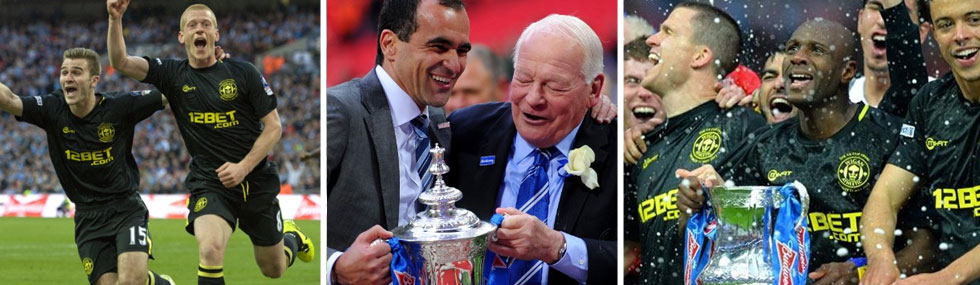
What followed was remarkable. Wigan climbed to 15th, won seven of their final nine games, and picked up famous victories away at Arsenal and Liverpool, plus a home win over Manchester United. The FA Cup win over Manchester City the following season came using the same shape, even with players filling in out of position due to injuries.

Yet even then, not everyone was convinced. Some fans never warmed to the back three and longed for the old 4-4-2 they’d seen under Paul Jewell. That group of supporters never really went away — and many of them were pleased when Ryan Lowe arrived promising two strikers and a more attacking outlook. The dull, ugly football at the end of last season was tolerated because people believed something better was coming.

So far, that hasn’t really happened.

In truth, Lowe’s football has been no more entertaining than what came before it. If anything, it’s drifted into something even more functional — combative, cautious, and increasingly reliant on long balls. The idea of a more front-foot team hasn’t materialised.

There’s a common belief among football fans that playing three at the back automatically means defensive football. That isn’t really true. Plenty of teams use a back three to play expansive, attacking football. The problem at Wigan isn’t the system itself — it’s how it’s being used.

Under Lowe, the wing-backs now sit far too deep, as do the two holding midfielders. The result is a huge gap between defence and attack, leaving centre-backs with no real passing options. Too often the only solution is to go long, which just hands possession away. It’s not a design flaw as much as a lack of intent.

What’s frustrated supporters most is Lowe’s reluctance to change things when they’re clearly not working. Many have called for a switch to a back four, but he’s stuck stubbornly to his shape. That hasn’t helped by the fact that none of the regular wing-backs had much experience playing there before this season, making the system even harder to execute properly.

Despite all this, sacking Lowe now would feel like repeating the same old cycle. The club has churned through too many managers already, and constant upheaval hasn’t helped anyone. He should be given until the end of the season to try and fix things — but that comes with conditions.

There needs to be more attacking intent, less aimless long ball football, and more flexibility in how the team sets up. Lowe has to show he can adapt, trust his more technical players, and get more out of the squad than he has so far.

If he can’t do that, then a change in the summer would be justified. There’s enough quality in this group to stay up, even if it’s tight — but only if the football improves.

Why Wigan Athletic Must Back Lowe and Rioch

Image courtesy of WiganToday

Why are so many Wigan Athletic supporters increasingly unhappy with both the head coach and the sporting director? For some, frustration has already tipped into calls for both to be sacked. But while the anger is understandable, removing either now would risk compounding the very problems that have led to this situation.

Saturday’s defeat to a Blackpool side sitting second from bottom of League One crystallised those frustrations. The Tangerines scored twice after poor defending from a back line missing captain and defensive lynchpin Jason Kerr through injury. Despite having far more shots, Wigan rarely looked like scoring. In a derby where intensity and commitment were expected as a minimum, the performance felt flat and uninspiring.

Latics currently sit 14th with a record of W6 D8 L6, having scored 22 and conceded 23. Given that the club’s staffing budget is reportedly within the top ten in League One, this position feels underwhelming. That perception has driven criticism beyond Ryan Lowe and towards sporting director Gregor Rioch. Yet this is where context matters.

Lowe’s tenure began with genuine promise. There was attacking intent, early momentum and real belief that a play-off challenge might be possible. That optimism unravelled after a limp 4–1 defeat at Bolton. Since then, performances have become more cautious and conservative, with the team focused on grinding out results rather than playing with freedom or flair. Lowe has also damaged goodwill by publicly criticising players and suggesting that supporter expectations “might need to be lowered”. In a club still healing from years of upheaval, those comments landed badly.

But the growing criticism of Rioch deserves closer examination. Supporters questioning recruitment, squad balance and identity are not wrong to ask those questions. However, they are often aimed at a role whose responsibilities and authority are poorly understood from the outside.

Rioch has been at Wigan since December 2013, initially as academy manager. During a decade marked by ownership chaos, financial collapse and administration, the academy was one of the few constants. Under his leadership, Wigan regained EPPP Category Two status and, crucially, continued producing first-team players when the club could not afford to buy them. Those graduates were not a luxury; they were a necessity.

That track record is precisely why Rioch’s promotion to sporting director in August 2023 made sense. It was not just a reward for loyalty, but an attempt to embed long-term thinking at a club that desperately needed stability. His expanded remit — recruitment, first team, academy and overall football strategy — was designed to ensure alignment and avoid the costly stop-start cycles that had plagued Wigan for years.

The logic was sound. With limited funds, Wigan needed clarity: a shared footballing identity, smart recruitment and a seamless pathway from academy to first team. The sporting director role existed to protect that coherence.

The appointment of Ryan Lowe in March 2025 complicated that vision. Lowe arrived with experience and a clear tactical identity, but one fundamentally different from Shaun Maloney’s. Maloney favoured structured possession and patient build-up; Lowe’s approach is more direct, physical and vertical. Neither is inherently wrong, but switching between them under tight financial constraints was always going to carry risk.

This is where frustration has hardened into distrust. Players recruited or developed for one system suddenly looked ill-suited to another. Recruitment had to pivot again without significant resources. Academy players were asked to adapt quickly to new demands. To supporters, it felt like another reset — another change of direction before anything had been allowed to settle.

That sense of drift is what has put Rioch under scrutiny. A sporting director should play a key role in managerial appointments precisely to avoid this kind of misalignment. That does not mean blocking ambition or dictating tactics, but it does mean ensuring that change does not undo years of planning. Whether Rioch had sufficient authority in Lowe’s appointment is unclear. If he did not, the issue lies higher up. If he did, then the long-term consequences were underestimated. Either way, the result has been a perception of poor recruitment that is as much structural as individual.

Seen through that lens, this is not a story about one manager or one transfer window. It is about whether Wigan have truly empowered the sporting director role to do what it was designed to do: provide continuity, limit waste and protect the club from constant reinvention. Without that authority, even the most competent operator will eventually take the blame.

Supporter reaction has been predictably polarised. Some point to recruitment missteps and a lack of ambition; others urge patience, reminding fans just how restricted Wigan’s finances remain. What is often overlooked is that the era of Whelan-level spending is gone. Sustainable progress now depends on youth development, intelligent recruitment and strategic patience — not nostalgia.

Wigan’s predicament is far from unique. Across League One and the wider EFL, clubs face limited budgets, ownership uncertainty and frequent managerial churn. Those that succeed do so not by spending their way out of trouble, but by committing to a clear, consistent strategy.

For Latics, that means rejecting the temptation to “spend to go up”. That route has repeatedly ended in financial disaster for others. The smarter path is to build a repeatable promotion-and-survival model, where managerial changes are evolutionary rather than disruptive. Recent months have shown how damaging the alternative can be.

Budget constraints explain much of the current frustration. Blackpool’s second goal, scored by former Wigan favourite Dale Taylor, was a stark reminder. Blackpool paid Nottingham Forest £1 million for him — a fee entirely beyond Wigan’s reach. Instead, Latics spent around £500,000 in total on Dara Costelloe and Christian Saydee. That is not a lack of ambition; it is financial reality.

On the pitch, the transition between Maloney and Lowe has been anything but smooth. Lowe initially deployed wingers as wing-backs, a role unfamiliar to them. None of the four main strikers has delivered consistently. Since Ryan Trevitt’s injury, creativity in attacking midfield has been lacking, leaving forwards isolated and ineffective.

Given those circumstances, criticism of recruitment is inevitable. Responsibility lies with both Lowe and Rioch, but so do the constraints. Lowe speaks of needing more “quality”, yet his commitment to a back three and wing-backs has required clearing out players while leaving key positions under-resourced. That is a structural issue, not simply a recruitment failure.

This is precisely why stability matters now. After years of turmoil, sacking either Lowe or Rioch would almost certainly set the club back further. The decision to replace Maloney with a stylistically opposite coach was flawed, even if Lowe’s past record suggested he could overachieve. Whether that choice was driven by Rioch, ownership or both is now less important than what happens next.

The priority must be clarity. A defined footballing identity, a realistic recruitment plan and visible alignment between board, sporting director and head coach. January’s transfer window will be critical, not just for additions, but for demonstrating that Wigan are acting proactively rather than lurching from problem to problem.

Frustration is justified. Panic is not. Wigan’s problems will not be solved by another reset — only by finally committing to a clear and consistent path forward.