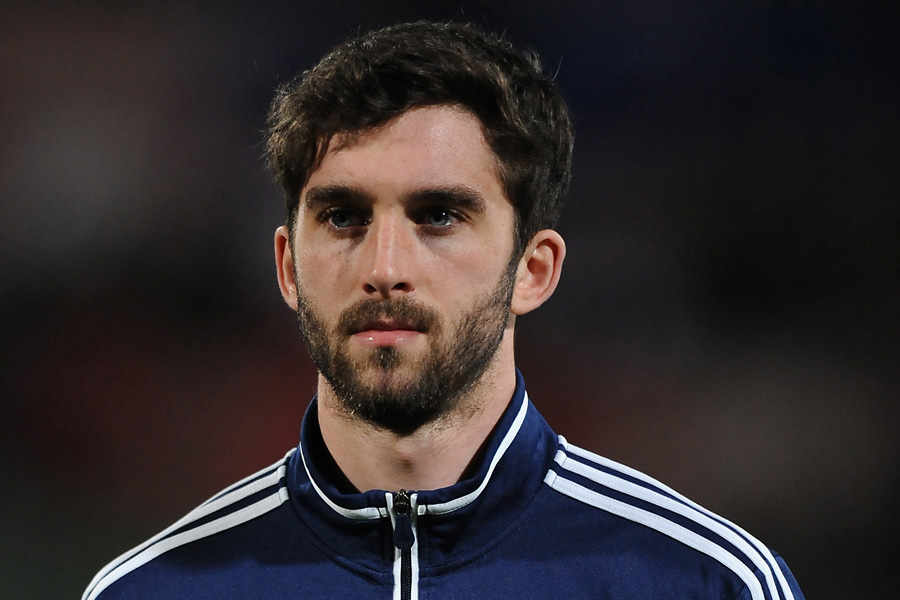
Much depends on Grigg

Grigg

I guarantee we will have a 20 goal a season striker this season

So said David Sharpe in June. Was the young chairman suggesting Latics would have a striker who would score 20 goals in the season ahead? Or was he saying that they would be signing a player who had already scored 20 goals in a season?

Less than two weeks after Sharpe had made his statement free agent Craig Davies was signed from Bolton on a two year contract. A week after that Latics paid Brentford around £1m for Will Grigg, who penned a three year deal.

Both had been 20 goal strikers. The 29 year old Davies scored 23 goals for Chesterfield in their promotion season from League 2 in 2010-11. Despite still only being 24 years old Grigg had done it twice. In the 2012-13 season he scored 20 for Walsall, then last season he scored 23 for the MK Dons in their promotion from League 1 to the Championship.

Davies remains a formidable force and has already impressed Latics fans with his all-action performances. Sadly the hamstring problems that haunted him at Bolton have returned, this time in his left leg. The big striker is now back in training, but even the most optimistic of fans will need to cross their fingers that he can stay away from further such problems. Given the likelihood of him receiving further injuries few would bet on Davies being a 20 goal striker this season. Up to this point he has made five starts, with one appearance as a substitute, scoring two goals.

In Davies and Grigg, Latics had signed players with proven goalscoring records in the lower divisions of the Football League. However, they already had another on their books. Grant Holt is now 34 years old and has recently recovered from a serious injury, but will nevertheless be feared by League 1 defences because of his superb goalscoring record in the lower divisions. Holt has reached the 20 goal mark on four occasions, once for Rochdale, once for Shrewsbury and twice for Norwich. Holt is being gradually eased back into playing a full 90 minutes and Latics will surely not rush him. The big man from Carlisle could have a big part to play in the remainder of the season, providing he can stay fit.

However, if Latics were to have a 20 goal striker this season, the odds would surely be on Grigg. On signing him Gary Caldwell said “Will is the one we were after. He’s a goalscorer, that’s what he does and why we’ve signed him. There were other clubs in the chase, including from the Championship, but he’s chosen to come to us and we are very happy about it.

But with the season at its first quarter Grigg has struggled to reach the goalscoring form that Caldwell would have hoped for. He has scored three goals up to this point, two of which were penalties. After starting in the first six games he missed the Chesterfield match through being on international duty for Northern Ireland. He came back as a 66th minute substitute at Port Vale, but was to pick up an elbow injury which kept him out of the next two games. He made his return as a 77th minute substitute, scoring the equalizer during added-on time against Millwall. Grigg returned to the starting lineup for the next game against Walsall, but was substituted after 70 minutes. However, international call up knocked on the door again and Grigg has missed the last two matches at Crewe and Bury.

Grigg’s season at Wigan has therefore been stop-start up to this point. Caldwell has experienced the frustration of the player being unavailable for three matches without getting on the field of play for Northern Ireland on top of his elbow injury.

At this point last season at MK Dons, Grigg was playing as a lone centre forward in Karl Robinson’s preferred 4-2-3-1 system, alternating with Benik Afobe in that position. He had made six starts, with four appearances as a substitute, scoring six goals including two in the Don’s League Cup victory over Manchester United.

Up to this point Grigg has played in the lone striker role and as a twin striker at Wigan. Caldwell has talked with enthusiasm about the Grigg-Davies partnership. They have started together three times, the most memorable being in the 3-0 destruction of Scunthorpe. The physical presence of Davies creates more space for Grigg and they are Caldwell’s optimal striking duo. The manager also has Holt at hand to play a similar kind of role to Davies and it will be interesting to see if he links the two together at some point in tomorrow’s game against Colchester.

Caldwell also has the option of linklng Grigg together with the physically less imposing, but pacy, Jordy Hiwula. The enigmatic Sanmi Odelusi remains another possibility in a partnership with Grigg.

Up to this point Latics have scored 17 goals in 13 games. Grigg ties with Hiwula and Michael Jacobs in being leading goalscorer with three goals. Recent loan signing Yanic Wildschut has really caught the fans’ attention with two exciting performances, including a blockbuster that will be a contender for goal of the season at Crewe. Hopes are high that the Dutch winger can terrify League 1 defences and score goals. However, the player’s career record reads 16 goals in 132 appearances, a goalscoring ratio similar to that of Jacobs who has also played a s winger during most of his career.

If any Wigan Athletic player is to reach the 20 goal mark this season, it will most likely to be Grigg. He has done it before on two occasions at League 1 level. But Grigg is much more than a goalscorer, his intelligent play and passing enabling him to create chances for others.

Caldwell will surely be counting on Will Grigg as being a cornerstone of his bid for promotion back to the Championship.


Like us on Facebook, or follow us on twitter here.


Progress report – Gary Caldwell


Caldwell2In early April the doom and gloom that was prevailing at Wigan Athletic was suddenly lifted. For so many months Wigan Athletic seemingly had no direction and leadership. But within a short amount of time Latics had a new chairman and a new manager, both young and hungry for success. Even if relegation were to happen there was now a sign of light at the end of the tunnel.

The new chairman had opted for a manager who believed in playing football the “Wigan way”. Moreover he intimated that the new manager would stay in the position long-term.

The 23 year old David Sharpe and the 32 year old Gary Caldwell were to launch the “new era” at the club.

It was a lovely mild spring evening on April 10th  when Caldwell made his managerial debut at Craven Cottage, which had rarely been a happy hunting ground for Wigan Athletic. The match against Fulham turned out to be an entertaining 2-2 draw and Latics were well worth their point. A win was just beyond their reach and relegation crept even closer. But the bright side was that, after just two days of training, Caldwell had got the team moving towards a brand of football reminiscent of the club’s best of times in the Premier League.

Latics went on to lose three of their next four matches and were relegated to League 1. However, few fans could blame Caldwell, who had inherited a team packed with journeymen and loanees. Relegation was a calamity, but there remained genuine hope that the new of Sharpe/Caldwell duo could put the club back on track after so sadly losing its way.

The last game of the season had been a miserable 3-0 defeat at Brentford, but Caldwell was to make a statement by bringing on the 18 year old Louis Robles and the 19 year old Jordan Flores for their first senior appearances after 64 minutes.  Moreover soon after his appointment Caldwell had brought 21 year old Tim Chow back to the club after he had been released by Malky Mackay. Chow has been given his debut at Millwall and gone on to score against Brighton in a 2-1 home win. Was this an indication that Caldwell would be using home-grown talent as a basis for the future?

Since that last match on May 2nd, so much has changed. Caldwell and Sharpe were clearly determined to jettison so many of the players of the previous era, whose Championship-level salaries could not be supported on a League 1 budget. Just a handful now remain.

Let’s take a look at Caldwell’s progress in the season so far. The grades go on a scale from A (excellent) to E (poor), with pluses and minuses indicating the top and bottom of the range (A+ being best possible, E- worst).

Success in the Transfer Market:  A-

Caldwell has done a remarkable job in moving on so many players from the previous era to make room for “hungry” new players to come in. The loanees returned to their clubs and none of the seven players at the ends of their contracts were to stay at the club. Nine players were sold, mostly at bargain-basement prices, and another four sent out on loan.

Latics now have an active first team squad of 29 players. It includes three “home grown” players, with five players remaining from last season’s senior squad. There are seven loanees and two players – Will Grigg and Reece James – for whom they have paid transfer fees around the £1m mark. The remainder were procured for bargain fees or at the ends of their previous contracts.

Caldwell’s squad has its share of experienced professionals, but it is packed with young players of potential. The £1.5 m received for the transfers of James McClean to West Bromwich Albion, together with the accumulation of smaller fees received for other players compensates for outgoing transfer fees. However, despite the continued presence of those five players on Championship-level salaries, Caldwell has drastically reduced the wage bill. Moreover four of those five have contracts that terminate in June 2016.

Caldwell has recruited 21 players since the beginning of May – a remarkable feat. Moreover he has brought in experienced players who have played in the Championship and Premier League, together with capable younger ones who can help form a foundation for the future. Having recruited such a large number of new players it was practically inevitable that he would have had to take a gamble on some who have had injury problems in the past years. However, only one of those is on a contract beyond June 2016, it terminating a year later.

The main frustration last season was with the players’ apparent unwillingness to fight for the cause. At times so many of them just did not seem to care. However, Caldwell’s squad has a different mentality – a fighting spirit and an unwillingness to give up when even two goals behind. It is a testament to his ability in finding the “right type “of player.

Public Relations: – A

Caldwell is a bright and eloquent young manager, seemingly unbowed by the prospect of being peppered with awkward questions, whether it be in an open fan forum or from the media. He is not only eloquent, but bold in enunciating his philosophy of football. For a 32 year old manager in his first job he is impressive.

Caldwell clearly believes that what he is doing is the right way forward for Wigan Athletic, even if he recognises that it remains a work in progress. It is through his belief that he has the strength of character to stand up there and put his head in the firing line.

Results so far: – B

Latics are currently in 10th place in League 1 after 12 matches. At home their record is W3 D3 L0, with an away record of W1 D2 L3. They were knocked out of the League Cup by Bury, but remain in the Johnstone Paints Trophy.

Given the high proportion of new players in the squad it is not surprising that results up to this point have not reached most fans’ expectations.

There has been a welcome change in an upturn in home form, but the away results have been disappointing.

Results over the next couple of months are likely to remain unpredictable, with the players needing more time to gel as a team.

Latics need to be in at least a mid-table position by the end of December if they are going to make a push towards promotion.

The Balance and Quality of the Playing Squad: – A

Caldwell has done well in making sure that there are at least two players competing for every position. On paper the squad is strong enough to gain automatic promotion.

All of his permanent signings are British, except for the Finnish goalkeeper Jaaskelainen who has been in England a long time. He has loan players from Guinea-Bissau, Holland and Slovenia.

The squad is particularly well stocked in the area of midfield. There are a more than a handful of players who can play the of a twin striker role, although there are fewer suited to a lone centre forward role.

With probably the largest squad in the division Latics will be well positioned compared with other clubs in mid-season when the injuries start to reel in. But the downside is that with a squad so large Caldwell will have to adopt a rotation policy to give all those players game time. The alternative is to have disgruntled players, as with what happened last year under Uwe Rosler.

The squad is bristling with the highest proportion of young players we have seen at Wigan for some years. There is a lot of talent, which augurs well for the future, but the team continues to suffer through their inconsistencies. There is an old adage that young players need time, but can Caldwell offer them that, given the pressure to achieve promotion?

Tactics and Team Selection: – B-

Not surprisingly, given injury problems and the need to rotate a large squad, Caldwell has used 30 players so far, including Jonjoe Kenny who has now returned to Everton.

The critics will say that Caldwell does not know his most favoured starting eleven. However, given the number of injuries suffered by his players it is doubtful if he would have ever been able to do field his strongest eleven , even if he did know it. Then again he would still need to shuffle his pack on a regular basis due to the size of his squad.

Caldwell is a rookie manager learning the job. Like any newcomer on the scene he has made mistakes, but his long-term view and his belief that his players can achieve is to be commended.

Some fans will say that Caldwell lacks courage in his approach and affords the other teams too much respect. They urge him to attack the opposition from the start. They will say that the slow build-up from the back involving passing between defenders allows the other team time to regroup. Moreover the result of defenders trying to pass the ball among themselves too often leads to the opposition intercepting the ball or a pass back to the goalkeeper and a punt upfield conceding possession.

They will say that possession means nothing, that it is goals that count. Some look back to the days of 4-4-2 with twin strikers of the ilk of Ellington and Roberts terrifying opposition defences. In away games Caldwell has constantly lined up with a lone centre forward who has been unable to make an impact given poor service and support from midfield. Moreover the defence has leaked too many goals that were preventable, being particularly vulnerable to crosses and set pieces. They cite the stunning late turnarounds, when Latics have been trailing and have come back in the final quarter “guns a blazing”. Could they not have done that from the start?

However, there are parallels to the Martinez area, when similar issues were so often raised, especially in the early days. Like Martinez, Caldwell clearly has a strong belief in his approach. In flashes Latics’ football under the Scot has been a joy to watch. What is missing is consistency. Possession football can wear the opposition down, leaving them vulnerable in the final quarter of the game. However, no matter what the style of football you need a solid defence, a midfield that can push forward to create chances and forwards who are capable of converting them to goals.

Caldwell can hardly be accused of tactical rigidity or being cautious in the use of substitutes. He has used 3-5-2, 3-4-3, 4-4-2 and even 4-2-4 in the closing part of the game. He has typically used his bench earlier in the game than his recent predecessors. What has hurt Caldwell most up to this point has been the absence of key defenders and forwards through injuries and suspensions, together with so many numbing refereeing decisions that have gone against his team.

On Saturday the Bury manager was upset with the referee for sending off one of his players after he had committed two professional fouls, each deserving of a yellow card. For once the tactical fouling of the opposition was punished by a referee. Sadly the norms of arbitrage in League 1 are worryingly low and too many cynical challenges go unpunished.

Wigan Athletic are a big name in the division and other teams will try to raise their game to beat them. Latics will come across teams who will employ whatever means necessary to stop their more talented players. However, the “big name” aspect can also cause teams to wilt when Latics really attack them. What is lacking is the collective confidence in the Latics squad to do that from the start. So often midfielders will take the easy option with a pass backwards or across the pitch. They are playing for their places and are afraid to make mistakes.

Playing 4-2-4 is so exciting to watch, but in the modern game it is a last resort. No manager is going to go into a match with that formation, let alone a rookie like Caldwell. However, when your team is behind and the opposition is tired near the end of the 90 minutes it is a viable option.

Areas to work on

Caldwell has done well to put together a squad that matches that of any other in the division. Providing he gets the best out of his players, promotion back to the Championship remains a possibility.

In order to succeed in League 1 a club needs quality players who are not easily deterred and ready to fight for the 50-50 ball at all times. It is something that Caldwell has clearly been instilling into his players, more than half of whom had never previously played in League 1. Many are still adjusting to the pace and physicality of the play in a division where tackles are tolerated that would draw red or yellow cards in the Championship or Premier League.

Caldwell needs to reduce his squad size to alleviate the need for constant rotation of his lineups. Although arguments can be made that injuries have played a big part, using 30 players up to this point is excessive. He needs to identify the players who make up his core lineup and play them together on a regular basis, injuries permitting. Moreover chopping and changing between different tactical formations is not helping players gel as a unit. The players have not only had to adapt to his preferred style of play, but also frequent changes in shape.

Caldwell deserves commending for giving youth a chance, but there is some validity in  the phrase “kids don’t win promotion”. When he has the bulk of his most capable and experienced players at his disposal he must use the youngsters more sparingly.

Caldwell and his squad need more time. It is simply too much to expect a group of players recently put together to gel into a fully functional unit at this stage. However, Caldwell clearly believes that with time it will come together. The question is – how much time will it take?

The hope is that maybe a couple of months from now Caldwell’s team will ramp up its gears, taking the game to the opposition from the start. It is the collective confidence that is lacking, but having played high-flying teams like Bury and Walsall in recent matches the players will surely have learned there are no teams to fear in the division.

Like us on Facebook, or follow us on twitter here.
Strength in depth?

Coulthirst

Shaq Coulthirst – his short term loan is soon to expire.

Even with five changes from Saturday, the team played the same way – they had the same control of possession, they attacked with a real threat. It’s good to know you’ve got that back up sitting waiting to come on when necessary.”

Gary Caldwell quoted on Wigan Today regarding the 3-2 victory at Crewe on Tuesday.

Caldwell had made the maximum five changes from the previous match that he was allowed according to Johnstone’s Paints Trophy rules. The players brought in to the starting lineup were Jack Hendry, Francisco Junior, Andy Kellett, Sanmi Odelusi and Yanic Wildschut. He went on to bring Don Cowie and Grant Holt off the bench for their first starts of the season. Tim Chow also came on as a substitute, with Richard O’Donnell staying on the bench.

A total of no less than 21 players played in the last two matches for Wigan Athletic out of a squad of 29. Some players were unavailable – Jordan Flores (suspension) and Shaq Coulthirst, Craig Davies, Haris Vuckic, Kevin McNaughton and Jason Pearce due to injury. Richard O’Donnell was on the bench for both games, with Ryan Jennings and Sean Murray not making the squad for either.

The departure of Jonjoe Kenny left Caldwell’s squad looking bare at right back/wing back, but the signing of Donald Love and with Donervon Daniels showing he can do a good job in that position has eased anxiety. Moreover Coulthirst has returned to the club from Tottenham and Yanic Wildshut has been signed on loan.

Caldwell’s comment indicated his satisfaction of having strength in depth. This is certainly the case, at least in the short term.

However, having a large squad can create complications as Uwe Rosler found out last year. Is Caldwell going to run into the similar problems, having to regularly rotate his squad in order to give all of them game time?

The lessons learned from last year are still ringing in the ears of Latics fans. Is Caldwell going to have to deal with disgruntled players left out in the cold? The logistics of rotating a squad of 29 players are mind boggling, let alone not having a settled team.

It appears that Coulthirst, Davies and Vuckic are close to returning from injury. Providing no further injuries or suspensions impact upon the squad before their return it will leave Caldwell in the position to choose his strongest starting eleven from a pool of 27.

Of the 29 in the squad there are 6 players on loan. Two of those – Jordy Hiwula and Haris Vuckic – are on season-long loans. The other four – Junior, Love, Murray and Wildschut – are on short-term loans. Coulthirst’s loan expires on November 1 and Love’s a month later, those of Junior and Wildschut in January.

Bringing in players on short-term loans is a relatively new experience for Wigan Athletic. Last season Rosler brought back Maynor Figueroa for a brief spell, followed by Malky Mackay bringing in seven. Moreover many of Mackay’s loanees were young players, causing a controversy among fans whether they should be given priority over home-grown young talent.

Up to this point Caldwell has been able to manage the two. He has given opportunities to the likes of Tim Chow, Jordan Flores and Ryan Jennings within the club, whilst bringing in the short-term loanees. Caldwell got a rude surprise when Everton recalled Kenny, although the same club had allowed Junior to extend his loan period.

Kenny is clearly an up-and-coming player at Goodison and will be there long-term. Junior’s contract will be up at the end of the season and at this stage it is unlikely that Everton will renew it. Junior has impressed in the relatively few appearances he has made so far. Fitness has been an issue. Junior has made five starts, being taken off in three of them within the first 56 minutes. However, it is to be noted that Junior completed the full 90 minutes at Crewe. He has already picked up three yellow cards.

Junior has clearly struggled to attain the levels of fitness necessary to make him a permanent choice in Caldwell’s team. Moreover he has had to make a major adjustment to the physicality of League 1. Come January Caldwell will need to make a decision whether to pursue the permanent signature of the player. Junior oozes class in a League 1 setting and were he to be fit and fully adjusted to the pace of the play, he would surely be an asset Caldwell would want to keep.

Caldwell certainly has a squad with strength in depth. But he will be challenged to name a settled team on a regular basis, given the size of the squad. He might even look at reducing its size over the coming months. The strength in depth could prove to be a millstone around his neck.

The return of Chris McCann

Mcann

Relegation from the Championship saw a Wigan Athletic fire sale that was surely unparalleled in the club’s history. Players on Championship-level salaries were jettisoned at bargain prices as the club made efforts to drastically slash its wage bill with the prospect of much reduced revenues in League 1. It was anybody’s guess who would remain from last season’s squad as the cull neared its completion.

Many of us thought they would keep up-and-coming young talent and cash in on the players with rich Championship or Premier League experience. It was therefore a surprise to see the 28 year old Chris McCann line up for the opening match of the season at Coventry. Here was a player who had appeared disaffected in the latter part of the previous season, who had not started a game since early February.

McCann could have been expected to be one of the first to be offloaded. But it was not to be. In fact, the Dubliner has played in all eleven league games up to this point. His versatility in being able to play in midfield or on the left side of a central defensive trio has been of paramount importance to Gary Caldwell, given the injury problems he has already had to cope with.

Owen Coyle must rank as one of the most unpopular managers that Wigan Athletic have ever had, although most fans would probably rank Malky Mackay even lower. Coyle lasted less than six months in charge at Wigan before he left “by mutual consent”.

Coyle was given the mountainous task of taking Latics back into the Premier League within a year, together with leading through an historic Europa League campaign. He inherited a group of players who had played under the tutelage of Roberto Martinez, but given the mass exodus of players in the summer he had a lot of recruiting to do.

Coyle’s first signing was to be Chris McCann. The Dubliner had played under him at Burnley and was available for free at the end of his contract. McCann had been at Turf Moor since arriving from Home Farm in 2004. He had an outstanding season in 2008-09, when Burnley won promotion to the top tier of English football. Sadly he sadly was only able to make half a dozen Premier League appearances for the Clarets before receiving a cruciate knee injury. McCann returned in January for a couple of games before injury ruled him out for rest of the season. However, the Irishman was to come back to start in 83 Championship matches over the next two seasons. But he was unable to once more reach the heights of that promotion season form at Burnley, with further knee problems not helping.

McCann’s early performances for Latics were solid, if uninspiring. Some said that Coyle had brought in an ex-player who was not up to par and was snubbing players from the Martinez era. However, McCann gave a fine display against Rubin Kazan in the Europa League, being tireless in defence, with his cultured passing when under pressure helping Latics keep possession. He followed that up with a fine performance at Charlton, being unlucky with a flick header that hit the crossbar. McCann had clearly now settled in and was to become an important cog in Coyle’s machine.

McCann must have wondered what would come next when Uwe Rosler replaced Coyle in December 2013. The Irishman is not the world’s most fortunate footballer and he was sadly sent off in Rosler’s first match in charge, leading to Latics being eliminated from the Europa League. Latics had been a goal up at Maribor when a shot from the edge of the box hit McCann’s upraised arm after he had turned his back to the shooter. It was clearly not intentional, but the Polish referee not only gave a penalty, but also gave McCann a yellow card. Since he already had an earlier one he was sent off.

But McCann was to become a key player for Rosler in Latics’ rise up the table and into the FA Cup semi-finals. He would usually operate on the left of midfield, where his surging runs forward, accurate passing and toughness in the tackle were a real asset. However, from time to time Rosler would play him on the left of a back line of three. He was playing in that position in the FA Cup sixth round match at Manchester City on March 9th, when he sadly fractured his knee cap during the first half of what was to be another stunning victory. Once again a serious injury had interrupted McCann’s career.

He was to make his return as a late substitute at Brighton on November 4th, in the penultimate game of Rosler’s reign. Mackay’s first match as Wigan manager saw them draw 1-1 at home to Middlesbrough, with McCann putting in an excellent performance. He became a frequent starter, although his performances had started to wane. McCann’s last appearance as a starter was on February 7th in a home defeat to Bournemouth. After that he was limited to three appearances off the bench for the remainder of the season.

McCann has staked his claim for a future under the management of Gary Caldwell. He has had his downs in his career, particularly with injuries, but continues to show his resilience. He has bounced back after appearing to be on his way out.

When McCann plays at the back Latics are pretty much guaranteed cultured passes coming in from the left hand side. Moreover at 6 ft 1 in and with a strong tackle McCann is able to cope with the physical side of defensive play.  However, his best position is on the left side of a trio of midfield players. It is from such a position that his attacking abilities are most effectively employed. On occasions when he has been played as one of two holding midfielders he has been less effective.

It has been a remarkable turnaround from McCann. Although seemingly destined to leave the club he has stayed and fought his way back to a regular starting place.

Over the coming weeks, providing the injured players gradually ease their way back in, it will be a challenge for McCann to maintain his place. But then again, given the player’s resilience, who can say that he will not be a key player in Caldwell’s plans?

Yanic Wildschut – a Middlesbrough fan’s view

wildschut

Wigan Athletic have signed 23 year old winger Yanic Wildschut from Middlesbrough on a three month loan. Wildschut has made 11 appearances for Boro, including two this season. He has represented the Netherlands 10 times at under-21 level.

Gary Caldwell told the official Latics website  that:

“He’s something we definitely haven’t got at the moment. We’ve lacked that bit of creativity from the flanks and we were interested as soon as we found out he may be available. With his background – coming through at Ajax – he is technically very comfortable and has had 12 months to get used to the pace of the English game. He is a very powerful boy, who stands at over 6ft tall and one we have been admiring from a distance and with him not being involved at the moment, he is looking for game time. Hopefully it will be an arrangement that suits everyone. We look forward to working with him.”

The 6 ft 1 12 in tall Wildschut was born in Amsterdam and played in the Ajax academy. He joined second division FC Zwolle and made 33 appearances for them in the 2010-11 season, scoring 3 goals. In summer 2011 he signed for VVV Venlo in the Eredivisie. Wildschut made 61 appearances for VVV, scoring 8 goals before leaving them in the summer of 2013, after they suffered relegation.

In summer 2013 he signed for another Eredivisie side, Heerenveen, on a three year contract. In January 2014 he was sent out on loan to Ado Den Haag until the end of the season, making 7 appearances. Wildschut made 18 appearances for Heerenveen scoring 2 goals.

Middlesbrough signed Wildschut in September 2014 on a two year contract for a fee of around £600,000, with the option of a further year.

In order to learn more about Wildschut’s time at Middlesbrough we contacted Robert Nichols of the Fly Me To The Moon fanzine fmttm.com.

Here’s over to Robert:

Yanic Wildschut is the kind of player that draws the fans to games. He is fast, strong, powerful and direct. 

 When I say he is fast, let me qualify that by saying Yanic wears athletes compression socks under his football socks. He can give defenders ten yards start and tear past them. A good span of games at Wigan will help him sort out his weak spot, the finished product. Although get him running into the box and it doesn’t matter what he does with his final delivery he will cause mayhem and bag free kicks and penalties by the bucket load.

 If defenders can knock him off the ball. He is, as they used to say in Mark Lawrenson circles, a very big unit.

 Wildcshut has been desperately unlucky at Boro. He helped destroy Oldham away in the 1st round of the League cup. He scored a superb break away goal and was generally far too hot for the other Latics to handle. His promotion to first team action was only a matter of time and indeed we saw more of the same from him at home to Bristol City. Every time he got the ball and went on the run Bristol City were running scared. Yanic was subbed at half time in a tactical switch to allow Stewy Downing to go wide. It didn’t work but we have such a surplus of good wide players, wingers and overlapping full backs that no less than three are out on loan at present. 

 It was expected that Albert Adomah would be leaving but he settled his differences with the manager yet in the meantime we had brought in a talented Uruguayan called De Pena. Thus Carayol, Adam Reach and Wildschut have been allowed on loan. They need first team football rather than Development side starts.

 Wildschut’s debut was as sub at Anfield in the League Cup last season. He was thrown on as a centre forward. And he caused Liverpool threats running through the centre. He scored in League action in a win away at Rotherham. But needs more starts to get consistency.

I would be very excited right now if I was a Wigan fan. Wildcshut will destroy defences with pace. He might need a few games to find a level of consistency to impact through 90 minutes. But he is worth the wait because he can split and sprint through a defence in a minute.

Watch him go. And watch Yanic grow.