
Looking back at MAF’s time at Wigan

 Fortunemiss

“The centre-forward is often a tall player, typically known as a target man, whose main function is to score the majority of goals on behalf of the team. The player may also be used to win long balls or receive passes and “hold up” the ball as team-mates advance, to help teammates score by providing a pass (‘through ball’ into the box); the latter variation usually requiring quicker pace. Most modern centre-forwards operate in front of the second strikers or central attacking midfielders, and do the majority of the ball handling outside the box.

I had been looking for a description of the role of the centre forward and after a bit of searching I found the above on Wikipedia. It sums up more or less what I thought the role involved. But why didn’t I trust my own judgment in the first place? After decades of watching football surely I knew what a centre forward should do. But events over the past year or so had clouded my judgment.

My boyhood hero as a centre forward was Harry Lyon. Lyon was by no means a giant, but he had the jumping technique to out-do defenders on high crosses. He certainly scored the majority of the goals for Latics in his heyday. In fact he netted a remarkable 67 times in the 1964-65 season. But the following season saw his goalscoring tally drop, when he scored less than his strike partner Bert Llewellyn who got 49.

Lyon was a scapper, lacking elegance in his tussles against opposition defenders, but he would always chase the long ball and fight hammer and nail to hold possession. Memory fades, but I don’t recall Harry as the kind of player to provide through balls into the box, but his strike partner would be there sniffing for the rebound of one of his ferocious shots. Llewellyn and his predecessor at Wigan, Carl Davenport, were good at putting those loose balls in the net.

But football has changed since Lyon’s day. Defenders are much fitter and most teams have a couple of large guys in the centre of defence who are very good at clearing the ball, especially if it is in the air.  For decades after Alf Ramsey brought in 4-4-2, teams used that system. The twin strikers would tussle with the twin central defenders of the opposition, but after a while the fashion changed.

Perhaps it had become too easy for those central defenders. Marking for them had been straightforward – you take one and I take the other being the order of the day. They were later to be faced with just one central striker, with support coming from the flanks and the midfield. Their roles became more complicated, sometimes confusing.

In the higher levels of English football not so many teams now play 4-4-2. The job of the centre forward has become an almost thankless task, extremely physically challenging in having to chase balls and hold up against often two big defenders. Then he has to have the energy and enthusiasm to mount attacks on goal. Not surprisingly good centre forwards are hard to come by in this day and age. Some are good at scoring goals, but not so efficient in chasing lost causes and holding up the ball. Others are the reverse. The average goal tally for a centre forward has not surprisingly dropped, given his onerous other duties.

However, this does not mean that modern day systems don’t work. The top teams have midfield players moving into the “hole” behind or to the side of the centre forward, notching opportunist goals. Those typically towering central defenders have a hard time coping with their runs.

Uwe Rosler was clearly a disciple of the “modern” approach. In his first season he often used MAF – Marc-Antoine Fortune – in that lone centre forward role, with two players wide of him. Fortune did a good job in holding up the ball and worked hard. MAF had been used sparingly by Owen Coyle, with Nick Powell being on the scene, but Rosler often used him as the target man following Powell’s loss of form and Grant Holt’s fall from grace. Over the course of the 2013-14 season,  MAF was to make 17 league starts, with 20 appearances off the bench. He scored four goals.

Rosler had clearly decided that MAF would not be his first choice centre forward when he signed Oriol Riera before the beginning of last season. This was underlined when Andy Delort was signed just before the close of the summer transfer window. But neither of the two overseas players could settle in their roles. MAF was brought back in.

In Malky Mackay’s first game in charge in late November, Latics were home to Middlesbrough. MAF was given the lone centre forward role, with Callum McManaman and Shaun Maloney playing wide. MAF was to become a regular fixture in Mackay’s teams, even when he switched to 4-4-2. Fans had been hopeful that more goals would come with a switch to the system that had done Latics proud in their heyday. However, Mackay was to pair up MAF with James McClean, a winger playing as a central striker, or Leon Clarke, a journeyman who rarely delivered. Mackay had scorned the idea of linking him up with Billy Mckay or Martyn Waghorn. By the end of the season, MAF had made 27 league starts, with 8 appearances off the bench and scored one goal.

MAF had become a feature in the Mackay era through his ability to chase those lost causes and hold up the ball. Although he offered a minimal goal threat the team often suffered when he was not on the field. MAF had become an important cog in Mackay’s long ball tactics.

MAF was like Marmite to Wigan Athletic fans. You either loved him or you hated him. Despite his whole-hearted play and willingness to sacrifice for the team, few loved him. MAF had become synonymous with the most disappointing season in living memory for most fans.

At Wigan MAF had become the target man, not always his role at previous clubs. Indeed at West Bromwich he had often been played wide. Perhaps Latics would have got more out of the player if they had done that. MAF’s career record as a goalscorer was weak when he arrived at Wigan as a 32 year old, but playing as a lone centre forward helped make it even worse. Moreover his concentration could lapse and he could too often be caught offside.

We might well ponder what might have happened if Latics had persevered longer with the overseas strikers, Delort and Riera. Had they been written off by the coaches or was it an economy measure to send them off on loan in January? On top of that, the reluctance of Mackay to give Waghorn and Mckay a genuine chance was hard to fathom, given the impotent strike force he was regularly fielding. There are fans who even suggest that Latics have avoided relegation if Mackay had not so often fielded MAF.

MAF sadly became the scapegoat of an awful season. Unlike Harry Lyon he could not score goals. Neither could he make assists.

MAF is by no means a bad footballer, neither does he shirk in his duties. But he is not a goalscorer.

We wish him well in his next move.

Wigan Athletic’s future – can shrewdness outweigh cash?

swissprofitand loss2013-14

In the 2013-14 season of the Championship only three clubs made a profit. They were Blackpool, Wigan Athletic and Yeovil Town. Each has since been relegated from the division.

At the time Queens Park Rangers had made the biggest loss of the promoted clubs (£70 million), with Leicester City losing £21 million and Burnley £8 million. Since then QPR’s loss has been cut to £10 million due to a write-off of shareholder debt of £60 million by chairman Tony Fernandes and his associates. Without that they would have faced a massive fine on their return to the Football League in 2015-16.

Many Wigan Athletic fans have written off the last two seasons in their minds, as a succession of bad decisions made by the club led to a slide into League 1.

Those decisions include the appointments of hapless managers in Owen Coyle and Malky Mackay and the departures of no less than thirteen players in the January transfer window of 2015. The result was a squad left short of quality that would have struggled to survive even if the manager had not been the seemingly oblivious Mackay.

In fact the 2013-14 season had turned out to be a relatively good one for Latics, despite a poor start under Coyle. It remains open to conjecture whether they could have challenged for an automatic promotion spot if they had made a different initial appointment.

The obvious choice would have been a manager who could have built upon the foundations left by Roberto Martinez, fine-tuning the playing style and philosophy as required. Ironically it did happen some 22 months later when Gary Caldwell was appointed, but sadly almost all of the players who had proved themselves under that philosophy of play had by then left the club.

It could be argued that apart from the appointment of Coyle, the season was a success in terms of a transition from the Premier League to the Championship. Shrewd financial management and the appointment of Uwe Rosler kept things on track. In comparison Blackburn Rovers were to make a loss of £42 million over a season in which they were to finish in 8th place. With a 5th place finish, a narrow playoff defeat and a valiant loss on penalties in an FA Cup semi-final, Rosler had made a very positive impression.

The 2014-15 season might well go down as the most memorable in the club’s history, albeit for the wrong reasons. Three managers, the selling off of the family silver, Dave Whelan’s awful happenings with the national media and his subsequent stepping down as chairman was to eventually lead an unhappy club to relegation to League 1.

In both the 2013-14 and 2014-15 seasons Latics were able to be competitive in the transfer market. This was partly due to incoming transfer fees, but more significantly down to parachute payments of £24 million in the first season and £18 million in the second. That meant that they were able to cope with a player wage bill of around £30 million, drastically cut down to around £20 million (on an annual basis) in January 2015. The Europa League campaign in 2013-14 and the FA Cup runs in both seasons added to the coffers.

However, in 2013-14 Latics’ gate receipts of around £4 million were close to the median for the division, whereas a paltry £1 million from commercial revenue was the lowest.

According to the Swiss Rambler the club had a net debt at the time of £23 million, significant but dwarfed by those of Bolton (£195 million), QPR (£158 million), Brighton (£131 million) and Ipswich (£86 million).

Swissdebt

For the coming season Wigan Athletic will have the advantage of the £9 million parachute payment over the other clubs in League 1. However, under the SCMP version of FFP used in Leagues 1 and 2, there is considerable amount of freedom for an owner to make cash injections.

If David Sharpe adopts the approach of recent years at the club he will run it on a tight budget and will not spend the kind of money that his grandfather splashed out some thirteen years ago when Latics were in the third tier. Latics will now be competing with clubs like Sheffield United, with higher match day and commercial revenues, but also with those with wealthy benefactors.

However, Latics are now in the hands of a young brigade that is optimistic about the future. Sharpe has talked about getting in “the right kind of player” after the nightmare of the season recently passed, when so many of them just didn’t seem to want to put in an effort commensurate to their salaries. If Latics are going to have future ambitions of getting back up there with the big guns a lot is going to depend on the recruitment team’s ability. Recruiting the “right kind” of hungry, talented young player from the lower leagues or Scotland is going to be the order of the day. A few hardened and seasoned pros are likely to be added to find a suitable blend, mostly on short term contracts

When Latics were in the third tier in the 1980’s they made some inspired signings of young players. So many were sold to keep the club afloat: a reflection of the club’s circumstances at the time. Most made their mark in higher levels of football.

It is that kind of expertise in picking out those young talents that is what Latics currently need. Sharpe might allow Caldwell a small number of players on higher salaries who have played in the upper echelons, but Latics will surely look to sign those up-and-coming players who can make the difference.

But even if Wigan Athletic can get promotion back to the Championship a year from now, what will be facing them?

The gap between the Premier League and the Championship continues to widen. Two of the three promoted teams were propelled back into the Championship, the third surviving with a “miraculous” end of season run, inaccurately paralleled with that of Latics in 2011-12 by the national media.

Moreover the massive increase in television money secured by the Premier League’s latest deal means that parachute payments will be much increased. It will be more difficult than ever for clubs without first or second year parachute payments to compete.

With shrewd management Latics can get promotion back to the Championship this season. Without it they are likely to be doomed to meandering in the lower leagues for years to come.

However, even if they are back in the Championship a year or so from now the picture will be vastly different than it was in 2013. They will be facing so many clubs with much bigger financial resources.

Can shrewdness outweigh cash?

It is the shrewdness that will make the difference.

Let’s hope that the young brigade currently running Wigan Athletic Football Club can show the kind of shrewdness that will be needed.

The jury is currently out.


Boyce’s anguished departure signals the end of an era


Photo courtesy of Daily Mail.

Photo courtesy of Daily Mail


I don’t think the history and tradition should ever be forgotten and it certainly should never be seen as a problem or an excuse for how we’re doing now. Showing that this club has enjoyed success in the past provides a target for everyone. But there is a generation of fans who are fed up with hearing about the European Cup victories from my time. I would really like this generation to share the times that the previous ones have done, as they did when they got a bit of glory in 2005.

It is a huge ask to get back to where we were in the Seventies and Eighties, but you always have to aim as high as you can, while at the same time being totally realistic. This club used to be so unified; everybody was pushing in the same direction. As long as I’m sitting here, there will be no divisions. Everybody will be treated with the utmost respect in the position they hold in the football club. “

So said Kenny Dalglish on his return to Liverpool in January 2011. The Scot is not known as one of the most eloquent men in football, but these words were powerful and struck a chord.

Twenty years from now will there be Wigan Athletic fans who are fed up of hearing about winning the FA Cup and the glories of wins over the elite clubs of English football? Will past successes provide a target or will they be a millstone around the club’s neck?

League 1 beckons Wigan after ten years away in the upper echelons. This time around it feels like a step into the unknown. The deconstruction of the playing staff that started in January will be completed over the coming weeks. The club has to cut its coat according to its cloth, from a £50 million salary bill in the Premier League in 2012-13 to one nearer £10 million in 2015-16.

Players come and they go. That is the nature of football. But Emmerson Boyce’s departure is much deeper than that. For me his presence on the field was always a reminder of the teams of the Martinez era, who achieved what was beyond our wildest dreams. Boyce and Wigan Athletic seemed to go hand in hand, the player and the club making constant, steady progress, jointly punching above their weight.

Boyce was signed by Paul Jewell from Crystal Palace in August 2006 as a replacement for right back, Pascal Chimbonda. He quickly established himself as a solid and reliable defender, playing either at right back or in the centre of defence. Boyce was to make 34 league starts in that 2006-07 season. However, Mario Melchiot was signed in the summer of 2007 and became the first choice right back, with Boyce being used primarily in the centre of defence. He made 25 league starts in that 2007-08 season. The following season saw him make 26 starts.

But it was the arrival of Roberto Martinez in the summer of 2009 that was to change Boyce’s career. Distribution had not been Boyce’s strong point, but under the influence of the Catalan, it started to improve.

Boyce was to experience true highs and lows during the four years with Martinez.

In September 2009, with Latics playing a new brand of football, Boyce lined up at centre back with Titus Bramble, in Wigan’s first ever league victory over Chelsea, a 3-1 win. A couple of months later that same central defensive partnership had a torrid time at Tottenham, resulting in a 9-1 defeat with Jermain Defoe scoring five goals. Gary Caldwell was to be signed in January, with Boyce losing a regular place in the lineup. However, Boyce did play in the last match of the season when Latics were thumped 8-0 by Chelsea. He had made 23 league appearances.

Boyce was back in the starting lineup in the 2010-11 season, but missed some 10 weeks due to injury. He went on to make 22 league appearances, including the final game of the season at Stoke when he made a goal line clearance in the first half before Hugo Rodallega’s header guaranteed safety from relegation.

Latics started the 2012-13 season badly and suffered seven consecutive losses in September and October. Following a 3-1 defeat by Wolves on November 6th, Martinez decided to change the system of play. For the next match with Blackburn he brought in a back line of three central defenders – Steve Gohouri, Gary Caldwell and Maynor Figueroa – with Ronnie Stam and David Jones as wing backs.

Gradually results started to improve as the players adapted to the new system. Boyce’s first game in the new system was as a wing back in a 3-1 defeat at QPR at the end of January. He moved into the back three for the next couple of matches, a 3-0 defeat at Tottenham and a 1-1 home draw with Everton. Martinez then opted for the safety of Boyce at wing back, rather than the defensively- suspect Ronnie Stam. Boyce was to get a better feel for the position, which was more physically challenging for him.

The tide was to turn in mid-March as the players started to play really well in the system. Shaun Maloney had established himself as a starter, with Boyce and the January arrival, Jean Beausejour, playing key roles as wing backs. Boyce’s form was a revelation. He had been transformed into a high quality wing back, defensively solid as always, but making long runs off the ball to make himself available to receive passes. But more than anything else it was the quality of his passing that caught the eye for me. Could this be the same player we saw in the Jewell era? He will be long remembered for his classy performances in the epic wins at home over Manchester United and away at Liverpool and Arsenal.

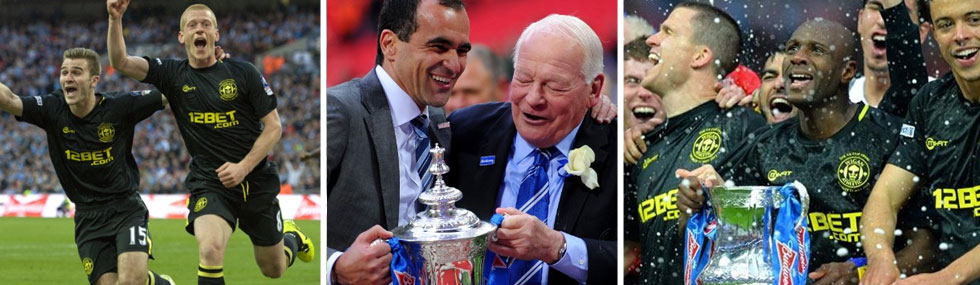
The following season was Latics’ last in the Premier League, but Boyce was to play a key role in helping lift the FA Cup. He had played at wing back in the 3-0 win at Everton and the 2-0 victory in the semi final against Millwall. But for the final he was drafted into the back three, together with Antolin Alcaraz and Paul Scharner. Being captain of a side that won the FA Cup is something he will never forget.

Boyce was clearly a late developer who had gained the self-confidence to play football in the Martinez style. The arrival of Owen Coyle meant a return to a flat back four, but Boyce did get opportunities to play in the wing back position on the occasions when Uwe Rosler chose to play with three central defenders. In the absence of Gary Caldwell through injury, Boyce had become the regular captain and an automatic choice in the team. He was to play a remarkable 50 matches in that 2013-14 season.

In August he had been back once again back at Wembley, leading his team out in the Community Shield against Manchester United. In September he led them out in the club’s first ever European competition match in Bruges. In early March he was to captain them to another famous FA Cup win over Manchester City, a 2-1 win in the sixth round at the Etihad Stadium. A month later he was back at Wembley for the 1-1 draw in the semi final against Arsenal. His season finished with two close encounters with QPR in the Championship playoffs.

Sadly Boyce could not maintain the same kind of form in the 2014-15 season that followed. He was not alone in that respect – it would not be an exaggeration to say that not one single player in the squad played to his potential. However, at times it looked like the years had caught up with him and at 35 he had lost some of his previously considerable pace. January saw a clear out of 13 players including his fellow cup final winners Roger Espinoza, Shaun Maloney, Callum McManaman and Ben Watson.

Just like with Liverpool an era of success had ended and the club was adjusting to a new reality. Dave Whelan had backed Uwe Rosler in the transfer market in a bid to get back to the Premier League, but it was to backfire with the German losing his job in November. Boyce was to work under his seventh manager in his ninth year at the club.

Malky Mackay was brought in by Whelan to get Latics back into the promotion race, but the reverse happened. Boyce no longer commanded a regular starting berth in the team and by the end of January, having seen the vestiges of the Martinez legacy depart, the writing was surely on the wall for him. The club was seriously downsizing just in case the unthinkable happened and Latics were to find themselves in League 1 next season. To not do so could jeopardise its financial future. Moreover so many players had not been playing to their potential, just not appearing to show the commitment on the field that fans expected. Sadly the downsizing left the squad short on quality and Mackay just could not turn things around.

After nine years Emmerson Boyce had become the epitome of what the club’s successful era was all about. In parallel he and the club had punched above their weight, competing on a field that was not level, against the elite of English football. His resilience and willingness to improve professionally made him a role model for his colleagues. Off the field he was a great ambassador for the club and his work with Street Soccer USA and Joseph’s Goal was notable.

As Wigan Athletic supporters we will all have our favourite and most memorable Boyce moments. I can remember being behind Mark Schwarzer’s goal at Fulham, with Latics fans singing ‘I’m a Believer’ at the tops of their voices, when he hit an absolute gem of a shot into the corner of the big keeper’s net. His block of what appeared to be a certain goal by Edin Dzeko in that sixth round cup win was unbelievable and will compete with any such incidents in world football. The post-match celebrations at Wembley and Boyce holding the FA Cup with Gary Caldwell beggared belief. But my favourite was when he carried Joseph Kendrick on to the pitch at Wembley. It was an unforgettable moment in a sport that can be as cynical as any.

As Kenny Dalglish said “…..you always have to aim as high as you can, while at the same time being totally realistic.”

This is what David Sharpe, Gary Caldwell and other senior managers at the club are currently dealing with. The club has to downsize to a wage bill around a third of what it was in that first season back in the Championship. Sharpe and Caldwell have provided a breath of fresh air to a club that was meandering with a lack of leadership and direction. They have a hard road ahead of them, but the support of the majority of the fans. The waters are going to be choppy over the next couple of months as things are reengineered.

There have been fans who have advocated finding a place for Emmerson Boyce, not only as a player, but also as a coach or an ambassador for the club. However, in the current economic climate that the club was facing, adding additional backroom or administrative staff was unlikely to happen. Sadly the club will most likely have to downsize its non-playing staff too, cutting back towards bare bones.

However, Dalglish had also pointed out that “This club used to be so unified; everybody was pushing in the same direction. As long as I’m sitting here, there will be no divisions. Everybody will be treated with the utmost respect in the position they hold in the football club.”

This is something that Sharpe, Caldwell and company will surely work on. Over the past couple of years too many players have been frozen out, with seemingly no future at the club, but still on the books. Others have come in and found it hard to settle and play to their potential.

There are so many supporters who are sad to see Emmerson Boyce not continue to be on the club’s playing staff. Some would say that he should have been offered a contract extension for another year on a salary commensurate with League 1 status. Others would opine that Boyce will be 36 in September, his best days behind him. Better to invest the more limited finances in younger players for the future.

Both views have credence. However, the way in which Boyce has been treated appears to reflect those broader human resource management issues within the club.

A pay-per-play arrangement is hardly ideal for a footballer coming up to 36 years of age, though the club can justify it given its changed economic situation. Boyce labelled the pay-as-you-play offer as “disappointing”, but went further by saying that the deal itself was “laughable”. His wife, Lucy, tweeted:

A degree of respect would be expected #9Years Unlike the disregard. It came too late & when it did it was a youth equivalent.”

But even if the size of the deal was seemingly derisive for him, Boyce went on to say that “After nine years I would have preferred someone to have sat down and told me they weren’t offering me a deal. That’s the most disappointing thing as far as I’m concerned. “

Some fans were disappointed with Boyce in that he had talked with the media about how he felt about the contract offer. Moreover his wife was active on the subject on Twitter. Why would a player who has appeared such a role model behave in that way? Some even said that he was using the media to put pressure on the club to give him a better offer. After all what right did he have to complain after picking up £1 million-plus salaries from the club over the years?

Others sided with the player. There had to be something seriously wrong with the scale of the offer he received. Why was the club offering its most highly respected player and captain a deal on youth equivalent terms? What happened with the communication?

The anguished exit of Emmerson Boyce leaves a sour taste in the mouth.

However, life goes on at the club and fans will continue to support the youthful duo of Sharpe and Caldwell. They have a difficult job to do to turn things around, but they remain optimistic about the road ahead.

Let’s hope they can learn from past mistakes made by the club and make sure they do not recur.


A Walsall fan’s view of Richard O’Donnell

Richard-ODonnell

“Delighted to have agreed a deal to join @LaticsOfficial for next season. Can’t wait to start and help get them back where they should be….”

So said new Latics acquisition Richard O’Donnell on Twitter today.

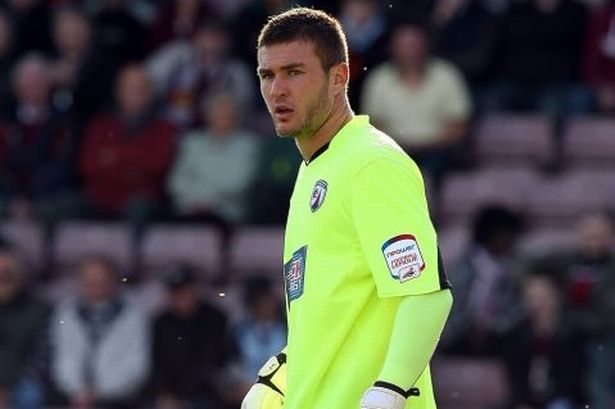
O’Donnell is a 6 ft 2 in goalkeeper, born in Sheffield, who will sign Wigan Athletic as a free agent from League 1 club Walsall. He is 26 years old, a product of the Sheffield Wednesday academy.

As a young player from O’Donnell was sent on loan to seven clubs in the lower divisions and non-league from 2007-11. He made his Football League debut as a 19 year old for Oldham Athletic against Luton Town in March 2008. It was three years later to the month that he made his debut for Wednesday in a match at Southampton. After making 19 appearances for the Owls he was released in May 2012.

O’Donnell then signed a one year contract for League 2 side Chesterfield. Covering for the absence of regular goalkeeper Tommy Lee he made 14 starts, but lost his place on Lee’s return from injury. In January he was loaned out to Stockport County in the Conference where he made 20 starts. He returned to Chesterfield for the last game of the season in a 4-0 win over Exeter.

In summer of 2013 he joined Walsall where he was to establish himself as the first choice goalkeeper, making 90 appearances in his two seasons there. He kept 21 clean sheets last season.

In order to learn more about O’Donnell’s time at Walsall we reached out to the BescotBanter.net fan site (@BescotBanter). Our thanks to them for the fan’s view that follows:

Following the Saddlers’ acquisition of goalkeeping coach Neil Cutler, Richard joined the club in the summer of 2013 and quickly went on to establish himself as first-choice, bringing his brand of committed stopping to the side.

A player who is willing to put his body on the line, Richard made over fifty first team appearances during his debut season with the club and penned a new eighteen-month contract in January 2014.

Following his debut season Richard continued as first-choice goalkeeper and went on to make his one hundredth consecutive first-team appearance for the club as the Saddlers played host to Notts County on 3rd April.

Richard established himself as a clear fan favourite during his time with the club and went on to be named both the Fans and Players’ Player of the Season at the 2014/15 End of Season Awards.

O’Donnell also came close to single-handedly breaking a club record for most clean sheets in a season, which was held by former Trinidad and Tobago international Clayton Ince, who was unbeaten on twenty-two occasions during the 2006/07 campaign.

The record was ultimately collected by Craig MacGillivray, as he kept a clean sheet during his debut against Oldham Athletic.

 Following a lengthy spell of contract negotiations, which began in November 2014, Richard made the decision to leave the club and join Wigan Athletic on a three-year deal, the move seems to have come down to a length of contact issue, with the Saddlers either unable or unwilling to match the Latics’ three-year offering.

When the dust of his move settles Richard will go down as one of the best stoppers in the club’s recent history, and will always be welcome at Banks’s Stadium.

A Blackpool fan’s view of David Perkins

Yesterday Wigan Athletic announced the impending signing of David Perkins from Blackpool. Perkins is a 32 year old central midfield player who has just completed his second season with the Tangerines. The 5 ft 6 in Perkins is to sign a one year contract.

Perkins is from Heysham and began his career at Morecambe at the age of 18. He was to spend seven years with the Shrimps making 176 appearances in the Conference before joining League 2 Rochdale in 2007. He went on to make 58 appearances for Rochale before joining Colchester United for a six figure fee in July 2008.

In the 2009-10 season manager Aidy Boothroyd loaned Perkins out, first to Chesterfield where he made 13 appearances, then to Stockport County where he made 22. John Ward’s arrival as manager at Colchester in the summer of 2010 saw Perkins blossom and have an outstanding season, making 40 appearances and receiving the Player of the Season and Players Player of the Season awards.

After 79 appearances over three seasons at Colchester he moved to Barnsley as a free agent in the summer of 2011, rejoining his ex Rochdale manager Keith Hill. On a visit to Charlton in October 2012 he was dubbed ”Barnsley Boris” by the home fans, his blonde hair reminiscent of that of the Mayor of London. Perkins was to make 69 appearances in  two and a half years playing for Barnsley in the Championship. In January 2014 he joined Blackpool on a free transfer. He made 64 appearances before being released this month.

In order to learn more about Perkins’ time at Blackpool we reached out to Phil at the AVFTT Blackpool fan site. AVFTT started out as a fanzine in 1996 and transferred to the Web in 2000. It has been going in various forms for the last 15 years and is now part of the FansNetwork group of websites.

The fan view below is also to be found on the avftt.co.uk site:

“He could do a job in League One” – probably the worst compliment anyone could pay a player who’s been plying his trade in the Championship for the last two seasons! However, that seems to have been the general consenus about David Perkins who was released by Blackpool officially yesterday and has been ‘snapped up’ by Wigan Athletic today.

When he first arrived at Bloomfield Road, many remembered him as the combative midfielder who had often been a thorn in the side when we’d played his former club Barnsley and whilst there wasn’t much around him when he arrived, it’s fair to say that in his time under Barry Ferguson he was one of the few players who could hold his head high at the end of the season. Therefore, much was expected of Perkins last season – few would say he delivered.

Maybe the biggest indictment on Perkins only full season in a tangerine shirt was that he only missed one game all season and yet only saw us win 4 games. In fact in his 64 games in a tangerine shirt he only enjoyed 7 victories – ironically one of which was against Wigan. At 5’6″, and through not fault of his own, many a game was spent chuckling as our keeper delivered a high ball in to midfield and Perkins failed to get within a foot of it! If he was a confidence player, then his confidence was shot at Blackpool. Quite often he’d do the hard work winning possession in midfield, only to give the ball straight back to the opposition. You could never question his commitment but too many times he fell short in the talent department.

At least he was one of few ‘recognisable’ players in the Blackpool team last season who you didn’t have to squint at in order to see who he was and we’ll see on at least two occasions next season if it was just the curse of the tangerine shirt which turned him in to a very average Championship player or if he excels as a League One player at Wigan.