
Relying on other teams’ results

npower

They are five points adrift in a relegation struggle, with just seven matches to go. Failure to win points in the next couple of games could practically seal the saddest of ends to a troubled season for Wigan Athletic.

Moreover one of those games is against a Middlesbrough team currently one point from an automatic promotion place with the joint best home record in the division. The second is a home game against a Derby County team that many of us thought was the best in the division, but has suffered a series of adverse results over recent weeks. Derby too will be desperate for a good result to get themselves back on track. Eyeing a Latics home record of W2 D8 L10 they must fancy their chances.

Supporters of many clubs would have psychologically thrown in the towel at this stage, given such a scenario. But optimism still remains among many Wigan Athletic supporters. There are people who believe that Malky Mackay’s patched up team of journeymen and short term signings can get the results needed to avoid the drop. After all, as supporters they have faced adversity before and given their full weight of support to their struggling teams with startling results. The neutral observer would be well advised never to count out Wigan Athletic.

It was looking ominous in the 2006-07 season when Latics went into the last match at Sheffield United needing a win to stay in the Premier League. But a fine finish by Paul Scharner, an ice-cool penalty from David Unsworth and gritty backs-to the-wall defending in the closing minutes helped keep the Blades out, consign them to relegation and keep Latics up.

The 2010-11 season also had a remarkable finale. Latics had gone into their penultimate game at home to West Ham, three points adrift of safety with a goal difference that was inferior to the teams above them. The Hammers were 2-0 up after just 26 minutes and Latics were a shambles. But they kept plugging away and scored two good goals through Charles N’Zogbia and Conor Sammon. However, the scores were tied as the game went into time added on. Four minutes later West Ham keeper Robert Green allowed a weak shot from N’Zogbia to squirm under his body to give Latics an invaluable three points, consigning his own team to relegation in the process.

Latics went into the last match of the season at Stoke level in 19th place, level on points with Blackpool and Birmingham, but with an inferior goal difference. Wolves and Blackburn stood just one point above them. It looked like Wigan had to win at the Stadium against a home side that had only lost four out of the eighteen home games they had played. But Hugo Rodallega’s header from Maynor Figueroa’s cross was to prove sufficient for a remarkable 1-0 win. In the event a draw would have been sufficient to keep Latics up as Blackpool and Birmingham both lost on that fateful day.

The following season Latics were once more locked in a relegation struggle and by the end of January they were in bottom place. Then came a slight upturn in results over February and March, but relegation looked certain. The revival that took place from late March onwards was nothing short of miraculous, with wins following against Arsenal, Liverpool and Manchester United. Latics were to win 7 of their last 9 matches to finish in 15th place, seven points clear of relegation.

Can Wigan Athletic achieve yet another great escape this season? Can Mackay inspire his team to get the results needed to avoid the drop in the same way as his predecessors Paul Jewell and Roberto Martinez? Fan support was crucial in such situations in the past. Will it be an essential element again? Will “Believe” come to the fore once more?

The current situation is serious. Latics remain 5 points behind 21st placed Rotherham and 8 points behind Fulham a place above the Yorkshire outfit. Either of the two could drop into the relegation zone should Latics get a good run of results. The pressure is on all teams in that relegation zone at this time of the season and teams can often go into freefall.

The last round of games was certainly eventful. Latics got a point through a 94th equalizer against Bolton, Fulham won 2-0 at Huddersfield with Nakhi Wells missing two penalties for the home team and Rotherham went down 3-2 at home to Sheffield Wednesday despite leading 2-1 after the regular 90 minutes.

Prior to that win Fulham had only won one of their last 13. It remains to be seen whether their win at Huddersfield will have boosted their sagging confidence sufficiently to end the season well. Like Latics they were one of the teams favoured by the bookies for promotion at the start of the season. Moreover they had paid around £12m for the striking duo of Ross McCormack and Matt Smith.

Rotherham’s defeat after being so close to a vital victory must have been hard for them to bear. After being beaten at home by Latics in mid-March they lost at Nottingham Forest before that fateful game with Wednesday. The question is whether they have the resilience to pick themselves up after such a cruel loss.

Despite a series of bad results and sacking their manager Millwall can still avoid relegation. They have drawn the last two games, 1-1 at home to Brighton and 2-2 away at promotion-chasing Brentford. They are just two points behind Wigan.

Wigan Athletic meanwhile continue to fail at home, despite four consecutive wins on the road. It is to be hoped that the failure to beat a poor Bolton side will not haunt them later. Mackay has put together a team that is willing to scrap for victory, which was not the case when he first arrived. However, it is doubtful whether his squad has the quality to get the kinds of results in the remaining matches that would render those of the other relegation candidates close to irrelevant.

Put simply Mackay needs either Fulham or Rotherham to fall apart while his own team narrows the gap. He also has to hope that Millwall cannot finish with a flurry. Should this not happen Latics will surely be doomed.

The next two games will go a long way towards deciding Wigan Athletic’s future in the Championship division. Tomorrow while Latics are away to Middlesbrough, Fulham play at home to Brentford, Rotherham travel to Birmingham and Millwall have a London derby at home to Charlton. Both Latics and Rotherham face games on Easter Monday, at home to Derby and Brighton respectively. Fulham have a day’s grace and play away at Charlton on Tuesday. Millwall have an eight day break before their next game on April 11th.

During the days of Roberto Martinez he would typically focus on his own team’s performances and results, rather than those of other teams in the danger zone. However, the results of the other teams certainly had an impact on where Latics were to end up.

Providing Latics can get good results in the final seven matches they will have a chance of staying up. Ideally they would win at least five of them, but given the squad they have it seems unlikely. The hope is that Fulham and Rotherham will fare much worse and Millwall no better.

Wigan Athletic’s hopes of avoiding relegation are very much dependent on the implosion of teams above them. Stranger things than that have happened in the past, but it surely should not be counted upon.

An academy and an identity

David Sharpe: "Having a top-class Academy is something I’m so passionate about" Photo courtesy of Sky Sports.

David Sharpe: “Having a top-class Academy is something I’m so passionate about”
Photo courtesy of Sky Sports.

“We strive to keep the way of playing football recognizable; attractive, offensive-minded, creative, fast, fair and preferably far away from the own goal on the opponents’ half.”

One could only wish the statement applied to the Wigan Athletic of today. In these times of fightball, rather than football, it seems light years away. But there is no reason why the club could not take on such an identity in the future.

The statement actually comes from Ajax of Amsterdam. Together with a 4-3-3 formation it sets the direction for football at all levels of the club, from academy to first team.

The Ajax youth system produced great players of the past like Dennis Bergkamp, Johan Cruyff, Edgar Davids, Frank and Ronald de Boer, Patrick Kluivert, Frank Rijkaard and Clarence Seedorf. Its academy has continued to produce top class players and both the club and the Dutch national team reap the benefit. Brazil World Cup players Nigel de Jong, John Heitinga, Wesley Sneijder, Martin Stekelenberg, Gregory van der Wiel and Rafael van der Waart all came through the Ajax academy.

Johan Cruyff was one of the best players the world has known. Ex-Barcelona president Juan Laporta once said that: “As a player he turned football into an art form. Johan came along and revolutionised everything. The modern-day Barca started with him, he is the expression of our identity, he brought us a style of football we love.”

It was Cruyff who inspired Barca to develop a football academy to mirror that of Ajax. La Masia has since become the most famous football academy in the world. Its class of 1987 is its most famous, containing Cesc Fabregas, Lionel Messi, Gerard Pique  and Pedro Rodriguez. In 2010 it became the first academy to produce the three finalists for the award of the Ballon d’Or in Xavi Hernandez, Andres Iniesta and Lionel Messi.

The original La Masia was an old Catalan farmhouse where Barcelona housed young players who came from outside Barcelona. The academy was actually moved to a purpose-built facility in Ciutat Esportiva Joan Gamper in 2011.  But the name La Masia remains synonymous with the Barcelona youth academy.

More than 500 young players have been housed at La Masia over the past 30 years. Lionel Messi was one of the three Argentinians who left his family for La Masia. He was 13 years old when he arrived. Although youngsters from Brazil, Cameroon and Senegal have come through La Masia, they were a minority. More than half have come from Catalonia, the rest from other parts of Spain.

La Masia costs around £5 million a year to run, most of the cost being the dormitory. Around 10% have made it into the first team. In 2000 coach Louis Van Gaal was laughed at for his dream of a Barcelona winning the Champions League with a team of La Masia players. But nine years later there were eight of them in the squad that was to win the trophy.

Operating a facility like those at Ajax or Barcelona is clearly way beyond the means of Wigan Athletic. But there are surely basic principles that can be applied in Wigan’s case.

On taking over from his grandfather David Sharpe commented:

Having a top-class Academy is something I’m so passionate about, we have to start making and creating our own players. We’ve only really produced two down the years in Leighton Baines and Callum McManaman, and the plan is to see more Wigan boys playing for Latics.”

The new facility at Charnock Richard remains in the future. We await further news from the club on when it will be completed. In the meantime reports suggest that Gregor Rioch and his team of coaches continue to make good progress in bringing up the level of the Academy. It is to be hoped that Rioch will not be poached by one of the big clubs and that he will continue to lead the youth programme.

The purchase of the golf club and its conversion into a football academy is a costly business, but a significant investment in the club’s future. The critics will say it should have happened years ago and question the ability of the club to finance it. However, the club has received funds from transfers that can help fund the capital investment required. It is the year to year operating costs that will be more of an issue, since a figure of £2 million per year would not be unrealistic. Much will depend on whether Latics will be scouring the country for young talent in addition to bringing in local youth or those from Manchester and Liverpool, as has been their wont in the past. Residence costs for those from outside the area, maybe also including overseas, will remain an expensive item.

However, no matter what the scale of the eventual academy at Charnock Richard there are lessons to be learned from both Ajax and Barcelona.

Both clubs have a well-defined style of play which permeates through all levels at the clubs. This helps players develop their roles and the skills that they need to be successful.

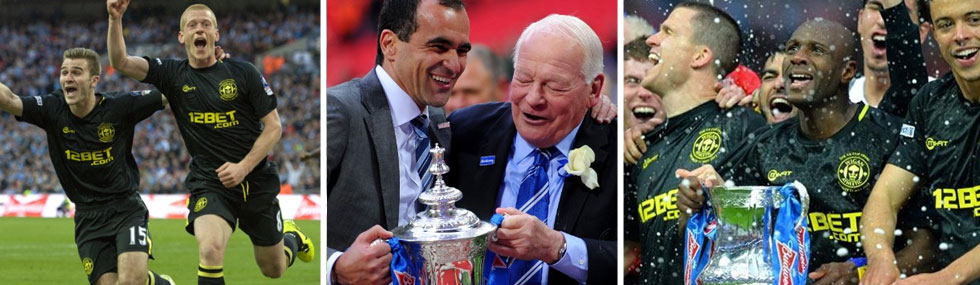
Wigan Athletic were approaching something like that in the Martinez era. The style of play was revolutionised during his time of the club. The Martinez style was not popular with all supporters. There were those who wanted a more direct style of play, which has become increasingly evident since he left. However, players at all levels of the club from academy to senior squad, knew what kind of football to strive to achieve. It was successful to the degree of winning the FA Cup on merit, overcoming an immensely talented Manchester City side with style and skill.

The tragic mistake that Dave Whelan made was in appointing a successor who was out of tune with tiki taca, more an adherent of the long ball. The Martinez legacy has since disappeared without trace over the course of the current season. Fightball has supplanted football.

In the meantime we can dream of a successful academy, underpinned by a shared vision of what constitutes good football. With coaches groomed for management from within, like Liverpool of the 1980s, when Bob Paisley and Roy Evans built success on the groundwork provided by Bill Shankly.

Look at what happened at Barcelona following Van Gaal’s dream of Champions League success with a team of players raised in La Masia.

Maybe David Sharpe’s dream of a top-class academy and Wigan boys playing for Latics is another which will become reality.

However, it is unlikely to do so unless the style of play that the club seeks is identified.

What a delight it would be to see Latics adopt a statement of intent similar to that of Ajax.

Waggy helps out the unbending Mackay

Is Martyn Waghorn back in from the cold?

Is Martyn Waghorn back in from the cold?

“Martyn showed what forwards are for, they’re there to score goals.”

The words of Malky Mackay after Martyn Waghorn’s spectacular late equalizer saved a point against a poor Bolton side.

Mackay will win some journalistic praise for an inspired substitution. After all it helped Wigan share the points when it looked like the opportunity had passed.

But the truth is less palatable.

Mackay frequently shoots himself in the foot, not only in his team selections, but also with what he says to the media. This was another example.

Once more Mackay started the game with a striker who is way short of his best form and another who cannot score goals.

Despite Leon Clarke’s poor performance against Watford the big man retained his place. Inconsistency has dogged Clarke throughout his frustrating career. Although he has genuine physical presence and can score goals, his record should be enough to tell Mackay that he is not a man to rely on for goals on a regular basis. At 30 years of age he has been the ultimate journeyman. His history shows him joining new clubs but soon being sent out on loan. Clarke is now in his 11th loan period at a club, after Wolves manager Kenny Jackett decided he did not need him for his promotion push.

At his best Clarke can play the bustling centre forward role with distinction, as he did for Coventry City in 2012-13 when he scored 23 goals in 34 appearances for the League 1 team. The other side of the coin is a player who appears languid and disinterested, too often caught offside, at odds with management.

What is in Mackay’s head when he makes quotes like the one above? Even the most supportive of fans would have to ask him why he continues to play Marc-Antoine Fortune upfront. Is MAF there to score goals? If goalscoring is what forwards are for then the French Guianan should surely not be playing there.

Martyn Waghorn’s reaction to his goal might well have sent a message to Mackay. Since the Scot’s arrival Waghorn’s main role has been that of a bench warmer. He has not been given a single start despite his proven ability to score goals at Championship level. Given the woeful lack of fire power in the Wigan attack Mackay’s unbending approach and loyalty to some players at the expense of others gives great cause for concern.

Do divisions still remain within the camp? Once again Mackay named a lineup that did not have a single player in it who was signed by Uwe Rosler. William Kvist – perhaps Rosler’s most successful signing – remained on the bench until the 78th minute when he came on for Emmerson Boyce. Boyce is an icon, a hero of the heights that the club reached in the Premier League era. At his peak he could match many of the best right backs in the country. But now his speed has gone and it leaves him defensively vulnerable. Kvist should have been on from the start with James Perch playing at right back.

Waghorn was Rosler’s first permanent signing at the club. He was an integral part of a team that finished in 5th place last season. Waghorn does not have the height of Clarke or Fortune, neither is he particularly fast. However, he has a great left foot and has the ability to be in the right place at the right time in the penalty box. Last season his excellent delivery from corner kicks caused problems for opposition defences, something that has been lacking in Mackay’s Wigan teams.

Last week Mackay shot himself in the foot with what was perhaps a Freudian slip saying:

“We’ve managed to bring in another couple this week, young Jerome for a little bit of experience and Josh, who showed his potential in the second half against Watford”.

His signing of Jerome Sinclair in particular raised the eyebrows of many fans. Some welcomed the arrival of a young talent from Liverpool with a fine goalscoring record at youth and development squad levels. Sinclair made an inauspicious debut against Watford, coming on in the 82nd minute. He did not make the bench yesterday.

Sinclair’s signing must have sent shock waves in the direction of both Waghorn and Billy Mckay. The Scot did actually get a place on the bench, but Waghorn was totally omitted.

But the larger question remains as to why, with just 9 matches left and with League 1 getting closer and closer, Mackay wanted to give experience to an 18 year old Liverpool player who had played just 9 minutes of first team football, that being almost two years ago.

Liverpool must be delighted in Mackay giving their youngsters an opportunity for first team football. Since his first appearance against Bournemouth on February 7th the 17 year old Sheyi Ojo has now played in 10 matches, including 5 in the starting lineup.

Although clearly a talented player Ojo has not surprisingly struggled to assert himself against rugged Championship defences. He might well produce some match-winning magic before the end of the season, but he is there at the expense of other players.

Martyn Waghorn was largely used in wide positions by Uwe Rosler. Moreover Mackay talks of the talent in his development squad, but has still not given any of them first team experience, apart from warming the bench. The bottom line is that Mackay is concentrating on young developing players from other clubs rather than his own.

Josh Murphy got his debut yesterday and might well be a regular feature in the upcoming matches. Despite his two superb free kicks at Rotherham, Jermaine Pennant is way past his sell-by date. He has started in 7 games so far and has not managed the full 90 in any of them. In fact he longest he has lasted has been 77 minutes and 84 minutes in his first two appearances. He went off after 66 minutes yesterday and 54 minutes in midweek.

Murphy is only 20 years old, more mature than Sinclair or Ojo, but sadly lacking in prior experience at senior level. He started in only one league game for Norwich this season. In fact most of his experience this season and last has been off the bench. Like Liverpool, Norwich must also be delighted that Latics are giving their young player invaluable first team experience.

To a large degree Mackay’s use of the loan market has been necessary. Losing 13 players in January left a big hole in the squad. However, bringing in young loanees with no real first team experience when relegation threatens smacks of desperation or trying to appease other clubs.

Moreover the young loanees have been brought in at the expense of players on long term contracts at the club who have been starved of first team opportunities, let alone the youngsters who have come through the club’s own academy.

Let us hope that Malky Mackay is not as unbending as he appears.

James McClean will return from suspension for the next game at Middlesbrough on April 3rd. Played on the left wing he could have a major role to play in keeping Latics afloat. But one has a sneaking suspicion that Mackay will once again play him in a striking role.

On the positive front Mackay has built a team with much more solidity in defence. However, his doggedness in persisting with a strike force impotent in its delivery could cost Latics their place in the division if it continues.

One hopes that Martyn Waghorn made a point with his brilliantly executed goal yesterday. The question is whether Mackay is willing to open his eyes, see the faults in his planning and take steps to rectify them.

Or is he going to be unbending?


Latics can beat Bolton if…..

Defeat to Wigan Athletic is something that Bolton Wanderers supporters find hard to bear. After all their local rivals are nothing but young upstarts compared with the glorious history of their Trotters.

Wanderers were founder members of the first Football League in 1888, one of the 6 Lancashire clubs that formed that initial division of 12. Since then they have spent more time in the top tier (Premier League/First Division) than out of it, 73 seasons to be precise. Their highest placing in the top tier was 3rd in 1920-21 and 1924-25 seasons. By the time Latics entered the Football League in 1978, Bolton had won the FA Cup four times, being runners-up on three occasions.

Wigan Athletic and Bolton Wanderers had their first-ever encounter in the Football League on Boxing Day in 1983. That was in the old Third Division and Wanderers won 1-0, but Latics went on to win by the same score in the return match at Burnden Park. Things have remained fairly even ever since. Bolton have won 17 and Wigan 16, with 11 draws in league and cup matches between the two clubs.

No matter what situation of either club the result of the derby is always of paramount importance. But a win it is so much more important to Latics than Bolton this time around. The 2-0 home defeat to Watford in midweek was depressing in that it was a repeat of what has happened on too many occasions this season. Wigan seeming to match their opponents, but once a goal has gone against them they have not been able to get back into the game.

However, the 2-0 defeat of Rotherham at Nottingham Forest and a 3-0 home reverse for Fulham against Leeds United means that Latics remain at 6 points behind the two. Moreover the London team’s collapse continued with Leeds scoring with the only genuine chances they had.  Fulham strikers Ross McCormack and Matt Smith, who had a combined total of 42 goals for Leeds last season, just could not find the net. Like Wigan, Fulham were among the bookmakers’ favourites for promotion this season. They are caught in a downward spiral, having won only one of their last thirteen games.

Latics’ miserable home record – their last win was against Birmingham City on August 30 – will surely come to an end soon. The pundits have tried to explain how a team can win four consecutive games on the road, but lose their last six at the DW Stadium. Their approach to matches appears similar, be they home or away, but they have so often been caught by surprise at the DW.

The away victories have been characterized by them getting goals relatively early in the proceedings and hanging on to their lead with grim determination. Most of those goals have come from set pieces, which clearly have not worked at home where they have not scored a goal for four matches.

However, football is rarely as scientific as we sometimes think. The difference between winning and losing games in the Championship can so often depend on a slice of fortune – a deflection or a misplaced pass finding a teammate for whom it was not intended. Latics have enough height to be a danger at set pieces, but too often the delivery at home games has been found wanting.

However, the law of averages tells us that you are more likely to score goals if you have players in the penalty box. Even better if they are in the right place at the right time. Some players have a knack of being in such positions. Some do not. Given Mackay’s choice of strikers over recent months it is sadly no surprise that Latics have not been scoring goals.

Latics can certainly beat Bolton tomorrow if…………….

  1. Mackay plays strikers who have track records of goalscoring.
  2. They are organised, work hard and “win that second ball”, as ex-Latics captain Neil Rimmer says so often in his Wish FM commentaries.
  3. The rub of the green goes their way.

This is the least accomplished group of players the club has had for at least a decade. Most are loanees or on short term contracts. They lack the mutual understanding gained through playing as a collective unit over a long period of time. As a result the whole is less than the sum of its parts.

However, Mackay has largely succeeded in getting levels of commitment that were not apparent earlier in the season. He has stabilized the defence. The central defensive pairing of Harry Maguire and Jason Pearce is rugged and determined, well suited to the division. Mackay will look towards playing with a solid defence and scoring from set pieces.

However, Bolton do not have a particularly good team. They are out of the relegation zone due to the “new manager effect” after Neil Lennon was appointed, something that Latics crucially missed with Mackay. That effect has since faded and their squad is not overburdened with talent. They have lost their last six away games and have difficulty scoring goals. Their leading scorer is Zach Clough with just 6 goals, although Adam Le Fondre has scored 5 in his 10 matches so far.

Wigan Athletic fans have learned to keep their expectations low for results in home games over the past six months. Maybe the time has come for them to see the victory they have been waiting for so long. It would be particularly sweet against a local rival which considers itself a step above.

The controversial MAF

Fortunemiss

“Marco is a quality player and we were very impressed by just how well he did for us last season. People say he didn’t have a fantastic scoring record. But look at the goals from midfield after he came in. The goals the other boys scored because the way he played was phenomenal. Marco had a great ethic about him in his training as well as his playing. He was a privilege to work with.”

So said Peter Grant when Marc-Antoine Fortune signed for Celtic in July 2009. Grant had moved to a coaching position at Celtic after a spell at West Bromwich Albion, where he had previously worked with the French Guianan.

Celtic had paid Nancy a fee of £3.8m for “MAF”, after he had impressed in a loan spell with West Bromwich in the second half of the 2008-09 season. MAF had become a fan favourite at the Hawthorns and after 18 appearances and 5 goals he was voted ‘’Player of the Season”.

Sadly times have changed for MAF. A mere mention of his name among Wigan Athletic supporters will cause controversy.

The player appears shot-shy, unwilling or unable to make the probing runs off the ball that are expected of a striker. But despite a record of 7 goals in 70 appearances (including 43 starts), MAF continues to figure prominently in Malky Mackay’s plans. It causes a considerable amount of consternation among the majority of fans. Put simply, how can a player with such a striking record regularly make the starting lineup?

However, MAF does have his supporters who will say that he is a real team player, with his strong hold-up play and willingness to chase. Moreover on occasions when he has been substituted during the course of a game, Latics’ play has got worse, not better. The team so often seems to play better when he is on the pitch.

At 33 and nearing the end of his contract, will there be a possibility of him staying at Wigan? He has never been a prolific goalscorer, but there have been spells at clubs where his record has been well within the acceptable range. Is he at the end of his career now or can he still show that he can score goals more often?

That move to Celtic had been potentially the high point of MAF’s career, but despite scoring 10 goals in 32 appearances for the Glasgow club, he could not live up to his price tag and new manager Neil Lennon shipped him off to West Bromwich a year later.

MAF was not able to relieve his previous highs in his second spell with the midlands club, but nevertheless stayed with them for three more years. He was to score 10 goals in 62 appearances.

When Owen Coyle took over as Wigan Athletic manager in the summer of 2013 he had a major rebuilding job to do with a squad that had been decimated following relegation from the Premier League. Coyle had been given a year to get the club back into the Premier League. His recruitment plan was to largely focus on seeking experienced professionals who had played in the Premier League.

In his signing of Grant Holt and MAF it looked like he had found a good blend of strikers. Holt was the bustling, goalscoring centre forward, with MAF the foil, through his unselfish and hardworking support. Sadly the partnership never really got together , with Holt dispatched off on loan in January.

Their lack of success had drawn criticism from many fans of Coyle’s signing of two 32 year olds on long term contracts. With the departure of Holt on loan the focus fell more and more on MAF. Under Coyle he had made 19 appearances, which included only 8 starts. His solitary goal had come ironically from a superb crossfield pass from Grant Holt at Yeovil. However, he was to find favour with new manager Uwe Rosler under whom he made 15 starts and 15 appearances off the bench, scoring 4 goals.

When Oriol Riera and Andy Delort were signed early on in the current season, and with Martyn Waghorn’s proven goalscoring record, it had looked like MAF would fall well down the pecking order. But he has come bouncing back. Riera and Delort are gone, Waghorn is marginalised and new signing Billy Mckay finds himself warming the bench. MAF has weathered the storm, working under three managers at Wigan, all of whom have shown faith in his abilities.

So far this season MAF has made 22 starts, with 5 appearances off the bench. He has scored 2 goals and made no assists. The last time he scored a goal at the DW Stadium was in February 2014.

Despite the value MAF might add through his hold-up play and commitment can Malky Mackay continue to justify his inclusion in a team desperately short on goals?

Has Mackay considered playing MAF wide on the right, where he can play an effective role but not labour under the burden of scoring goals?

The controversy appears set to linger on until the end of a bitterly disappointing season.