They are the fittest team in the division and their high pressing unnerves opposition defenders into giving the ball away. They have a rock solid defence and are not averse to grinding out results. The team has genuine pace up front and that enables them to make deadly counterattacks. They are well disciplined and every player gives one hundred percent effort. They are dangerous from set pieces, with players who have the skill to curve the ball round defensive walls and score or create opportunities. Goal scoring is deemed as a collective responsibility and players in all outfield positions make a significant contribution over the course of the season.
Could this be a description of Uwe Rosler’s promotion-winning Wigan Athletic side, 2014-15?
These are early days still. Rosler’s squad building is not yet complete, with three weeks of the transfer window remaining. However, the squad already looks strong, especially in defence. Rosler will be hoping to offload the hapless Grant Holt, to reduce the wage bill and be able to bring in another central striker. In Adam Forshaw he is seeking another creative midfielder to complement Shaun Maloney. Media reports also suggest he is interested in Aston Villa winger, Alexander Tonev. More loan players are also likely to be brought in, with George Saville of Chelsea a clear target. If Rosler spends money on Forshaw and a central striker he is likely to have to offset the costs by pulling in transfer money by letting at least one of his current squad go.
Last season’s promotion push stumbled at the playoffs. By then Latics had played an awful lot of games in a short space of time. Despite their tiredness they pushed Queens Park Rangers into extra time of the second match, although in reality they had all but lost their best chance of going t through being unable to find a way past Harry Redknapp’s parked bus at the DW Stadium. That match called for a moment of magic from the likes of Shaun Maloney, Callum McManaman or Nick Powell. Powell’s game had gone off the boil after a mid-season injury and he did not get into the squad for the playoff games. McManaman had had a frustrating season, mired by niggling injuries, and Maloney had not got back to his best after a long spell out through injury.
There was little to choose between Latics and QPR last season, but it was the Londoners who went up. Lots of teams came to park their buses at the DW last season and it is likely to be the same scenario this year. However, McManaman is now approaching full fitness and is likely to terrorise Championship team defences in a way that he was infrequently able to do last season. Rosler has carefully nurtured the invaluable Maloney through the pre-season and although he has had no competitive playing time so far he might well appear on the bench against Reading.
Rosler will continue to use his preferred 4-3-3 and 3-5-2 systems, switching seamlessly between the two. Although the former appears to be his preferred system, he has a large reservoir of fine central defenders he can call on to operate with three at the back. With the 3-5-2 system players like McManaman and James McClean are pushed further inside, as second strikers alongside the centre forward. Rosler likens McClean to a ‘wild horse’, although he clearly has faith in the Irishman. It is to be hoped that Rosler can break-in the wild horse, having him lift his head and look up when going on his marauding runs. McClean and McManaman are players who can cause panic when they run at defences, particularly on the counterattack.
Rosler will be confident that his side can mount a strong challenge for promotion this year. He might not have strikers who can score 20 goals a season, but he has a very strong defence, a combative but skilful midfield and exciting forwards.
Providing his flair players stay fit, Rosler might well be a Premier League manager in 2015.
Like us on Facebook, or follow us on twitter here.
McArthur and Maloney – key players for a promotion push.
“Before the World Cup started there were a few rumours about McArthur and Maloney, but I have spoken to them and they know they are two of the cornerstones of the team. Both players will be massively important in my plans going forward and I made that very clear to both of them.”
It was heartening to hear Uwe Rosler this week dismiss transfer speculation regarding the two.
New signings apart, it is to be hoped that Latics will be able to resist approaches from other clubs for quality players such as Maloney and McArthur. Maloney was sadly missed last season and can play a key role, whether playing in “the hole” or in a wide role. Maybe we expected too much of him at the end of the season after a long layoff through injury.
Rosler will be hoping that Ben Watson and Chris McCann will be back in action following a double leg fracture and a damaged knee cap. Rosler clearly had faith in the midfield trio of McArthur, McCann and Watson. He had already lost Watson, when he lost McCann in the FA Cup win at Manchester City. It was McCann’s injury that proved to be the turning point and from then on results fell significantly.
One continues to ponder the future of Roger Espinoza, one of Honduras’ best performers in an albeit disappointing World Cup campaign. Despite being a fan-favourite Espinoza has failed to establish himself under three managers during his time at Wigan. He was played at left midfield for Honduras and looked effective in that position. Having been in the shop window during the World Cup it is possible that other clubs will bid for him. It will be interesting to see what develops.
Rosler continues to impress as Wigan Athletic manager. He has analysed the weaknesses in his squad and already made four signings, all of whom look like they can fit into the system the German likes to employ. They are already in training at the Latics camp in Germany.
Left back was a problem area last season, with wing back Jean Beausejour often having to play in that position, excellent when going forward, but sometimes unconvincing in defence. Stephen Crainey struggled to cope initially, but thrived when Rosler took some defensive responsibility away from him, allowing him to play at wing back. However, at 32 and on a one year contract it was unlikely the Scot would be staying. In their place Rosler has brought in Andrew Taylor and Aaron Taylor-Sinclair. Taylor is an experienced and very capable left back, who can also play left midfield. Taylor-Sinclair is clearly a bright young talent from Partick Thistle who might well follow in the paths of James McCarthy and James McArthur, who came from a similar type of background at Hamilton.
The signing of James Tavernier from Newcastle gives Rosler more options at right back. James Perch is an excellent defensively and over the course of last season he improved greatly in his attacking. His goals at the Etihad and Loftus Road showed his willingness to thrust himself forward. When Ryan Shotton left in the New Year Latics were short of options at right back, Emmerson Boyce having been drafted into the centre of defence. Perch continued to be the consummate team player, sometimes playing when he was not 100% fit. In Tavernier, Rosler has a more attacking option and the young player certainly has some flair.
Oriel Riera might well prove to be an inspired signing. Although he has spent most of his career in the lower leagues in Spain he proved himself last season in the La Liga first division at Osasuna. There was speculation among supporters that Dave Whelan was going to get out his cheque book and spend big money on a couple of quality strikers. However, Whelan was unlikely to undermine the wage structure that was in place and he is unwilling to pay over-inflated transfer fees for English-born strikers. Riera fits the bill. Another foreign-based striker remains on the cards.
There is a strong likelihood that more of the players remaining from the Premier League days will leave over the coming weeks. Jordi Gomez has already gone and Jean Beausejour will move soon. Ivan Ramis is Latics’ best centre back, but his high salary and questions over his fitness lead us to believe he will be on his way. One of the goalkeepers too is likely to depart. There has been no statement from the club regarding a new contract for Gary Caldwell. The Scot has his detractors, but if fully fit, he could be a force in the Championship.
A lot could happen over the coming weeks, but Rosler clearly has a plan forward. Under his astute management, promotion is a distinct possibility.
Like us on Facebook, or follow us on twitter here.
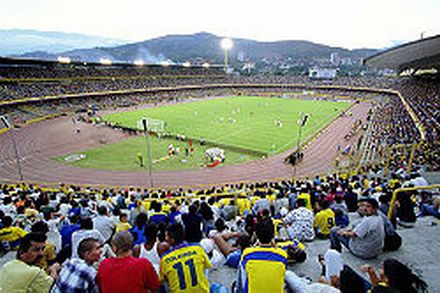
The Pascual Guerrero Stadium, Cali, was the home ground for both America and Deportivo Cali.
One evening in the early 1990s my son Ned and I found a free table at Pascualitos café in the centre of Cali, awaiting the ‘classico’. It was hot and humid evening and the café, right across the street from the Pascual Guerrero Stadium, was doing good business. The café was run by true brothers. The elder brother served us cold drinks, telling us that America were to once more overcome their local adversary Deportivo Cali (typically referred to as ‘Cali’). The younger brother would hardly have agreed, being a Cali fan. The evidence of the split in the family was plain to see as the walls of the little café were adorned with both the red of the ‘Diablos Rojos’ of America and the green of the ‘Azucareros’ of Cali.
We sat there for half an hour, listening to the tango music that they invariably played there, watching supporters bedecked in green or red, passing by. There was a carnival atmosphere and not a hint of trouble as the rival supporters intermingled. There was talk that Cali’s controversial new coach, Jorge Luis Pinto, was going to bring back the glory days to the club. The previous decade had seen a shift in power within the city and Cali had not won a championship, being beaten three times in the final of the playoffs by America. America had started to dominate the Colombian league and had reached three Copa Libertadores finals.
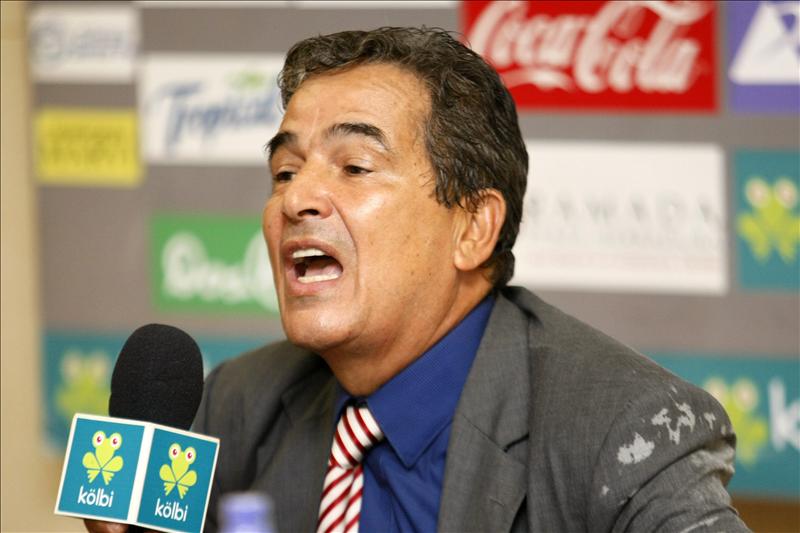
The volatile Pinto was not a universally popular appointment for Cali fans at the time. He had never played professional football and had started out as a fitness coach for Millionarios in Bogota. Following a sojourn in Brazil he joined the coaching staff of Union Magdalena, in the town of Santa Marta on Colombia’s Caribbean coast. Pinto was then to embark on a degree course in Cologne, Germany. His dedication to professional advancement was to pay dividends for him in 1984 when he returned to Millionarios as their Director Tecnico (DT), head coach. He was to also become DT at the other big Bogota team, Santa Fe, and at his old club, Union Magdalena, before arriving in Cali.
Pinto had inherited a difficult situation at Cali. It was a big old club on its way down, but the fans maintained their expectations for the kind of football they had seen during the reign of that most elegant of Colombian midfield players, Carlos Valderrama. Under the influence of Pinto, Cali were to become more physically competitive, but were to lack the class of previous teams that had worn the green jersey. They could not overcome the stranglehold of their city rivals. Pinto lasted a year before moving on.
Over the 20 years since leaving Cali, Pinto was to become the ultimate journeyman, changing his job 14 times. Returning to previous clubs has been his forte. Following his departure from Cali he went back to Santa Fe, then back to Union Magdalena. He was national coach for both Costa Rica in 2004-05 and Colombia in 2007-08. Given his previous pattern it was no surprise that he came back to lead the Costa Rica national team in 2011.
Gabriel Ochoa Uribe, manager of the highly successful America side of the 1990s, once said that Pinto has one obvious weakness: his personality. There is no doubt that Pinto is a prickly character to deal with. However, his travels and studies have left him with a wealth of football knowledge in his head.
Costa Rica have been the surprise team in the current World Cup. Pinto has welded together a group of players who play for unfashionable clubs in Europe and the Americas into a highly organized outfit, showing no mean level of skill. Playing a back line of three central defenders they play a high pressing game which stymies their opponents. To play at such a tempo makes physical demands on the players but given Pinto’s background we can expect his team to be as fit as any in the competition.
On Sunday Costa Rica play Greece in the knockout phase. Can the Central American team continue to punch above its weight under the guidance of its colourful coach?
Only time will tell. But while Pinto could not produce miracles a couple of decades ago at Cali, he has shown he can come close to doing so on a world stage. His tactics have been spot-on up to this point and it will be interesting to see if he tweaks them in the Greece game. His side have won a lot of support from neutral fans and deservedly so. They will continue to be backed by a strong Tico contingent who have made the journey to the south. That crowd support could make a difference in what is going to be a tense affair in the steaming heat of Recife.
Pinto is in his third year as coach of Costa Rica, equaling the longest stay he has had anywhere during his turbulent career. The 61 year old Colombian, who stands at 5’5”, has come so far over these years. To win a group containing the likes of England, Italy and Uruguay was beyond belief, but can he now take it a stage further?
Like us on Facebook, or follow us on twitter here.
So said Jordi Gómez after he had cut his five year tie with Wigan Athletic by agreeing to join Sunderland.
The myriad of Latics fans that for months had been campaigning for him to stay through the social media were to be disappointed, although in their heart of hearts they probably knew it was not going to happen. The player who was transformed from scapegoat to hero is packing his bags for the north east. Emotion apart, a return to the Premier League and a lucrative three year contract makes sound sense to a player who is 29 years old.
It is ironic that Gómez should be leaving Wigan with his popularity ratings being at their highest point during his five year stay. His final season proved to be easily his best. The Spaniard had started to win over fans through playing a key role in the FA Cup run of the previous season. Moreover he had shown before what a force he could be playing in the Championship division. However, it took the departure of the hapless Owen Coyle to allow Gómez the chance to show what he was capable of. He was to shine under Uwe Rösler.
After suffering continual verbal abuse from sections of the crowd for so many years, Gómez had won over so many of them through his performances over these past months. Ice cool penalties dispatched in the cup run against Manchester City and Arsenal thrust him once again into the eye of the media. Spectacular goals from long range in open play and from free kicks, matched with a high work rate added to the impression of the Spaniard being a changed man under the management of Uwe Rösler.
In the end his displays managed to convince the majority of Latics fans that he was a player the club should keep if they were to keep pressing for promotion. The inability of the club to keep him leads supporters to worry about who next will jump ship.
But was it more than just financial security that helped the Spaniard decide to leave Wigan after five years?
If it had not been for an end of season rally, Sunderland would have been joining Latics in the Championship next season. Gus Poyet must have known it would be an uphill task to turn things around when he replaced Paolo Di Canio at Sunderland in October last year. Poyet had come in with a reputation for good football from his time at Brighton and the Mackems are a much more attractive side to watch now. It is a playing style that Gomez should find relatively easy to fit into.
Although the majority of Latics fans will be sad to see Gómez go, there will be others who won’t.
Jordi Gómez was a player who divided Latics fans. He was derided by those who preferred the more traditional English approach of “up and at ‘em” . His admirers would say he was a skilful player who could bring order to a game through his cultured technique, keeping the ball while under pressure, drawing fouls. It was sometimes said that we would never see how good Gomez could be until Latics were playing the level of skilful football that Roberto Martinez sought.
The anti-Gomez lobby was strong during Martinez’ reign at Wigan. Jordi Gómez was identified as a player in whom the manager had faith beyond the norm. When the crowd lost their patience with the tiki-taka style of Martinez’ teams it was so often Gomez who suffered the brunt of their frustration .
I retain a vivid memory of the first match of what proved to be the last season for Martinez at Wigan. Latics had lost 2-0 at home to Chelsea. At the end of the match I was sheltering from the pouring rain outside, when I overheard a conversation where a group of Latics supporters came to the consensus that having Gomez in the team was like playing with ten men. These fans were infuriated by the team’s apparent unwillingness to go at Chelsea after falling behind. Jordi had come on in the second half for crowd favourite Shaun Maloney. Once again Jordi Gómez had become the scapegoat of a section of fans, who were above all frustrated by the manager’s tactical approach.
In those days, when Wigan fell behind there would be little increase in tempo, contrary to what one would expect in English football. In this particular game Latics had so often seemed languid after giving away a soft opening goal. In such circumstances the Englishman in me would get frustrated, even if I knew that Martinez’s teams would not follow the usual English pattern. Watch Barcelona fall behind and you would see no change in their brand of football: they would eventually grind you down and beat you. The Barcelona style was clearly an inspiration for Martinez, but he was savvy enough to know that Latics did not have the wherewithal to go with it fully.
Jordi had come through the youth ranks at La Masia, with the likes of Messi and Pique. The Barca style of play was in his blood and it was probably for that very reason that Martinez first signed him. Martinez espoused possession football and for Gómez had grown up playing that brand of tiki taka.
It was anathema for Gómez to waste the ball with a speculative pass. He would infuriate fans by passing the ball backwards or sideways, rather than risk losing possession. His detractors would label him as lazy, too slow and unwilling to go into 50/50 challenges.
If one looked at the stats for ground covered during his time on the pitch the ‘lazy’ tag would he hard to justify. When Latics’ defence or midfield was under pressure Gómez was invariably there to receive the ball, so often drawing free kicks which gave his side a breather. But too often Martinez would play Gómez in a role wide on the right where he did not have the pace to get past the full back on the outside. Inevitably he would have to cut the ball back inside, once again testing the patience of the fans. The manager was doing the player no favours using him in that position.
Over four years in the Premier League Gómez had mixed success. In the minds of many Wigan Athletic supporters Jordi Gómez never quite proved that he could handle the transition from the Championship to the Premier League. Too often he would get himself into great scoring positions, but not have the composure to put the ball in the net. However, Martinez continued to have faith in Gómez and the player persevered with the support of his manager, despite hostility from elements of the crowd, but never establishing himself as a regular starter.
In the 2012-13, his last season in the Premier League, Gómez scored three goals in 32 appearances However, those goals were memorable as they came in the same game, a thrilling 3-2 home win over Reading in November.
In that very game Gómez was booed early on following misplaced passes and poor finishing. A few minutes later he slipped an incisive short pass through to Kone who should have scored. But Gómez was back to showing his frustrating side just before half time, maneuvering past defenders with considerable skill in before shooting wide. Who would have thought that he would come to the rescue, winning this game for the Latics with a brilliant hat trick of second half goals? Even the most fair and open-minded of Latics supporters had been getting to the point where they would wince to see his name on the team sheet.
The game would be remembered as the day that Gómez showed the Wigan fans that his manager’s faith in his abilities might be justified after all. In the second half of this match he had looked a class act, threading through good passes and taking his chances with great aplomb. Sadly Gomez was unable to add to his goal tally in the league after that.
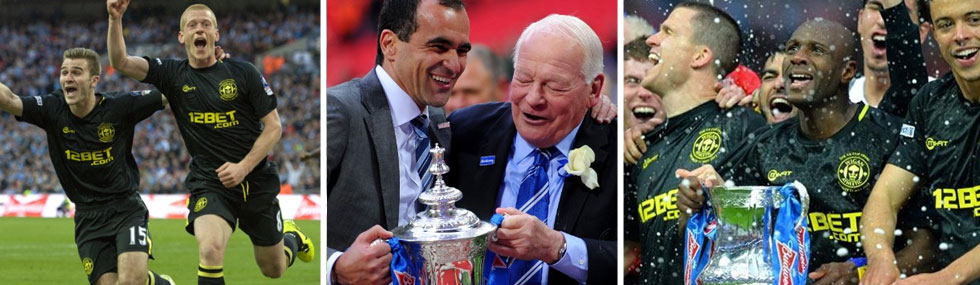
That hat trick against Reading really was something special, but Gómez’ outstanding contribution in the 2012-13 season was in the FA Cup. Gomez was pivotal in that cup run, scoring three goals and making four assists. His assist for Callum McManaman’s goal in the semi-final against Millwall will stick in the minds of Wigan supporters for years to come. In the FA Cup Final Gomez had played remarkably well in a midfield holding role, but as fate would decree, he was the one to go off after 81 minutes to allow Watson to come on.
Given his previous success in the Championship with Swansea, Gómez appeared to be a key player for Owen Coyle on his arrival at Wigan. However, the Scot did not get the best out of the player, sometimes following Martinez’s habit of playing him wide on the right.
The low point for the player under Coyle was in the Europa League home game against Zulte Waregem in early December. Coyle had put out a well-balanced starting lineup, omitting his two out-of-form central strikers and playing Nick Powell upfront. Callum McMananan and James McClean were on the wings and this time Gómez was played in his natural advanced midfield role.The four were to link up very well at times in the first half, showing the kind of movement and mutual understanding that had been sadly lacking for big chunks of the previous game against Brighton. Although he made mistakes at times, Gómez was a key link player in the first half.
Gómez had a bad start to the second half, with poor deliveries from set pieces followed by the crowd voicing their frustration with him after being caught unawares as an opponent robbed him of the ball. He was to be substituted soon after. Taking him off after the crowd got on his case was not going to help the player’s confidence. He needed a better level of support from a manager who had put him in the starting lineup.
However, the arrival of Rösler was to enable Gómez to play the football he was always capable of at Championship level, resulting in him being voted ‘Player of the Year’. But if fans would have voted for the award in December, Gómez would have been nowhere near the top of the charts.
Ironically Gómez only became a regular starter under Rösler in March. Prior to that he was in and out of the lineup, only once completing a full 90 minutes. However, following serious injuries to Ben Watson and Chris McCann, Gómez’s name was to become one of the first to be written on the teamsheet. Spectacular and crucial goals, great assists and a willingness to cover every blade of grass of the pitch were to help Gómez win that ‘Player of the Year’ award. In doing so he leapfrogged over stalwarts like Emmerson Boyce and James McArthur who had played far more games and provided a real backbone for the team. However, given the abuse that Gómez had taken over the years, few would begrudge him the award.
In the minds of many Wigan Athletic supporters Jordi Gómez never quite proved that he could handle the transition from the Championship to the Premier League. He had a rare ability to drift in, seemingly unnoticed by a defence, but too often he would get himself into great scoring positions, but not have the composure to put the ball in the net. There had been so many times over the those years when Gómez had done everything right until his final touch has let him down, whether it will be a header, a shot or a defence-splitting pass. He just did not seem to have had the self-belief to deliver in the Premier League.
The stats show that in four years playing in the Premier League Gómez scored 7 goals in in 46 starts and 25 appearances as a substitute. He made no assists.
As Swansea’s ‘Player of the Year’ in the 2008-09 season he scored 12 goals in 38 starts and 6 substitute appearances, making 5 assists. As Wigan Athletic’s ‘Player of the Year’ he scored 12 goals and made 10 assists in 37 starts and 13 substitute appearances, in all competitions. The stats reveal the gulf between the player’s performances in the Premier League and the Championship.
However, whatever shortcomings he might have had at Premier League level, there could be no doubting his determination and commitment to the club. Gómez has learned to hassle and harry the opposition, and to cover a large number of yards of the pitch in each game he plays. At Swansea he played in a newly promoted team that was on the up. His role was to orchestrate the midfield and to score goals. When he arrived at Wigan he moved into a struggling team that was too often unable to get the lion’s share of the possession.
Latics fans will surely wish Jordi Gómez well at Sunderland. Despite constant abuse from some sections of the crowd he has maintained a positive and professional attitude. He will be long remembered for his role in helping Wigan Athletic win the FA Cup.
Jordi’s next challenge will be to prove, once and for all, that he is a true Premier League player. Sunderland might not be the best side in the elite division, but with Gus Poyet at the helm the Spaniard should be able to slot seamlessly into the style of play.
Like us on Facebook, or follow us on twitter here.
Markus Holgerrson is one of several Latics players whose contracts expire this summer.
The big Swede, Markus Holgerrson, at last made his debut for Wigan Athletic, albeit coming on at Blackburn as a substitute after 72 minutes.
Holgerrson was signed as a free agent from New York Red Bulls in early February, with glowing references. His contract is until the end of the current season, which is impending.
Uwe Rosler took a gamble at Blackburn by surprisingly playing Ivan Ramis in a central back line of three. The Spaniard came off at half time, to be substituted by Leon Barnett. Knowing that Ramis could be a key player in the playoffs, Rosler took the gamble of playing him despite the risk of it being too early following the hamstring injury from which he has been recuperating. Only time will tell if Rosler was right to put Ramis in there. A fit Ramis could make a big difference to the promotion push. But will he make it?
At this stage Holgerrson’s future at Wigan is uncertain. Rosler has been able to assess him in training, in the development squad and in about 20 minutes of competitive league play.
Were Holgerrson not to be offered a further contract it would not be a surprise following previous occurrences at the club. At the beginning of last season Roberto Martinez brought in two young players from Spain who had represented their country at youth and schoolboy levels. Eduard Campabadal was an exciting young right back from Barcelona who had put in good performances for the development squad. Martinez gave him his league debut in the last match of the season against Aston Villa and he did not play badly. However, for some unstated reason the 20 year old left the club over the summer and is now back in Spain playing for Cordoba. The other young prospect, forward Guillermo Andres, signed from Villareal, remains in the development squad.
The fate of Nouha Dicko does not bode well for Holgersson and others struggling to get frontline experience. As has happened with other young players at Wigan, Dicko was never given a run of games in which to establish himself. Under Roberto Martinez he went to Blackpool on loan and played well, scoring 9 goals in 32 appearances. Owen Coyle’s arrival saw him shipped off to Rotherham where he once again gave a good account of himself and scored 5 goals in 5 appearances. Despite never giving him a chance in the first choice lineup, in January Uwe Rosler sold him to Wolves where he since has scored 13 goals in 19 appearances. Given Latics’ lack of a forward who can regularly score goals the Dicko transfer was hard to fathom.
The dearth of first team opportunities for young players in particular has been a sore point at Wigan for some time. Callum McManaman had to wait so long to get his chance, as did Lee Nicholls. Their contemporaries Danny Redmond and Jordan Mustoe still have not started in a single league match despite being 23 years old and successfully negotiating Latics’ youth system and the development squad. They still remain on Latics’ books.
During his tenure at Wigan, Roberto Martinez was loath to blood young players from within the club in league games. More surprisingly Martinez gave young midfielder Fraser Fyvie little opportunity outside cup games to prove his worth. Fyvie was certainly no raw recruit, having made more than 50 appearances for Aberdeen in the SPL up to the age of 20, when he joined Latics. The current season has been a disaster for the skilful midfielder with injuries and unfortunate loan spells at Yeovil and Shrewsbury taking their toll. He has now had three managers at Wigan who have not had the confidence to give him a further league start to add to the single one he received at the same time as Campabadal against Aston Villa.
Owen Coyle took Adam Buxton to the USA for pre-season, but the young defender soon disappeared from the limelight. Over recent months he has had loan spells at Burton Albion and Accrington Stanley .
The news came out today that Honduras coach, Luis Fernando Suarez, has named both Roger Espinoza and Juan Carlos Garcia in his squad of 23 players for Brazil. The Colombian has also included ex-Latics favourites Maynor Figueroa and Wilson Palacios. Given that Garcia has played only one senior game all season at Wigan, Suarez clearly has faith in the player’s abilities. It was a surprise that Rosler did not include Garcia in the squad for the Blackburn game on Saturday. The player still has two more years remaining on his contract.
Holgerrson is not alone in that he has a contract expiring in summer. He is joined by Jean Beausejour, Emmerson Boyce, Gary Caldwell, Stephen Crainey, Jordi Gomez and Mike Pollitt. Moreover the loan periods will expire for Jack Collison, Josh McEachran, Nicky Maynard and Nick Powell.
For the moment Rosler will be focusing on the playoffs, which will decide which division Latics play in next year. Should it be the Premier League he might well look at retaining some of those end of contract players who have proven experience at that level. Should it be the Championship, Rosler will look at bringing down both the average age and the salary costs of his squad.
It is going to be a very different Wigan Athletic squad we will see at the beginning of next season.
Like us on Facebook, or follow us on twitter here.






 LOS THREE AMIGOS