High pressing and squad rotation – a Brentford View of Uwe’s tactics: Part 1

BillyDonaldson

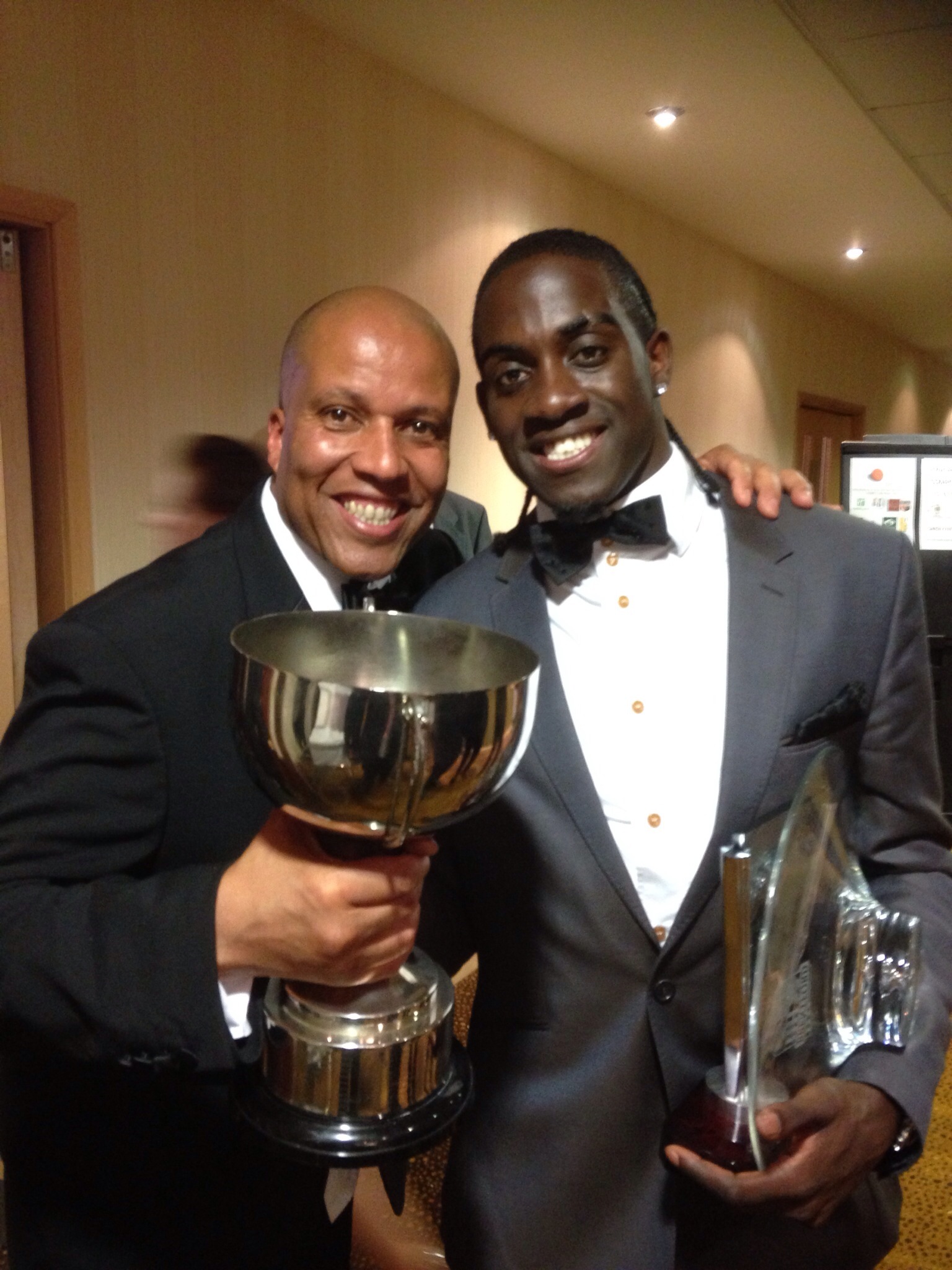
Billy with top scorer Clayton Donaldson.

Has there ever been a manager of Wigan Athletic who has achieved a popularity rating as high as that of Uwe Rosler within just six months of taking over? The ex-Manchester City centre forward has lifted the whole club, introducing a new dynamic. After the disastrous reign of Owen Coyle there is once again light at the end of the tunnel.

Latics fans have a lot of faith in Rosler. He has a huge amount of support.

However, even his most faithful fans would say that he has made tactical mistakes, been unsuccessful with many of his loan players, and that his team selection and use of substitutes can be baffling. He espouses open, attacking football, but so often the team’s play has been scrappy.

It is true that Rosler has made mistakes. But fans appreciate his willingness to be upfront, acknowledge his mistakes and his desire to learn from them. Despite a tightening of the club’s purse belts being anticipated, there is a mood of optimism for the coming season with Rosler at the helm.

Like his team, Rosler is not the finished article. He recently commented on Radio Manchester that “I’m a strong believer that first you have to fail before you become a winner. Next year, we will be winners.”

Following Rosler’s appointment in December Billy Grant gave us a fan’s view of the German’s time at Griffin Park (click here to see the previous article). Six months later we have come back to Billy to give us more of his insight. Rosler is clearly involved in a work in progress at Wigan – he has come a long way towards changing the way Latics play, but there is still some way to go.

Billy writes for the Brentford fanzine http://www.Beesotted.co.uk (Twitter – @beesotted). He will also be travelling to his sixth World Cup this year, video-blogging his way around the country for All Mouth No Action’s ‘World Cup FanCam’. You can follow Billy by RSS linking http://www.worldcupfancam.com. Also follow him on twitter @worldcupfancam and @billythebee99. Facebook: http://www.facebook.com/worldcupfancam.

So here is over to Billy to respond to some questions we composed for him.

First of all I would like to say we at Beesotted have a lot of time for Uwe Rosler. A lot of Brentford fans do to be honest. He came to us at a time that we needed to instil a new mentality into the club. Uwe was very much part of that new mentality. I do believe his work was instrumental in getting us to the Championship. Mark Warburton did a great job in picking up where Uwe left off. It could have gone horribly wrong at that point and Brentford fans would have no doubt felt a little bit more bitter about Uwe’s departure. But it all worked out right in the end.

We also have to realise that Uwe was also a relatively rookie manager when he came to Brentford. Yes he had managed clubs in Norway but he was an unknown force in the UK and was still learning on the job so to speak when he started managing us. And he’s still learning now. Wigan fans should remember that. He has taken a step up in division and has so far over-performed so give him a little rope.

High pressing is clearly the centerpiece of Uwe’s main tactical ploys. The pressing has worked for Latics in patches but when they have run out of steam they have stopped pressing and also surrendered possession too easily, inviting teams upon them. This is probably fatigue more than instruction, but how did it work for Brentford? Were his teams able to sustain the high pressing for 90 minutes, or would they enjoy possession for periods to “rest” or the break the opposition’s rhythm?

Yes Uwe’s tactic was to play the pressing game when he came to Brentford. He introduced playing the ball out from the back and pressing high to a team that quite frankly wasn’t quite used to it. It worked in patches but when it broke down, we were often punished. It was quite amusing as fans used to the blood and thunder of third division football would often be heard shouting from the terraces “Just bloody get the ball up there. Kick it. Forget the fancy stuff”. The players struggled to cope with playing that style of football naturally on an ongoing basis. But they were learning.

A couple of seasons later with a few personnel changes and more experience of playing “Uwe’s way”, the team had things pretty much sorted. The season when we lost out on promotion with the 94th minute penalty against Doncaster (2012/13), we often had games where we had over 70% possession. When we played Doncaster at their ground earlier in the season, apparently we had 82% possession at one point. We went 1-0 up but were beaten 2-1 with a Doncaster smash-n-grab. Even their manager Dean Saunders said at the time he had no idea how they won that game. We had loads of possession and were were creating loads of chances but unfortunately our finishing was letting us down. Uwe admitted that was an issue and looked to address that in the close season.

Uwe was a stickler for fitness. Last summer he took the team away for a conditioning week in Germany where they undertook an iron man session involving all sorts of body straining and team bonding exercises. The team was infinitely fitter at the beginning of this season as opposed to when Uwe took over. Fitness is a real key to the way he wants the team to play. It’s no co-incidence that he poached the conditioning coach Chris Haslam from Brentford and no one else (as yet .. Let’s see if he goes for one or two of our players in the close season). Chris was instrumental in installing a programme to get the Brentford team in ship shape and Uwe would think him as an important part of the jigsaw in getting Wigan to play the way he wants.

Of course Wigan will have some better players than Brentford to an extent. But overall, the principle remains the same. Uwe will no doubt be looking to bring to Wigan what he brought to Brentford. Without a shadow of doubt he feels that he is missing a couple of certain types of player to complete the jigsaw.

For Brentford our jigsaw was completed by adding a no nonsense player into the mix in Alan McCormack. a central midfielder-come right back. His impact on the team was phenomenal with him winning him supporters player of the year and Beesotted player of the year awards. And an attacking/wide midfielder option. For us it started with Conor McAleney from Everton but he got injured. Then it was Kadeem Harris from Cardiff but he got injured. Then it was Alan Judge from Blackburn (who joined after Uwe left). The third piece of the jigsaw was a striker and Will Grigg was bought in. Unfortunately, Grigg has not as yet lived up to his potential but we got away with it as we started scoring more goals from midfield.

But it’s all about time. A person needs time to deliver results. That’s the problem with football nowadays. There is no long term plan for most clubs. They want everything yesterday. That means there is no real scope for proper development. I’m a person that really believes that the best employees are ones who make and learn from their mistakes. For someone to really develop he (or she) has to be given time to find the right path forward.

Give Uwe a bit of time and Im sure he will get your squad in ship shape.

Uwe has clearly stated that he believes in squad rotation. Although some just don’t like it, most fans have accepted that it has been necessary because of the exceedingly long season Latics faced. Or is he just a serial rotator?

This was one of the biggest issues a vocal section of the Brentford fans had with Uwe if I had to be honest. His player rotation policy. At Beesotted we obviously get a lot of the fan opinion channelled through the website and can gauge the feeling out there. Many people were saying “We don’t know if he knows what his best team is” even at the beginning of this last season. Uwe felt that player rotation was essential to enable to squad to last a whole season. People agreed with him in principal but the argument many had was .. Couldn’t some players have a run of games .. Then get rested as opposed to rotating players constantly?

Things really went a bit awry when Uwe decided to rest practically the whole first team away to Derby in the second round of the League Cup. Many Bees fans Had their “let’s concentrate on the league” head on and were a bit dubious of getting into another cup run like we did the season before when we lost eventually to Chelsea. But we took a fair few fans up to Derby on a Tuesday night because we wanted to see Brentford give them a fight at least with a few regulars and some up-and-coming kids in the side. As it was, we went down 5-0 and the fans were really p!ssed off. Meanwhile, the rested players all came back into the side the following Saturday and huffed and puffed to grind out a 0-0 draw with a hapless Carlisle team – one which was getting knocked for 4 and 5 goals every week by the opposition. We then lost 4-0 to Bradford, 1-0 to Rotherham and, worst of the worst, 2-1 to a useless Stevenage side within the next 6 weeks or so.

To be fair, Wigan fans should be thanking Stevenage as if they hadn’t beaten us, Uwe would never have be managing their team. After that game, Uwe embarked on an excellent piece of man management. He locked the team in the dressing room for 90 minutes and everyone had it out. It was apparently a no holds barred two-way feedback session. Players could say what they felt about other players. About the manager. About tactics. Anything they weren’t happy with. And vice versa.

Whatever was uttered in that dressing room has never been leaked … But the following match, Uwe dropped fans favourite right back Shaelum Logan and replaced him with hard man central midfielder Alan McCormack. Logan was great going forward but could sometimes find himself missing in defensive positions, giving the ball away in key areas. But we were short on right back options and he was deemed too good to drop. More interestingly though, from the following game onwards, Uwe picked a team and stuck with that same team until he left for Wigan two months later. He never lost another match after that in his time at Brentford. In fact, he won them all except a 0-0 draw away to eventual title winners Wolves. What’s more … After Uwe left, we continued the no rotation policy as much as we could bar injuries. As a result, we went on an incredible 19 match 4 month unbeaten run seeing us win 17 games and draw 3 before being beaten by eventual champions Wolves. I can only assume that the right back and team rotation points were discussed at length in the Stevenage dressing room and, fair play, Uwe took them on board.

 

Like us on Facebook, or follow us on twitter here.

Where will Uwe do his summer shopping?

shopping“We will be investing in our playing and coaching staff, and I think it’s important to keep working on changing the culture at the football club.”

So said Uwe Rosler to the Wigan Evening Post this week.

When Roberto Martinez took over as manager of Wigan Athletic in June 2009, he quickly got to work on changing the culture of the club. He started by bringing in Graeme Jones as his assistant manager, to be followed by coaching and backroom staff from his previous club, Swansea. Within four days of his appointment Martinez signed Jordi Gomez, who had been on loan at Swansea, from Espanyol. He was to bring in Jason Scotland from his old club a month later.

Is Rosler set to follow the same pattern?

When the German was appointed in December, many of us expected him to bring in a swath of coaching and backroom staff from Brentford. Within a month he brought in Chris Haslam from his old club as Head of Performance. Alan Kernahan and Peter Farrell – assistant manager and first team coach – had left Brentford within a week of Rosler’s departure and it seemed a matter of time before they were installed at Wigan. It did not happen.

At the time the rationale among fans on social media was that Haslam had been brought in because of concerns in the fitness levels of Latics’ players. The non-arrival of Rosler’s trusted lieutenants was put down to either budget issues or Dave Whelan’s loyalty towards staff previously appointed.

Who would bet against either Kernahan or Farrell or both arriving over summer, given Rosler’s recent statement? Moreover will Rosler follow Martinez’s lead by signing players from his previous club?

When Martinez was appointed it was clear that he was going to employ the same playing style that had served him well during his time at Swansea. That was going to involve a paradigm shift for players who had played under the pragmatic Steve Bruce. However, Martinez had brought in playing and coaching staff to help catalyse the shift. Gomez had been the ‘player of the season’ for Swansea, making 44 starts and scoring 14 goals. Scotland had started in 48 matches, scoring 24 goals. Both fitted into the playing style that Martinez wanted and appeared to be good signings at the time.

Not long after the end of Martinez’s first season Scotland was gone. The Trinidadian just could not put the ball in the back of the net. Gomez struggled to establish himself and made more appearances off the bench than as a starter. The step up to the Premier League from the Championship appeared to have been too much for them.

However, Martinez continued to have faith in Gomez and the player persevered for three more years with his manager, despite hostility from elements of the crowd, but never establishing himself as a regular starter. But given his previous success in the Championship, Gomez appeared to be a key player for Owen Coyle at the beginning of the season. However, the Scot did not get the best out of Gomez, sometimes following Martinez’s habit of playing him wide on the right. However, the arrival of Rosler was to enable Gomez to play the football he was always capable of at Championship level, resulting in him being voted ‘player of the season’.

Following Rosler’s departure, Mark Warburton has done a great job at Brentford and they will be joining Latics in the Championship next season. Among the outstanding performers in their promotion season have been two 22 year olds – defender Harlee Dean and ex-Everton youth midfielder Adam Forshaw. Centre forward Clayton Donaldson is out of contract and could be subject to interest from Rosler. The 6’1” Bradford born player has scored 46 goals in 135 appearances for the Bees. However, he is 30 years old. Another fine performer for them has been George Saville, a 20 year old on loan from Chelsea, who can play in midfield and left back. The Italian Marcello Trotta, a 21 year old on loan from Fulham, has also been a key player in attack.

It remains to be seen whether Rosler will raid his former club for players. He told Wigan Today “I have a very good squad of players already available to me, but we have to tweak here and there.

Rosler maintains that Latics do not need to sell any players but qualifies the position by stating that “Clearly every player at every football club has his price, but our players are under contract. I don’t think certain clubs would be able to afford them – unless we got the kind of offer we got for James McCarthy, which obviously any club would have to consider.”

Rosler’s statement echoes those made by Martinez during his time at Wigan, a reflection on Whelan’s willingness to let players leave if the price is right.

Despite the public statements it is likely that Rosler will sell some players over summer in order to raise funds to bring in new ones who would fit into his playing style. A left back and a couple of decent strikers will be foremost in Rosler’s shopping list. The latter are most likely to come at a cost, hence the need to raise funds.

As usual at this time of the year all kinds of speculation is floating around the social media. One day we get headlines telling us that Nick Powell is going to Leicester or Swansea, then later we hear that he will stay at Wigan. It’s crazy time.

Rosler has suggested he might have two signings lined up by the end of the week. Maybe those signings will give us inkling as to what is to follow?

Like us on Facebook, or follow us on twitter here.

Finances, FFP and the long term future for Wigan Athletic

2012-moneyball

Leicester City were once again champions of the second tier of English football this year. No club has done that more than the Foxes, this being their seventh title.

Leicester were deserving winners of the 2013-2014 Skybet Championship. Manager Nigel Pearson had built up a squad that in terms of quality and depth was far superior to those of the majority of the other clubs in the division. His success was reflected in their tally of 102 points for the season, the joint highest since 2005-06 when Reading amassed an impressive 106 points.

But did Leicester buy their success?

Leicester lost £34 million in the 2012-13 season, beating what had been a record deficit of £29.7 million the previous year. However, the Financial Fair Play (FFP) rules came into play at the start of the 2013-14 season. FFP was to allow Championship clubs to lose no more than £8 million this season or they would face a fine or a ban on player transfers. Leicester’s Thai owners had lent £75 million, but facing FFP they drastically reduced the club’s debt by conversion into equity, as Dave Whelan did at Wigan. The Leicester Mercury  reports that the club can “effectively make a £13 million loss and still comply with these rules. This is because the rules do not include costs relating to the youth academy and various one-off losses.”

The FFP rules clearly have some loopholes and Leicester’s accounting team, like those at many other clubs, will be keen to manipulate them and not pay the penalties. Leicester still expect to meet that £13 million loss target.

In contrast with Leicester’s total losses of almost £64 million over the two seasons from 2011-13, Wigan Athletic actually made a profit in each. Reversing a spiral of losses spanning decades, Latics made total net profits of £4.3 million in 2011-12 and £822,000 in 2012-13. That was accomplished while they were in the Premier League.  Can they continue to make a profit – or at least break even – in the totally different environment of the Skybet Championship?

When Wigan Athletic were relegated from the Premier League last season it was clear that both revenues and attendances were going to drop. The question was going to be – by how much?

Latics’ gate money in the Premier League days was always dwarfed by the TV revenues they were receiving and from a purely financial viewpoint attendances were not much of an issue. Last year match day revenues covered no more than 10% of total revenue of £56.4m. Without the television revenues, the club could never have seriously competed in the Premier League.

However, relegation entailed a huge loss in TV revenue – an average Premier League club now receives around £60 million, while the average Championship club receives around £2.5 million. It was clear that the club would need to look at maximizing its other sources of revenue. However, parachute payments (£59 million over four years, including £23 million in the first) would help cover the shortfall  and give Latics a competitive advantage over the majority of the clubs who receive only the £2.2 million Premier League Solidarity payment.

Financial accounts for the season just finished are not yet available, but the likelihood is that the majority of the clubs in the Championship once again lost money. In 2012-13 only five clubs made a profit: Blackpool, Crystal Palace, Huddersfield, Peterborough and Watford. Most of those clubs did so through their business in the transfer market.

The Championship clearly has a long way to go in terms of marketing itself. Its television revenues are paltry in comparison with the Premier League. This despite the fact that  average attendances for the Championship division place it in eighth place of leagues in the whole of Europe.

With an average of 43,497 the Bundesliga once again tops the attendance charts in Europe ahead of the top flight leagues in England, Spain, Italy, France and the Netherlands. The second division of the Bundesliga had an average attendance of 17,888, with England’s second tier following with 16,605.

Wigan Athletic’s average league attendance of 15,177 this season was some 8% below the division  average. Brighton topped the attendance table with an average of 27,283. However, Latics ranked third in attendances away from home drawing an average crowd of 17,370, bettered only by Leeds and Burnley.

In the two years they had spent in the Championship division prior to promotion, Latics averaged 9,531 in 2003-04 and 11,563 in 2004-05 when they finished second. Latics now have a much bigger and younger fan base than they did then. That core of younger supporters will help attendances remain at least where they currently are at the moment unless the club is relegated.

On a local level their attendances remain above those of Wigan Warriors who averaged less than 14,000 in 2013.  Since Latics entered the Premier League in 2005 their attendances have been constantly superior. The challenge will be to hold them there whilst remaining in the Championship. Latics highest league attendance at home this year was 19,226 against Leeds United. The lowest was 12,970 when hosting Yeovil.

Latics’ Lancashire rivals in the Championship are old clubs with fan bases built up over more than a century. Wigan Athletic were formed in 1932, got into the Football League in 1978 and the Premier League in 2005. Their average attendance in the 1993-94 season just twenty years ago – not a long time span compared with the age of those clubs – was 1,897, which is an eighth of what they had in this 2013-14 season.

This season their average attendance was higher than those of Burnley (13,719 – founded in 1882), Blackpool (14,216 – founded in 1877) and Blackburn (14,961 – founded in 1875), being bettered only by Bolton (16,140 – founded in 1874).

During their stay in the Premier League Wigan Athletic wisely kept their ticket prices well below those of most other clubs. The ticket prices  remain competitive in the Championship. In the 2013-14 season the lowest price for a ticket at the DW Stadium was £15, equal to costs at Blackburn, Leicester and Nottingham Forest. Such tickets were cheaper only at  Derby and Huddersfield at £10. Moreover Latics’ cheapest season ticket price of £280 was below average, being bettered only by Yeovil £273, Bournemouth £250, Derby £230, Blackburn £225, Blackpool £195 and Huddersfield £199.

Through playing successes in recent years, keeping admission prices low and an increasing involvement in the local community the club has built up a fan base that now rivals those of their venerable neighbours and competitors. Through Whelan’s actions of converting debt into equity, Wigan Athletic are currently close to being debt free. They are being run along sound financial lines and are not living beyond their means, as is the norm with most Championship clubs.

However, the Championship is a difficult environment in which to operate. It is the parachute payments that are currently keeping Latics afloat. In order to hold a mid table position a club typically carries a wage bill in excess of £20 million. But the total of match day receipts, television revenue and commercial revenue is unlikely to reach £10 million next season and they will be without the financial benefits of the Europa League.

The long-term future for Latics in this division appears bleak. Parachute payments will decrease by £5 million next season, when Latics really need to put in a concerted effort to get back to the Premier League where they would have the huge financial buffer of media revenues. They will face stiff financial competition from the relegated clubs – Cardiff, Fulham and Norwich – with their first year parachute money and Premier League squads. Moreover  there are other clubs, not long departed from the top tier, receiving such subsidies. What will happen if Latics do not get promotion within the next three years?

Over recent years there have been a lot of clubs who have maintained high wage bills, without the playing success to match it. However, the clubs near the bottom of the table have almost invariably tended to be those with the lowest wage bills.

In an interesting study of Championship club finances made by Kevin Messere he quotes that: “Typically to finish in the top six a cost base of £30M is required.” Given the figures we have already looked at, Latics are unlikely to be able to reach such a figure without making a loss, unless they use financial reserves or make a healthy profit in the transfer market. However, given the significant outlay to be made at Charnock Richard they are unlikely to have much in reserve. The inference is that Uwe Rosler will have to sell off some of his prized assets or to cut his squad size drastically.

Given the inability of the Football League to attract big money from the media there will continue to be a large imbalance in income in the Championship division for years to come. Parachute payments give a huge financial advantage to clubs coming down from the Premier League, although many have been weighed down by the salaries of players remaining on long-term contracts. In 2012-13 relegated clubs Bolton and Blackburn had costs amounting to around £50M, leading to big financial losses over the season, despite the first year parachute payments they received.

Given the precarious financial future ahead of the club, Dave Whelan has made a bold move in purchasing what promises to be an excellent venue for a youth academy. Put simply, Wigan Athletic needs to be a “selling club”. Selling one prized asset each year might well be enough to keep the club afloat over the long term, no matter which division they are in.

It is going to take some years for the club to be able to develop its academy sufficiently to provide potential first team players. In the meantime it will be a matter of making astute signings, of young players in particular, who can be nurtured and eventually sold on.

We can expect a lot of changes over the summer. Rosler will have to look at offloading players with high salaries and will have to reduce his squad size significantly. Changes might also be made within the coaching and backroom staff, with him bringing in people who have worked with him previously who know his philosophy and the style of play he seeks. Ex-Brentford assistant manager Alan Kernahan and coach Peter Farrell will surely be under consideration.

Next season promises to be a fascinating one for Wigan Athletic. Rosler will lose a number of quality players over the summer. The question will be whether he will be able to find quality replacements, given the financial resources at his disposal.

In the meantime Latics will strive towards long-term sustainability as a higher echelon team in English football.

Like us on Facebook, or follow us on twitter here.

QPR 2 Wigan Athletic 1 – a spirited end of an era


Hoilett goes down under Caldwell's challenge for a penalty.

Hoilett goes down under Caldwell’s challenge for a penalty.

Charlie Austin’s extra time goal heralded not only the end of the season, but the end of an era for Wigan Athletic.

The failure to beat the Londoners over two legs means another year in the Championship for Latics and a likely exodus of many of their most skilful players. This was a brave performance, full of spirit, against a strong QPR side.

Uwe Rosler kept the same lineup that played in the first leg except bringing in James McClean for Marc-Antoine Fortune. He was to use a tactic that had worked before in producing some of Latics’ best results of the season away from home – high pressing to disrupt the opponents’ play, followed by dogged defence. But defending a 9th minute goal for the remaining 81 minutes was always going to be a mountain to climb, let alone a team was playing its 62nd game of the season having to play extra time.

James Perch typifies the Rosler approach. He has been one of the mainstays of Wigan’s revival under the German, with his willingness to run himself into the ground for the cause. Just as he did at the Etihad, Perch got himself into the six yard box to convert an excellent 9th minute cross from the lively James McClean. QPR had been bamboozled by Rosler’s tactic of using McClean and Callum McManaman to high press their centre of defence. The result was the QPR defenders hoofing long balls, gobbled up by the Wigan defence.

McClean could have added a second as he ran on to O’Neil’s backpass, but instead of trying to round goalkeeper Rob Green he chose to make a theatrical dive. A good chance went begging and the Irishman got a yellow card from Mark Clattenberg for his actions. Not long after Shaun Maloney had a shot blocked by Green, but then QPR gradually got themselves back into the game. The high pressing had gradually disappeared from Wigan’s game and Harry Redknapp moved Kevin Doyle from right midfield to support Charlie Austin up front. Moreover James McArthur, who had been excellent in the midfield pressing, had to go off with an injury after 36 minutes, Roger Espinoza replacing him. It was a different contest now.

A shell-shocked QPR were gradually getting back into the game. Carson made a fine save from a fierce drive from Niko Kranjcar and McClean cleared Austin’s header off the line. But Latics went into the dressing room at half time with their lead intact.

McClean had another fine chance after the break, going through one on one with Green, but he did not have the control to convert it. Green blocked his first effort and McClean’s effort from the rebound hit the post and went wide. Although the home team’s attacks lacked coherence, Wigan became besieged. They could not hold on to the ball, the defenders hoofing it over the midfield to forwards who had little chance of retrieving it. Wigan’s three central defenders – Emmerson Boyce, Gary Caldwell and Rob Kiernan – had been superb in defence, repelling Rangers’ attacks.

Redknapp had brought on Korean left back Suk Yun-Young after 50 minutes for the combative Clint Hill, who had been lucky to survive the first leg after his deliberate elbowing of Kiernan. The pattern of play continued, with Latics unable to hold the ball and QPR applying pressure, but not convincingly. However, Redknapp’s substitution of big target man Bobby Zamora after 65 minutes for Doyle was to change the course of the game. Zamora’s striking rate is comparable with that of Fortune, but his physical presence and experience was to make the difference.

McManaman was replaced by Martyn Waghorn in the 71st minute. A couple of minutes later Zamora interchanged passes with Junior Hoilett who was brought down by a reckless challenge by Caldwell just inside the penalty box. Austin converted the penalty with ease. Moreover Caldwell had been injured in the challenge and had to be substituted by Leon Barnett. Zamora continued to cause problems and almost sealed it for QPR near the end of normal time, but his lob passed over Carson’s crossbar.

The game went into extra time with Latics playing with spirit, but the hoofing continued. The decisive goal came in the 96th minute when Zamora helped the ball through to Austin who got to it much quicker than Barnett to beat Carson. The final minutes of extra time saw Barnett pushed forward as Latics pumped in high balls. In the final minute a deflected shot from Kiernan passed narrowly wide of Green’s goal. It was not to be Wigan’s day.

The Good

The energy and passion shown by a Latics team playing its 62nd game of the season was truly exceptional. It was cruel that the game went into extra time, but those tired legs kept running to the bitter end.

The backline of Boyce, Caldwell and Kiernan had been immense in repelling the waves of QPR attacks until the penalty. It looked like Rosler’s gamble of starting Caldwell, who had played less than a handful of games in a year, was going to pay off until that fateful moment in the 73rd minute.

Rosler’s tactic of blitzing QPR from the start worked well. High pressing and a high level of physical fitness are key elements of the German’s approach to football and the players responded well, at least for the first quarter of the game. Starting without a centre forward was a brave ploy that almost came off.

It was sad to see Caldwell so visibly distraught on the sidelines after giving away the penalty and having to be substituted. It looks like his Wigan Athletic playing career is over. Up until that 73rd minute he had looked like the great defender and leader that he was in the closing part of the 2011-12 season when Latics ensured Premier League survival through beating the elite. He has also had some calamitous moments for Latics over the years, making rash tackles such as the one that turned this game. For some fans he has been a hero, for others a scapegoat.

Uwe Rosler deserves immense credit for the way he has lifted the club since the dark days of Owen Coyle. Reaching the semi-finals of both the FA Cup and the Championship playoffs has been a great achievement.

The Bad

Roberto Martinez would have scratched his eyes out if he had seen his team throw away possession as Latics have done, not only in this match, but in many others over these past months. Rosler has cut out the excessive sideways and backwards passing that could be so frustrating during the Martinez era. He has also tightened up the centre of defence. But he has not cut out the hoofing that started to rear its ugly head under Owen Coyle.

When a team “parks its bus”, as Latics did after scoring, it is important to hold on to the ball as much as possible. QPR did it fairly effectively at the DW last week.

In this match the Wigan defenders were once again prone to the big hoof, none more so than the goalkeeper. Carson is a fine ‘keeper, with a very powerful kick. But during Coyle’s reign he was making those long, speculative clearances and under Rosler he continues to do so.

The hoof is a part of Wigan’s play that needs to be cut out if Rosler is to maintain the continued support of Latics fans who have an expectation of good football.

Player Ratings

Scott Carson: 8 – a terrific defensive display. He made some fine saves and inspired confidence in his defence. Distribution poor.

James Perch: 8 – an excellent display. Took his goal well.

Emmerson Boyce: 9 –superb in his reading of the game. The best player on the pitch.

Gary Caldwell: 8 – excellent until the rush of blood for the penalty.

Rob Kiernan: 8 – excellent in defence.

Jean Beausejour: 6 – has not been at his best in recent weeks. Has a long summer ahead with the World Cup.

James McArthur: – led the high pressing with expertise. Badly missed when he went off after 36 minutes.

Jordi Gomez: 7 – not at his best, but got through a lot of work.

Shaun Maloney: 6 – still not at his sharpest.

Callum McManaman: 7 – worked hard closing the opposition down, but never received the service to make him more of a threat. When he was taken off after 71 minutes it dulled the Latics attack.

James McClean: 7.5 – an enigma once again. Worked so hard closing down the opposition and his powerful running was a constant threat to the QPR defence. His fine cross led to Latics’ goal. With better finishing he could have won the game for Wigan. What a pity.

Substitutes

Roger Espinoza: 7 – came on after 36 minutes. He was his usual energetic self, always involved, playing at high tempo.

Leon Barnett: – came on after 73 minutes. Has not been able to regain his previously good form since his injury at Ipswich.

Martyn Waghorn: – came after 71 minutes. Retrieving high balls is not his forte.


Like us on Facebook, or follow us on twitter here.


Latics at Loftus Road – will Uwe park the bus?

Bus

Thanks to WiganWorld for the photo.

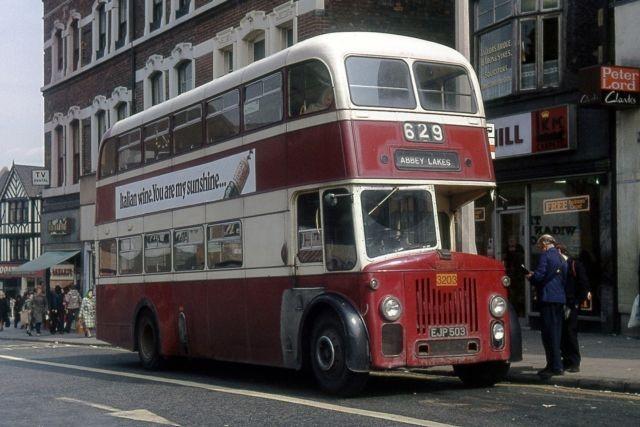
In September 2004 Chelsea and Tottenham played a goalless draw at Stamford Bridge. After the match Chelsea manager Jose Mourinho commented “As we say in Portugal they brought the bus and left it in front of the goal. I would have been frustrated if I had been a supporter who paid £50 to watch this game because Spurs came to defend. I’m really frustrated because there was only one team looking to win, they only came not to concede – it’s not fair for the football we played.”

“Parking the bus” has since become a well-used term in football vernacular. Ironically Mourinho himself has become an expert in having his teams do exactly that same thing when he has felt a 0-0 draw would suit him.

Despite making noises about playing an attacking line-up, Harry Redknapp parked the bus on Wigan Athletic on Friday night. The wily East Londoner had clearly made up his mind that a 0-0 draw was what he wanted. With an away record of W8 D5 L10 Redknapp’s team had the least number of points away from home of the top six in clubs the Championship division. In comparison their home record was bettered only by champions, Leicester City.

Latics go to Loftus Road tomorrow to play a team that has lost only two league games all season on their home ground. One of those was to Leicester and the other was to play-off contenders Reading.

Loftus Road has never been an easy place for visiting teams. The pitch measures 102 by 66 meters, on the small side compared with the standard dimensions of 105 by 68 meters stipulated by the Premier League and UEFA. The stadium itself is small, with a capacity of 18,360. The stadium feels tightly enclosed as all four stands meet with no gaps and fans are closer to the pitch than at other stadia. Away teams can easily feel intimidated as the crowd noise reverberates in a compact space.

It is a difficult task for Rosler’s team, which has played 61 games this season. However, Latics are used to playing against the odds. In March they went to the Etihad Stadium to defeat a Manchester City side that had won 12 of its 13 home matches in the Premier League, scoring 43 goals. Rosler might be right in saying that QPR have three times the wage bill of Latics, and they do have some quality players, but they pale in comparison with the might of Manchester City.

Redknapp might well have done his homework prior to Friday’s game. If he had then he would have expected Latics to struggle against a massed defence. They have done so all season. During Rosler’s tenure they have had most of their best results away from home, where they have more room to play. They won 4-1 at playoff rivals Nottingham Forest, 3-0 at Sheffield Wednesday and had hard fought wins at Brighton, Derby and Reading.

Despite what seemed to be a bad result on Friday, Rosler did not seem over concerned. He acknowledged that his wing backs had not pushed forward sufficiently. It could be because Redknapp had planted Hoilett and Traore in wide positions as a tactical ploy to hold back Perch and Beausejour. Or maybe Rosler had wanted to keep things tight and not push them as far forward as usual.

Rosler saying that the pressure is now on QPR might be playing mind games with Redknapp, but could also be a statement he genuinely believes. So what will Rosler’s tactics be tomorrow?

It would be ironic if the German were to turn the tables on Redknapp by parking the bus too. Allowing the home team to do the work of breaking down a massed defence, at least in the first half, would conserve the energy of his players for a concerted push later in the game.

But then again Rosler might go for broke by blitzing QPR from the start. To do so he would be asking a lot from players with already tired legs. However, with vigorous high pressing from the start Latics could disrupt the home team’s play and possibly secure an early goal. Getting that goal could be psychologically huge for a Latics side that has lost some of its self-confidence through a string of indifferent results.

It will be interesting to see if Rosler continues to operate with a back line of three central defenders and wing backs. He did so in the victory at the Etihad, but reverted to a flat back four in the FA Cup semi-final against Arsenal. When Latics visited QPR in March he played a back line of Rogne, Ramis and Kiernan. It was a tight game, with Latics a little unfortunate to lose 1-0.

Unfortunately it looks like Latics will be without the excellent Ivan Ramis tomorrow. Rosler’s gamble of playing him at Blackburn misfired, with the Spaniard going off injured at half time. Ramis could make a huge difference in the centre of defence if he were fit.

Gary Caldwell looked comfortable on Friday, but the defence were put under little pressure by a defensive QPR side. Playing him tomorrow would be another gamble and it could misfire. However, Rosler boldly thrust the Scot into the FA Cup semi-final and it came off.

This could prove to be one match too many for Latics at the end of a marathon season. They have done so well to get into the playoffs after a poor managerial appointment in summer left them heading towards the lower reaches of the table by December. Win or lose, the fans will continue to back Rosler.

If Wigan were to lose tomorrow it might well be the last match for the club for a number of players recruited in the Premier League era. Another year in the Championship would mean tightening the purse belts and letting the larger wage earners move on.

However, having seen what Latics have done before when the odds were stacked against them, only a fool would count them out.

Like us on Facebook, or follow us on twitter here.