Reflections on Paul Cook and Ian McNeill

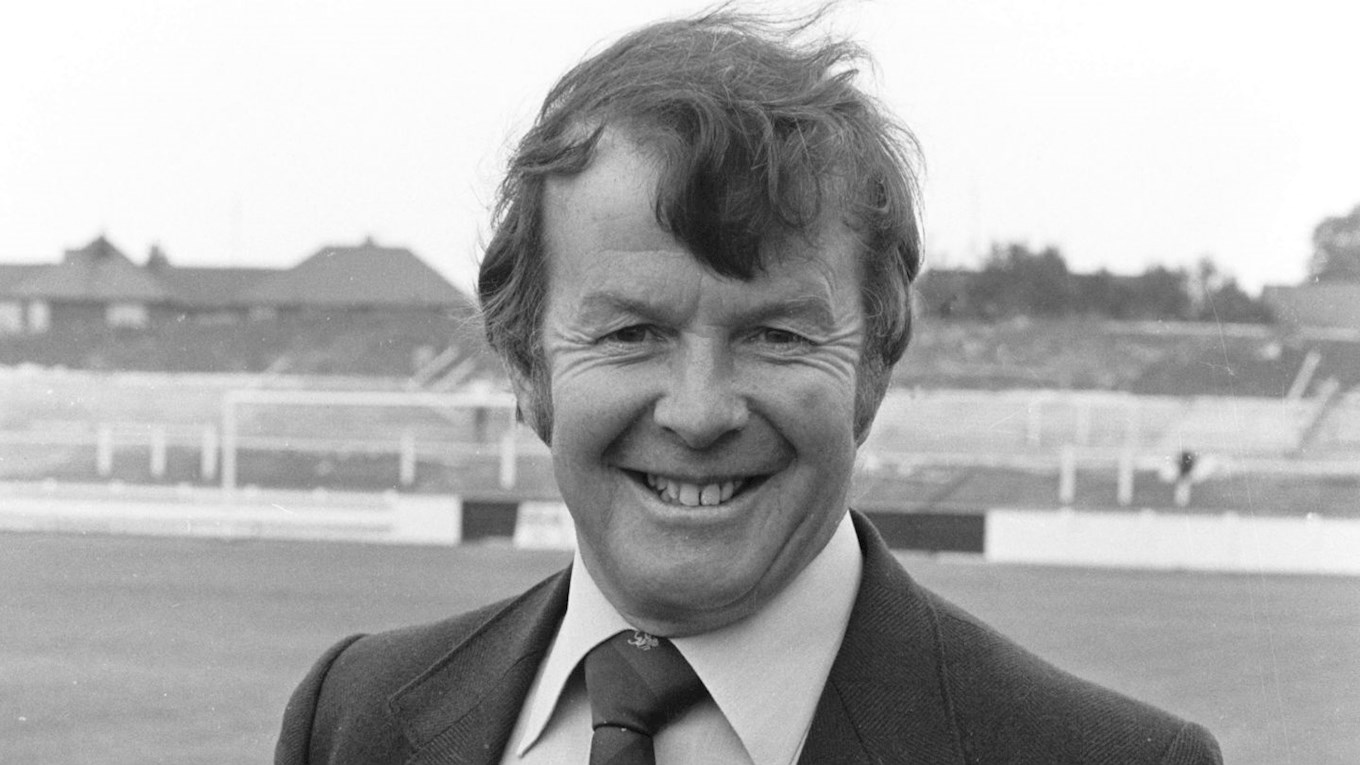
Ian McNeill.
Photo courtesy of Wigan Athletic FC.

Sometimes you receive a jolt that turns your mind towards things that have happened just now and in the distant past. The trip to Scunthorpe was never going to be easy, against a physical side that had only conceded five goals up to that point. All seemed to be going well until Lee Evans was sent off: it was to be the first real low point of the afternoon. But Nick Powell’s opportunism saved the day for Paul Cook’s team, Latics coming away with a 2-1 victory despite playing the final third of the game with ten men.

But the feel-good factor of the three points gained in Lincolnshire was to dissipate soon after when David Sharpe’s tweet announced the passing away of Ian McNeill at the age of 85.

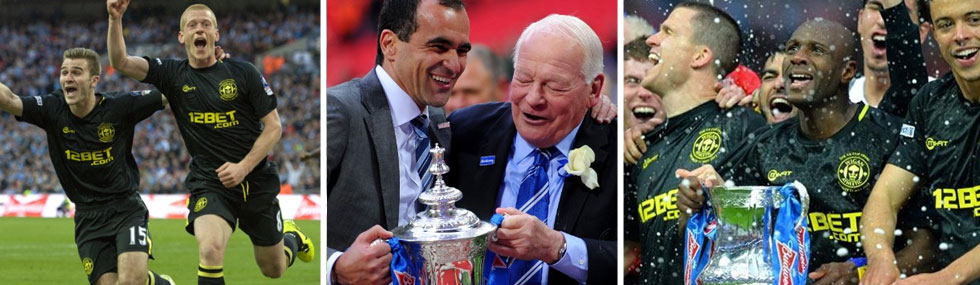
For me McNeill ranks among the best-ever Wigan Athletic managers. Some would say that you cannot compare his achievements with those that came decades later  such as those of Paul Jewell and Roberto Martinez. Jewell got Latics to the Premier League and the League Cup final, Martinez got wins over the biggest clubs in England, including that eventful day at Wembley in 2013. What had McNeill achieved that could place him in a category up there with those two?

Lots has been written about Ian McNeill’s career. He was an inside forward for Aberdeen, Leicester, Brighton and Southend. He went on to spend decades in management, then as a scout in later years. He was manager at Wigan from 1968-70, doing a second spell from 1976-81. His Latics teams were a pleasure to watch as he always seemed to insist that they play the “right” way. Good football was his expectation. He was an expert in scouting out talent, bringing in players who would provide the backbones of teams for years to come.

McNeill was appointed in the summer of 1968 to lead an ambitious Wigan Athletic into the newly formed Northern Premier League. An archaic system was still in place by which the bottom four clubs in Division 4 would apply for re-election, together with non-league aspirants. The Football League was almost a closed shop with clubs playing the “old pals act” by voting for those four clubs.

In the previous eighteen years only two non-league clubs had been elected. The non-league vote had been repeatedly split, with anything up to half a dozen clubs applying each year. However, the creation of a northern super league, composed of the top clubs from the various regional competitions, was a real step forward. Winning such a league would certainly give more kudos than the Cheshire County League, even if it had been the best of the northern regional competitions. Moreover, the prospect of only the winners of the NPL and the Southern League applying for election would make sense. The NPL was to prove key in enabling Wigan Athletic in their quest for a place in the Football League.

The NPL was to comprise 7 clubs from the Cheshire County League, 5 from the Lancashire Combination, 4 from the Midland Counties League, 3 from the Northern Regional League and one from the West Midlands League. Interest in Wigan was high and Latics’ first game at Springfield Park against Ashington was to draw a crowd of 6,721 – the highest home league attendance for 13 years.

Ian McNeill had been managing Ross County, guiding them to their first ever Highland League title. His contacts in Scotland were to prove invaluable and he brought in the likes of David Breen, Benny Cairney, Doug Coutts, Jim Fleming, Jimmy Lynn, Jim Savage and Billy Sutherland. But the most notable of all in McNeill’s squad that year was not a Scot, but an ex-youth player from Arsenal, who had played just three games in the Cheshire League the previous season. Just 19 years old at the time, Ian Gillibrand soon established himself as a regular in the team. Although he lacked height for a central defender, Gilly had an impressive leap and his reading of the game made him look like the non-league version of Bobby Moore. He was to play a further ten seasons at the club, breaking the record for his number of appearances.

McNeill was keen to win the NPL in its inaugural season, but so too were the previous season’s Cheshire League champions, Macclesfield Town. McNeill paid Runcorn a huge £3,000 for Alan Ryan, who had scored a remarkable 66 goals in the previous season. But despite having an excellent record of record of W18 D12 L8, Latics were to finish in second place. Attendances had almost doubled from an average of 1,801 the previous season in the Cheshire League to 3,393.

The following season was an even better one for Latics, with a record of W20 D12 L6, but they were to once again to finish behind Macclesfield, this time on goal difference. Despite doing a great in those two initial NPL seasons McNeill was to leave the club following a disagreement with the chairman. But he left behind a very strong base of players who went on to win the NPL the following season under Gordon Milne.

McNeill re-joined Latics in the summer of 1976. Latics finished in a mid-table position in his first season back, but once again he used his scouting connections to pick up bargains in the transfer market for the 1977-78 season. Latics went on to finish second, but could apply for Football League status because the champions, Boston United, did not have ground facilities up to the required standard. Their election into the Football League in 1978 was a sensation, after 34 years of unsuccessfully applying.
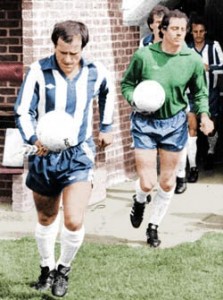
Ian Gillibrand leads Latics out at Hereford.
Thanks to Wigan Athletic Supporters Club for the photo.

The photo of Ian Gillibrand leading Latics out to their first Football League match at Hereford is one that continues to stick in the minds of the more senior supporters. Wigan finished in 6th place in their first two seasons in Division 4, but McNeill left in 1981 when they were to finish in mid-table. He joined Chelsea as assistant manager and was instrumental in bringing in players like Kerry Dixon and David Speedie to the west London club. Wigan replaced McNeill with Larry Lloyd, who was given a level of financial support to which McNeill had not been accustomed. Lloyd built on the firm base provided by McNeill to win promotion in the 1981-82 season.

Ian McNeill will be remembered as the manager who led Wigan Athletic to their inaugural seasons in the Northern Premier League in 1968-69 and the Fourth Division of the Football League in 1978-79. But more than anything else he will be remembered for his positive approach to the game of football.

Paul Cook is in his early days as Wigan Athletic manager. Like McNeill, Jewell and Martinez he will insist that his teams play his brand of football, akin to that nebulous criterion “The Wigan Way”. Cook believes in attacking football and the players are clearly enjoying his positive approach. Promotion back to the Championship is a distinct possibility this season. It is to be hoped that Cook will be given the kind of longevity afforded to his predecessors – McNeill, Jewell and Martinez.

We can only hope that Cook too will become a Wigan Athletic legend as a manager.

Five talking points arising from the win against Walsall


Result: Wigan Athletic 2 Walsall 0

In the end it was a comfortable victory over a Walsall side that is as good as any we have seen at the DW this season. It was a scrappy game, with Latics playing their best football in flashes, but they did enough to pick up three more points.

The result keeps Wigan in second place, with Shrewsbury beating Scunthorpe 2-0 to maintain their impressive start to the season.

Let’s take a look at some points arising from the game:

When was the last time Wigan’s home record was so good?

It was this time of year in 2015 when Gary Caldwell’s team played out a goalless draw with Walsall. Their record at home following that match was W3 D3 L0, whereas on the road their record was W1 D1 L3.

This season’s home record is W5 D1 L0. Latics fans will be scratching their heads to remember a better start of a season. However, it has not all been plain sailing and Latics have had to show a lot of patience in breaking down teams who have come to avoid defeat. There have been excerpts of champagne football, mingled with solid defensive play.

Away from home they have fared less well, although there have been several fixtures against teams that were high-flying at the time. The defeats at Shrewsbury and Peterborough were tight affairs. The away record up to this point is W3 D0 L2.

Are Shrewsbury going to be like Burton a couple of years ago?

Burton Albion were formidable in League 1 in 2015-16, a seemingly modest club towering above larger competitors, topping the table for months until Caldwell’s team overtook them in the latter part of the season. By Christmas they were topping the table, with Wigan eight points behind in fifth place. At the time people were questioning whether Burton could maintain their momentum, but they did to a large degree. They had gained 48 points in the first 23 games of the season, going on to accumulate 37 points more in their final 23 outings. That was enough to secure second place to ensure automatic promotion. With shrewd moves in the transfer market they went on to avoid relegation in the Championship last season playing against clubs with budgets that made their own look miniscule in comparison.

Can Shrewsbury do what Burton did? In fact, the Shrews have already made a better start than the Brewers did a couple of years ago. Shrewsbury narrowed their pitch in the summer of 2016 in a move their manager at the time, Micky Mellon, saying that “We had one of the biggest pitches in England and now we have the same size as everyone else, so everybody who we play against will have the same size pitch.” In fact, the current pitch at the New Meadow measures 110 by 72 yards, the same as that of the Pirelli Stadium in Burton. Not many teams will relish a trip to New Meadow these days.

A year ago, Shrewsbury were bottom of League 1, but Paul Hurst arrived in late October and managed to keep them out of relegation, eventually finishing in 18th place. Over the summer Hurst made 8 new signing with 6 players brought in on loan. The transformation has been remarkable.

Jones reaches the 300 mark

When Christian Walton was injured in early September there were concerns about Jamie Jones coming in. However, Jones has done well, giving confidence to his defence through his positioning and handling. Moreover, his intelligent distribution has helped Latics launch rapid attacks. Although he has made 300 career appearances, Jones is still only 28 years old.

Not on fire but getting warmer

Will Grigg’s brace of goals will certainly be good for his confidence. Latics need an “on-fire” Grigg to finish off their often-excellent approach work.

Latics have strength in depth

Michael Jacobs went off at half time, presumably through injury. He had certainly not been his usual self in the first half. But with Ryan Colclough injured, Cook called on David Perkins, who was to prove as lively and industrious as ever.

Reece James had been rested for the game, with Callum Elder having his first home league start. The Australian was excellent, his superb cross leading to the first goal.

Lee Evans has been a key player, but he was taken off after 68 minutes yesterday, Max Power stepping comfortably in to his natural position.

Having a bench which includes the likes of Perkins, Power and Elder, plus Ivan Toney who did not come on, illustrates the strength in depth that Cook possesses.

Five talking points arising from the home win against Plymouth


Result: Wigan Athletic 1 Plymouth Argyle 0

Wigan Athletic did not play badly, but found a massed Plymouth defence difficult to penetrate. Despite having 23 attempts on goal it took a penalty to break the deadlock and give Latics a single goal victory.

The three points gained from the match enabled Wigan to move up to second place, still four points behind a Shrewsbury side which continues to play out of its skin. The Shrews record of W8 D2 L0 is highly impressive. But do they have the quality in the squad to keep it going?

Let’s take a look at some points from yesterday’s game.

Was Nick Powell kept on too long?

Nick Powell had not completed 90 minutes in a competitive match for so long. He did yesterday and it could be seen as an indicator that he is on the way to overcoming those fitness issues that have beset his career. But the player was clearly in discomfort as he was helped off the field in the 90th minute to be substituted by Noel Hunt. Up to that point Paul Cook had been judicious in the amount of time he was giving Powell in each game. But was 90 minutes too long?

Cook had kept Powell on the field much longer than usual, presumably because he needed the kind of spark that the ex-Man U player could provide to break down a stubborn Plymouth defence. But after Powell had put away the 82nd minute penalty one expected Cook to withdraw him.

It could prove a costly mistake.

The centre forwards need to score goals

Wigan Athletic have scored 18 league goals up to this point. The two centre forwards have scored a combined total of three of those.

But Grigg just has not got back to his best since his injury. Grigg’s key strength is his movement. We have seen that, but the end-result has not been forthcoming. One goal in six starts and four appearances off the bench is unimpressive from a striker who has passed the 20 goal per season mark three times previously.

Toney has more physical presence than Grigg and is more likely to score headed goals. But his two goals so far have been a perhaps fortunate deflection and a tap-in. He has come close so many times but has not been able to put the ball in the net with enough regularity.

Grigg is the first to admit that he is not yet up to peak fitness. He speaks with confidence about his ability to get another 20 goal haul this season. Toney has looked lively in his approach play and fits well into the style of play. Toney has a career record of 0.23 goals per league game, having scored 26 goals from 70 starts and 43 appearances off the bench. Grigg’s average is 0.31 goals per game, with 82 goals from 173 starts and 87 appearances off the bench.

Most League 1 managers will envy Cook for having both Grigg and Toney at his disposal. Both are good players at this level. It appears to be a matter of time until one or the other starts firing on all cylinders. Cook is fortunate that his advanced midfield trio of Michael Jacobs, Gavin Massey and Nick Powell have already notched a combined total of 12 goals in 10 matches up to this point.

Goal threat from corner kicks

Latics had 15 corners yesterday. With Dan Burn and Chey Dunkley coming forward into the box and with good headers of the ball like Powell and Toney also there, could we not expect more of a threat from corner kicks? Lee Evans usually takes them, from the right and left. His delivery is by no means bad, but could more variety be introduced? Using left footers Reece James or Callum Elder could be a possibility.

Is it something that Cook and his coaches will be working on during training?

The full backs are important in Cook’s system

Nathan Byrne’s form has been a revelation this season. His attacking down the right hand side has been a pleasure to watch and he has worked hard on the defensive side of his game. The problem is that Cook has no back-up right back if Byrne gets injured.

On the left-hand side Reece James has been impressive since his long lay-off from injury. Callum Elder looked lively yesterday when he came on for James. He is a naturally attacking left back with a sweet left foot.

Cook expects a lot physically from his full backs, being expected not only to be solid in defence, but to race forward almost like wingers. They have been a key part of the good football we have been seeing so far this season.

Expect more parking of buses

In 2004 Jose Mourinho coined the term “parking the bus” following a match between his Chelsea team and Tottenham. It has come to convey a team using all of its players defensively when they want to draw a game or defend a narrow margin. Wigan Athletic’s Warren Joyce tried it several times last season.

Both Northampton Town and Plymouth Argyle came to Wigan to park their buses. Their tactics were ruined by a spectacular goal (by Michael Jacobs) and giving away a “soft” penalty.

With Latics being the favourites to win the League 1 title we are likely to see lots more teams come to the DW to park their buses. In the last two home games Latics have certainly had to show patience against massed defences.

The key to such games lies in Wigan getting an early goal, forcing the visiting team to change its tactics. It remains to be seen if Walsall will try to park the bus on Saturday. From an entertainment point of view one hopes not, but an early Wigan goal could be the signal for more to follow later.


Five talking points arising from the Peterborough game


Result: Peterborough United 3 Wigan Athletic 2

It was a classic game of two halves. Latics played some scintillating football in the first half, when they could and should have wrapped the game up. With even half decent finishing they could have had three or four goals. In the event they went into half time just one goal up, that being from a lucky deflection.

Posh manager, Grant McCann, later commented on what had happened in the first half: “I congratulated the players for being only a goal down. And I wasn’t being sarcastic. We hadn’t played well, but we had created two great chances of our own so I knew we were still in the game as our fitness levels are so good. Staying in touch with a very good side was crucial.”

McCann’s mention of fitness levels was certainly relevant as the home side seemed to have so much more energy in the second half than Wigan. Gone was the away team’s swagger of the first half. For the first time this season we saw signs of panic in Latics’ defence as the protection from midfield dissipated. In the end Peterborough’s win came as no great surprise.

Let’s take a look at some talking points from the game:

Wigan are the team the others want to beat

Peterborough’s lap of victory in front of their supporters at the end of the game showed how important the victory was to them. Wigan Athletic are the bookmakers’ favourites to win League 1 and it makes them a team all the others want to beat. Like Shrewsbury previously, the Posh raised their game, punching above their weight in order to beat Latics.

The good news is that we have not played a team that looks like it has the quality needed to challenge Latics for automatic promotion. But we have not played Blackburn, Bradford City or Scunthorpe yet.

Fixture congestion continues to take its toll

Although Latics had played on Tuesday, Peterborough had a week between fixtures. After struggling to beat Northampton it was going to be a struggle to fire on all cylinders for 90 minutes against the Posh.

The return of Nick Powell helped bring more rhythm into Wigan’s play in the first half. But the opposition know that Powell is going to be substituted around the 60-70 minute mark and the player just could not make the same impression in the 18 minutes he played in the second half.

Whether Peterborough’s rousing second half display was inspired by tactical changes instigated by their manager or heavy legs on the part of Wigan players is open to conjecture. But Paul Cook will be anxious to get home wins tomorrow against Plymouth and on Saturday versus Walsall. He might well look at resting some tired legs for the first of those games at least. The good news is that there is a week’s break after the Walsall game until Latics have a difficult away game at Scunthorpe.

Profligacy in front of goal is a concern

The failure to convert clear-cut chances into goals is losing Latics points. In the first half Gavin Massey, Nick Powell and Ivan Toney failed to convert when in good positions. Michael Jacobs’ approach play, movement and dynamism is a joy to behold and the only blemish on his performance was that he missed three clear chances on goal. The player repeatedly gets into great positions, but so often is found wanting in his final touch. His defected goal gives him four for the season, including that superb winner against Northampton in midweek, but it could have at least doubled that tally with more incisive finishing.

David Perkins is back

The past year has been a difficult one for Perkins, who was “Player of the Season” in 2015-16. He had made 45 league starts. Niggling injuries might have played their part, but he made only 27 league starts last season in the Championship. Perkins is now 35 and falls behind Lee Evans and Sam Morsy in the midfield pecking order, also having to compete with Max Power for a place.

It was his first league appearance of the season at Peterborough. Perkins looked bright in the first half, but like so many others, struggled somewhat in the second.

Cook’s change of shape did not work

Cook brought on Power for Powell after 63 minutes, putting him into a midfield anchor role like that occupied by Shaun MacDonald last season, pushing Evans and Perkins further forward. We have to assume the manager was trying to provide more protection for his defence. Sadly it did not work.

Power is a fine passer of the ball and in his previous season in League 1 he scored 6 goals. He can hold his own in the tackle, but is not a ball-winner in the mould of MacDonald or Sam Morsy. Perhaps he should have been played further forward with Perkins playing the anchor role?


An excellent, well-balanced report on the match was provided by Alan Swann of the Peterborough Telegraph. Click here if you would like to read it. It is an example of high quality sports journalism for a local newspaper.

Five talking points arising from the win against Northampton


He has only been at the club for some two weeks but Jimmy Floyd Hasselbaink has already stamped his mark upon Northampton Town. Well organised, tight in defence, looking for a breakaway goal they were the spitting image of his Burton Albion side a couple of years ago.

Gary Caldwell’s team lost at home to Burton in November 2015, after they could not find a way through the visitors’ defence and conceded a 74th minute goal through counterattack. But against Northampton, Latics were to win, courtesy of a stunning 55th minute goal from Michael Jacobs and resolute defence, which included a brilliant reaction save from Jamie Jones from Leon Barnett’s effort in the 75th minute.

Latics had not played well, but the three points gained from the 1-0 victory propelled them up to second place in the league table.

Let’s take a look at some points arising from the game.

The orchestrator was sorely missed

Gary Roberts was on a hiding to nothing when making his first Wigan Athletic start in the absence of Nick Powell. When Roberts signed from Portsmouth to join his old teammate, Noel Hunt, there was talk of cronyism on the part of Paul Cook. But although Hunt’s role this season is likely to be largely peripheral, Roberts is likely to feature on a regular basis. Roberts had been criticised at Pompey for being over the hill, no longer having the legs to make an impact on a game. But he proved his doubters wrong in this match, putting in a solid shift for 84 minutes, despite having so little time on the field in recent weeks.

But Powell was sorely missed. He is the orchestrator of Wigan’s best football, his intelligent passing and movement being the catalyst for bringing out the creativity of his teammates.

Thank goodness that Dan Burn stayed

There were rumours over the summer that Burn might be going to a Championship club. But if any one player is crucial to Wigan’s promotion hopes it is he. Burn does not only provide an aerial presence, but his anticipation and timing make him a formidable player in League 1. Cook is not a manager to applaud individual player’s performances, but even he had to comment that the player was “absolutely outstanding” against Northampton.

7,777 turned up for the match

It was the lowest league attendance so far this season, the best having been 9,685 against Portsmouth. Prior to the season starting there had been grumbles about ticket prices, some suggesting that attendances would plummet as a result.

However, after four home games up to this point the average attendance is 8,828. After four home games in the 2015-16 season the average was 8,464.

3 goals conceded in 8 games

Cook’s approach is the most attacking that we have seen since the halcyon days of Paul Jewell. However, a measly 3 goals conceded from 8 games shows that they can certainly defend too.

Sam Morsy is suspended

Morsy is the first player in the four tiers of English football to be suspended this season for an accumulation of five yellow cards. Moreover there have been times when it has looked like the player would receive a second yellow in the same game.

Cook clearly believes that Morsy is being targeted by opposing teams. However, he also concedes that “if you take that competitive edge away from Sammy, he wouldn’t be the same player.”

The result is that the captain will not be available for the difficult trip to Peterborough on Saturday. Max Power is the most likely to take his place.