“I’m not sure I’ll renew my season ticket this year.”
It’s a sentence quite a few Latics supporters have uttered over the past few weeks.
Some will have said it after another disappointing season. Others because the uncertainty surrounding the proposed sale of the club makes it difficult to know what the future holds.
For many, it’s simply the feeling that, after years of stability, progress has stalled. We’ve waited patiently for signs that the club is ready to move forward again, but the next step has proved frustratingly elusive.
Whether everyone who voices those doubts actually follows through is another matter.
Football supporters are emotional. The disappointment of May has a habit of giving way to the optimism of July. A couple of encouraging signings, a decent pre-season performance and suddenly the fixture list can’t arrive quickly enough.
But the debate itself matters.
Not simply because of the money.
Because of what it represents.
Whenever I hear those words, “I’m not sure I’ll renew,” I find myself thinking about someone who walked through the turnstiles for Latics’ very first league match in 1932.

Thanks to Ron Hunt and WiganWorld for photo.
I’ll come back to him later.
More Than a Season Ticket
A season ticket/card is far more than a guaranteed seat for twenty-three home league matches. It represents a commitment to the club and a belief that, despite the frustrations, the journey is still worth taking. For many supporters, renewing isn’t simply buying football. It’s saying,
“This is still my club.”
From the club’s perspective, season ticket holders remain its financial backbone. They provide guaranteed income before the season begins, create the atmosphere that makes the Brick Community Stadium feel like home and continue to support the club throughout the year by buying food, drink and merchandise.
Supporters living further afield, some overseas, continue to play their part too. Many still buy shirts, follow every development and renew their Latics TV subscriptions because distance has never diminished their affection for the club. Their loyalty is every bit as genuine, even if season tickets remain the club’s single biggest source of supporter income.
Unlike pay-on-the-day receipts, season ticket money arrives before a ball has been kicked. It gives the club certainty, improves cash flow and allows budgets to be planned with greater confidence. No manager signs a player because one extra season ticket has been sold, but a successful renewal campaign gives the club a stronger financial platform from which to operate.
The loss of a few hundred renewals would not threaten the club’s future.
The loss of confidence behind those renewals would be far more significant.
Every season ticket sends a message to the club, potential investors and prospective sponsors:
The supporters still believe.
A Loyalty Few Clubs Can Match
That belief is easy to overlook because, like so many things in football, we quickly start taking it for granted.
Think back over the last decade.
Administration, ownership crises, points deductions, relegations, a succession of managers and years spent in League One have tested the patience and loyalty of every supporter. Many clubs would have watched their crowds steadily decline under those circumstances.
Latics haven’t.
To continue attracting around 10,000 supporters after everything the club has endured is no small achievement. It says far more about the people in the stands than it does about league tables.
We often describe the academy, the training ground and the continued use of a 25,000 capacity = stadium as the club’s greatest assets.
Perhaps we’ve been overlooking another one.
The supporters themselves.
That loyalty deserves appreciation, but it also deserves progress.
Where It All Began
The supporter I mentioned earlier was my father.
Regular readers may remember an article I wrote some years ago about him.
His first Latics match wasn’t simply his first game; it was the club’s first ever league fixture in 1932.
From that afternoon onwards he followed Wigan Athletic for the rest of his life. Without ever intending to, he ensured that I would do exactly the same.
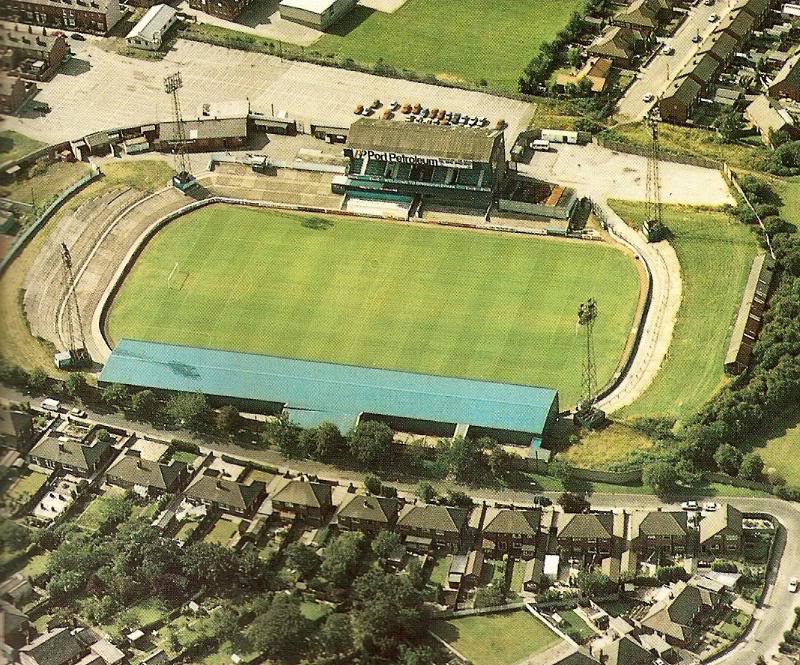
My own earliest memories are from Springfield Park in the early 1960s. They aren’t dominated by league tables or results. They are filled with the atmosphere that surrounded a Saturday afternoon. The smell of meat pies drifting across the ground. The marching band before kick-off. Standing in the paddock waiting for the familiar clip-clop of the players’ boots as they emerged from the tunnel. Even the unmistakable smell of oil of wintergreen as the players came out of the tunnel on to the pitch.
Those memories have stayed with me for more than sixty years.
I can still remember discussing the team with my dad before kick-off. Would Johnny Ball pick the experienced Peter Higham or the young Harry Lyon at centre forward? At the time it felt like the biggest decision in football. Looking back, the conversation itself mattered far more than who actually wore the number nine shirt.
The result of those matches has largely faded from memory.
Those afternoons never have.
Perhaps that’s what football really gives us. Not just results or league tables, but memories that become woven into our lives. Somewhere along the way the club stops being something we watch and becomes part of who we are.
Supporting Latics has never been the easy option.
Hope has always been part of the deal.
From Survival to Sustainability
When Mike Danson took control, the priority wasn’t promotion.
It was survival.
Without financial stability, nothing else mattered.
Since then, he has advanced around £30 million to keep Latics operating, funding the losses that are common throughout League One.
Crucially, that funding has come from the owner rather than banks or commercial lenders.
That distinction matters. Bank borrowing comes with interest, repayment schedules and pressure. Owner funding has provided breathing space while the club rebuilt and has allowed Latics to emerge from years of financial uncertainty.
Of course, those loans don’t simply disappear. Any future sale will inevitably involve discussions about how they are treated. Add to that the fact that Mike Danson also owns the Brick Community Stadium and it becomes clear why selling the club is more complicated than many supporters appreciate. Modern football increasingly relies on hospitality, conferencing and other non-matchday income, making the relationship between club and stadium an important part of any investment.
None of this makes Latics unattractive.
It simply makes them more complex.
The important point is that the conversation has changed. Not long ago supporters were wondering whether the club would survive.
Today we’re asking how it can grow.
That is progress
The Next Step
Growth, however, isn’t just about what happens between three o’clock and five o’clock on a Saturday afternoon.
Winning football matches will always be the biggest driver of attendances, commercial income and optimism. Nothing replaces success on the pitch.
But football has changed dramatically over the last two decades. Clubs are no longer judged solely by league position. They are media businesses, community organisations and brands. The most successful clubs build relationships with supporters every day of the week, not just on matchdays.
Commercial income has become increasingly important. Sponsorship, hospitality, conferencing, retail, digital advertising, partnerships with local businesses and community events all contribute to a club’s financial strength. Every additional pound earned commercially is another pound that can be invested in the football operation.
Success undoubtedly makes that easier.
But it’s not the whole story.
A club’s image matters too.
Potential sponsors want to be associated with organisations that are visible, ambitious and professionally presented. Supporters want to feel connected. Prospective investors look for evidence of momentum both on and off the pitch. In today’s football world, a strong digital presence has become almost as important as the experience inside the stadium.
This is one area where many supporters feel Latics still have room to improve.
That isn’t meant as criticism of the staff, many of whom may work incredibly hard with limited resources. Rather, it reflects how expectations have changed. Modern supporters expect behind-the-scenes content, academy features, player interviews, podcasts, videos and stories that keep them engaged throughout the week.
These things don’t replace winning football.
They reinforce it.
Every engaging video, every well-told story, every community initiative that is properly promoted strengthens the club’s reputation. It gives sponsors greater value, encourages businesses to become involved and reminds potential investors that this is a club moving forward.
Football clubs don’t just build financial capital.
They build reputational capital too.
That reputation takes years to create, but it can become one of a club’s greatest assets.
Reasons to Believe
It is easy, particularly after a disappointing season, to focus on what Latics lack.
Sometimes it’s worth reminding ourselves what the club already has.
- The use of a modern stadium and a more than adequate training ground.
- A productive academy.
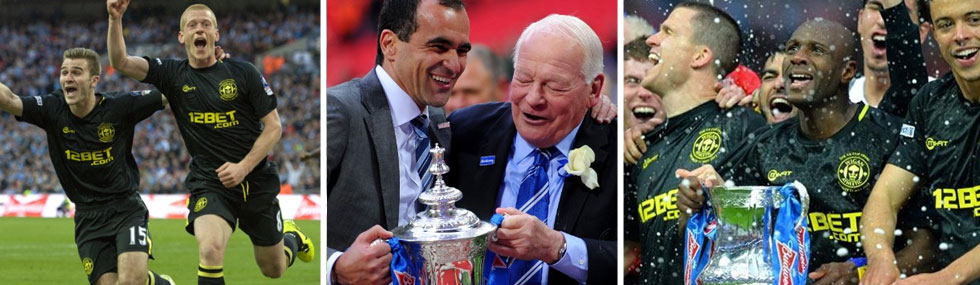
- An FA Cup-winning history and eight seasons in the Premier League
- A loyal supporter base that many League One clubs would envy.
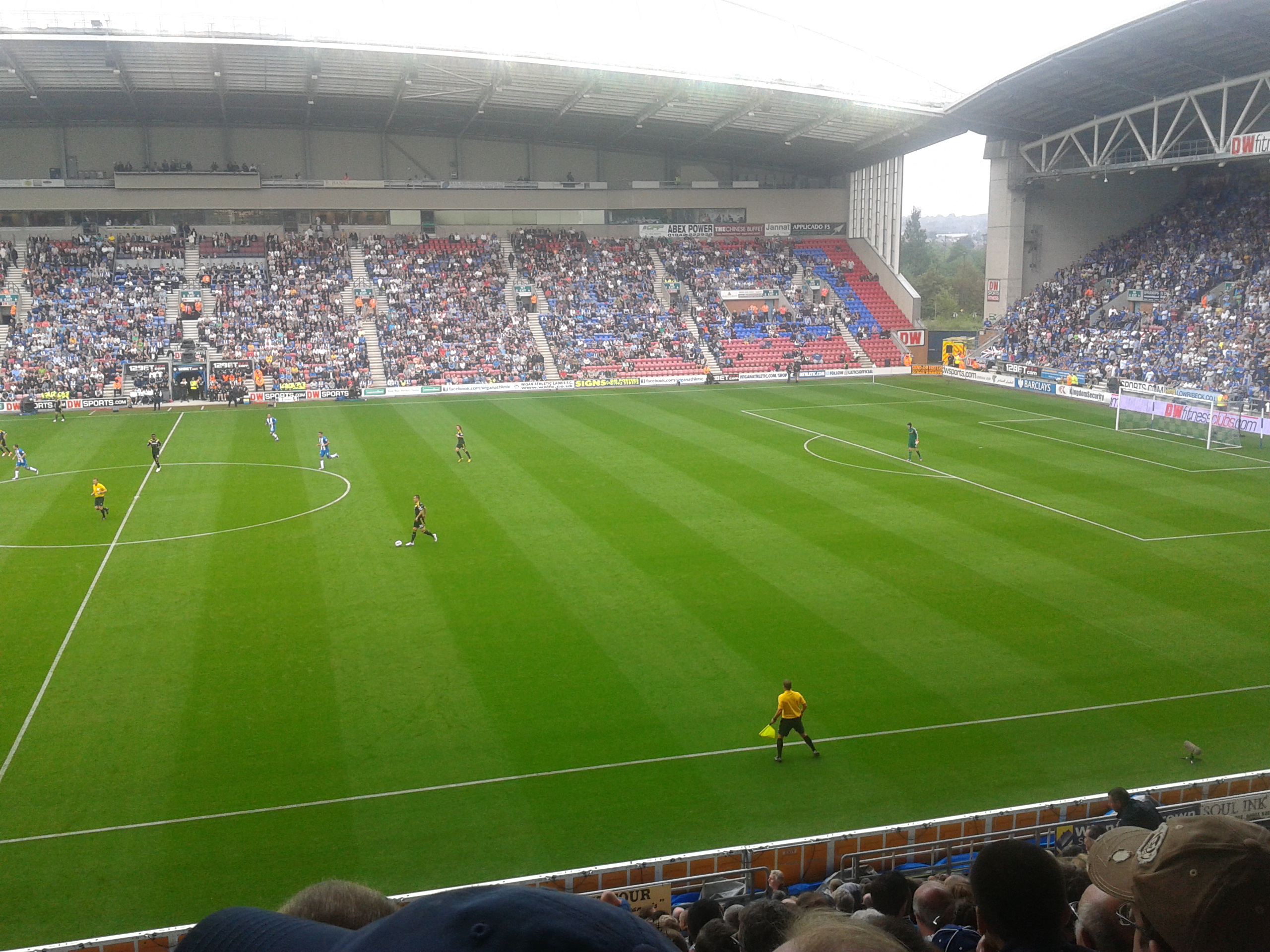
Those are solid foundations.
The challenge now is building upon them.
The Choice
Every supporter will make their own decision this summer.
Some won’t renew. Many who currently say they won’t probably will.
That’s football.
No one should feel guilty for making the decision that is right for them or their family. Football has become an expensive pastime, and supporters are entitled to expect value for their money.
But perhaps this year’s decision is about more than buying another season ticket.
Perhaps it’s about recognising that, after years spent securing the club’s future, the next chapter must be about fulfilling its potential.
Promotion will depend on the players, recruitment and good decisions in the boardroom. Commercial growth will depend on ambition, imagination and presenting Latics as the progressive football club we all know it can become.
But every successful chapter in the club’s history has begun with supporters who believed before everyone else did.
When my father walked through the turnstiles for Latics’ first ever Football League match in 1932, he couldn’t possibly have imagined where the journey would lead. Promotions and relegations. Springfield Park and the Brick Community Stadium. The Premier League. Wembley. The greatest day in the club’s history. Administration. Survival. Recovery.
Through all of it, I have never stopped believing there would be another season worth looking forward to.
Looking back, I realise that some of my happiest memories were never just about the football. They were about Saturday afternoons spent with my dad, sharing hopes, disappointments and conversations that have stayed with me for a lifetime.
The scorelines have blurred.
Those memories never have.
Perhaps that’s why supporting Latics has never been just about results.
It’s about belonging.
A season ticket doesn’t guarantee promotion.
It doesn’t even guarantee a good season.
What it represents is hope.
The future isn’t guaranteed.
It never has been.
But for the first time in a long while, there are genuine reasons to look forward.
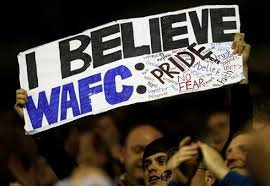
Perhaps it’s time to “believe” again


Outside of some flying trips I haven’t been to games consistently since moving to the USA in 2008 – giving up the season ticket at the time. Still in love from afar.
IF (big if) we got a sale to a deep pocketed individual I’d actually love for them to negotiate a 3-4 year lease with the DW stadium hold-co and build a new compact ground with more community involvement/facilities (other than Robin Park) at the center of it. Something in the 12k capacity but with the option to expand it. Not sure where that land is but I think the JJB/DW/Brick gives the media, fans and those inside the game a big stick to beat us with. I remember it being half-full in the 2000’s prior to the prem, then a few years of bliss being little Wigan with the novelty of the prem and watching it just nose dive like our fortunes. A proper compact little ground could really play to our advantage, spark some scarcity and build a cauldron to have as a fortress.
A very interesting read and all the points made express my own feelings about being a Latics supporter! This has always been my hometown club that I proudly associate myself with and have done,like you for sixty years. Of course I want us to win every game and naturally I complain when we perform poorly but I’ll maintain my belief and my season ticket as long as I’m alive!!!!
As Barcelona put it