The Paderborn game is important for injury-hit Latics

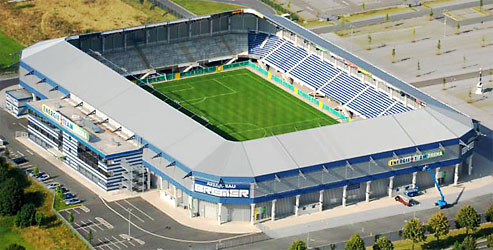
The Benteler Arena, Paderborn.

The Benteler Arena, Paderborn.

On Friday Wigan Athletic travel to face SC Paderborn, newly promoted to the Bundesliga for the first time in their history. In May, Paderborn clinched second place in the Bundesliga second division with a 2-1 win in the last game of the season at home to Aelen.

As with Latics entering the Premier League in 2005, the skeptics are not expecting Paderborn to survive for long in the higher league. Paderborn play in the Benteler Arena, which has a capacity of 15,300. They will be keen to prove their critics wrong by holding their own in the Bundesliga.

Over recent seasons Wigan Athletic have had more than their fair share of injuries and Uwe Rosler will be keen to get his squad in good physical shape for the opening Championship match against Reading on August 9th. Although they are convalescing well from major injuries, neither Chris McCann nor Ben Watson is going to be available over the coming weeks. Shaun Maloney has not played a single minute in the five pre-season matches up to this point and James McArthur’s only action has been coming on as a 72nd minute substitute at Dusseldorf. On top of that, Marc-Antoine Fortune, Rob Kiernan, James McClean and Andrew Taylor have picked up injuries in the pre-season preparations.

However, apart from the injuries, Rosler has managed to share out the playing time among the rest of the squad. Most of the senior players have amassed between 220-250 minutes of playing time in the pre-season games with Havelse, Walsall, Besiktas, Rochdale and Fortuna Dusseldorf. With so many midfield players unavailable the 21 year old Fraser Fyvie and 20 year old Tim Chow have stepped up to the plate and have amassed 375 and 369 minutes of playing time respectively. Another young player, James Tavernier, has played 332 minutes. Of the senior pros Leon Barnett has had the most playing time, 290 minutes. The three goalkeepers have shared the playing time, with Ali Al-Habsi having slightly more than Scott Carson or Lee Nicholls.

The last pre-season match typically provides indicators as to the manager’s preferred starting XI from the players available. Rosler will be keen to get his most experienced players ready for the beginning of the league season, but will have to tread lightly in the case of James McArthur, who is still trying to overcome an injury suffered at the end of last season. Rosler will look for experience in midfield and Don Cowie is likely to be a starter. Fraser Fyvie has come in from the cold and it will be hard for Rosler to leave him out of the starting lineup, given his good recent performances.

In defence the injury worry is Andrew Taylor, likely to be the preferred left back against Reading. Given the inexperience of Aaron Taylor-Sinclair, Roger Espinoza might be retained as a left wing back. There are good options in the rest of the defence. Ivan Ramis has played in all five pre-season matches, with 272 minutes of game time. Rosler will be hoping to get the Spaniard to the level of fitness he had before that cruciate knee injury at Fulham. He is likely to line up in the centre of defence with Emmerson Boyce. Leon Barnett and Thomas Rogne have both played in all five games and will challenge for a place, together with Rob Kiernan, if he is fit. The solid and dependable James Perch is likely to start at right back, with the more attacking option of James Tavernier available later in the game.

It could be anyone’s guess who will start in goal. Latics are blessed with two experienced and highly capable ‘keepers in Ali Al-Habsi and Scott Carson, with the huge potential of Lee Nicholls breathing down their necks.

Up front we can expect Oriel Riera to play as the target man. Callum McManaman has been getting fitter and fitter and the 90 minutes he put in at Dusseldorf is something he has not been able to do for a long time. McManaman is typically played on the flanks, but might well find himself in a more central role, effectively as a second striker. Latics have been so short of players with the ability to finish, but Riera and McManaman are players who can show the kind of coolness and poise needed to put the ball in the back of the net. Martyn Waghorn scored two goals against Besiktas and will challenge for a starting spot.

Following a poor defensive display at Dusseldorf, Latics will be keen to tighten up at Paderborn. Once again Rosler will employ his high pressing, high intensity tactic in the hope that Latics can sustain it throughout the match.

The Paderborn match is an important one for Rosler in that he needs to get his key available players as match fit as possible. Paderborn will provide tough opposition, but Rosler will be looking at the performances of individual players more than at the result of the game. Last year Owen Coyle’s squad enjoyed success in terms of results in their US tour, but were to be palpably short of match fitness as the season progressed. Rosler and his conditioning team are clearly demanding more of the players and despite the current injury situation, they will are unlikely to be deterred. The success of the high tempo style that Rosler seeks is dependent on the players’ physical abilities to meet its demands.

It promises to be a fascinating contest and an indication of what we can expect over the coming weeks.

Like us on Facebook, or follow us on twitter here.

Latics’ midfield – the key to promotion

soc_g_maloney11_576

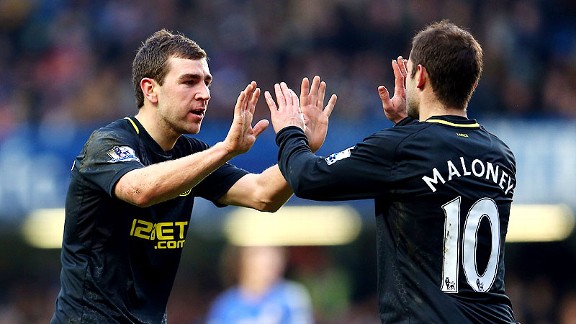
McArthur and Maloney – key players for a promotion push.

“Before the World Cup started there were a few rumours about McArthur and Maloney, but I have spoken to them and they know they are two of the cornerstones of the team. Both players will be massively important in my plans going forward and I made that very clear to both of them.”

It was heartening to hear Uwe Rosler this week dismiss transfer speculation regarding the two.

New signings apart, it is to be hoped that Latics will be able to resist approaches from other clubs for quality players such as Maloney and McArthur. Maloney was sadly missed last season and can play a key role, whether playing in “the hole” or in a wide role. Maybe we expected too much of him at the end of the season after a long layoff through injury.

Rosler will be hoping that Ben Watson and Chris McCann will be back in action following a double leg fracture and a damaged knee cap. Rosler clearly had faith in the midfield trio of McArthur, McCann and Watson. He had already lost Watson, when he lost McCann in the FA Cup win at Manchester City. It was McCann’s injury that proved to be the turning point and from then on results fell significantly.

One continues to ponder the future of Roger Espinoza, one of Honduras’ best performers in an albeit disappointing World Cup campaign. Despite being a fan-favourite Espinoza has failed to establish himself under three managers during his time at Wigan. He was played at left midfield for Honduras and looked effective in that position. Having been in the shop window during the World Cup it is possible that other clubs will bid for him. It will be interesting to see what develops.

Rosler continues to impress as Wigan Athletic manager. He has analysed the weaknesses in his squad and already made four signings, all of whom look like they can fit into the system the German likes to employ. They are already in training at the Latics camp in Germany.

Left back was a problem area last season, with wing back Jean Beausejour often having to play in that position, excellent when going forward, but sometimes unconvincing in defence. Stephen Crainey struggled to cope initially, but thrived when Rosler took some defensive responsibility away from him, allowing him to play at wing back. However, at 32 and on a one year contract it was unlikely the Scot would be staying. In their place Rosler has brought in Andrew Taylor and Aaron Taylor-Sinclair. Taylor is an experienced and very capable left back, who can also play left midfield. Taylor-Sinclair is clearly a bright young talent from Partick Thistle who might well follow in the paths of James McCarthy and James McArthur, who came from a similar type of background at Hamilton.

The signing of James Tavernier from Newcastle gives Rosler more options at right back. James Perch is an excellent defensively and over the course of last season he improved greatly in his attacking. His goals at the Etihad and Loftus Road showed his willingness to thrust himself forward. When Ryan Shotton left in the New Year Latics were short of options at right back, Emmerson Boyce having been drafted into the centre of defence. Perch continued to be the consummate team player, sometimes playing when he was not 100% fit. In Tavernier, Rosler has a more attacking option and the young player certainly has some flair.

Oriel Riera might well prove to be an inspired signing. Although he has spent most of his career in the lower leagues in Spain he proved himself last season in the La Liga first division at Osasuna. There was speculation among supporters that Dave Whelan was going to get out his cheque book and spend big money on a couple of quality strikers. However, Whelan was unlikely to undermine the wage structure that was in place and he is unwilling to pay over-inflated transfer fees for English-born strikers. Riera fits the bill. Another foreign-based striker remains on the cards.

There is a strong likelihood that more of the players remaining from the Premier League days will leave over the coming weeks. Jordi Gomez has already gone and Jean Beausejour will move soon. Ivan Ramis is Latics’ best centre back, but his high salary and questions over his fitness lead us to believe he will be on his way. One of the goalkeepers too is likely to depart. There has been no statement from the club regarding a new contract for Gary Caldwell. The Scot has his detractors, but if fully fit, he could be a force in the Championship.

A lot could happen over the coming weeks, but Rosler clearly has a plan forward. Under his astute management, promotion is a distinct possibility.

Like us on Facebook, or follow us on twitter here.

From scapegoat to hero – A look at Jordi’s five years at Wigan

“My time in Wigan was unforgettable.”


So said Jordi Gómez after he had cut his five year tie with Wigan Athletic by agreeing to join Sunderland.

The myriad of Latics fans that for months had been campaigning for him to stay through the social media were to be disappointed, although in their heart of hearts they probably knew it was not going to happen. The player who was transformed from scapegoat to hero is packing his bags for the north east. Emotion apart, a return to the Premier League and a lucrative three year contract makes sound sense to a player who is 29 years old.

It is ironic that Gómez should be leaving Wigan with his popularity ratings being at their highest point during his five year stay. His final season proved to be easily his best. The Spaniard had started to win over fans through playing a key role in the FA Cup run of the previous season. Moreover he had shown before what a force he could be playing in the Championship division. However, it took the departure of the hapless Owen Coyle to allow Gómez the chance to show what he was capable of. He was to shine under Uwe Rösler.

After suffering continual verbal abuse from sections of the crowd for so many years, Gómez had won over so many of them through his performances over these past months. Ice cool penalties dispatched in the cup run against Manchester City and Arsenal thrust him once again into the eye of the media. Spectacular goals from long range in open play and from free kicks, matched with a high work rate added to the impression of the Spaniard being a changed man under the management of Uwe Rösler.

In the end his displays managed to convince the majority of Latics fans that he was a player the club should keep if they were to keep pressing for promotion. The inability of the club to keep him leads supporters to worry about who next will jump ship.

But was it more than just financial security that helped the Spaniard decide to leave Wigan after five years?

If it had not been for an end of season rally,  Sunderland would have been joining Latics in the Championship next season. Gus Poyet must have known it would be an uphill task to turn things around when he replaced Paolo Di Canio at Sunderland in October last year. Poyet had come in with a reputation for good football from his time at Brighton and the Mackems are a much more attractive side to watch now. It is a playing style that Gomez should find relatively easy to fit into.

Although the majority of Latics fans will be sad to see Gómez go, there will be others who won’t.

Jordi Gómez was a player who divided Latics fans. He was derided by those who preferred the more traditional English approach of “up and at ‘em” . His admirers would say he was a skilful player who could bring order to a game through his cultured technique, keeping the ball while under pressure, drawing fouls. It was sometimes said that we would never see how good Gomez could be until Latics were playing the level of skilful football that Roberto Martinez sought.

The anti-Gomez lobby was strong during Martinez’ reign at Wigan. Jordi Gómez was identified as a player in whom the manager had faith beyond the norm. When the crowd lost their patience with the tiki-taka style of Martinez’ teams it was so often Gomez who suffered the brunt of their frustration .

I retain a vivid memory of the first match of what proved to be the last season for Martinez at Wigan. Latics had lost 2-0 at home to Chelsea. At the end of the match I was sheltering from the pouring rain outside, when I overheard a conversation where a group of Latics supporters came to the consensus that having Gomez in the team was like playing with ten men. These fans were  infuriated  by the team’s apparent unwillingness to go at Chelsea after falling behind. Jordi had come on in the second half for crowd favourite Shaun Maloney. Once again Jordi Gómez had become the scapegoat of a section of fans, who were above all frustrated by the manager’s tactical approach.

In those days, when Wigan fell behind there would be little increase in tempo, contrary to what one would expect in English football. In this particular game Latics had so often seemed languid after giving away a soft opening goal. In such circumstances the Englishman in me would get frustrated, even if I  knew that Martinez’s teams would not follow the usual English pattern. Watch Barcelona fall behind and you would see no change in their brand of football: they would eventually grind you down and beat you. The Barcelona style was clearly an inspiration for Martinez, but he was savvy enough to know that Latics did not have the wherewithal to go with it fully.

Jordi had come through the youth ranks at La Masia, with the likes of Messi and Pique. The Barca style of play was in his blood and it was probably for that very reason that Martinez first signed him. Martinez espoused possession football and for Gómez had grown up playing that brand of tiki taka.

It was anathema  for Gómez to waste the ball with a speculative pass. He would infuriate fans by passing the ball backwards or sideways, rather than risk losing possession. His detractors would label him as lazy, too slow and unwilling to go into 50/50 challenges.

If one looked at the stats for ground covered during his time on the pitch the ‘lazy’ tag would he hard to justify. When Latics’ defence or midfield was under pressure Gómez was invariably there to receive the ball, so often drawing free kicks which gave his side a breather. But too often Martinez would play Gómez in a role wide on the right where he did not have the pace to get past the full back on the outside. Inevitably he would have to cut the ball back inside, once again testing the patience of the fans. The manager was doing the player no favours using him in that position.

Over four years in the Premier League Gómez had mixed success. In the minds of many Wigan Athletic supporters Jordi Gómez never quite proved that he could handle the transition from the Championship to the Premier League. Too often he would get himself into great scoring positions, but not have the composure to put the ball in the net. However, Martinez continued to have faith in Gómez and the player persevered with the support of his manager, despite hostility from elements of the crowd, but never establishing himself as a regular starter.

In the 2012-13, his last season in the Premier League, Gómez scored three goals in 32 appearances However, those goals were memorable as they came in the same game, a thrilling  3-2 home win over Reading in November.

In that very game Gómez was booed early on following misplaced passes and poor finishing. A few minutes later he slipped an incisive short pass through to Kone who should have scored. But Gómez was back to showing his frustrating side just before half time, maneuvering past defenders with considerable skill in before shooting wide. Who would have thought that he would come to the rescue, winning this game for the Latics with a brilliant hat trick of second half goals? Even the most fair and open-minded of Latics supporters had been getting to the point where they would wince to see his name on the team sheet.

The game would be remembered as the day that Gómez showed the Wigan fans that his manager’s faith in his abilities might be justified after all. In the second half of this match he had looked a class act, threading through good passes and taking his chances with great aplomb. Sadly Gomez was unable to add to his goal tally in the league after that.

That hat trick against Reading really was something special, but Gómez’ outstanding contribution in the 2012-13 season was in the FA Cup. Gomez was pivotal in that cup run, scoring three goals and making four assists. His assist for Callum McManaman’s goal in the semi-final against Millwall will stick in the minds of Wigan supporters for years to come. In the FA Cup Final Gomez had played remarkably well in a midfield holding role, but as fate would decree, he was the one to go off after 81 minutes to allow Watson to come on.

Given his previous success in the Championship with Swansea, Gómez appeared to be a key player for Owen Coyle on his arrival at Wigan. However, the Scot did not get the best out of the player, sometimes following Martinez’s habit of playing him wide on the right.

The low point for the player under Coyle was in the Europa League home game against Zulte Waregem in early December. Coyle had put out a well-balanced starting lineup, omitting his two out-of-form central strikers and playing Nick Powell upfront. Callum McMananan and James McClean were on the wings and this time Gómez was played in his natural advanced midfield role.The four were to link up very well at times in the first half, showing the kind of movement and mutual understanding that had been sadly lacking for big chunks of the previous game against Brighton. Although he made mistakes at times, Gómez was a key link player in the first half.

Gómez had a bad start to the second half, with poor deliveries from set pieces followed by the crowd voicing their frustration with him after being caught unawares as an opponent robbed him of the ball.  He was to be substituted soon after. Taking him off after the crowd got on his case was not going to help the player’s confidence. He needed a better level of support from a manager who had put him in the starting lineup.

However, the arrival of Rösler was to enable Gómez to play the football he was always capable of at Championship level, resulting in him being voted ‘Player of the Year’. But if fans would have voted for the  award in December, Gómez would have been nowhere near the top of the charts.

Ironically Gómez only became a regular starter under Rösler in March. Prior to that he was in and out of the lineup, only once completing a full 90 minutes. However, following serious injuries to Ben Watson and Chris McCann,  Gómez’s  name was to become one of the first to be written on the teamsheet. Spectacular and crucial goals, great assists and a willingness to cover every blade of grass of the pitch were to help Gómez win that ‘Player of the Year’ award. In doing so he leapfrogged over stalwarts like Emmerson Boyce and James McArthur who had played far more games and provided a real backbone for the team. However, given the abuse that Gómez had taken over the years, few would begrudge him the award.

In the minds of many Wigan Athletic supporters Jordi Gómez never quite proved that he could handle the transition from the Championship to the Premier League. He had a rare ability to drift in, seemingly unnoticed by a defence, but too often he would get himself into great scoring positions, but not have the composure to put the ball in the net. There had been so many times over the those years when Gómez had done everything right until his final touch has let him down, whether it will be a header, a shot or a defence-splitting pass. He just did not seem to have had the self-belief to deliver in the Premier League.

The stats show that in four years playing in the Premier League Gómez scored 7 goals in in 46 starts and 25 appearances as a substitute. He made no assists.

As Swansea’s ‘Player of the Year’ in the 2008-09 season he scored 12 goals in 38 starts and 6 substitute appearances, making 5 assists. As Wigan Athletic’s  ‘Player of the Year’ he scored 12 goals and made 10 assists in 37 starts and 13 substitute appearances, in all competitions. The stats reveal the gulf between the player’s performances in the Premier League and the Championship.

However, whatever shortcomings he might have had at Premier League level, there could be no doubting his determination and commitment to the club. Gómez has learned to hassle and harry the opposition, and to cover a large number of yards of the pitch in each game he plays. At Swansea he played in a newly promoted team that was on the up. His role was to orchestrate the midfield and to score goals. When he arrived at Wigan he moved into a struggling team that was too often unable to get the lion’s share of the possession.

Latics fans will surely wish Jordi Gómez well at Sunderland. Despite constant abuse from some sections of the crowd he has maintained a positive and professional attitude. He will be long remembered for his role in helping Wigan Athletic win the FA Cup.

Jordi’s next challenge will be to prove, once and for all, that he is a true Premier League player. Sunderland might not be the best side in the elite division, but with Gus Poyet at the helm the Spaniard  should be able to slot seamlessly into the style of play.


Like us on Facebook, or follow us on twitter here.

Team selection and shape, loan players and discipline – A Brentford View of Uwe’s Tactics: Part 2


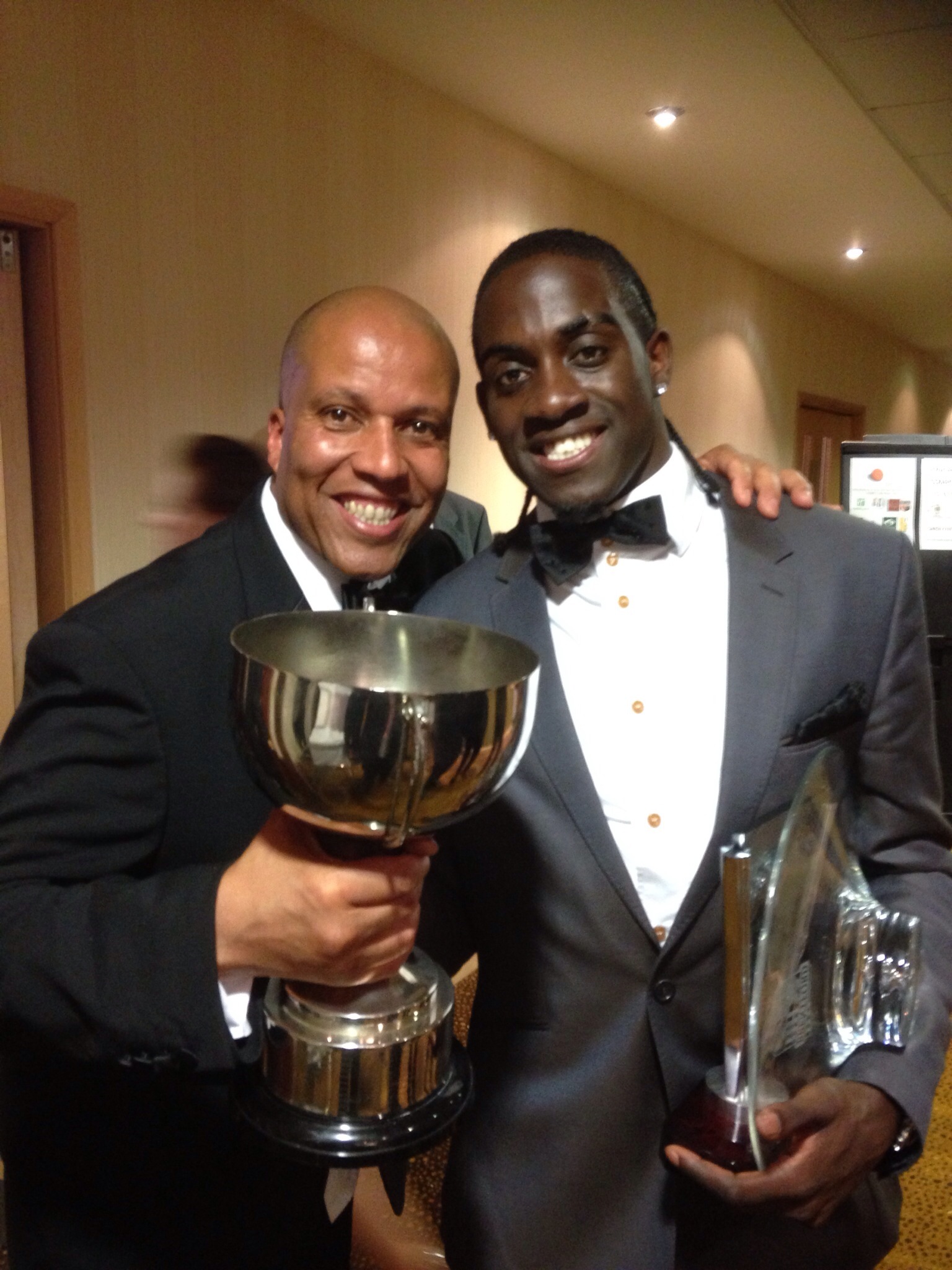
Billy down the pub with Rosler signings Brentford captain Tony Craig and Alan McCormack (and the rest of the team) the night Brentford won promotion.

Billy down the pub with Rosler signings Brentford captain Tony Craig and Alan McCormack (and the rest of the team) the night Brentford won promotion.

Following Uwe Rosler’s appointment in December, Billy Grant gave us a fan’s view of the German’s time at Brentford (click here to see the previous article). Six months later we have come back to Billy to give us more of his insight.

Billy writes for the Brentford fanzine http://www.Beesotted.co.uk (Twitter – @beesotted). He will also be travelling to his sixth World Cup this year, video-blogging his way around the country for All Mouth No Action’s ‘World Cup FanCam’. You can follow Billy by RSS linking http://www.worldcupfancam.com. Also follow him on twitter @worldcupfancam and @billythebee99. Facebook: http://www.facebook.com/worldcupfancam.

This is Part 2 of our look at Rosler’s footballing philosophy and tactical style through the eyes of this knowledgeable Brentford fan. Click here to see Part 1 on high pressing and squad rotation.

Fans here find it hard to predict Uwe’s lineups and substitutions can be even harder to predict. Granted that much of this might have been down to having to rotate his squad and save players for upcoming matches. Do have any insight into what his rationale might be?

Not really. One reason why Uwe used to rotate the team was he would try and adapt the Brentford team depending on the opposition. Many fans wanted him to stick to the same team and let the opposition worry about us. That obviously changed after the Stevenage game when he stuck with the same team week in and week out.

To be fair to Uwe, he would often change the team quite radically as well as the tactics if it was not working in the first half. More often than not, this has proven to have positive results with the changes turning the game around. His teams were also known for fighting till the very very end. Brentford were well known for scoring important goals very late in the game – this I believe was down to the team’s increased fitness levels that Uwe insisted on, an incredible team spirit within the side fostered by Uwe and an alteration in the team, formation and or tactics.

Uwe’s masterstrokes were becoming legendary.

At Loftus Road in the playoff semi final we saw the hoof once more rear its ugly head. That was what fans might have expected more from Coyle’s teams than Rosler’s. Over the past months it has become more and more prevalent. A measured long pass is one thing, but hoofing forward speculative high balls to the opposition defence is something else. It could have been a symptom of mental tiredness on the part of the players, but did Uwe manage to keep a lid on it when at Brentford?

We saw a bit of both at Brentford. There was the total passing game which was interspersed with a long ball game. In division one, Uwe learned that pretty football did not always get you the results you wanted. Long ball was sometimes effective for Brentford although after three seasons of seeing our style change, many fans would get p!ssed off if we resorted to a long ball game.

We had a striker, Farid El Alagui, who was a big fans’ favourite who used to attack aerial balls and chase everything down with a passion. Unfortunately, he got injured early on in the “Doncaster” season and when he came back a year later at the beginning of the promotion season, our football style had changed somewhat. Brentford were beginning to rely a lot less on playing the long ball game. Farid was reduced to an occasional substitute. Ironically, in quite a few games he came on in, he managed to switch the game up and score. Brentford fans wanted to keep Farid as an option so that we could switch to a “B” plan which involved playing a more direct style of football. But he was used less and less and eventually was loaned to Dundee Utd just after Uwe left.

I was actually at Loftus Road in the Wigan end for the QPR game with Laney the Beesotted founder. Uwe kindly sorted us out match tickets. We blame ourselves for Wigan losing. Brentford have a terrible record in the playoffs – losing every 7 of the playoffs we have been in – so I’m surprised he let us anywhere near the match with our dismal playoff record. Saying that, Uwe is totally practical when it comes to superstition not believing that past Brentford’s failures should have any impact on current games. I think he may take a different view after we lost to Yeovil in the final once again last year and our jonah appearance at Loftus Rd.

My personal opinion was with so much at stake, Uwe probably played it a little bit too cautious at QPhah. It reminded me of some games at Brentford back in the day. Lots of good skillful passing play. Getting the ball up to front men quickly who are unable to deliver. Giving the ball away in midfield needlesslessly at times. Quite frustrating as naturally, we wanted you guys to win. But his argument will be – Wigan were playing away from home so you keep it tight and hit the opposition with a sucker punch and all of a sudden they’re chasing you for the game. That’s when you switch it up in the last 20 minutes with substitutions to expose those gaps.

Unfortunately, it didn’t quite work that way.

How successfully did Uwe use the loan system at Brentford? Things did not work out well for him here with many of his loan players. Not one of them appeared in the starting lineups in the two playoff games. What proportion of loan players “made it” at Brentford. How many were later to sign permanent contracts?

Brentford have a wicked loan system. We have a sporting director who’s main role is dealing with the player side of things. Current manager Mark Warburton was sporting director when Uwe was manager. The two very much worked as a team. Who actually found specific players we signed I cannot say for sure. But as Warburton’s background and passion is developing youth team players, I can only assume that it was he who developed relationships with a number of premier league academies as he created the NextGen series (sort of the champions league for academy teams). As a result I can then assume that he  recommended the signing of young Everton academy players Luke Bidwell, Adam Forshaw (league one player of the year this season) and Conor McAleney, as well as players like Harlee Dean (Southampton), Kadeem Harris (Cardiff), Tom Adeyemi (Norwich) and Marcello Trotta (Fulham). I may be wrong though. Bidwell, Forshaw and Dean played a good season or so on loan for the Bees before becoming permanent signings.

Adeyemi was great for Brentford in the “Doncaster” season and we tried to buy him in the summer. We would have got him if we got promoted but Birmingham waded in and promised him Championship football so he left for them. We’re still trying to sign Trotta after he matured massively after “crossbar-gate” in the last league game of last season. He’ll probably end up at Wigan as will George Saville (Chelsea) who had a great debut season for us and Uwe tried to sign in the January window. We tried to sign him too but he’s going places and has already said his farewells to Brentford after the team’s promotion holiday in Vegas.

The policy Brentford has is to pick up players with great potential but still needing a lot of developing. Then give them match time and try and sign them from the parent club on a deal which gives the club a decent sell-on clause.

Matthew Benham the owner also keeps an eye on what is happening in the transfer market and, as he owns a company which analyses football data of players worldwide, he occasionally throws in suggestions of players Brentford should look at. But it is ultimately down to the manager and sporting director to see whether these players fit into the squad.

We did have a number of duff loan and permanent signings too. Paul Hayes comes to mind as a striker with potential that just didn’t work out. His fitness levels were apparently incredibly poor and his work rate wasnot up to Uwe’s standards. He was on decent money too. it’s no secret that him and Uwe fell out. He was banished to the development team, trained on his own at stages and was loaned out to Plymouth and Crawley. We ended up having to pay him off as no one would even take him on loan for any period of time.

Bradley Wright-Philips I feel was also a disappointment. Yes he scored a last minute equaliser up at Bramall Lane when we were down to 9 men which will always be remembers for years to come as one of the great Brentdord matches .. But the reality is if he had scored more goals in his loan spell at the end of “Doncaster” season we would not have had to rely on Marcello Trotta to score that 94th minute penalty to get automatic promotion to the Championship.

Czech striker Martin Fillo played for Uwe in Norway. We signed him on a season-long loan but he didn’t make the grade. Maybe this was a reflection of the standard of our division where players who looked great playing in the Norwegian league, couldn’t even make the bench in a Division One side. Lesson learned for Uwe there.

This last season, the decision was made that the manager, sporting director and owner had to agree on all signings. That I believe helped to ensure there we maximised the potential of all our signings and didn’t repeat the Paul Hayes mistake.

So to answer your question, Uwe played the loan system very well at Brentford. He had a great team of people to work with to make sure the right decisions were being made and to bounce off. Something he will need at Wigan I reckon.

What is Uwe’s transfer market style? Where does he like to shop? Is he willing to splash cash either on transfer fees or wages for the right players? Obviously Wigan has a bit more money than Brentford, what sort of signings should we expect?

This is a toughie. I can’t be sure who initiated the decision to bring in particular players. I do know for example Uwe was incredibly keen on Marcello Trotta. When we failed to get promoted, Uwe wanted to bring Marcello back but for various reasons, it was decided that was best if we looked elsewhere. When the season started, we we still short of a striker and to make matters worse, Conor McAleney got injured within the first month. We tried desperately hard to bring in a striker before the deadline but were turned down repeatedly. After the deadline closed, Uwe then requested he bring Trotta back from Fulham on loan and the wish was granted. The move was met with anger from a large section of the Brentford fanbase (I will be quick to point out that Beesotted was behind Trotta’s move back to Griffin Park from day one). Trotta went on to show what a great player he is by putting in a shift and scoring some crucial goals for the team this season including the one away to Orient in mid March which, in effect, sealed our promotion to The Championship.

That was an incredibly brave move by Uwe. But he believed in Trotta and wanted him to prove to people what he was capable of. Yes he’s still green and makes mistakes but he’s young and is developing. We’re currently trying to sign him but I wouldn’t be surprised if he ends up at Wigan if Fulham decide to cash in on him.

Uwe likes to give younger more enthusiastic players a chance to grow with him. Interesting that he pulled Rob Kiernan from Southend and put him in your team (Rob was at Brentford on loan last season and we were meant to be getting him on loan in January but it fell through much to our disappointment). I was very surprised he let Dicko go though. I seriously thought Uwe was going to send him to Brentford when he pulled him from Rotherham or keep him. He was just the type of player we needed. I was gutted when he went to Wolves. I believe his signing turned their season as they were third and we were top when they signed him. 13 goals in 16 starts says it all.

I feel Uwe would be prepared to splash cash if the player is right. But he won’t go overboard Harry Redknapp-stylee as he believes every player has a value and that should adhered to. He bought Northern Ireland striker Will Grigg for £350k plus which was big money for us. He scored 20 goals from Walsall the season before. So far he hasn’t quite worked out for us but it will be interesting to see how he fairs in the Championship.

Uwe has used a variety of tactical formations here at Wigan, using either a conventional back four or a line of three central defenders and wing backs. Did he have a preferred team shape at Brentford?

Uwe would often switch formation during the game. But we would normally go for four at the back, four or five in the midfield and one or two up front. normally 4-5-1 away from home. Or maybe 4-4-1-1 with a player in “the hole”. Then some time during the game we would switch to a traditional 4-4-2. But we have never played with three centre backs as far as I can remember. Sometimes a player would drop back from midfield and play deeper just in front of the centre backs.

Uwe also believed massively in wing backs with Jake Bidwell and Shaelum Logan (who was then replaced by Alan McCormack) careering down the wings. This season, we have been playing a lot of games 4-4-3. I have a feeling Uwe instigated the 4-3-3 switch post Stevenage when we brought in Kadeem Harris to bomb up and down that left wing. But then I can’t be sure. It’s been a long season trust me.

One last question – squad discipline. Did Uwe have to deal with anything such as players drink driving or causing trouble. Any public reprimanding?

There were a few incidents I know about but I would rather not repeat them in public. They were obviously kept under wraps for a reason. Some things are best held down in order to maintain the equilibrium within the team. But a job of a manager is to manage a team of individuals. And that will involve making some tough calls. There were dressing room politics and personal battles at Brentford for sure. That will be the same in any team. How the manager deals with it is the important thing. The Stevenage dressing room lock-in allowed a number of issues that were festering to come out. It obviously did the job as we went on a 19 match unbeaten run after that. That to me was good man-management.

From what I can gather, Uwe was an incredibly firm but fair manager. He wanted things done his way and he would be meticulous in ensuring that that happened. He was a big believer in team spirit and bonding. That’s why he took the team over to Germany two seasons running for a training and bonding exercise. The fans were invited over to stay in the team hotel the first season as Uwe felt that having the fans and team bonding together was an important exercise in the club moving forward together. Needless to say, this move went down incredibly well with the fans who felt that the team hadn’t got “too big” for them.

It was not Uwe’s style to publicly reprimand any player. Some of the stuff we have heard that has gone down behind closed doors would have definitely been made public by certain managers. But Uwe preferred to keep a lid on it. And even at times blame himself or himself and the team together for things when they didn’t go to plan. Which was a refreshing change to our previous manager Andy Scott who week in and week out used to blame the players for any failings without criticizing himself occasionally for poor tactics or team selection.

The final thing I would say about Uwe is he is still learning. He will make mistakes but he puts his hand up and readily admits that. But if the club allows him to grow with them, he will make a great manager. I personally don’t believe he has quite finalised his staffing issues. I reckon he will bring in a few more people around him so that he has his own team to work with – just like he had at Brentford. We were all surprised that Alan Kernaghan didn’t go with him at Christmas. Maybe he will be on the way in the summer. Lovely bloke is Alan. But I say Uwe really benefitted from Brentford’s Sporting Director system. It took a lot of pressure off him as a lot of the work for finding and delivering players was being done by a man who’s full time job it was to build relationships with key clubs and unearth and present players for possible additions to the squad. I wouldn’t be surprised if Uwe was talking to Whelan at this very moment about poaching one of the premiership academy coaches for this very role.

Best of luck for next season. But not too much luck. We’re in the same division now remember.

Like us on Facebook, or follow us on twitter here.
High pressing and squad rotation – a Brentford View of Uwe’s tactics: Part 1

BillyDonaldson

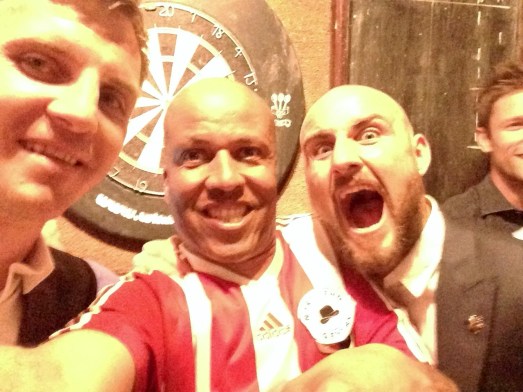
Billy with top scorer Clayton Donaldson.

Has there ever been a manager of Wigan Athletic who has achieved a popularity rating as high as that of Uwe Rosler within just six months of taking over? The ex-Manchester City centre forward has lifted the whole club, introducing a new dynamic. After the disastrous reign of Owen Coyle there is once again light at the end of the tunnel.

Latics fans have a lot of faith in Rosler. He has a huge amount of support.

However, even his most faithful fans would say that he has made tactical mistakes, been unsuccessful with many of his loan players, and that his team selection and use of substitutes can be baffling. He espouses open, attacking football, but so often the team’s play has been scrappy.

It is true that Rosler has made mistakes. But fans appreciate his willingness to be upfront, acknowledge his mistakes and his desire to learn from them. Despite a tightening of the club’s purse belts being anticipated, there is a mood of optimism for the coming season with Rosler at the helm.

Like his team, Rosler is not the finished article. He recently commented on Radio Manchester that “I’m a strong believer that first you have to fail before you become a winner. Next year, we will be winners.”

Following Rosler’s appointment in December Billy Grant gave us a fan’s view of the German’s time at Griffin Park (click here to see the previous article). Six months later we have come back to Billy to give us more of his insight. Rosler is clearly involved in a work in progress at Wigan – he has come a long way towards changing the way Latics play, but there is still some way to go.

Billy writes for the Brentford fanzine http://www.Beesotted.co.uk (Twitter – @beesotted). He will also be travelling to his sixth World Cup this year, video-blogging his way around the country for All Mouth No Action’s ‘World Cup FanCam’. You can follow Billy by RSS linking http://www.worldcupfancam.com. Also follow him on twitter @worldcupfancam and @billythebee99. Facebook: http://www.facebook.com/worldcupfancam.

So here is over to Billy to respond to some questions we composed for him.

First of all I would like to say we at Beesotted have a lot of time for Uwe Rosler. A lot of Brentford fans do to be honest. He came to us at a time that we needed to instil a new mentality into the club. Uwe was very much part of that new mentality. I do believe his work was instrumental in getting us to the Championship. Mark Warburton did a great job in picking up where Uwe left off. It could have gone horribly wrong at that point and Brentford fans would have no doubt felt a little bit more bitter about Uwe’s departure. But it all worked out right in the end.

We also have to realise that Uwe was also a relatively rookie manager when he came to Brentford. Yes he had managed clubs in Norway but he was an unknown force in the UK and was still learning on the job so to speak when he started managing us. And he’s still learning now. Wigan fans should remember that. He has taken a step up in division and has so far over-performed so give him a little rope.

High pressing is clearly the centerpiece of Uwe’s main tactical ploys. The pressing has worked for Latics in patches but when they have run out of steam they have stopped pressing and also surrendered possession too easily, inviting teams upon them. This is probably fatigue more than instruction, but how did it work for Brentford? Were his teams able to sustain the high pressing for 90 minutes, or would they enjoy possession for periods to “rest” or the break the opposition’s rhythm?

Yes Uwe’s tactic was to play the pressing game when he came to Brentford. He introduced playing the ball out from the back and pressing high to a team that quite frankly wasn’t quite used to it. It worked in patches but when it broke down, we were often punished. It was quite amusing as fans used to the blood and thunder of third division football would often be heard shouting from the terraces “Just bloody get the ball up there. Kick it. Forget the fancy stuff”. The players struggled to cope with playing that style of football naturally on an ongoing basis. But they were learning.

A couple of seasons later with a few personnel changes and more experience of playing “Uwe’s way”, the team had things pretty much sorted. The season when we lost out on promotion with the 94th minute penalty against Doncaster (2012/13), we often had games where we had over 70% possession. When we played Doncaster at their ground earlier in the season, apparently we had 82% possession at one point. We went 1-0 up but were beaten 2-1 with a Doncaster smash-n-grab. Even their manager Dean Saunders said at the time he had no idea how they won that game. We had loads of possession and were were creating loads of chances but unfortunately our finishing was letting us down. Uwe admitted that was an issue and looked to address that in the close season.

Uwe was a stickler for fitness. Last summer he took the team away for a conditioning week in Germany where they undertook an iron man session involving all sorts of body straining and team bonding exercises. The team was infinitely fitter at the beginning of this season as opposed to when Uwe took over. Fitness is a real key to the way he wants the team to play. It’s no co-incidence that he poached the conditioning coach Chris Haslam from Brentford and no one else (as yet .. Let’s see if he goes for one or two of our players in the close season). Chris was instrumental in installing a programme to get the Brentford team in ship shape and Uwe would think him as an important part of the jigsaw in getting Wigan to play the way he wants.

Of course Wigan will have some better players than Brentford to an extent. But overall, the principle remains the same. Uwe will no doubt be looking to bring to Wigan what he brought to Brentford. Without a shadow of doubt he feels that he is missing a couple of certain types of player to complete the jigsaw.

For Brentford our jigsaw was completed by adding a no nonsense player into the mix in Alan McCormack. a central midfielder-come right back. His impact on the team was phenomenal with him winning him supporters player of the year and Beesotted player of the year awards. And an attacking/wide midfielder option. For us it started with Conor McAleney from Everton but he got injured. Then it was Kadeem Harris from Cardiff but he got injured. Then it was Alan Judge from Blackburn (who joined after Uwe left). The third piece of the jigsaw was a striker and Will Grigg was bought in. Unfortunately, Grigg has not as yet lived up to his potential but we got away with it as we started scoring more goals from midfield.

But it’s all about time. A person needs time to deliver results. That’s the problem with football nowadays. There is no long term plan for most clubs. They want everything yesterday. That means there is no real scope for proper development. I’m a person that really believes that the best employees are ones who make and learn from their mistakes. For someone to really develop he (or she) has to be given time to find the right path forward.

Give Uwe a bit of time and Im sure he will get your squad in ship shape.

Uwe has clearly stated that he believes in squad rotation. Although some just don’t like it, most fans have accepted that it has been necessary because of the exceedingly long season Latics faced. Or is he just a serial rotator?

This was one of the biggest issues a vocal section of the Brentford fans had with Uwe if I had to be honest. His player rotation policy. At Beesotted we obviously get a lot of the fan opinion channelled through the website and can gauge the feeling out there. Many people were saying “We don’t know if he knows what his best team is” even at the beginning of this last season. Uwe felt that player rotation was essential to enable to squad to last a whole season. People agreed with him in principal but the argument many had was .. Couldn’t some players have a run of games .. Then get rested as opposed to rotating players constantly?

Things really went a bit awry when Uwe decided to rest practically the whole first team away to Derby in the second round of the League Cup. Many Bees fans Had their “let’s concentrate on the league” head on and were a bit dubious of getting into another cup run like we did the season before when we lost eventually to Chelsea. But we took a fair few fans up to Derby on a Tuesday night because we wanted to see Brentford give them a fight at least with a few regulars and some up-and-coming kids in the side. As it was, we went down 5-0 and the fans were really p!ssed off. Meanwhile, the rested players all came back into the side the following Saturday and huffed and puffed to grind out a 0-0 draw with a hapless Carlisle team – one which was getting knocked for 4 and 5 goals every week by the opposition. We then lost 4-0 to Bradford, 1-0 to Rotherham and, worst of the worst, 2-1 to a useless Stevenage side within the next 6 weeks or so.

To be fair, Wigan fans should be thanking Stevenage as if they hadn’t beaten us, Uwe would never have be managing their team. After that game, Uwe embarked on an excellent piece of man management. He locked the team in the dressing room for 90 minutes and everyone had it out. It was apparently a no holds barred two-way feedback session. Players could say what they felt about other players. About the manager. About tactics. Anything they weren’t happy with. And vice versa.

Whatever was uttered in that dressing room has never been leaked … But the following match, Uwe dropped fans favourite right back Shaelum Logan and replaced him with hard man central midfielder Alan McCormack. Logan was great going forward but could sometimes find himself missing in defensive positions, giving the ball away in key areas. But we were short on right back options and he was deemed too good to drop. More interestingly though, from the following game onwards, Uwe picked a team and stuck with that same team until he left for Wigan two months later. He never lost another match after that in his time at Brentford. In fact, he won them all except a 0-0 draw away to eventual title winners Wolves. What’s more … After Uwe left, we continued the no rotation policy as much as we could bar injuries. As a result, we went on an incredible 19 match 4 month unbeaten run seeing us win 17 games and draw 3 before being beaten by eventual champions Wolves. I can only assume that the right back and team rotation points were discussed at length in the Stevenage dressing room and, fair play, Uwe took them on board.


Like us on Facebook, or follow us on twitter here.