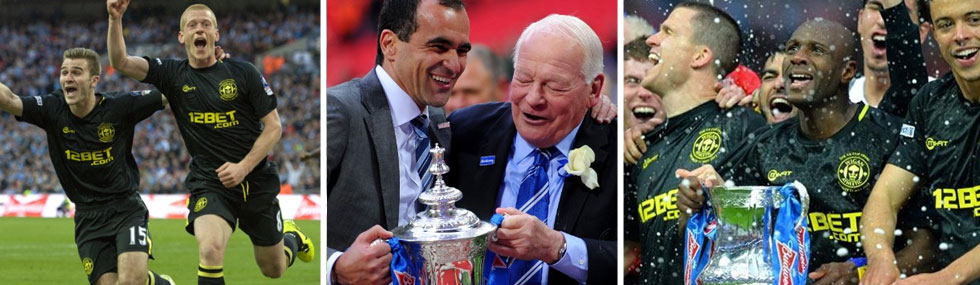

Looking back at MAF’s time at Wigan

 Fortunemiss

“The centre-forward is often a tall player, typically known as a target man, whose main function is to score the majority of goals on behalf of the team. The player may also be used to win long balls or receive passes and “hold up” the ball as team-mates advance, to help teammates score by providing a pass (‘through ball’ into the box); the latter variation usually requiring quicker pace. Most modern centre-forwards operate in front of the second strikers or central attacking midfielders, and do the majority of the ball handling outside the box.

I had been looking for a description of the role of the centre forward and after a bit of searching I found the above on Wikipedia. It sums up more or less what I thought the role involved. But why didn’t I trust my own judgment in the first place? After decades of watching football surely I knew what a centre forward should do. But events over the past year or so had clouded my judgment.

My boyhood hero as a centre forward was Harry Lyon. Lyon was by no means a giant, but he had the jumping technique to out-do defenders on high crosses. He certainly scored the majority of the goals for Latics in his heyday. In fact he netted a remarkable 67 times in the 1964-65 season. But the following season saw his goalscoring tally drop, when he scored less than his strike partner Bert Llewellyn who got 49.

Lyon was a scapper, lacking elegance in his tussles against opposition defenders, but he would always chase the long ball and fight hammer and nail to hold possession. Memory fades, but I don’t recall Harry as the kind of player to provide through balls into the box, but his strike partner would be there sniffing for the rebound of one of his ferocious shots. Llewellyn and his predecessor at Wigan, Carl Davenport, were good at putting those loose balls in the net.

But football has changed since Lyon’s day. Defenders are much fitter and most teams have a couple of large guys in the centre of defence who are very good at clearing the ball, especially if it is in the air.  For decades after Alf Ramsey brought in 4-4-2, teams used that system. The twin strikers would tussle with the twin central defenders of the opposition, but after a while the fashion changed.

Perhaps it had become too easy for those central defenders. Marking for them had been straightforward – you take one and I take the other being the order of the day. They were later to be faced with just one central striker, with support coming from the flanks and the midfield. Their roles became more complicated, sometimes confusing.

In the higher levels of English football not so many teams now play 4-4-2. The job of the centre forward has become an almost thankless task, extremely physically challenging in having to chase balls and hold up against often two big defenders. Then he has to have the energy and enthusiasm to mount attacks on goal. Not surprisingly good centre forwards are hard to come by in this day and age. Some are good at scoring goals, but not so efficient in chasing lost causes and holding up the ball. Others are the reverse. The average goal tally for a centre forward has not surprisingly dropped, given his onerous other duties.

However, this does not mean that modern day systems don’t work. The top teams have midfield players moving into the “hole” behind or to the side of the centre forward, notching opportunist goals. Those typically towering central defenders have a hard time coping with their runs.

Uwe Rosler was clearly a disciple of the “modern” approach. In his first season he often used MAF – Marc-Antoine Fortune – in that lone centre forward role, with two players wide of him. Fortune did a good job in holding up the ball and worked hard. MAF had been used sparingly by Owen Coyle, with Nick Powell being on the scene, but Rosler often used him as the target man following Powell’s loss of form and Grant Holt’s fall from grace. Over the course of the 2013-14 season,  MAF was to make 17 league starts, with 20 appearances off the bench. He scored four goals.

Rosler had clearly decided that MAF would not be his first choice centre forward when he signed Oriol Riera before the beginning of last season. This was underlined when Andy Delort was signed just before the close of the summer transfer window. But neither of the two overseas players could settle in their roles. MAF was brought back in.

In Malky Mackay’s first game in charge in late November, Latics were home to Middlesbrough. MAF was given the lone centre forward role, with Callum McManaman and Shaun Maloney playing wide. MAF was to become a regular fixture in Mackay’s teams, even when he switched to 4-4-2. Fans had been hopeful that more goals would come with a switch to the system that had done Latics proud in their heyday. However, Mackay was to pair up MAF with James McClean, a winger playing as a central striker, or Leon Clarke, a journeyman who rarely delivered. Mackay had scorned the idea of linking him up with Billy Mckay or Martyn Waghorn. By the end of the season, MAF had made 27 league starts, with 8 appearances off the bench and scored one goal.

MAF had become a feature in the Mackay era through his ability to chase those lost causes and hold up the ball. Although he offered a minimal goal threat the team often suffered when he was not on the field. MAF had become an important cog in Mackay’s long ball tactics.

MAF was like Marmite to Wigan Athletic fans. You either loved him or you hated him. Despite his whole-hearted play and willingness to sacrifice for the team, few loved him. MAF had become synonymous with the most disappointing season in living memory for most fans.

At Wigan MAF had become the target man, not always his role at previous clubs. Indeed at West Bromwich he had often been played wide. Perhaps Latics would have got more out of the player if they had done that. MAF’s career record as a goalscorer was weak when he arrived at Wigan as a 32 year old, but playing as a lone centre forward helped make it even worse. Moreover his concentration could lapse and he could too often be caught offside.

We might well ponder what might have happened if Latics had persevered longer with the overseas strikers, Delort and Riera. Had they been written off by the coaches or was it an economy measure to send them off on loan in January? On top of that, the reluctance of Mackay to give Waghorn and Mckay a genuine chance was hard to fathom, given the impotent strike force he was regularly fielding. There are fans who even suggest that Latics have avoided relegation if Mackay had not so often fielded MAF.

MAF sadly became the scapegoat of an awful season. Unlike Harry Lyon he could not score goals. Neither could he make assists.

MAF is by no means a bad footballer, neither does he shirk in his duties. But he is not a goalscorer.

We wish him well in his next move.
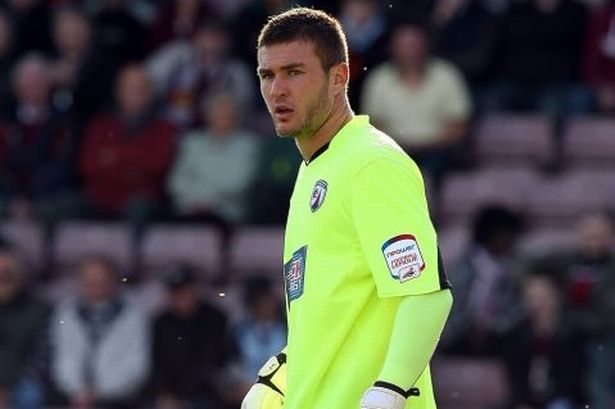
A Walsall fan’s view of Richard O’Donnell

Richard-ODonnell

“Delighted to have agreed a deal to join @LaticsOfficial for next season. Can’t wait to start and help get them back where they should be….”

So said new Latics acquisition Richard O’Donnell on Twitter today.

O’Donnell is a 6 ft 2 in goalkeeper, born in Sheffield, who will sign Wigan Athletic as a free agent from League 1 club Walsall. He is 26 years old, a product of the Sheffield Wednesday academy.

As a young player from O’Donnell was sent on loan to seven clubs in the lower divisions and non-league from 2007-11. He made his Football League debut as a 19 year old for Oldham Athletic against Luton Town in March 2008. It was three years later to the month that he made his debut for Wednesday in a match at Southampton. After making 19 appearances for the Owls he was released in May 2012.

O’Donnell then signed a one year contract for League 2 side Chesterfield. Covering for the absence of regular goalkeeper Tommy Lee he made 14 starts, but lost his place on Lee’s return from injury. In January he was loaned out to Stockport County in the Conference where he made 20 starts. He returned to Chesterfield for the last game of the season in a 4-0 win over Exeter.

In summer of 2013 he joined Walsall where he was to establish himself as the first choice goalkeeper, making 90 appearances in his two seasons there. He kept 21 clean sheets last season.

In order to learn more about O’Donnell’s time at Walsall we reached out to the BescotBanter.net fan site (@BescotBanter). Our thanks to them for the fan’s view that follows:

Following the Saddlers’ acquisition of goalkeeping coach Neil Cutler, Richard joined the club in the summer of 2013 and quickly went on to establish himself as first-choice, bringing his brand of committed stopping to the side.

A player who is willing to put his body on the line, Richard made over fifty first team appearances during his debut season with the club and penned a new eighteen-month contract in January 2014.

Following his debut season Richard continued as first-choice goalkeeper and went on to make his one hundredth consecutive first-team appearance for the club as the Saddlers played host to Notts County on 3rd April.

Richard established himself as a clear fan favourite during his time with the club and went on to be named both the Fans and Players’ Player of the Season at the 2014/15 End of Season Awards.

O’Donnell also came close to single-handedly breaking a club record for most clean sheets in a season, which was held by former Trinidad and Tobago international Clayton Ince, who was unbeaten on twenty-two occasions during the 2006/07 campaign.

The record was ultimately collected by Craig MacGillivray, as he kept a clean sheet during his debut against Oldham Athletic.

 Following a lengthy spell of contract negotiations, which began in November 2014, Richard made the decision to leave the club and join Wigan Athletic on a three-year deal, the move seems to have come down to a length of contact issue, with the Saddlers either unable or unwilling to match the Latics’ three-year offering.

When the dust of his move settles Richard will go down as one of the best stoppers in the club’s recent history, and will always be welcome at Banks’s Stadium.

Throwing in the towel – Brentford 3 Wigan Athletic 0

Towel

When a boxer is too beaten up to continue, his coach throws a towel into the ring to signal that the fight is over.

Gary Caldwell might have wanted to throw in the towel at various times during an awful performance at promotion-chasing Brentford. The unfortunate deflection of a Pritchard free kick after 25 minutes was the precursor of the nothingness that followed. Latics had dominated the game up to that point, at least in terms of possession. But a team with such brittle confidence was unlikely to be up to the task of getting back into the game following such an unfortunate goal.

What was to follow was merely a replay of the football we have seen so often this season.  Toothless in attack, woeful in defence, passing awful

Gary Caldwell set up his stall with a 3-5-2 formation. It worked well for the first quarter of the game with the wing backs getting into advanced positions, particularly Gaetan Bong on the left.  The team pressed forward to harass Brentford’s passing game. Wigan’s passing was neat and their interplays led them into the Brentford box on various occasions. One had a feeling that something positive might happen, even of the incisive final pass was lacking. It looked like Caldwell had got the team playing the kind of football he was seeking.

But as the game progressed following that first goal one got the feeling that Latics could be in for a drubbing. The Latics back three looked like they had never played together before, fragile and vulnerable to the movement of the Brentford midfield and wide players. Wigan’s midfield was both pedestrian and predictable. The forwards found it hard to stay onside.

But then again, what did Latics have to play for in the last match of a catastrophic season? The majority of the players who made the starting lineup are unlikely to be at the club next season. But at least Caldwell had taken the opportunity to give Billy Mckay his first start, together with bringing the 18 year old Louis Robles and the 19 year old Jordan Flores off the bench for their first senior appearances after 64 minutes.

The breath of fresh air that Caldwell’s appointment has brought into the club was not enough today. The Scot has inherited a poor team that was never going to be good enough to beat promotion chasers like Wolves and Brentford in the last two games. But if that deflection had not beaten Lee Nicholls half way through the first half, perhaps a goalless draw might have been on the cards  today?

The social media and message boards have been packed with fans asking which of the players whose contracts are expiring next month should be offered new contracts. On the basis of today’s performances alone the answer would quite simply be “none” except the goalkeeper. The highlight of the afternoon for Wigan was Lee Nicholls’ late penalty save. With the impending departure of both Ali Al-Habsi and quite probably Scott Carson it is no surprise to hear strong rumours that the young keeper has been offered a contract extension.

It is a measure of how far Latics have fallen over the past months that Brentford could so easily carve holes into the defence as the game wore on. The kind of football they played today is something that Caldwell might well aspire to. The Scot has a mountain of a task ahead of him to get Latics back to that level of performance.

Meanwhile we will continue to play our guessing games as to who is to stay and who is to go.

It is going to be an interesting summer!

The financial side of a bounce back for Wigan Athletic

Sharpe

David Sharpe offers the club new direction, but he has major challenges ahead of him.


“You will no doubt have heard the news by now that we will be kicking off next season in Sky Bet League One. Everyone associated with Wigan Athletic is suffering this morning but the reality is that this is where we find ourselves and I wanted to write to all of you with a personal pledge that nothing else but an immediate return to the Championship will suffice. We will bounce back.

The words of David Sharpe after Rotherham had put the final nail in Wigan Athletic’s coffin by beating Reading on Tuesday night.

Since taking over as chairman Sharpe has injected a breath of fresh air into the morale of Latics fans. The unthinkable actually happened – from winning the FA Cup to League 1 just two years later. But Sharpe’s enthusiasm for the task of getting the club back into the top echelons is infectious. After the club drifting for months like a rudderless ship Sharpe has come in and provided not only direction, but hope.

He has installed a bright young manager in Gary Caldwell, insisting that it is a long-term appointment. During just four games in charge Caldwell has already turned the style of play from the hoofball prevalent under Malky Mackay to what Sharpe calls “the right brand of football”. Sharpe continues to reiterate the club’s desire to produce a top class academy. He also plans to put in place an effective department of recruitment, something the club was lacking even in the Premier League days.

Sharpe has been impressive in his dealings with the media. Rather than look like a 23 year old novice in the role of club chairman, he has clearly enunciated his vision for the club and looked calm and confident when interviewed. Moreover he is from a generation that is skilled in the use of electronic and social media.

Dave Whelan too started off with a vision when he first took over as chairman some two decades ago. His was to propel Latics out of League 2 into the Premier League in ten years. His achievements are legendary. However, Whelan was already in his late fifties when he took over, with huge business acumen and experience. During those twenty years he was to pump around £100m into the club for them to hold their own in the upper tiers of English football.

DW is a hard act to follow. Does the young chairman not only have the vision, but also the business acumen and sheer determination needed to follow in his grandfather’s footsteps? More importantly is the Whelan family still willing to help support the club financially?

Sharpe is by no means alone in dealing with the financial side of the football club. His grandfather remains the owner and will surely be in regular contact with him. Moreover he has the capable Jonathan Jackson, a Chief Executive with a strong business background, steeped in the tradition of the club since birth.

However, the two of them, together with Head of Football operations, Matt Jackson, have a huge task on their hands over the coming weeks. No less than 13 players left the club in January. A comparable exodus is impending as Latics need to cut their cloth according to the financial realities of League 1 status.

In their last season in the Premier League Wigan Athletic had a staffing budget of around £50 million. Relegation and a huge drop in TV revenues meant that wages had to be drastically reduced, despite a parachute payment of £26 million. To keep a team in mid-table in the Championship typically involves a wage bill in excess of £20 million. Whereas to get into the top six  comes to around £30 million, which is precisely what it cost Latics last season.

With parachute payments dropping to £16m this season that the club once again needed to reduce its wage bill. The departures of ex-Premier League players Jean Beausejour, Jordi Gomez and James McArthur helped. However, manager Uwe Rosler was to bring in nine new players over the summer. Although some were younger players, not on high earning contracts, the competition in the transfer market forced the club to offer more tempting salaries to the rest. The result was a squad that was larger than the club needed with a wage bill close to that £30 million of the previous season.

The January fire sale, in which 13 players left the club, helped to put Latics back on track financially. Apart from the transfer fees received the wage bill was reduced significantly, to probably around £20 million on an annual basis. Sadly the selling of much of the family silver left Latics with a threadbare squad, short on quality. Only two permanent signings were made, coincidentally both being players who had prior experience in League 1. The squad was supplemented by young loanees and players on short term contracts.

For the coming season Latics will receive £8 million in parachute payments, plus around £2.5 million from TV money. The rest will need to come from gate receipts and commercial revenue. The club will have gone from a wage bill of £50 million to £30 million to around £10 million in the space of just three years.

Assuming the current wage bill approximates to around £20 million on an annual basis it means that it will need to be halved over the summer.

Wigan Athletic currently have 19 players under contract until 2016 and beyond. None of those were previously on Premier League contracts. However, having been signed when Latics have been in the Championship division many of them will be on salaries that are way above the norm in League 1.

Excluding loanees there are 8 players out of contract in June. The list includes goalkeeper Lee Nicholls, although rumours suggest that he is being offered a contract extension.

Given the situation Sharpe will look at selling off those contracted players on the highest salaries. Many of the most saleable assets departed in January, but players with prior Premier League backgrounds remain who will be targeted by other clubs. The most likely to attract sizeable transfer fees are Scott Carson, James McClean and James Perch. Moreover Oriol Riera has already shown in his return to Spain that he is a player who will be in demand, likely to bring in a transfer fee.

So many players have been tainted by the low morale and low confidence among the squad this season and their performance levels have dipped. With a fresh start next season and playing in a lower division, many of them are capable of significantly raising those performance levels. However, the financial reality is that around half of them will need to be persuaded to find other clubs, with their contracts terminated by mutual consent.

A few weeks back Sharpe mentioned that Latics were going to need at least ten new players for next season. With around ten retained from the current squad, ten new additions and a handful of players brought up from the development squad it would bring the club close to the squad size of 24 stipulated for League 1 clubs. Up to half of the new additions are likely to be players on loan.

Persuading such a large number of players to move on, helping them to find them new employment, is no easy matter. It will be easier in some cases than others. Some may need to move to clubs offering lower salaries, but in higher divisions than Latics. Players who have been in the Premier League not so long ago will be reluctant to damage their future career prospects by dropping down to League 1.

Caldwell will know which players he wants to retain. However, he might not be able to be so selective. Those returning from long-term injury are unlikely to be sought out by other clubs until they have proved they are fit again. Emyr Huws, Aaron Taylor-Sinclair and Grant Holt fall into that category. Holt is not only recovering from an anterior cruciate ligament knee injury, but will be 34 years of age when the season starts. Moreover he is one of the highest earners. Caldwell’s hands will most likely be tied and he will need to find ways of enabling the big Cumbrian to fit into his style of play.

Caldwell might want to keep at least some of the players whose short term contracts are about to expire. Harry Maguire is on Premier League wages at Hull and the salary expectations of ex-top flight players such as William Kvist, Kim Bo-Kyung and Jermaine Pennant will be high. Caldwell also needs to make a decision on his old teammate Emmerson Boyce. At 35 years of age, Boyce does not have the pace of before. However, Caldwell could choose to use him in a back line of three, where his experience could be useful. But then again, it would also depend on his wage expectations.

Despite Sharpe’s assertions about producing a top class academy the club has not made any recent statements about the development of the Charnock Richard site. There are fans who remain skeptical about whether the project will be brought to its conclusion. We await further news.

The framework governing Financial Fair Play in League 1 differs greatly from that of the Championship. Clubs in Leagues 1 and 2 have to operate under the Salary Cost Management Protocol (SCMP). It limits the wages that a League 1 club can pay out to a maximum of 60% of its turnover. There is no consideration given to clubs coming down from the Championship except that the salaries of players signed before September of the previous season, on contracts of three year or more, are not included in the calculations.

That would be the case of those signed by Owen Coyle prior to the 2013-14 season. However, although the retention of those players would not be contributory to breaking the SCMP protocols, the club will be reluctant to continue to pay salaries of approaching £1 million per year to the higher wage earners. In certain cases, such as that of Holt, its hands may be tied.

Over the coming weeks we will discover which players are moving on. Caldwell faces a tough decision whether to retain a handful of high earners, who would take up around half of the total wage bill, or whether to ditch as many as he can to sign up-and-coming players from the lower divisions or maybe Scotland. It could be argued that if he were to keep some of those high earners they would provide a strong backbone for his team. It could also be said that so many of those players underperformed this season and the club is better off without them.

Sharpe has made it clear that he wants promotion this season. In reality it might be too much to ask of a rookie manager in his first full season with so many new players to bed-in. However, the parachute payments only continue for two more years and after that Latics will compete on an even keel with the other clubs in the division. Promotion in the second year would become a real priority.

Turnover usually includes not only match day revenues, TV money and sponsorship deals. But interestingly the Football League also includes donations from the owners of clubs and the injection of equity. It basically leaves the door open for a rich owner to take over a club and pump money into it in a bid for promotion. Moreover there is no direct restriction on the amount of money the club can spend or receive in transfer fees.

Unlike so many clubs Wigan Athletic have been well managed financially in recent years and made profits in the past three seasons. Whether they make one this year remains to be seen, although the transfer fees received and staffing cuts made in January will help. However, the long term question is whether the Whelan family, through Sharpe, is willing to inject further funds into the club. Funds will be needed for the foundation of a top class academy and if Latics cannot gain promotion in the next couple of years the parachute payments will be gone and they will have no financial advantage over the general morass of clubs in League 1.

Sharpe has made an inspirational start to his tenure as chairman of Wigan Athletic. But the coming weeks are going to test his abilities to remain calm and level-headed, whilst being determined in realizing his vision for the club.

Then there remains the big question about injection of further funds into the club by the Whelan family, which has already given so much.

Mackay sacking – a month too late.

Sharpe

David Sharpe announced Malky Mackay’s departure tonight.


What a sad day.

The loss to Derby County puts Latics with practically no chance of avoiding the drop. The thought of relegation is hard to bear but what is even more depressing is that the two Davids – Sharpe and Whelan – did not remove Mackay at least a month ago. The lack of vision and decisiveness from above is worrying.

Less than 18 months ago Owen Coyle exited Wigan Athletic as a much derided figure. By coincidence his last game in charge had been a home loss to Derby. Coyle was sacked because it looked like he could not get Latics into the playoff zone. Moreover the stylish, if not always successful, football of the previous era had lapsed towards ‘hoofball’.

Uwe Rosler came in and enjoyed considerable success in his first season. His services were dispensed of when it looked like he was losing player support and failing in the quest to make Latics a serious candidate for promotion.

Little did we know what depths the team would plumage towards under his successor. Mackay’s appointment did great damage to the club’s image as portrayed by the national media. Moreover the team did not rise on the bounce effect of a new manager, as is so often the case. In fact they got worse. They did not win a single home game during his tenure and he might well go into Wigan Athletic history as their least successful manager.

When Mackay took over he stuck by an “old guard” who had clearly been underperforming under Rosler. Neither did they perform well under him. His revenge was sweet, with no less than thirteen players dispatched out of the club in the January window. Given the departure of so many players who had proved themselves in the Premier League it was no surprise that the standard of football was to plummet close to rock bottom. The hoofball that had become evident under Coyle, which Rosler could not eradicate, soon became the order of the day under Mackay.

Mackay’s tactics involved having two big strikers who could fight for those long balls. The most successful at retrieving those long balls was Marc-Antoine Fortune. Without him Latics seemed lost. With him they had a player adept at chasing seemingly lost causes and gaining possession. They also had a striker with an appalling goalscoring record. Forwards of lesser physical stature, such as Billy Mckay and Martyn Waghorn, were never going to be included in Mackay’s system, despite their proven career record as goalscorers.

The conspiracy theorists will say that Mackay was brought in as a short-term alternative, with his main task being to cull the dead wood within the playing staff. It could be said that he did that. Perhaps some of the players from the Martinez era had become complacent and were causing divisions within the camp. But the cull, together with a reluctance to provide Mackay with sufficient cash to find adequate replacements, left the club so short of quality players that relegation was always going to be a possibility.

Mackay was to replace the departed players with those on short term contracts or young loanees green behind the ears. It was a recipe for disaster.

So many fans will be relieved that Mackay will not be at the club next year, even if it is in League 1. But it should not hide the lack of foresight and decisiveness by Sharpe who has surely left it too late for hope of salvation in the Championship division.

It is to be hoped that Sharpe will also take a look at the coaching staff. Too many players have been written off this season despite arriving at the club with good credentials. There has been a disconnect between recruiting and coaching. The former has taken the brunt of criticism and Sharpe has enunciated his reorganisation of recruitment services. In the meantime it defies belief that the coaches could not have done more with so many of those new signings.

The challenge for Sharpe is to emulate his grandfather in appointing a manager capable of lifting the club out of this trough. Moreover lovers of good football will hope that he does not go for someone of the ilk of Coyle or Mackay. Between the two of them they caused so much damage.

It is to be hoped that the departure of Mackay will lead to a successful new era for the club.

Much of that will depend on Sharpe’s vision and leadership. It is a lot to expect from such a man so young.