How good is Grigg?

This post was originally published a week ago. However, it did not reach our wider audience because it was not picked up by our main news aggregator. We are therefore republishing it. Apologies to those of you who might have previously received it.
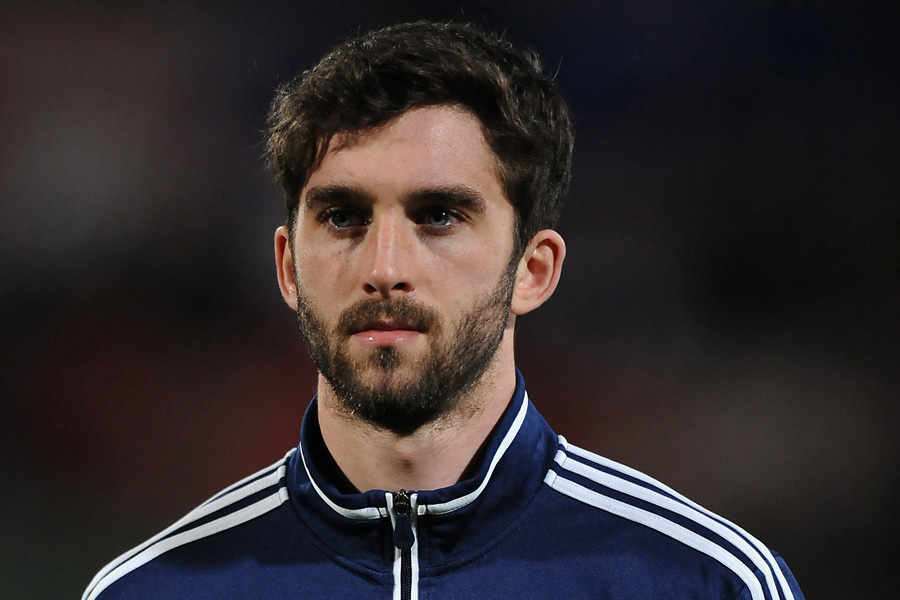
Grigg

In the past 20 years just four players have scored 20 goals in a season for Wigan Athletic. Nathan Ellington scored 24 and Jason Roberts got 21 when Latics were promoted from the Championship in 2004-05. Graeme Jones scored 31 when they gained promotion by winning Division 3 in 1996-97.

Will Grigg has scored 23 goals already this season, 20 in league games and 3 in cup competitions. His team is already practically odds-on for promotion. The goals of Ellington, Roberts and Jones were key to their team’s promotion successes. It looks like those of Grigg could prove to be the same.

It is the third time that Grigg has exceeded the 20 goal per season mark with a League 1 club. He first did it for Walsall in 2012-13, leading him on to win their player of the Season and Players’ Player of the Season awards. However, rather than build on his successes in the midlands Grigg moved on to Brentford, who at the time were then in League 1 under the management of Uwe Rosler.

The move from Walsall had been acrimonious. The player had been out of contract, but since he was under 24 a Football League tribunal required Brentford to pay a £325,000 fee plus add-ons. The Walsall manager Dean Smith said at the time that “If he were leaving to go to a better side I would have thought he would have done better than Brentford.” Ironically Smith now finds himself  manager at the West London club.

Given his success in League 1 it had seemed that Grigg would be moving up a level, to the Championship at least. His move to Brentford did not work out as he would have hoped and in the 2014-15 season he was sent off on loan to the MK Dons, an eventful move which put him in the limelight when he scored a brace to knock Manchester United out of the League Cup, scoring 20 goals in the league.

In June 2015 David Sharpe’s gave his guarantee that Wigan would have a 20 goal striker in their lineup this season.  In mid-July he got his man, paying Brentford  £900,000 for Grigg. It was a huge fee for a club in League 1 to splash out, particularly for a player who had never played at a level above League 1. Grigg was brought in to provide the firepower to get Latics out of League 1, but were Latics also looking beyond that? Were they expecting Grigg make it as a striker in the Championship?

At his best Grigg is a handful for any opposition defender. He has the ability to time his runs to create space when surrounded by the tightest of defences. His workrate cannot be faulted and he is a real team player. Grigg relies on his intelligent movement rather than sheer physical power to get past defenders. He is a genuine goal poacher, a dying breed in the modern game. Grigg also has a good temperament as evidenced by receiving just one yellow card in the season so far.  This is despite the rugged treatment he so often gets in a division where too much cynical and tactical fouling goes unpunished by referees.  Still only 24 years old his best is surely yet to come.

However, like any striker Grigg can have his off days. In the visit to Walsall in February he had at least five gilt-edged opportunities to score, but fluffed them all. Latics had to rely on a last minute winner from Yanic Wildschut to bring home the three points that their superior play had merited. But Grigg can opportunities with genuine aplomb, in the style of a “natural” goalscorer. There is finesse to Grigg’s game that suggests he can make it at a much higher level than the third tier of English football. As his confidence grows and he matures as a player he will put home an even higher proportion of the opportunities that come his way.

Grigg’s first season at Wigan did not start particularly well. In its first quarter Grigg had struggled to reach the goalscoring form that Caldwell would have hoped for. He had scored just three goals, two of which were penalties. After starting in the first six games he missed the match at Chesterfield through being on international duty for Northern Ireland. He came back as a 66th minute substitute at Port Vale, but was to pick up an elbow injury which kept him out of the next two games. He made his return as a 77th minute substitute, scoring the equalizer during added-on time against Millwall. Grigg returned to the starting lineup for the next game against Walsall, but was substituted after 70 minutes. However, international call up knocked on the door again and Grigg missed the last two matches at Crewe and Bury.

By Christmas Grigg had notched 8 goals for Latics. Since then he has scored 15 more. Grigg just does not seem to do so well in the earlier part of the season. In fact in his 20 goal season at Walsall he had only scored 5 by Christmas. At MK Dons he scored 9 by Christmas, followed by another 13 by time the season finished.

At Milton Keynes, Grigg had to play second fiddle to Benik Afobe until the latter’s 19 goals persuaded Wolves to pay serious money for him in January 2015. This and a loan move to Fleetwood of the Dons’ other main striker, Tom Hitchcock, opened up the door for Grigg to be the automatic choice as a lone centre forward. Grigg was to thrive on the consistency of having a regular first choice berth.

At 24 years of age, Will Grigg has a bright future ahead. His immediate target will be to score goals in the remaining five matches to help propel Latics back to the Championship. But the irony is that should that promotion come into effect and should Grigg continue to score goals, he will surely arouse the interests of the big clubs that dominate the English game.

Despite a slow start Will Grigg has become a key player in Wigan Athletic’s promotion push. Fans will be hoping he will continue to knock in the goals for the Latics for years to come.

How good is Will Grigg?

Grigg

In the past 20 years just four players have scored 20 goals in a season for Wigan Athletic. Nathan Ellington scored 24 and Jason Roberts got 21 when Latics were promoted from the Championship in 2004-05. Graeme Jones scored 31 when they gained promotion by winning Division 3 in 1996-97.

Will Grigg has scored 23 goals already this season, 20 in league games and 3 in cup competitions. His team is already practically odds-on for promotion. The goals of Ellington, Roberts and and Jones were key to their team’s promotion successes. It looks like those of Grigg could prove to be the same.

It is the third time that Grigg has exceeded the 20 goal per season mark with a League 1 club. He first did it for Walsall in 2012-13, leading him on to win their player of the Season and Players’ Player of the Season awards. However, rather than build on his successes in the midlands Grigg moved on to Brentford, who at the time were then in League 1 under the management of Uwe Rosler.

The move from Walsall had been acrimonious. The player had been out of contract, but since he was under 24 a Football League tribunal required Brentford to pay a £325,000 fee plus add-ons. The Walsall manager Dean Smith said at the time that “If he were leaving to go to a better side I would have thought he would have done better than Brentford.” Ironically Smith now finds himself  manager at the West London club.

Given his success in League 1 it had seemed that Grigg would be moving up a level, to the Championship at least. His move to Brentford did not work out as he would have hoped and in the 2014-15 season he was sent off on loan to the MK Dons, an eventful move which put him in the limelight when he scored a brace to knock Manchester United out of the League Cup, scoring 20 goals in the league.

In June 2015 David Sharpe’s gave his guarantee that Wigan would have a 20 goal striker in their lineup this season.  In mid-July he got his man, paying Brentford  £900,000 for Grigg. It was a huge fee for a club in League 1 to splash out, particularly for a player who had never played at a level above League 1. Grigg was brought in to provide the firepower to get Latics out of League 1, but were Latics also looking beyond that? Were they expecting Grigg make it as a striker in the Championship?

At his best Grigg is a handful for any opposition defender. He has the ability to time his runs to create space when surrounded by the tightest of defences. His workrate cannot be faulted and he is a real team player. Grigg relies on his intelligent movement rather than sheer physical power to get past defenders. He is a genuine goal poacher, a dying breed in the modern game. Grigg also has a good temperament as evidenced by receiving just one yellow card in the season so far.  This is despite the rugged treatment he so often gets in a division where too much cynical and tactical fouling goes unpunished by referees.  Still only 24 years old his best is surely yet to come.

However, like any striker Grigg can have his off days. In the visit to Walsall in February he had at least five gilt-edged opportunities to score, but fluffed them all. Latics had to rely on a last minute winner from Yanic Wildschut to bring home the three points that their superior play had merited. But Grigg can opportunities with genuine aplomb, in the style of a “natural” goalscorer. There is finesse to Grigg’s game that suggests he can make it at a much higher level than the third tier of English football. As his confidence grows and he matures as a player he will put home an even higher proportion of the opportunities that come his way.

Grigg’s first season at Wigan did not start particularly well. In its first quarter Grigg had struggled to reach the goalscoring form that Caldwell would have hoped for. He had scored just three goals, two of which were penalties. After starting in the first six games he missed the match at Chesterfield through being on international duty for Northern Ireland. He came back as a 66th minute substitute at Port Vale, but was to pick up an elbow injury which kept him out of the next two games. He made his return as a 77th minute substitute, scoring the equalizer during added-on time against Millwall. Grigg returned to the starting lineup for the next game against Walsall, but was substituted after 70 minutes. However, international call up knocked on the door again and Grigg missed the last two matches at Crewe and Bury.

By Christmas Grigg had notched 8 goals for Latics. Since then he has scored 15 more. Grigg just does not seem to do so well in the earlier part of the season. In fact in his 20 goal season at Walsall he had only scored 5 by Christmas. At MK Dons he scored 9 by Christmas, followed by another 13 by time the season finished.

At Milton Keynes, Grigg had to play second fiddle to Benik Afobe until the latter’s 19 goals persuaded Wolves to pay serious money for him in January 2015. This and a loan move to Fleetwood of the Dons’ other main striker, Tom Hitchcock, opened up the door for Grigg to be the automatic choice as a lone centre forward. Grigg was to thrive on the consistency of having a regular first choice berth.

At 24 years of age, Will Grigg has a bright future ahead. His immediate target will be to score goals in the remaining five matches to help propel Latics back to the Championship. But the irony is that should that promotion come into effect and should Grigg continue to score goals, he will surely arouse the interests of the big clubs that dominate the English game.

Despite a slow start Will Grigg has become a key player in Wigan Athletic’s promotion push. Fans will be hoping he will continue to knock in the goals for the Latics for years to come.

Morgan and Pearce – a formidable partnership in the centre of defence

MorganPearce

Jason Pearce and Craig Morgan celebrate the Welshman’s last minute winner against Gillingham. Photo courtesy of http://www.bbc.com

Who would have thought that a couple of experienced old pros who have largely plied their trade in the lower divisions could fit in so successfully to a team striving to play possession football?

Between them the 30 year old Craig Morgan and the 28 year old Jason Pearce have amassed a total of over 800 senior appearances in their careers. Last summer Gary Caldwell picked up Morgan for nothing at the end of his contract at Rotherham. Pearce was signed by Malky Mackay from Leeds United in January 2015 for a bargain fee in the region of £300,000.

The two have formed a formidable central defensive partnership for Wigan Athletic this season. In fact Latics have not lost a game when the two have started together in the centre of defence. Their differing styles tend to complement each other.

Pearce is seemingly fearless, a player of total commitment who will put his own body on the line for the team’s sake. He is strong in the air, rugged in the tackle and rarely wastes the ball. Morgan too is strong in the air and relies on his timing and positioning to cut out opposition attacks. Unlike most central defenders with type of his career background, Morgan resists the hoof and is a fine passer of the ball from defence.

Both players have had injury problems this season, the result being that they have only played in the same starting lineup 16 times of the 41 matches played. Sometimes they have played together in a conventional back four, on other occasions being joined by a third central defender. Morgan has made 31 appearances this season, with a red card received against Bury in the League Cup and 6 yellows. Pearce has made 25 appearances with just 3 yellows, a low ratio for a player with a physical approach, revealing a level of self-discipline and maturity.

Before the season started Caldwell had a difficult choice between the two as to whom he would name club captain. Morgan had been captain at Peterborough at the age of 23 and skippered Rotherham to promotion from League 1 to the Championship and then holding their place there last season. Pearce had also been captain at the age at 23 at Portsmouth, going on to lead Bournemouth and Leeds. In the end Caldwell chose Morgan as captain with Pearce as vice-captain.

Both players are leaders on the field of play and their partnership in the centre of defence has been critical in Latics’ rise to contention for an automatic promotion place in League 1. Pearce missed the last game at Colchester after being forced off by injury at half time in the previous match at the DW Stadium against Peterborough.

With just 10 games to go Caldwell will be hoping that the two can steer clear of injuries and suspensions for what remains of the season. Their joint presence is critical in Wigan’s quest for promotion.


Sam Morsy – a crucial acquisition in the quest for promotion

Photo courtesy of the Express and Star.

Photo courtesy of the Express and Star.

To the more discerning viewer the work of Sergio Busquets for Barcelona is crucial to the smooth running of the team. Granted their MSN forward line would take any defence apart, given decent ammunition. But that ammunition is dependent upon someone playing a seemingly simple role much deeper. Busquets plays the same kind of role that Pep Guardiola did when playing under Johan Cruyff. He is strong in the tackle, makes key interceptions and rarely wastes the ball.

On Saturday Sam Morsy played the Busquets role in an excellent Wigan Athletic performance at Walsall. He sat in front of the back four, nullifying Walsall’s attacks, making sure possession was retained. Moreover he put through pinpoint long passes towards the flanks. Had Will Grigg not been so profligate, with a handful of goal scoring opportunities, Latics would have been out of sight long before Yanic Wildschut’s stunning winner. But Morsy’s contribution in that Busquets role was crucial in stopping opposition attacks and launching his team forwards.

Morsy was signed at a knock-down price from Chesterfield, being in the final year of his contract. He was the captain and the driving force behind the midfield in a team that challenged for promotion last season. The Busquets role is not one he was used to at Chesterfield, where he operated in the holding midfield role where David Perkins and Max Power have excelled for Latics this season. But at Sheffield and Walsall, Caldwell opted to put Morsy in front of the back four, pushing the duo further forward.

Morsy is only 24, with his best years ahead of him. He gave an excellent account of himself at both of his previous clubs, Port Vale and Chesterfield. He is a player who has come through the lower divisions of the English football pyramid, but shows the capability of playing at a higher level.

Gary Caldwell and his recruitment team have done a wonderful job in building up a squad capable of gaining automatic promotion back to the Championship. They have signed a number of players in their early to mid-twenties. Should Latics get the promotion they seek, most of those players can be expected to make a mark on the Championship. Morsy ranks among them.

Sam Morsy has made an immediate impression on Wigan Athletic fans. He could be a key player for not only promotion, but for years to come.

Getting the best out of Yanic

Wildschut

Just a couple  of weeks ago most Wigan Athletic supporters were hoping and praying that the “New Era” duo of Gary Caldwell and David Sharpe would find a way to make Yanic Wildschut a Latics player.  The Dutchman had made an impact comparable to that of Amr Zaki in the Steve Bruce era or even Keith Gillespie a long time before that. But unlike the other two who were also on loan, Yanic Wildschut signed a contract with Wigan Athletic some 12 days ago.

Caldwell and Sharpe made a major investment on the part of the club to invest in Wildschut. The best case scenario is that the player will play a major role in Latics’ promotion push and that his transfer value will soon rise above the fee reputed to be £600,000 rising towards £1m with add-ons.  The worst case scenario is that the duo bowed to fan pressure to sign a player who does not fit into Caldwell’s tactical system.

Since his permanent signing Wildschut has not made the starting lineup. He came on as substitute for Haris Vuckic on 62 minutes with Latics already 2-0 up against Sheffield United, but the game eventually finished 3-3. Then he came on for Jordy Hiwula after 80 minutes against Chesterfield. So why is one of the most expensive and the most spectacular players in the squad not making the starting lineup?

Yanic Wildschut is still only 24, with the potential to become a top player in any of Europe’s leagues. He is lightning fast, has tremendous power in his right foot and has a left foot that his fellow countryman and big money signing, Memphis Depay, does not seem to possess. But he has been the frustration of so many of his previous managers who have not been able to help him become the finished article.

Wildshut started his career in the Ajax Amsterdam academy but moved on to second division FC Zwolle before joining first division VVV Venlo, where he made 68 appearances, scoring 11 goals over two years. He left for Heerenveen when Venlo got relegated.  But halfway through his first season he was sent off on loan to Ado Den Haag. From there he went to Middlesbrough for a fee reputed to be around £300,000.

Wildschut has been a frustration for so many managers. A throwback to the past when wingers were primarily attackers, with less defensive duties. Defence is not his forte.  But could a player run with his kind of intensity if weakened  by the defensive duties?

He certainly did not fit into Aitor Karanka’s plans at Middlesbrough.  Mourinho’s ex-assistant expects wingers to tackle back and help their full backs. He has made Albert Adomah  a more complete player in that respect, as did Mourinho with Joe Cole.

But Karanka has not been negative with the media about Wildschut. He recently commented that:

“I don’t have any doubt that he is a Championship player and why not a Premier League player? He has everything but sometimes it was difficult for him to play here. I don’t have any doubts though that he is a really good player and when he matures he is going to be a really good player because he is talented, he is strong, he is fast, so he is going to be successful.”

So how can Caldwell get the best out of Wildschut? Is he going to be the super-sub who causes devastation when the opposition tires? Or will he be a regular starter offering a consistent input, both offensively and defensively?

Much will depend on the formation that Caldwell puts out. Wildschut’s preferred position is on the left wing. But how can that fit into Caldwell’s preferred 3-4-3? In recent games the 3-4-3 has really been a 3-4-2-1, with a lone centre forward and two “number 10s” playing behind him. The system has worked well with Michael Jacobs and Haris Vuckic flourishing in their forward/midfield roles.

But in Roberto Martinez’s time he operated 3-4-3 with Callum McManaman in a fairly orthodox right wing role, despite having an Emmerson Boyce at right wing back. Before that Victor Moses enjoyed a similar, if more mobile, role.

Wildschut’s preferred position is on the left wing, from where he can cut in and shoot with his right foot. He can also operate as an orthodox right winger. But could Wildschut play in other positions?

Some fans have advocated playing him as a central striker. Given his ferocious shooting that does not sound such a bad idea, but would his electric pace be wasted playing as a target man so often with his back towards the goal?

Others advocate giving him a free role in attacking midfield where he can use his pace to run at defences.

On completing Wildschut’s permanent transfer to Wigan Caldwell told the club’s official site that “On his day, he has already shown us what he can do and how devastating he can be. He’s not the finished article yet, he will be the first to admit that, but his potential is huge and we are delighted that it is here in Wigan that we can both work together for the long-term.”

Can Caldwell unlock that potential in the big Dutchman and help him become the finished article? Other managers have tried before without great success. Caldwell must first define exactly how Wildschut fits into his tactical planning, with the possibility of using the player in a variety of roles.

If Caldwell can get it right in the more immediate future it could well propel Latics back into the Championship division.