Why Wigan Athletic Must Back Lowe and Rioch

Image courtesy of WiganToday

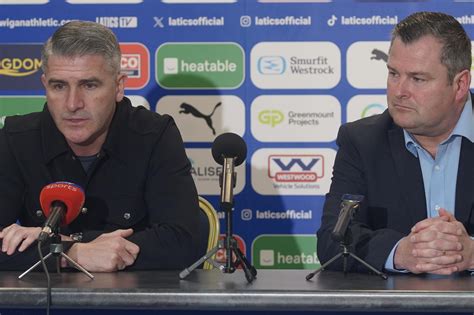
Why are so many Wigan Athletic supporters increasingly unhappy with both the head coach and the sporting director? For some, frustration has already tipped into calls for both to be sacked. But while the anger is understandable, removing either now would risk compounding the very problems that have led to this situation.

Saturday’s defeat to a Blackpool side sitting second from bottom of League One crystallised those frustrations. The Tangerines scored twice after poor defending from a back line missing captain and defensive lynchpin Jason Kerr through injury. Despite having far more shots, Wigan rarely looked like scoring. In a derby where intensity and commitment were expected as a minimum, the performance felt flat and uninspiring.

Latics currently sit 14th with a record of W6 D8 L6, having scored 22 and conceded 23. Given that the club’s staffing budget is reportedly within the top ten in League One, this position feels underwhelming. That perception has driven criticism beyond Ryan Lowe and towards sporting director Gregor Rioch. Yet this is where context matters.

Lowe’s tenure began with genuine promise. There was attacking intent, early momentum and real belief that a play-off challenge might be possible. That optimism unravelled after a limp 4–1 defeat at Bolton. Since then, performances have become more cautious and conservative, with the team focused on grinding out results rather than playing with freedom or flair. Lowe has also damaged goodwill by publicly criticising players and suggesting that supporter expectations “might need to be lowered”. In a club still healing from years of upheaval, those comments landed badly.

But the growing criticism of Rioch deserves closer examination. Supporters questioning recruitment, squad balance and identity are not wrong to ask those questions. However, they are often aimed at a role whose responsibilities and authority are poorly understood from the outside.

Rioch has been at Wigan since December 2013, initially as academy manager. During a decade marked by ownership chaos, financial collapse and administration, the academy was one of the few constants. Under his leadership, Wigan regained EPPP Category Two status and, crucially, continued producing first-team players when the club could not afford to buy them. Those graduates were not a luxury; they were a necessity.

That track record is precisely why Rioch’s promotion to sporting director in August 2023 made sense. It was not just a reward for loyalty, but an attempt to embed long-term thinking at a club that desperately needed stability. His expanded remit — recruitment, first team, academy and overall football strategy — was designed to ensure alignment and avoid the costly stop-start cycles that had plagued Wigan for years.

The logic was sound. With limited funds, Wigan needed clarity: a shared footballing identity, smart recruitment and a seamless pathway from academy to first team. The sporting director role existed to protect that coherence.

The appointment of Ryan Lowe in March 2025 complicated that vision. Lowe arrived with experience and a clear tactical identity, but one fundamentally different from Shaun Maloney’s. Maloney favoured structured possession and patient build-up; Lowe’s approach is more direct, physical and vertical. Neither is inherently wrong, but switching between them under tight financial constraints was always going to carry risk.

This is where frustration has hardened into distrust. Players recruited or developed for one system suddenly looked ill-suited to another. Recruitment had to pivot again without significant resources. Academy players were asked to adapt quickly to new demands. To supporters, it felt like another reset — another change of direction before anything had been allowed to settle.

That sense of drift is what has put Rioch under scrutiny. A sporting director should play a key role in managerial appointments precisely to avoid this kind of misalignment. That does not mean blocking ambition or dictating tactics, but it does mean ensuring that change does not undo years of planning. Whether Rioch had sufficient authority in Lowe’s appointment is unclear. If he did not, the issue lies higher up. If he did, then the long-term consequences were underestimated. Either way, the result has been a perception of poor recruitment that is as much structural as individual.

Seen through that lens, this is not a story about one manager or one transfer window. It is about whether Wigan have truly empowered the sporting director role to do what it was designed to do: provide continuity, limit waste and protect the club from constant reinvention. Without that authority, even the most competent operator will eventually take the blame.

Supporter reaction has been predictably polarised. Some point to recruitment missteps and a lack of ambition; others urge patience, reminding fans just how restricted Wigan’s finances remain. What is often overlooked is that the era of Whelan-level spending is gone. Sustainable progress now depends on youth development, intelligent recruitment and strategic patience — not nostalgia.

Wigan’s predicament is far from unique. Across League One and the wider EFL, clubs face limited budgets, ownership uncertainty and frequent managerial churn. Those that succeed do so not by spending their way out of trouble, but by committing to a clear, consistent strategy.

For Latics, that means rejecting the temptation to “spend to go up”. That route has repeatedly ended in financial disaster for others. The smarter path is to build a repeatable promotion-and-survival model, where managerial changes are evolutionary rather than disruptive. Recent months have shown how damaging the alternative can be.

Budget constraints explain much of the current frustration. Blackpool’s second goal, scored by former Wigan favourite Dale Taylor, was a stark reminder. Blackpool paid Nottingham Forest £1 million for him — a fee entirely beyond Wigan’s reach. Instead, Latics spent around £500,000 in total on Dara Costelloe and Christian Saydee. That is not a lack of ambition; it is financial reality.

On the pitch, the transition between Maloney and Lowe has been anything but smooth. Lowe initially deployed wingers as wing-backs, a role unfamiliar to them. None of the four main strikers has delivered consistently. Since Ryan Trevitt’s injury, creativity in attacking midfield has been lacking, leaving forwards isolated and ineffective.

Given those circumstances, criticism of recruitment is inevitable. Responsibility lies with both Lowe and Rioch, but so do the constraints. Lowe speaks of needing more “quality”, yet his commitment to a back three and wing-backs has required clearing out players while leaving key positions under-resourced. That is a structural issue, not simply a recruitment failure.

This is precisely why stability matters now. After years of turmoil, sacking either Lowe or Rioch would almost certainly set the club back further. The decision to replace Maloney with a stylistically opposite coach was flawed, even if Lowe’s past record suggested he could overachieve. Whether that choice was driven by Rioch, ownership or both is now less important than what happens next.

The priority must be clarity. A defined footballing identity, a realistic recruitment plan and visible alignment between board, sporting director and head coach. January’s transfer window will be critical, not just for additions, but for demonstrating that Wigan are acting proactively rather than lurching from problem to problem.

Frustration is justified. Panic is not. Wigan’s problems will not be solved by another reset — only by finally committing to a clear and consistent path forward.

Is Ryan Lowe’s squad good enough to challenge for promotion?

Courtesy of TheMastermindsite.com

It is a long time since Wigan Athletic fans enjoyed the first game of the season so much. Latics beat Northampton 3-1, but the margin could easily have been greater. In a lacklustre first quarter, with Wigan lacking cohesion, it looked like it would take the players some time to gel, to effectively function as a unit. However, Fraser Murray’s brilliantly taken 29th minute goal was to rapidly accelerate the process. As the game proceeded the players seemed to thrive in their well-defined roles, providing a synergy that had been absent early on. They thoroughly deserved the warm applause they received from the home fans at the final whistle.

 Lowe has based his summer recruitment on adapting the squad he inherited into one that can operate effectively in his preferred 3-1-4-2 system. It is a system where wing backs play a key role and it was highlighted by the fine performances of Murray and Joe Hungbo. Lowe had made it clear that he needed wing backs, rather than full backs. It looked like Steven Sessegnon, a specialist full back, was on his way out, but he was impressive in a new position on the left of the back three. He will be staying after all. However, Lowe considers Josh Robinson a full back and therefore unwanted. The player signed by Shaun Maloney from Arsenal in January has been practically invisible to us fans. Isaac Mabaya (20), signed on loan from Liverpool, certainly looked confident in the wing back position when he came on in the second half, for his debut in senior football. However, he was beaten to the ball for Northampton’s goal and he will need time to adjust to the demands of first team football.

Having wing backs means that natural wingers will have few opportunities unless the manager changes the shape. Dion Rankin appears to be on his way to Leyton Orient. Jonny Smith remains, although he was less than impressive as a wing back following Lowe’s arrival. Smith’s previous role as an inverted winger has no place in the manager’s style of play. Callum McManaman’s re-signing was a surprise as he too is a winger. However, both players have the capability of changing the course of a match through moments of individual brilliance. K’Marni Miller (19) was unavailable through injury on Saturday. He is an exciting prospect as a left wing back and Lowe recently gave him a new two- year contract. He will challenge Hungbo for that position.

With twin strikers being part of Lowe’s system, it was crucial that he brought in reinforcements. The exciting, talented, but raw, Maleace Asamoah (22) remains. The manager has done well to provide a wide range of attacking options by bringing in Dara Costelloe (23), Paul Mullin (31) and Christian Saydee (23). Costello looked comfortable in the orthodox centre forward role on Saturday, with Saydee behind or to the side of him receiving long balls and feeding his teammates in a manner reminiscent of Emile Heskey. Given feedback from Portsmouth supporters it was no surprise to see the powerfully-built forward have such a good game in that role. The downside is that Saydee’s career goalscoring record is akin to of another excellent target man for Latics, Marc-Antoine Fortune. Paul Mullin has a superb goalscoring record, although has not been convincing at League 1 level. But Mullin could be a key signing if he can get into gear.  All four strikers have different attributes and Lowe can mix-and-match them as he pleases. It gives so many different options. Chris Sze (23) has had a career dogged by injury and a has yet to make his mark at senior level, but the player that Maloney said had as much technical ability as any in the squad remains at the club Lowe is certainly not short of midfield options. Tyrese Francois played in the defensive midfield role in front of the back three on Saturday and looked comfortable in the role. Baba Adeeko is excellent defensively in that position. Matt Smith played superbly there for Maloney, so capably helping the back three with the high press. At times, Smith’s incisive passing could have been more effectively employed further up field. Despite some injury problems over the past couple of seasons he does not have a career record of injuries. He played 45 games for Doncaster the season before joining Wigan. Lowe insists that Smith has a role to play.

On Saturday, Lowe played Jensen Weir (23) and Tobias Brenan (19) in the central midfield positions. Weir underperformed has last season, but Lowe has kept faith in him. He had his best game for the club on Saturday, scoring an opportunist goal with a bullet header. Brenan made a very positive debut, showing composure, despite nervousness. Lowe has sent Ronan Darcy on loan to Chesterfield after declaring that a #10 does not fit in his system. Harry McHugh (22) was surprisingly offered a new contract: Lowe surely sees him as a late developer. New loan signings Callum Wright (25) and Ryan Trevitt (22) will compete for places.

Last season’s defensive record last season was excellent. Sam Tickle showed himself as a shot-stopper of a quality way above League 1 and the back three were excellent in front of him. The trio of Carragher-Kerr-Aimson were formidable. However, Maloney’s style of football was based on a solid defence, but with forwards and midfielders also playing an important defensive role. Lowe has intimated that there will be an attacking approach in home matches, as it was on Saturday. However, away from home he will more cautious His record at Preston last season showed 35 goals scored at home and 21 away.

The signing of Morgan Fox (31) on a two-year contract is a positive statement from Lowe and the club. Fox has over 300 EFL appearances in his career, largely in the Championship. He is a left centre back. Will Aimson was mainly playing there since Lowe’s arrival, although he can play in any of the three centre back positions. With Steven Sessegnon, Jon Mellish and Luke Robinson also able to play in the left centre back position there will be stiff competition for the defensive positions, providing all those players stay at the club. Will there will be some departures (along with Josh Robinson) in order to balance the books?

There was speculation through recent weeks regarding the possible sale of Sam Tickle. However, Latics fans breathed a sigh of relief when Lowe stated categorically that the goalkeeper will not be leaving. Tickle is an outstanding young keeper in all areas except his distribution. Were it not for this weakness he would surely have been snapped up by a bigger club over the summer. Together with James Carragher he is the club’s most prized asset.

Up to this stage Lowe has done a fine job in rebalancing the squad to fit his preferred playing formation. His work is not yet finished and he will need to make more adjustments to ensure that staffing costs do not exceed the budget set by Mike Danson. Looking at the current squad there is certainly enough quality to finish in the top half of the table, barring major injuries. Injuries proved a major obstacle to Shaun Maloney in his tenure at Wigan. Lowe will be hoping he can keep them at a minimum as he seeks a top eight position, which would be by no means unlikely.

Wigan Athletic: a look at Ryan Lowe’s summer recruitment so far

Stats courtesy of Wikipedia

Ryan Lowe’s previous track record clearly appealed to Mike Danson when he was looking for someone to replace Shaun Maloney as manager of Wigan Athletic.

Lowe had a record of success at clubs where spending was limited, rather than profligate, as is the case with so many football clubs. The Liverpudlian led Bury and Plymouth to promotion out of League 2 in 2018-19 and 2019-20 respectively. That was followed by a stint at Preston where the club’s middling positions in the Championship showed that they were punching above their weight with staffing budgets being low relative to the majority of clubs in the division.

Lowe’s appointment in March was well received by Latics fans who had been frustrated by the defensive style of football under Shaun Maloney. However, the football on display in Lowe’s 11 games at the helm from then to the end of last season was no more entertaining, with the new manager adopting a “fightball approach”, with few memorable moments. When Lowe had taken over Latics had been in 15th place in League 1, 10 points clear of the relegation zone. The stats at the end of the season showed exactly the same results. Relegation has been avoided.

Lowe gained a reputation for attacking football early in his managerial career at Bury, employing a 3-4-1-2 formation. But goals were not easy to come by later at Preston where Will Keane was the highest scorer in his time there with 11 goals in 2023-24.

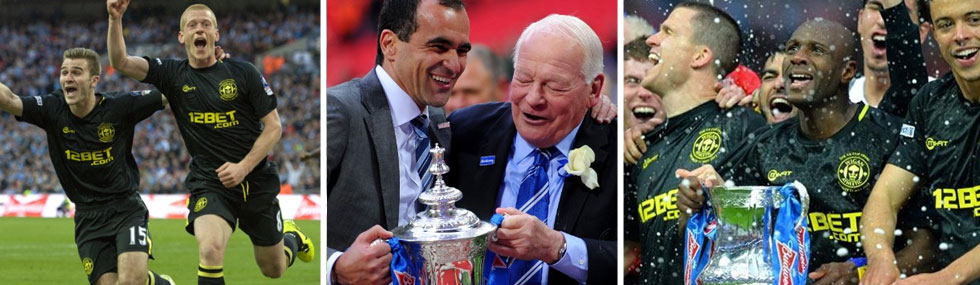
Long-standing fans recall Paul Jewell’s and Steve Bruce’s sides playing enterprising football with twin strikers and many very much welcome Lowe’s preference for the same. Some of them were critical of the Roberto Martinez era, preferring a more direct style of football, grudging of the manager’s success of keeping the club in the top tier for four more seasons and his staggering achievement of winning the FA Cup. The initial managerial appointments of both Gary Caldwell and Shaun Maloney from the Martinez days did not go down well with that faction.

Last summer’s player recruitment under Maloney was largely focused on signing younger players with potential sell-on values. It was a reaction to the club previously being saddled with older players on bloated salaries and long contracts who could not be moved on, a massive drain on finances. Maloney’s summer recruitment largely brought in players of 25 years of age or less, who had been identified as having potential to develop further given the right coaching environment. Salaries offered were commensurate to that of a club seeking sustainability, rather than one looking for a quick-fix for promotion. But Danson backed Maloney in the transfer market by allowing him a figure in the region of £1m to bring in players to supplement a collection of free agents and young loan players.

Lowe has also been backed by Danson in the transfer market. In addition to picking up Fraser Murray (26) and Christian Saydee (23) for free, Lowe paid Burnley a figure of around £350,000 for Dara Costelloe (22). Lowe’s acquisition of Paul Mullin (31) and Callum Wright (25) on year-long loans suggests he will be looking for more mature players in the loan market, whose experience could prove useful in a young squad.

Since Lowe likes to play with twin strikers, he has needed to bring more in. He already signed Costelloe, Mullin and Saydee and the rumours suggest he is trying to sign Jordan Rhodes (35) who was at Blackpool last season. Were Rhodes to be signed it would be on a short-term contract. Lowe already had Maleace Asamoah (22) and Chris Sze (21) under contract.

Mullin, the most well known of the newly signed strikers, had an outstanding goalscoring record at Wrexham when they climbed up the division from the National League. However, his League 1 record of 3 goals in 9 starts and 17 appearances off the bench last season is a concern. Christian Saydee was a popular figure at Portsmouth, but his career record shows him scoring 12 goals in 60 starts and 63 substitute appearances. Dara Costelloe’s record is better, with 12 goals in 56 starts and 19 as a substitute. Asamoah has scored one goal in League 1 from 12 starts and 12 as a sub with Latics and Fleetwood. Sze has made just 4 starts with 28 appearances off the bench, scoring 2 goals since 2021. 

Lowe’s hope will be that his young strikers will mature and start producing goals on a more regular basis. He will also hope that Mullin can renew his goalscoring exploits, given a change of club: a fresh start, with the full support of his manager.

With new contracts being signed by Matthew Corran, Callum McManaman, Harry McHugh, K’Marni Miller and Tom Watson, Lowe already has a first team squad of 28. The manager continues to scour the market for players who will fit in his budget and there will be more comings and goings before the transfer window ends on 1 September. There will be players currently under contract who will need to be moved to other clubs if the manager is to stay within his staffing budget.

Toby Sibbick has already joined Burton Albion and Kai Payne is to go on a season-long loan at Oldham. Lowe has made it clear that Steven Sessegnon needs to move on, although still under contract.

Lowe wasted little time in acquiring more strikers but still needs to look at specialist wing backs and perhaps more cover at centre back. But the question that concerns so many fans is whether Sam Tickle will be leaving over the summer. The young goalkeeper has been a revelation and his brilliant shot-stopping has saved his team on so many occasions. The weakness in his game is his distribution, a key area for new goalkeeping coach, Tony Warner, to work with him on should Tickle stay.  Should Tickle leave he would be very hard to replace.

All football managers prefer to have all their squads complete before the first game of the new season. It will be Ryan Lowe’s preference, but the nature of the transfer market suggests that more movement will take place during the month of August.

Ryan Lowe’s summer shopping list

I read an article the other day saying that in the 1960s the average tenure for a top flight manager was around four years, a far cry from the modern day when the figure is well below two. Since April 2015 Wigan Athletic have had 12 managers, although the figure does include those who were interim appointments.

Football clubs that are succeeding tend not to replace their managers frequently, but those who are not are doing well will usually ditch their manager in the hope of a new one coming in changing their fortunes. If the new manager does not succeed clubs rarely make thorough investigations into underlying factors that can cause the lack of success, so often repeating the process by making another change at the top. Over the past 25 years Wigan Athletic’s longest-serving managers have been Paul Jewell (6 years) and Roberto Martinez (4 years), both of whom brought honours to a club punching above its weight.

In early March I published an article “What kind of manager is needed to take Shaun Maloney’s legacy further? stating that:

“One can only hope that the Board are shrewd in their appointment. Whoever comes in will have players signed by Maloney on permanent contracts. They were signed to play the possession-based football that Maloney believes in. A shrewd appointment would be to bring in someone who can build on the good things that the Scot did, rather than one with a diametrically opposed philosophy of football.”

Whether Ryan Lowe can build on what Maloney did is open to question. From what we have seen so far, his style of football is hardly akin to that of the Scot. However, there was a faint chance of the club being relegated when Lowe took over and he adopted a “fightball” style of play, grinding out the results that would eventually get them to 15th position.

Most managers have a preferred tactical formation. The most common shape at Wigan in recent years has been 4-2-3-1, with a lone centre forward and an attacking midfielder playing behind him. Although Paul Cook and Leam Richardson were largely popular managers during their tenures there were always fans, particularly those who had witnessed the golden days of the Ellington-Roberts duo, who wanted to see twin strikers. Those fans will be delighted that Lowe likes to play with two central strikers. His preferred formation has been a version 3-1-4-2, with a central midfielder playing deep in front of the defence. He has lacked “natural” wing backs, having to use players more used to playing at full back or on the wing.  

Given Lowe’s preferred tactical approach he will need to adjust the balance of the squad. The retained list shows a senior squad of 19 players under permanent contract, but with Steven Sessegnon made available for transfer. Options for another year are triggered for Joe Adams, Tom Watson and Luke Robinson. Matthew Corran, Callum McManaman and Harry McHugh may get extensions on depending on negotiations.

Lowe needs wing backs and more strikers so he will need to move on players his predecessor signed on permanent contracts. Some will leave for low fees or free transfers, others being sent out on loan. Much has been said about the quality of recruitment last summer, but the aim to bring in young players in their early to mid-twenties, with potential sell-on value, was refreshing.  For too long the club had been saddled with older, experienced pros on relatively high salaries and long contracts, but with low sell-on values.

Lowe has made it clear that he needs more experience in his squad and that any under-21 players hoping to make the senior team will have to prove themselves worthy in training. He gave the exciting 19 -year-old K’Marni Miller his League 1 debut in the final game against Northampton, commenting “I said I wouldn’t be throwing in people for the sake of it, they’d have to have earned it with the way they handle themselves around the training ground and he’s been first one out and last one in ever since I’ve been here, so he was well worthy of coming on and I was pleased with what he did.” Miller was signed by Maloney last summer from on-league Guiseley.

Ryan Lowe’s appointment has gone down well with the majority of Latics fans. Although one could see the green shoots that suggested Maloney’s side would progress to a higher level with time it was nevertheless a frustrating season for us as fans, watching insipid stuff so often. Lowe’s arrival means yet another change in playing style and the kind of turnover in playing staff that has plagued the club over the past years. However, Lowe is an experienced manager who has a history of producing teams that punch above their weight despite being on modest budgets. One can only hope that he is given the full three years of his contract. Too many managers have been dismissed in an untimely manner over the years rather than being supported through difficult periods. The net result has been instability, with too much turnover not only of managers and coaches, but also of playing staff.

The hope is that over summer Lowe will make the adjustments in the balance of the squad that he feels he needs, but that turnover of playing staff is much reduced in the summer of 2026 and beyond. History has shown us that success is more likely if the manager is given a relatively long tenure.  

Ryan Lowe’s Summer Shopping List

I read an article the other day saying that in the 1960s the average tenure for a top flight manager was around four years, a far cry from the modern day when the figure is well below two. Since April 2015 Wigan Athletic have had 12 managers, although the figure does include those who were interim appointments.

Football clubs that are succeeding tend not to replace their managers frequently, but those who are not are doing well will usually ditch their manager in the hope of a new one coming in changing their fortunes. If the new manager does not succeed clubs rarely make thorough investigations into underlying factors that can cause the lack of success, so often repeating the process by making another change at the top. Over the past 25 years Wigan Athletic’s longest-serving managers have been Paul Jewell (6 years) and Roberto Martinez (4 years), both of whom brought honours to a club punching above its weight.

In early March I published an article “What kind of manager is needed to take Shaun Maloney’s legacy further?” stating that:

“One can only hope that the Board are shrewd in their appointment. Whoever comes in will have players signed by Maloney on permanent contracts. They were signed to play the possession-based football that Maloney believes in. A shrewd appointment would be to bring in someone who can build on the good things that the Scot did, rather than one with a diametrically opposed philosophy of football.”

Whether Ryan Lowe can build on what Maloney did is open to question. From what we have seen so far, his style of football is hardly akin to that of the Scot. However, there was a faint chance of the club being relegated when Lowe took over and he adopted a “fightball” style of play, grinding out the results that would eventually get them to 15th position.

Most managers have a preferred tactical formation. The most common shape at Wigan in recent years has been 4-2-3-1, with a lone centre forward and an attacking midfielder playing behind him. Although Paul Cook and Leam Richardson were largely popular managers during their tenures there were always fans, particularly those who had witnessed the golden days of the Ellington-Roberts duo, who wanted to see twin strikers. Those fans will be delighted that Lowe likes to play with two central strikers. His preferred formation has been a version 3-1-4-2, with a central midfielder playing deep in front of the defence. He has lacked “natural” wing backs, having to use players more used to playing at full back or on the wing.  

Given Lowe’s preferred tactical approach he will need to adjust the balance of the squad. The retained list shows a senior squad of 19 players under permanent contract, but with Steven Sessegnon made available for transfer. Options for another year are triggered for Joe Adams, Tom Watson and Luke Robinson. Matthew Corran, Callum McManaman and Harry McHugh may get extensions on depending on negotiations.

Lowe needs wing backs and more strikers so he will need to move on players his predecessor signed on permanent contracts. Some will leave for low fees or free transfers, others being sent out on loan. Much has been said about the quality of recruitment last summer, but the aim to bring in young players in their early to mid-twenties, with potential sell-on value, was refreshing.  For too long the club had been saddled with older, experienced pros on relatively high salaries and long contracts, but with low sell-on values.

Lowe has made it clear that he needs more experience in his squad and that any under-21 players hoping to make the senior team will have to prove themselves worthy in training. He gave the exciting 19 -year-old K’Marni Miller his League 1 debut in the final game against Northampton, commenting “I said I wouldn’t be throwing in people for the sake of it, they’d have to have earned it with the way they handle themselves around the training ground and he’s been first one out and last one in ever since I’ve been here, so he was well worthy of coming on and I was pleased with what he did.” Miller was signed by Maloney last summer from on-league Guiseley.

Ryan Lowe’s appointment has gone down well with the majority of Latics fans. Although one could see the green shoots that suggested Maloney’s side would progress to a higher level with time it was nevertheless a frustrating season for us as fans, watching insipid stuff so often. Lowe’s arrival means yet another change in playing style and the kind of turnover in playing staff that has plagued the club over the past years. However, Lowe is an experienced manager who has a history of producing teams that punch above their weight despite being on modest budgets. One can only hope that he is given the full three years of his contract. Too many managers have been dismissed in an untimely manner over the years rather than being supported through difficult periods. The net result has been instability, with too much turnover not only of managers and coaches, but also of playing staff.

The hope is that over summer Lowe will make the adjustments in the balance of the squad that he feels he needs, but that turnover of playing staff is much reduced in the summer of 2026 and beyond. History has shown us that success is more likely if the manager is given a relatively long tenure.