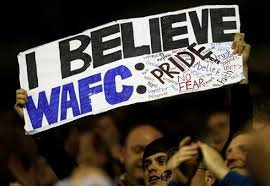
Time to “Believe” Again? Wigan Athletic, loyalty and the road ahead.

Photo courtesy of fansonline.net

“I’m not sure I’ll renew my season ticket this year.”

It’s a sentence quite a few Latics supporters have uttered over the past few weeks.

Some will have said it after another disappointing season. Others because the uncertainty surrounding the proposed sale of the club makes it difficult to know what the future holds.

For many, it’s simply the feeling that, after years of stability, progress has stalled. We’ve waited patiently for signs that the club is ready to move forward again, but the next step has proved frustratingly elusive.

Whether everyone who voices those doubts actually follows through is another matter.

Football supporters are emotional. The disappointment of May has a habit of giving way to the optimism of July. A couple of encouraging signings, a decent pre-season performance and suddenly the fixture list can’t arrive quickly enough.

But the debate itself matters.

Not simply because of the money.

Because of what it represents.

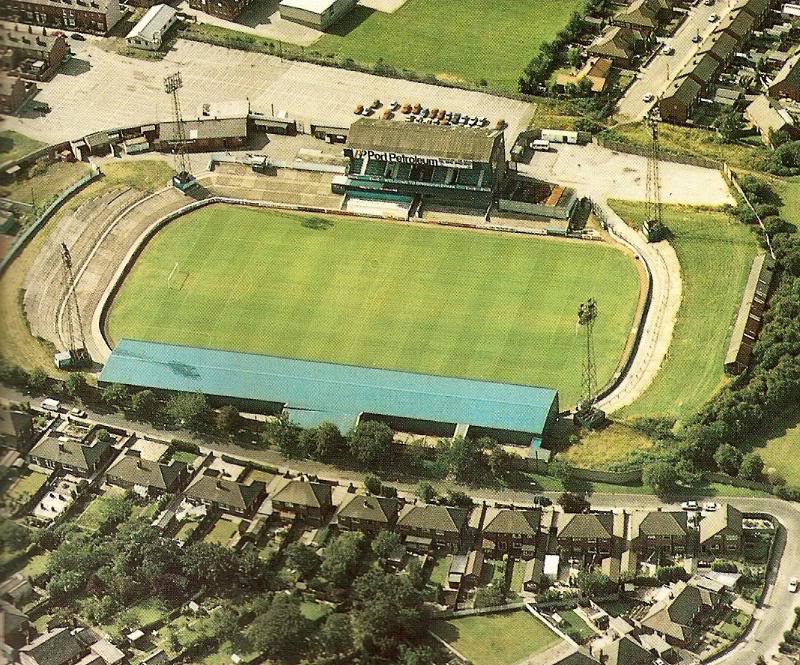
Whenever I hear those words, “I’m not sure I’ll renew,” I find myself thinking about someone who walked through the turnstiles for Latics’ very first league match in 1932.

Latics’ team for their debut match in 1932 against Port Vale Reserves,
Thanks to Ron Hunt and WiganWorld for photo.

I’ll come back to him later.

More Than a Season Ticket

A season ticket/card is far more than a guaranteed seat for twenty-three home league matches. It represents a commitment to the club and a belief that, despite the frustrations, the journey is still worth taking. For many supporters, renewing isn’t simply buying football. It’s saying,

“This is still my club.”

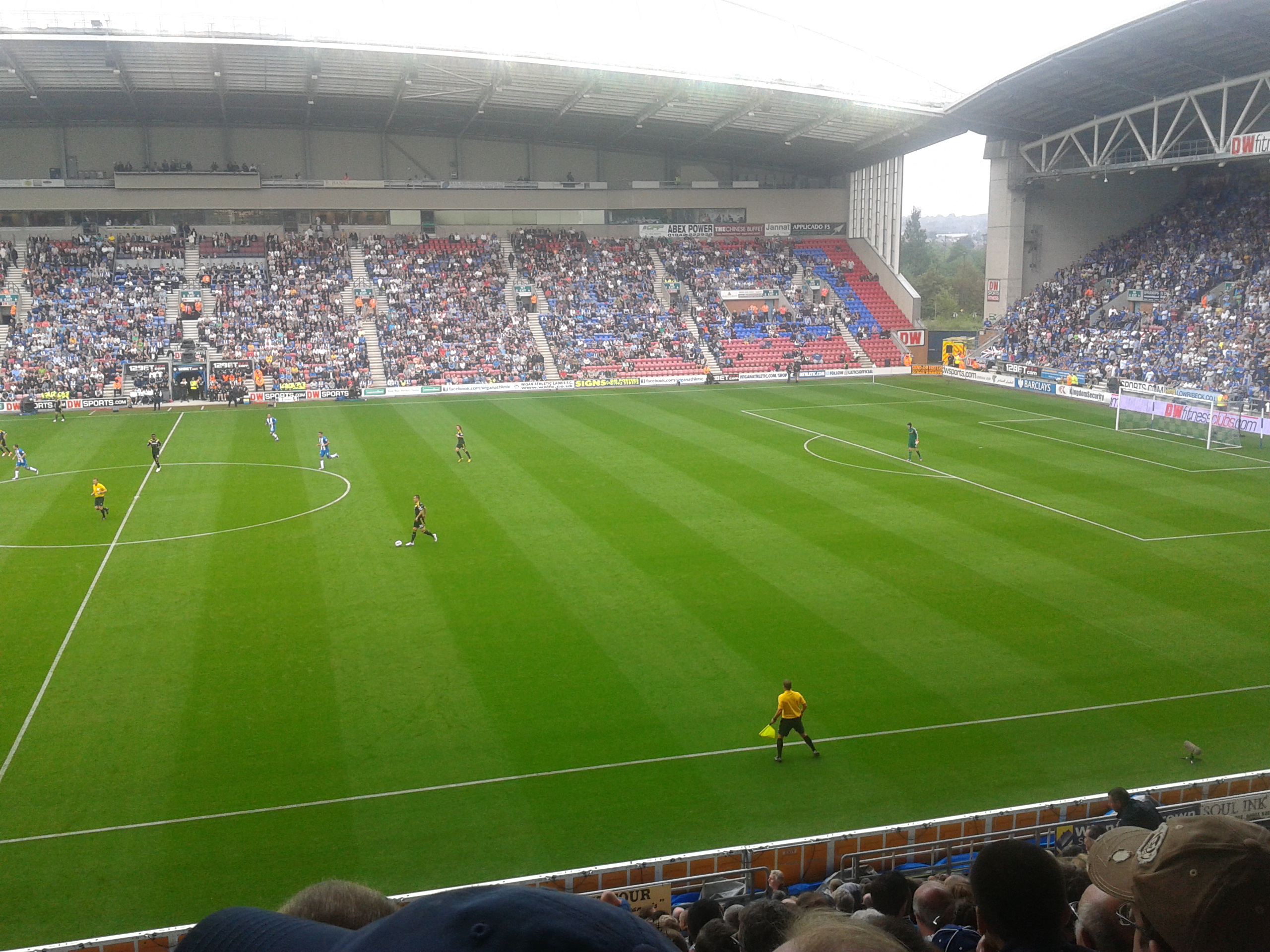
From the club’s perspective, season ticket holders remain its financial backbone. They provide guaranteed income before the season begins, create the atmosphere that makes the Brick Community Stadium feel like home and continue to support the club throughout the year by buying food, drink and merchandise.

Supporters living further afield, some overseas, continue to play their part too. Many still buy shirts, follow every development and renew their Latics TV subscriptions because distance has never diminished their affection for the club. Their loyalty is every bit as genuine, even if season tickets remain the club’s single biggest source of supporter income.

Unlike pay-on-the-day receipts, season ticket money arrives before a ball has been kicked. It gives the club certainty, improves cash flow and allows budgets to be planned with greater confidence. No manager signs a player because one extra season ticket has been sold, but a successful renewal campaign gives the club a stronger financial platform from which to operate.

The loss of a few hundred renewals would not threaten the club’s future.

The loss of confidence behind those renewals would be far more significant.

Every season ticket sends a message to the club, potential investors and prospective sponsors:

The supporters still believe.

A Loyalty Few Clubs Can Match

That belief is easy to overlook because, like so many things in football, we quickly start taking it for granted.

Think back over the last decade.

Administration, ownership crises, points deductions, relegations, a succession of managers and years spent in League One have tested the patience and loyalty of every supporter. Many clubs would have watched their crowds steadily decline under those circumstances.

Latics haven’t.

To continue attracting around 10,000 supporters after everything the club has endured is no small achievement. It says far more about the people in the stands than it does about league tables.

We often describe the academy, the training ground and the continued use of a 25,000 capacity = stadium as the club’s greatest assets.

Perhaps we’ve been overlooking another one.

The supporters themselves.

That loyalty deserves appreciation, but it also deserves progress.

Where It All Began

The supporter I mentioned earlier was my father.

Regular readers may remember an article I wrote some years ago about him.

His first Latics match wasn’t simply his first game; it was the club’s first ever league fixture in 1932.

From that afternoon onwards he followed Wigan Athletic for the rest of his life. Without ever intending to, he ensured that I would do exactly the same.

My own earliest memories are from Springfield Park in the early 1960s. They aren’t dominated by league tables or results. They are filled with the atmosphere that surrounded a Saturday afternoon. The smell of meat pies drifting across the ground. The marching band before kick-off. Standing in the paddock waiting for the familiar clip-clop of the players’ boots as they emerged from the tunnel. Even the unmistakable smell of oil of wintergreen as the players came out of the tunnel on to the pitch.

Those memories have stayed with me for more than sixty years.

I can still remember discussing the team with my dad before kick-off. Would Johnny Ball pick the experienced Peter Higham or the young Harry Lyon at centre forward? At the time it felt like the biggest decision in football. Looking back, the conversation itself mattered far more than who actually wore the number nine shirt.

The result of those matches has largely faded from memory.

Those afternoons never have.

Perhaps that’s what football really gives us. Not just results or league tables, but memories that become woven into our lives. Somewhere along the way the club stops being something we watch and becomes part of who we are.

Supporting Latics has never been the easy option.

Hope has always been part of the deal.

From Survival to Sustainability

When Mike Danson took control, the priority wasn’t promotion.

It was survival.

Without financial stability, nothing else mattered.

Since then, he has advanced around £30 million to keep Latics operating, funding the losses that are common throughout League One.

Crucially, that funding has come from the owner rather than banks or commercial lenders.

That distinction matters. Bank borrowing comes with interest, repayment schedules and pressure. Owner funding has provided breathing space while the club rebuilt and has allowed Latics to emerge from years of financial uncertainty.

Of course, those loans don’t simply disappear. Any future sale will inevitably involve discussions about how they are treated. Add to that the fact that Mike Danson also owns the Brick Community Stadium and it becomes clear why selling the club is more complicated than many supporters appreciate. Modern football increasingly relies on hospitality, conferencing and other non-matchday income, making the relationship between club and stadium an important part of any investment.

None of this makes Latics unattractive.

It simply makes them more complex.

The important point is that the conversation has changed. Not long ago supporters were wondering whether the club would survive.

Today we’re asking how it can grow.

That is progress

The Next Step

Growth, however, isn’t just about what happens between three o’clock and five o’clock on a Saturday afternoon.

Winning football matches will always be the biggest driver of attendances, commercial income and optimism. Nothing replaces success on the pitch.

But football has changed dramatically over the last two decades. Clubs are no longer judged solely by league position. They are media businesses, community organisations and brands. The most successful clubs build relationships with supporters every day of the week, not just on matchdays.

Commercial income has become increasingly important. Sponsorship, hospitality, conferencing, retail, digital advertising, partnerships with local businesses and community events all contribute to a club’s financial strength. Every additional pound earned commercially is another pound that can be invested in the football operation.

Success undoubtedly makes that easier.

But it’s not the whole story.

A club’s image matters too.

Potential sponsors want to be associated with organisations that are visible, ambitious and professionally presented. Supporters want to feel connected. Prospective investors look for evidence of momentum both on and off the pitch. In today’s football world, a strong digital presence has become almost as important as the experience inside the stadium.

This is one area where many supporters feel Latics still have room to improve.

That isn’t meant as criticism of the staff, many of whom may work incredibly hard with limited resources. Rather, it reflects how expectations have changed. Modern supporters expect behind-the-scenes content, academy features, player interviews, podcasts, videos and stories that keep them engaged throughout the week.

These things don’t replace winning football.

They reinforce it.

Every engaging video, every well-told story, every community initiative that is properly promoted strengthens the club’s reputation. It gives sponsors greater value, encourages businesses to become involved and reminds potential investors that this is a club moving forward.

Football clubs don’t just build financial capital.

They build reputational capital too.

That reputation takes years to create, but it can become one of a club’s greatest assets.

Reasons to Believe

It is easy, particularly after a disappointing season, to focus on what Latics lack.

Sometimes it’s worth reminding ourselves what the club already has.

  • The use of a modern stadium and a more than adequate training ground.
  • A productive academy.
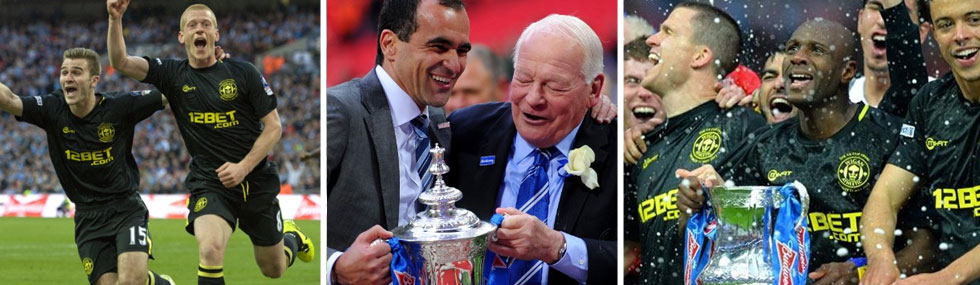
  • An FA Cup-winning history and eight seasons in the Premier League
  • A loyal supporter base that many League One clubs would envy.

Those are solid foundations.

The challenge now is building upon them.

The Choice

Every supporter will make their own decision this summer.

Some won’t renew. Many who currently say they won’t probably will.

That’s football.

No one should feel guilty for making the decision that is right for them or their family. Football has become an expensive pastime, and supporters are entitled to expect value for their money.

But perhaps this year’s decision is about more than buying another season ticket.

Perhaps it’s about recognising that, after years spent securing the club’s future, the next chapter must be about fulfilling its potential.

Promotion will depend on the players, recruitment and good decisions in the boardroom. Commercial growth will depend on ambition, imagination and presenting Latics as the progressive football club we all know it can become.

But every successful chapter in the club’s history has begun with supporters who believed before everyone else did.

When my father walked through the turnstiles for Latics’ first ever Football League match in 1932, he couldn’t possibly have imagined where the journey would lead. Promotions and relegations. Springfield Park and the Brick Community Stadium. The Premier League. Wembley. The greatest day in the club’s history. Administration. Survival. Recovery.

Through all of it, I have never stopped believing there would be another season worth looking forward to.

Looking back, I realise that some of my happiest memories were never just about the football. They were about Saturday afternoons spent with my dad, sharing hopes, disappointments and conversations that have stayed with me for a lifetime.

The scorelines have blurred.

Those memories never have.

Perhaps that’s why supporting Latics has never been just about results.

It’s about belonging.

A season ticket doesn’t guarantee promotion.

It doesn’t even guarantee a good season.

What it represents is hope.

The future isn’t guaranteed.

It never has been.

But for the first time in a long while, there are genuine reasons to look forward.

Perhaps it’s time to “believe” again

Wigan Athletic Under Ryan Lowe: From Grit to Something Greater?

Wigan Athletic’s time under Ryan Lowe has really been one built on grit. In football, “grinding out results” basically means doing whatever you need to get points, even if it’s a slog. It’s about being organised, disciplined, and prepared to battle for everything. In a league as tight and physical as League One, that kind of mentality often matters more than pretty football. Managers want players who stay switched on, stick to the plan, and don’t fall apart under pressure. It’s not always thrilling to watch, but it turns bad days into draws and half-chances into big wins.

When Lowe arrived in March 2025, Wigan were in a lower mid-table position and seriously struggling for goals — bottom of the league in that department. They weren’t heading straight for relegation, but the season had drifted. Lowe’s arrival felt like a reset — new ideas, fresh energy, and a chance to stabilise things.

Before long, the team leaned fully into that scrappy, hard-working identity. They finished the season in 15th, mostly because they became tougher mentally and harder to beat. They clawed back deficits, held onto narrow leads, and looked like a side willing to dig in. Not glamorous, but effective.

Over the summer, Lowe shaped the squad to fit his preferred 3-1-4-2. That system relies heavily on wing-backs, and the opening game of the new season showed exactly why. Joe Hungbo and Fraser Murray were excellent in the 3-1 win over Northampton — a scoreline that honestly could’ve been bigger. The first 20 minutes were messy and disjointed, but Murray’s goal around the half-hour settled everyone down and suddenly the team looked much more like a unit.

Of course, settling into a new shape and integrating new signings takes time. The early weeks were a mix of positives and frustrations: solid performances, some good results, but also draws where Wigan should’ve taken more. Opposition managers quickly figured out how dangerous the wing-backs were, so Hungbo and Murray started getting much more attention defensively. That’s League One — once you show a threat, everyone finds a way to make life difficult.

After eight league games, Wigan were sitting at W3 D3 L2 with 13 goals scored and 9 conceded — decent, but clearly still a work in progress. Then came Bolton. Wigan had enjoyed a strong record against them recently, and fans saw it as a genuine benchmark of their progress.

But Bolton, led by Steven Schumacher, were flying. They went with two natural wingers and caused Wigan’s wing-backs all sorts of problems. Latics were second best throughout, losing 4-1, and the fans were furious. They felt the team didn’t show enough fight and that Lowe hadn’t treated the derby with the importance it deserved. They even pointed out the lack of cards — Wigan picked up one yellow, Bolton none — which raised questions about the passion and intensity on display.

It did feel like Lowe misjudged the moment. Derbies aren’t just about points; they’re about pride and emotion. If that wasn’t fully communicated to the players, it could explain the flat performance. And once fans start questioning desire, the pressure ramps right up.

The Bolton defeat hit confidence hard. The football tightened up, became more cautious, and the spark in the final third faded. Lowe leaned further into defence-first thinking, which made sense in the moment but dulled the attacking edge even more. The injury to Ryan Trevitt made things worse — without their most creative midfielder, Wigan lacked imagination. The wing-backs also had to focus more on defending, meaning they weren’t getting forward as freely.

All of this made Wigan more solid, but not exactly entertaining. The challenge now is finding the right balance — keeping that grit without switching off the creativity.

As it stands, Latics sit 11th with a record of W6 D7 L5. They’re definitely harder to beat, and while fans still daydream about a run toward the Championship, Lowe has sensibly played that down, treating promotion as a long-term aim rather than something immediate. His popularity has dipped during the rough spells — some fans have even called for him to be sacked, others are simply bored by the football. But given how many managers Wigan have chewed through over the past decade, stability is badly needed. Lowe deserves the time to build something properly.

His spell at Preston is a useful comparison. In his first full Championship season there, they started with a 0-0 at the DW — one of FIVE goalless draws in their first six games. They had one of the smallest budgets in the league, yet still finished 12th. Not spectacular, but quietly impressive.

This season, Wigan reportedly have a top-ten League One budget. So can Lowe get them punching above their weight and pushing into the play-off conversation? A lot will hinge on the January transfer window.

With his commitment to 3-1-4-2, he needs proper wing-backs. He couldn’t sign any specialists in the summer and ended up using Hungbo and Murray — talented players, but natural wingers. Two real wing-backs surely top the shopping list, unless K’Marni Miller returns ready to step up. He also needs more creativity in midfield and better service for the strikers, who simply haven’t scored enough.

And that’s the big question hanging over everything: if the supply improves, will the forwards finally deliver the goals Latics need?

What a difference a win makes

It had been doom and gloom among so many Wigan Athletic fans for too long. The team was lying below mid-table in League 1 and the last time Latics had last won an away game under Ryan Lowe was on Good Friday.

The game at Wimbledon looked like it was following on from what we had seen before. The home side were a goal up, despite Wigan having the better chances in a first half when they could have gone ahead. They had not played badly but just did not look like they were going to show killer instinct in front of goal.

Enter the 18-year-old Harrison Bettoni in the 77th minute. With his first touch of the ball, he scored from a sublime free kick curling in to the top corner. Ten minutes later he latched on to a clever flick from Paul Mullin to race through and slot home. The away support went wild with excitement.

After talking about avoiding relegation and sacking Lowe the less tolerant and less patient core among the fan base have started to perk up. One fan even suggested promotion was even a possibility with Latics just 8 points behind the leaders, Cardiff City, after 16 games played.

Although Bettoni’s league debut was spectacular some fans had not heard of him. However, he has been at Wigan since his early teens and was a key player in the youth team. Lowe trusted him with the free kick because he had been taking them in the junior ranks for some time. Bettoni had showed his mettle in a much-improved U21 team and it was to Lowe’s credit that he was given that chance.

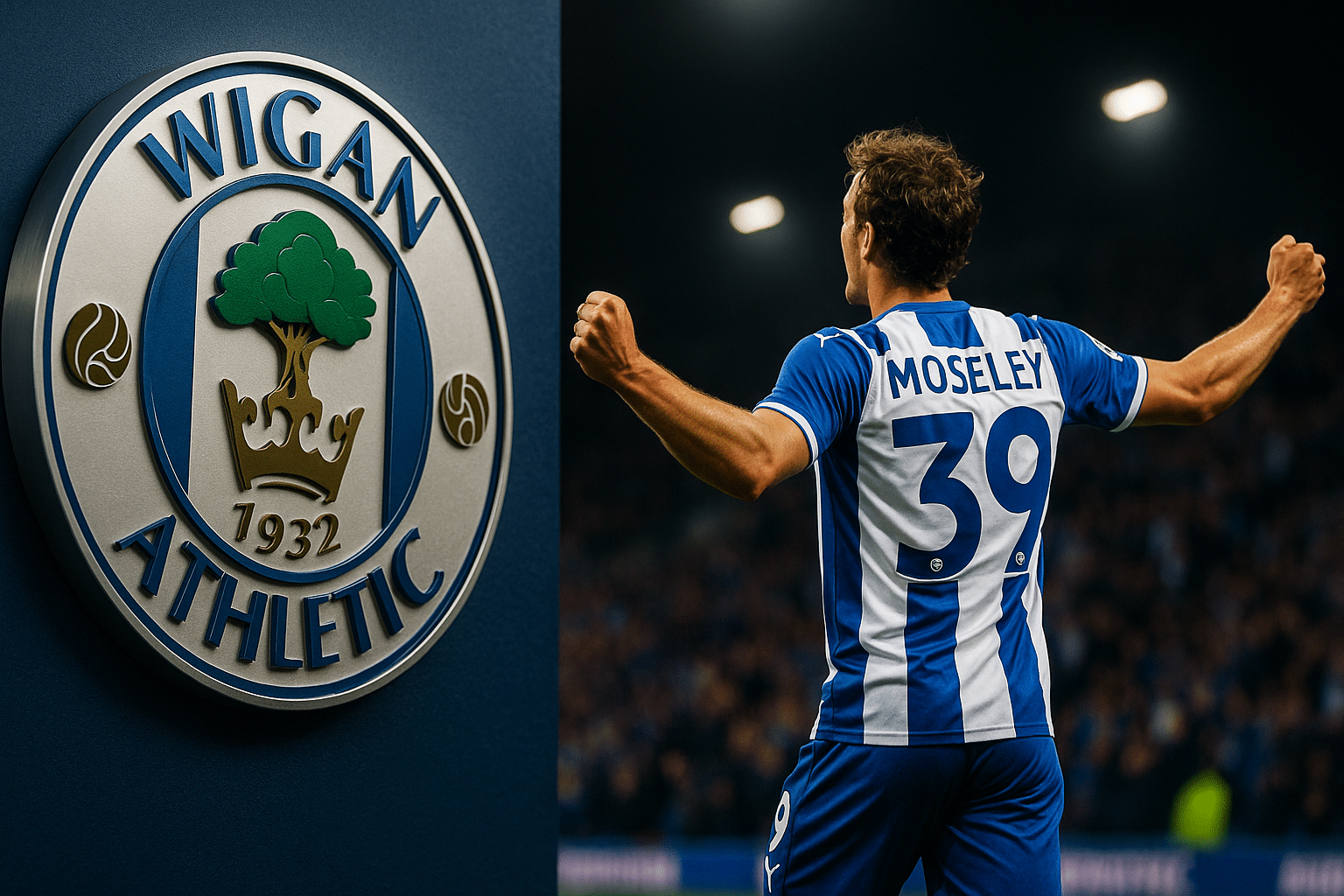
Wigan’s U21 team had a tough start to the season, losing their first four games. Their transformation was helped on its way by the arrival of 20-year-old Adam Moseley on trial from Runcorn Linnets. Moseley’s record of 17 goals in 11 games for the U21 team speaks for itself. Although he had been appearing under the name of “Trialist”, posts on social media a week ago told us his name and that he had agreed to a two-and-a-half-year contract at Latics. Although this has now been revealed in the local press, nothing yet has appeared on the club website.

The main news on the U21 side recently has been in sending players away on loan. Tom Watson has gone to South Shields, Leo Graham to Bury, Jack Rogers to Macclesfield, Christy Edwards to Witton Albion and K’Marni Miller to Radcliffe FC. Kai Payne went to Oldham Athletic at the start of the season, but injury has limited his appearances to 10 games so far. Some fans have been critical that the club has not secured them loan spells at clubs in higher tiers of English football. However, the majority are short term loans which expire before January.

The U21 team’s last three results have been spectacular. A 9-0 win at Coventry was followed by a 2-1 home win over top of the table Sheffield United, then by a 7-2 win at Barnsley. In the absence of U21 match reports on the club’s website one has had to rely on picking up information from opposing clubs’ sites. In previous years there were pockets of information on players in both the U21 and U18 squads to go with their photographs but there is scant coverage now.

Bettoni’s spectacular debut and Moseley’s acquisition have certainly helped to lift the spirits of supporters. At the beginning of the season, it had looked like Lowe had lots of options with four strikers in his senior squad. However, optimism has faded over the past months as none of the four have convinced. Lowe’s preference, particularly in home games, has been to play with twin strikers. Dara Costelloe and Christian Saydee were his choice for the opening game against Northampton, but both have had three game suspensions after receiving red cards, disrupting their settling into their roles. Paul Mullin and Maleace Asamoah have been largely used as substitutes in League 1 games. Between the four of them they have scored 7 goals.

Moseley will only be available for EFL games from the start of the January transfer window. It will be interesting to see how Lowe handles Bettoni. Will he start against Stevenage on Saturday or be used as an impact sub in the latter stages?

Although Lowe clearly likes the twin striker approach he has also resorted to packing the midfield with two number 6s, two number 10s and a single central striker. The latter system looked viable while Ryan Trevitt was available to provide some goal threat as a #10, but the other midfielders who have played there have rarely looked incisive.

Callum Wright scored a well taken goal against Barnsley and has got into good positions, but lacks the composure of a midfield goalscorer. Lowe might have to continue to persevere with Wright in the hope that the composure will come, even if his career goalscoring record does not suggest that.

In a similar way he has been relying on Christian Saydee to score goals as a central striker. Saydee has scored 2 goals so far at Wigan and his career record is 14 goals in 137 appearances. Although he is unlikely to score many goals as a striker, he is nevertheless a useful player to have on the pitch. He is a powerful and skilful forward able to hold the ball, with an eye for a killer pass through a defence. Some would say his style is reminiscent of Emile Heskey. Others might cite Marc-Antoine Fortune who scored 5 goals in 71 appearances at Wigan, but was nevertheless a regular starter in the Championship.

Following the opening game against Northampton I commented here that “Looking at the current squad there is certainly enough quality to finish in the top half of the table, barring major injuries.”

Since then, Lowe lost Isaac Mabaya early on and Ryan Trevitt since the end of September. However, my comment still holds. If they can be in a mid-table position by the New Year, they will have something to build on and it is by no means impossible that they will reach a playoff position.

If Lowe had money to spend, he would invest in specialist wing backs and creative midfielders. Good, proven strikers don’t come cheap and it is unlikely that Latics will ever splash out the kind of money needed.

In the meantime, he will look at getting the best of the strikers he has at his disposal. Finding the right blend will be key.

Luton Town 1 Wigan Athletic 0 – Latics go down fighting

“For us to have held our own against a good team is really pleasing. I am proud of the boys – they gave us everything.  We threw everything at the game and made changes to try and get a result. I can’t fault the boys – I am really proud of them…… We’re not making excuses, but we had to field a team that we thought could compete, and have loads of energy. I felt like we did that – the goal we conceded is a scruffy one on our behalf. It’s not what we want, of course, but I can’t fault the lads. They stuck to the game plan. Luton were in the Premier League two years ago, and they’ve still got some Premiership and Championship players who shouldn’t be in this division.”

So commented Ryan Lowe after last night’s display at Luton.

It was certainly an improvement on the way Latics played at Leyton Orient. The players had rolled down their sleeves, showed energy and lots of commitment.

It was an odd game in many ways. Lowe had fielded a starting lineup that looked as defensively-minded as any that Wigan have put out since the days of Warren Joyce. However, despite playing with wing backs, Jensen Weir and Luke Robinson, who rarely pushed forward and a lone centre forward in Paul Mullin, they certainly matched the home team in the first half. After 9 minutes the home side had gone ahead when Liam Walsh too easily evaded the right side of Wigan’s defence to cross for George Saville to hit home. But it did not deter Latics and they played with energy and determination, launching balls down the channels to push Luton back and create chances that might have been converted.

Latics had started out with a 3-4-2-1 formation with Baba Adeeko and Tobias Brenan in defensive midfield, with central midfielders and Ryan Trevitt and Callum Wright pushed further forward. Three central strikers had been left on the bench.

Maleace Asamoah was brought on as a second striker for the second half, but it did not do the trick. The targeted long balls had turned into “hopeful” ones and the home team dominated. However, in the dying seconds Sam Tickle came up for a corner, but shot wide when he might have scored.

Lowe retains the backing of the majority of Latics fans. He has done well to build a squad that can compete with most teams in League 1 and there is a long way to go in the season. After suffering so many dull displays in home games last season prior to his arrival, the crowd at the Brick Community Stadium are now getting more entertainment. However, their away performances have been dour to watch.

Stats courtesy of WhoScored.com

Wigan Athletic 2 Peterborough 0 – Latics show promise

The opening day 3-1 victory over Northampton was an enjoyable occasion for Latics supporters. Ryan Lowe’s new team certainly showed promise for the season ahead.  However, it was followed by an abject defeat at Leyton Orient and an insipid League Cup win over League 2 Notts County.

Yesterday’s win over Peterborough once again suggested that Lowe’s Latics team have potential, albeit tempered by the fact that the visiting team’s starting lineup was inexperienced, their two oldest players being 25 years old, the average age being 23.

Players’ age stats courtesy of FotMob.com

It is dangerous to make predictions at this stage of the season based on performances and results. Wigan’s best performances so far have been against two teams whose so far have gained just one point between them. Moreover, Peterborough had more than 70% possession and were awarded 10 corners compared with Wigan’s 3. Sadly, for the visitors, they could not show a cutting edge to their finishing.

However, green shoots have appeared to suggest that Lowe’s Latics have potential. The wing backs, Joe Hungbo and Fraser Murray, were excellent yesterday, as they had been against Northampton. Left wing back is a position that Hungbo is growing in to, having played as an inverted right winger previously. His approach burns up a lot of energy: he was substituted after 72 minutes yesterday, after 67 minutes against Orient and 70 minutes against Northampton. Hungbo has already shown the signs of becoming an effective wing back, a key component in Lowe’s system.

Murray really looks the part in the right wing back position, despite playing mainly on the left for Kilmarnock. His run and cross for Christian Saydee’s opening headed goal was quite superb. Murray is physically fit, intelligent, has excellent vision and gets himself into good attacking positions. He complements his attacking skills with sound defence and a determination to succeed.

Wing back is arguably the most physically demanding position to play in. Lowe has been dealt a cruel blow with Isaac Mabaya’s serious injury. He needs an alternative on the right-hand side as a backup to Murray. He has K’Marni Miller as a possibility for left wing back when fully fit. Already having a squad that needs to be reduced in size for economic reasons he will face difficulties finding someone to replace Mabaya.

Although they had such little possession Latics did create opportunities to increase their lead. However, the substitution of the defensively strong Luke Robinson for Hungbo, rather than Jonny Smith, signalled the manager’s intention of closing down the game. Peterborough did get into good positions around Wigan’s penalty area although they squandered their opportunities.

Another excellent performer yesterday was Christian Saydee. Not only was he in the right place to score the opening goal, but he had a fine all-round game. Saydee is not only physically very strong but has good skill on the ground, showing vision in finding teammates when under pressure. He is only 23 years old and looks like a bargain signing. Goalscoring is the side of his game that he really needs to work on.  His goal yesterday will do him a world of good.

Latics face trips to Luton and Rotherham this week. Each game will provide a stern test to Lowe’s squad which shows promise but still has a long way to go to prove itself as a contender in the upper reaches of the table.