The transfer window – a sign of things to come for Latics?


“Of course Luis wants to work and play at the top level. But unless something drastic happens, he will be staying here.”

Brendan Rodgers’ hapless quote did not go down too well with the fans. The Luis Suarez saga dragged on for so long, but the end-result was that the player got what he wanted with a move to Barcelona.  Suarez had been pivotal in Liverpool’s challenge for the Premier League title. His departure seriously weakened a team that had come so close to winning the Premier League.

Nick Powell’s departure from Wigan Athletic over the January transfer window would also have seriously weakened a team striving to win their division. The media was awash with stories telling us that other clubs were bidding for him. We had to hold our breath until the window closed on Wednesday evening.

Powell’s case is remarkable among modern day footballers. Indeed, it was so refreshing to get away from the media hype of Alexis Sanchez and Manchester United, instead hearing how a player did not want to go a higher division to earn a much bigger salary. Powell quite simply told his chairman that he wanted to stay at Wigan and consecutive bids from Brighton were turned down by the club.

January transfer windows have been depressing affairs over recent years at Wigan Athletic. The decimation of January 2015 immediately comes to mind, when Dave Whelan had Malky Mackay boot out so many household names, together with players who had only been signed in summer. It was a matter of reducing the wage bill more than anything else. Relegation was not a surprise consequence of those actions. Add to that the woeful comings and goings in 2017 under the inept Warren Joyce. None of the 13 players he signed were at the club when the current season began. But the January 2018 dealings were by no means depressing, and if anything, they were positively uplifting. So, what has changed at the club?

First and foremost is the manager. Paul Cook has shown the kind of shrewdness in hiring and moving-on of players that has been lacking at Wigan in recent years. When Lee Evans left to join Sheffield United, early in the transfer window, it looked like a case of David Sharpe not being willing to put up that extra money to keep the player. Evans had been excellent and wanted to stay at the club.

But the signing of Jamie Walker from Hearts looked like a step forward, a player who can play the number 10 role that Nick Powell currently occupies. Within a few days James Vaughan was signed from Sunderland, an experienced player who has not only played most of his football in the upper two tiers of English football but has a superb goalscoring record in League 1. The loan signing of Jay Fulton from Swansea was to follow, then on deadline day Devante Cole was signed from Fleetwood for reportedly £400,000 and Donervon Daniels brought back from Rochdale.

Cook has brought in largely younger players, together with the 29-year-old Vaughan. Walker is 24 years old, Fulton 23 and Cole 22.  Daniels is still only 24. His contract runs out in summer. Cole’s signing was a bit of a surprise, a third central striker to challenge Will Grigg and James Vaughan. However, Cole might well be used on the flanks when needed.

Only time will tell if the players brought in during January 2018 will make a success of it at Wigan. But their profiles certainly look promising and the blend seems right. What is surprising is that David Sharpe has spent more money over January when the club are heading for a financial loss for the season. It is not what we have come to expect in recent years.

Reports suggest that the current wage bill is around £10 m, which cannot even be met half way by gate receipts and EFL subsidies. Part of the funds paid out in January will be offset by a 30-40% share of the £1.5 m transfer fee of Jack Hendry from Dundee to Celtic. However, the takeover by the Asian consortium appears imminent. Has this influenced the transfer window dealings? Moreover, will David Sharpe continue when the takeover happens?
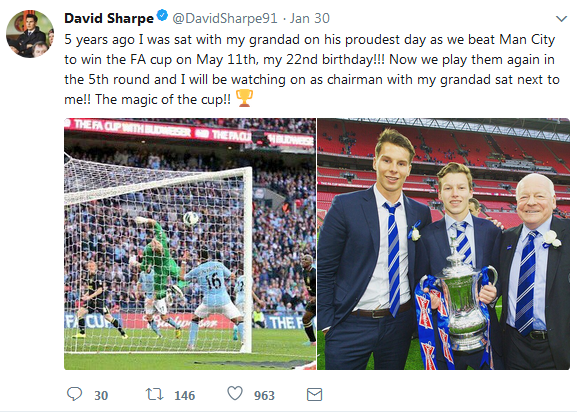
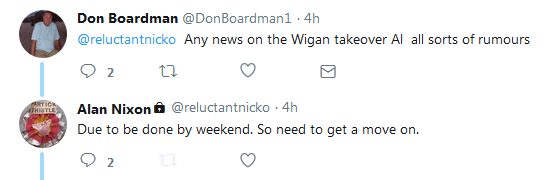
Does Sharpe’s tweet give us a clue?


Evans on his way out – what kind of legacy will the Whelan family leave behind?

Lee Evans’ departure will be a blow for Paul Cook.
Photo courtesy of Wigan Athletic.

Things had been going so well for Wigan Athletic. Promotion back to the Championship had been looking a near certainty, following the club’s best-ever start to a league season. But will the impending departure of Lee Evans prove to be an indicator that the promotion will not be as inevitable as it might have seemed?

Evans will certainly be missed. He and Sam Morsy have been the most successful central midfield pairing since the halcyon days of the “Jimmy Macs”, McArthur and McCarthy. That Latics have conceded only 12 goals in 25 league matches is not only due to having a solid defence. lt should rightly be attributed as a whole team effort, but the protection provided by Evans and Morsy in front of the back four has been exceptional. However, Evans is much more than a midfield enforcer, his range of passing adding an extra dimension to Latics’ play, particularly in his delivery from set pieces. It is no coincidence that he leads the team in assists.

According to media reports, Wolves will sell Evans to Sheffield United for a fee of around £750,000. The player will join a club with aspirations of promotion to the Premier League. A couple of seasons ago Wigan paid more than that to sign Will Grigg, to help them get out of League 1. They also paid around £600,000 to secure the services of Yanic Wildschut, whose permanent signing proved to catalyse that League 1 title win. By paying out that kind of money Latics had shown ambition, albeit buoyed by the parachute payments the club was receiving at the time.

Sadly the ambition showed in 2015-16 was not to be replicated the following season, when pre-season spending of around £3 m was modest compared with the norms of the Championship. Gary Caldwell had reportedly wanted Hearts right back Callum Paterson and Barnsley midfielder Conor Hourihane, but it did not happen. The right back position was to prove problematic and the quality  of delivery that Hourihane can provide could have made a big difference to Caldwell. In the January 2017 transfer window, Sharpe found Norwich’s generous offer for Wildschut too good to refuse. The end-result was the club getting relegated, but nevertheless making a profit.

Reports suggest that the K8 consortium is poised to take over Wigan Athletic, but is awaiting EFL approval. The Whelan dynasty at Wigan therefore appears to be reaching its end.

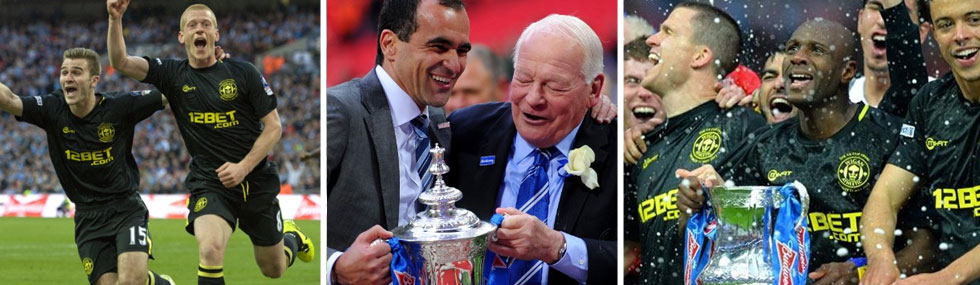
The club had overachieved for so long, winning the FA Cup, reaching the League Cup final, with eight years in the Premier League, including luscious wins over the elite clubs that dominate the English game. Dave Whelan’s drive, vision and financial backing underpinned those successes.

However, in recent years some bad decisions have been made and, despite having received well in excess of £100m in parachute payments, the club finds itself in the third tier. The appointments of Owen Coyle, Malky Mackay and Warren Joyce were disasters waiting to happen and their lack of success was no surprise to the more discerning of fans.

The appointment of Paul Cook in summer had appeared to set Latics back on the right track. But now with the club in limbo, waiting for the change of ownership to be confirmed, what can we expect to happen over the January transfer window? Will other key players in Cook’s squad be departing over the next three weeks?

We can only surmise on what would have happened in the transfer window if the takeover had already taken place. Would the K8 consortium have given Cook the financial backing to keep Evans and to hold on to the club’s most prized assets? Would Cook have been given a treasure chest to buy players for an anticipated return to the Championship next season?

Given the reality of the situation, with an ownership change still in process, what can we expect from Sharpe and his grandfather over the window period?

We do not know whether Sharpe made a bid to Wolves to sign Evans on a permanent contract. But even if he had, would he have been willing to get into a bidding war with Sheffield United? The probability is that with Max Power and Shaun MacDonald ready to step into Evans’ shoes, the club was unwilling to seriously compete for the player’s services. Latics no longer have parachute payments and are unlikely to shell out big money over the window. Given that Sharpe appears likely to continue to hold the reins for some weeks at least, are we likely to see more player exits?

Cook and the recruitment team spent no money on transfer fees over summer. Players were picked up as free agents or on loan. However, the media reports that the £300,000 transfer of Jamie Walker from Hearts is currently going through, despite the fact that the player has a knee injury and will not be available for some time. The 24 -year-old Walker may well prove to be a good signing in the long run, but what does it tell us about Sharpe’s intentions? Will Sharpe expect funds to be coming in to compensate?

The media has been telling us that Steve Bruce wants to take Nick Powell to Aston Villa, although the player was under Bruce’s charge at Hull in the second half of the 2015-16 , but could not command a place in the starting lineup.Now the Sun complicates the situation by telling us that Powell will stay at Wigan if the Asian consortium takes over.

Cook is in an unenviable position as this transfer window unravels. He is depending on Sharpe, who is in a sitting duck position, waiting for the takeover to happen. Will Sharpe, or ultimately his grandfather, allow clubs to come in and pick off key players, with the club in limbo? In addition to Evans and possibly, Powell, is there a danger of such as Dan Burn and Sam Morsy leaving too? Has there been any discussion between Whelan/Sharpe and K8 about how the transfer window will be handled?

Whelan generally has the backing of the Wigan Athletic support, although there are critics who tell us that he is at heart a businessman. Would he sanction the selling-off of players prior to the takeover, damaging Cook’s attempts to get Latics back into the Championship?

All will be revealed in the coming weeks.

Like us on Facebook, or follow us on twitter here.

The stats behind Latics’ rise to the top

The table tells no lies. The stats show us that Wigan Athletic not only top League 1, but they have not only scored more goals than the other teams in the division, but they have conceded only 12 in 21 games, a ratio unequalled in the four tiers of English football.

Paul Cook’s strategy as a manager has differed from those of his recent predecessors. Uwe Rosler did a fine job in the 2013-14 season, getting Latics to the Championship playoffs and an FA Cup semi-final. He did it with a rotation policy. It was not universally popular with the fans but his results that season were outstanding. Cook certainly does not adhere to a philosophy of rotation for rotation’s sake, largely preferring to stick with a nucleus of players who play week in, week out in the League 1 competition. He has saved his major rotations for cup games.

The stats show that seven players have made a minimum of 18 starts in the 21 games so far. Nathan Byrne has been ever-present, with Dan Burn and Michael Jacobs missing just one game each. Chey Dunkley missed three games, through suspension. Sam Morsy missed one through suspension and another due to international duty. Nick Powell has already started in 18 games, which is remarkable considering that he had not started a league match for two seasons until rejoining Wigan last season and making just 10 starts. Gavin Massey has also started in 18 matches.

Goalkeeping duties have been shared between Jamie Jones (15 starts) and Christian Walton (6). The left back position too has been shared between Reece James (13 starts) and Callum Elder (8). The most equitable sharing has been for the centre forward position with Will Grigg making 11 starts and Ivan Toney 10. Lee Evans has made 16 appearances in central midfield.

Goalscoring

In Cook’s 4-2-3-1 system the advanced midfield three are expected to play a leading part in not just the creation of chances, but in scoring goals. Nick Powell is Latics’ leading scorer with 9 goals, followed by Michael Jacobs with 8. Gavin Massey has scored 3, as has Ryan Colclough.

Goalscoring has not been easy for the centre forwards, Grigg and Toney notching 4 each. The centre backs have helped out with Chey Dunkley scoring 3 goals and Alex Bruce and Dan Burn 2 each. Of the central midfielders Morsy has scored 2, with Evans, David Perkins and Max Power 1 each.

Assists

Lee Evans’ excellent delivery has him leading the assists with 6. Cook pushes his full backs well forward, expecting them to shower the opposition penalty box with crosses. Nathan Byrne has 3 assists and Reece James 2. Gary Roberts has not featured as much for Latics as he did for his previous clubs, making just 2 starts and 9 substitute appearances, but retains an eye for the killer pass, making 3 assists to date. Jacobs, Massey, Perkins and Toney have 2.

Foul counts

Given his combative approach it is no surprised that Sam Morsy has conceded the most, with a total of 38. However, he has also had 34 committed against him. In contrast Lee Evans has committed 18 fouls, receiving 33.

Given his key role in orchestrating play one would expect Nick Powell to receive a lot of fouls and he leads the field with 38. But Powell is not afraid to “get stuck in” and has committed 23. Michael Jacobs is also a main creative source and he has received 35 fouls, committing 22.

The foul counts for the two mainstay centre backs make interesting reading. Chey Dunkley has committed only 8 fouls in 18 starts (albeit one foul resulting in a red card), receiving 6. But Dan Burn has committed 23 fouls and suffered 16 in his 20 starts.

Card Counts

Latics have received 4 red cards – one each for Colclough, Dunkley, Elder and Evans.

Sam Morsy has accumulated 7 yellow cards, Dan Burn 5, with Nathan Byrne, Nick Powell and Ivan Toney on 4.

Stats courtesy of espnfc.com

Like us on Facebook, or follow us on twitter here.

Paul Cook’s Christmas Shopping List

A year ago, Paul Cook was manager of a Portsmouth side in fourth place in League 2, seven points shy of an automatic promotion position. Over the January transfer window he picked up four new players, with three leaving. Of the new players midfielder Jamal Lowe went on to make 17 appearances and striker Eion Doyle 12.

Wigan Athletic are currently top of League 1, four points ahead of Shrewsbury Town and five ahead of Blackburn Rovers. Given the circumstances, can we expect much activity from Cook over the January 2018 transfer window?

Over the summer Cook did an excellent job in ensuring that he had a minimum of two players competing for each position, except for the right back berth.  Up to the transfer window 12 players were brought in and a greater number moved out as Cook reduced the size of his squad. Wigan Athletic did not pay any transfer fees in the summer recruitment.

Nathan Byrne has not only occupied the right back position for all the 21 league games up to this point, but has not missed a single minute. Although it could be viewed as an indication of Byrne’s excellent form and fitness, it could also be said that Cook had no real alternative.

In summer Cook released his other specialist right back, Luke Burke, for a loan period at AFC Fylde. At the time it appeared a strange decision, but there remained the possibility of Max Power or one of the centre backs moving across to the right, if needed. Moreover, Burke had not looked the player he had been a year earlier when he was to enjoy a brief spell in Gary Caldwell’s Championship division side. Up to this point Burke has been a regular starter at Fylde, his confidence returning as a result. Burke is still only 19 and signed a long-term contract for Latics last year. His loan at Fylde expires in January. The question is whether Cook will bring him back or allow him to continue to bolster his confidence by prolonging the loan. Should Burke not return in January, Cook will surely scour the market for a specialist right back to challenge Byrne for his place. Ironically it could well be a loan signing.

The other loan decision Cook will need to make is that of Jack Byrne at Oldham. The young Irishman’s loan deal also finishes in January. Despite rumours of him lacking fitness, Byrne has been a revelation for the other Latics. He is the obvious candidate to compete with Nick Powell for the number 10 spot. The question is whether Cook will want him back with things going so well.

Cook will need to be cautious in terms of changing the chemistry of a squad that has high morale. Providing there are no surprise departures he will keep changes to a minimum. Last January the departure of Yanic Wildschut to Norwich helped to seal relegation. Latics fans will be praying that they will not lose a key player again this year.

However, Sun journalist Alan Nixon continues to tweet about a takeover:

Should this takeover be finalised prior to the January transfer window, what would be the implications for the remainder of the season? Would an incoming new ownership want to splash money in January by recruiting players who could be an asset in the Championship? Or would they want to keep the status quo until next season?

It promises to be an interesting time coming up at Wigan Athletic.


Like us on Facebook, or follow us on twitter here.

Reflections on Paul Cook and Ian McNeill

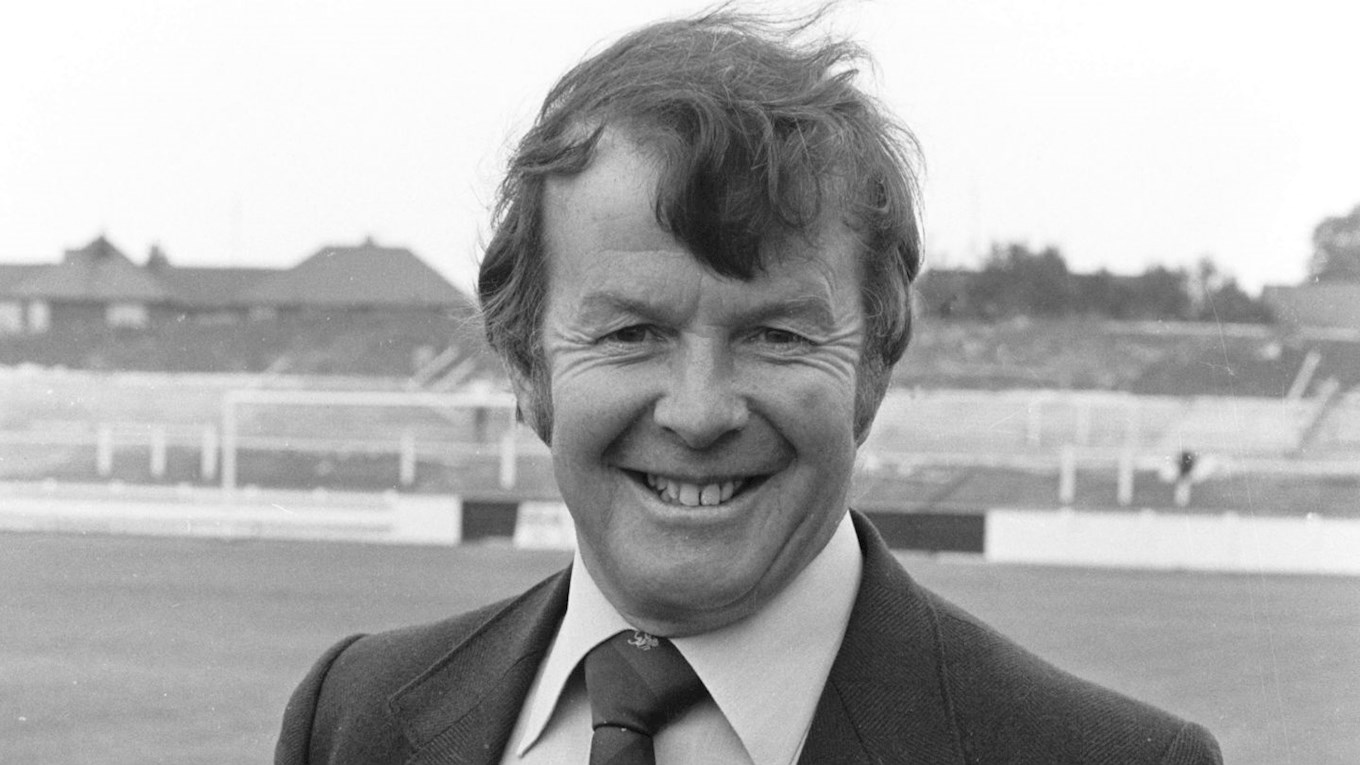
Ian McNeill.
Photo courtesy of Wigan Athletic FC.

Sometimes you receive a jolt that turns your mind towards things that have happened just now and in the distant past. The trip to Scunthorpe was never going to be easy, against a physical side that had only conceded five goals up to that point. All seemed to be going well until Lee Evans was sent off: it was to be the first real low point of the afternoon. But Nick Powell’s opportunism saved the day for Paul Cook’s team, Latics coming away with a 2-1 victory despite playing the final third of the game with ten men.

But the feel-good factor of the three points gained in Lincolnshire was to dissipate soon after when David Sharpe’s tweet announced the passing away of Ian McNeill at the age of 85.

For me McNeill ranks among the best-ever Wigan Athletic managers. Some would say that you cannot compare his achievements with those that came decades later  such as those of Paul Jewell and Roberto Martinez. Jewell got Latics to the Premier League and the League Cup final, Martinez got wins over the biggest clubs in England, including that eventful day at Wembley in 2013. What had McNeill achieved that could place him in a category up there with those two?

Lots has been written about Ian McNeill’s career. He was an inside forward for Aberdeen, Leicester, Brighton and Southend. He went on to spend decades in management, then as a scout in later years. He was manager at Wigan from 1968-70, doing a second spell from 1976-81. His Latics teams were a pleasure to watch as he always seemed to insist that they play the “right” way. Good football was his expectation. He was an expert in scouting out talent, bringing in players who would provide the backbones of teams for years to come.

McNeill was appointed in the summer of 1968 to lead an ambitious Wigan Athletic into the newly formed Northern Premier League. An archaic system was still in place by which the bottom four clubs in Division 4 would apply for re-election, together with non-league aspirants. The Football League was almost a closed shop with clubs playing the “old pals act” by voting for those four clubs.

In the previous eighteen years only two non-league clubs had been elected. The non-league vote had been repeatedly split, with anything up to half a dozen clubs applying each year. However, the creation of a northern super league, composed of the top clubs from the various regional competitions, was a real step forward. Winning such a league would certainly give more kudos than the Cheshire County League, even if it had been the best of the northern regional competitions. Moreover, the prospect of only the winners of the NPL and the Southern League applying for election would make sense. The NPL was to prove key in enabling Wigan Athletic in their quest for a place in the Football League.

The NPL was to comprise 7 clubs from the Cheshire County League, 5 from the Lancashire Combination, 4 from the Midland Counties League, 3 from the Northern Regional League and one from the West Midlands League. Interest in Wigan was high and Latics’ first game at Springfield Park against Ashington was to draw a crowd of 6,721 – the highest home league attendance for 13 years.

Ian McNeill had been managing Ross County, guiding them to their first ever Highland League title. His contacts in Scotland were to prove invaluable and he brought in the likes of David Breen, Benny Cairney, Doug Coutts, Jim Fleming, Jimmy Lynn, Jim Savage and Billy Sutherland. But the most notable of all in McNeill’s squad that year was not a Scot, but an ex-youth player from Arsenal, who had played just three games in the Cheshire League the previous season. Just 19 years old at the time, Ian Gillibrand soon established himself as a regular in the team. Although he lacked height for a central defender, Gilly had an impressive leap and his reading of the game made him look like the non-league version of Bobby Moore. He was to play a further ten seasons at the club, breaking the record for his number of appearances.

McNeill was keen to win the NPL in its inaugural season, but so too were the previous season’s Cheshire League champions, Macclesfield Town. McNeill paid Runcorn a huge £3,000 for Alan Ryan, who had scored a remarkable 66 goals in the previous season. But despite having an excellent record of record of W18 D12 L8, Latics were to finish in second place. Attendances had almost doubled from an average of 1,801 the previous season in the Cheshire League to 3,393.

The following season was an even better one for Latics, with a record of W20 D12 L6, but they were to once again to finish behind Macclesfield, this time on goal difference. Despite doing a great in those two initial NPL seasons McNeill was to leave the club following a disagreement with the chairman. But he left behind a very strong base of players who went on to win the NPL the following season under Gordon Milne.

McNeill re-joined Latics in the summer of 1976. Latics finished in a mid-table position in his first season back, but once again he used his scouting connections to pick up bargains in the transfer market for the 1977-78 season. Latics went on to finish second, but could apply for Football League status because the champions, Boston United, did not have ground facilities up to the required standard. Their election into the Football League in 1978 was a sensation, after 34 years of unsuccessfully applying.

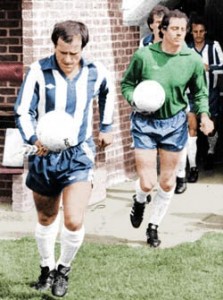
Ian Gillibrand leads Latics out at Hereford.
Thanks to Wigan Athletic Supporters Club for the photo.

The photo of Ian Gillibrand leading Latics out to their first Football League match at Hereford is one that continues to stick in the minds of the more senior supporters. Wigan finished in 6th place in their first two seasons in Division 4, but McNeill left in 1981 when they were to finish in mid-table. He joined Chelsea as assistant manager and was instrumental in bringing in players like Kerry Dixon and David Speedie to the west London club. Wigan replaced McNeill with Larry Lloyd, who was given a level of financial support to which McNeill had not been accustomed. Lloyd built on the firm base provided by McNeill to win promotion in the 1981-82 season.

Ian McNeill will be remembered as the manager who led Wigan Athletic to their inaugural seasons in the Northern Premier League in 1968-69 and the Fourth Division of the Football League in 1978-79. But more than anything else he will be remembered for his positive approach to the game of football.

Paul Cook is in his early days as Wigan Athletic manager. Like McNeill, Jewell and Martinez he will insist that his teams play his brand of football, akin to that nebulous criterion “The Wigan Way”. Cook believes in attacking football and the players are clearly enjoying his positive approach. Promotion back to the Championship is a distinct possibility this season. It is to be hoped that Cook will be given the kind of longevity afforded to his predecessors – McNeill, Jewell and Martinez.

We can only hope that Cook too will become a Wigan Athletic legend as a manager.