I read an article the other day saying that in the 1960s the average tenure for a top flight manager was around four years, a far cry from the modern day when the figure is well below two. Since April 2015 Wigan Athletic have had 12 managers, although the figure does include those who were interim appointments.
Football clubs that are succeeding tend not to replace their managers frequently, but those who are not are doing well will usually ditch their manager in the hope of a new one coming in changing their fortunes. If the new manager does not succeed clubs rarely make thorough investigations into underlying factors that can cause the lack of success, so often repeating the process by making another change at the top. Over the past 25 years Wigan Athletic’s longest-serving managers have been Paul Jewell (6 years) and Roberto Martinez (4 years), both of whom brought honours to a club punching above its weight.
“One can only hope that the Board are shrewd in their appointment. Whoever comes in will have players signed by Maloney on permanent contracts. They were signed to play the possession-based football that Maloney believes in. A shrewd appointment would be to bring in someone who can build on the good things that the Scot did, rather than one with a diametrically opposed philosophy of football.”
Whether Ryan Lowe can build on what Maloney did is open to question. From what we have seen so far, his style of football is hardly akin to that of the Scot. However, there was a faint chance of the club being relegated when Lowe took over and he adopted a “fightball” style of play, grinding out the results that would eventually get them to 15th position.
Most managers have a preferred tactical formation. The most common shape at Wigan in recent years has been 4-2-3-1, with a lone centre forward and an attacking midfielder playing behind him. Although Paul Cook and Leam Richardson were largely popular managers during their tenures there were always fans, particularly those who had witnessed the golden days of the Ellington-Roberts duo, who wanted to see twin strikers. Those fans will be delighted that Lowe likes to play with two central strikers. His preferred formation has been a version 3-1-4-2, with a central midfielder playing deep in front of the defence. He has lacked “natural” wing backs, having to use players more used to playing at full back or on the wing.
Given Lowe’s preferred tactical approach he will need to adjust the balance of the squad. The retained list shows a senior squad of 19 players under permanent contract, but with Steven Sessegnon made available for transfer. Options for another year are triggered for Joe Adams, Tom Watson and Luke Robinson. Matthew Corran, Callum McManaman and Harry McHugh may get extensions on depending on negotiations.
Lowe needs wing backs and more strikers so he will need to move on players his predecessor signed on permanent contracts. Some will leave for low fees or free transfers, others being sent out on loan. Much has been said about the quality of recruitment last summer, but the aim to bring in young players in their early to mid-twenties, with potential sell-on value, was refreshing. For too long the club had been saddled with older, experienced pros on relatively high salaries and long contracts, but with low sell-on values.
Lowe has made it clear that he needs more experience in his squad and that any under-21 players hoping to make the senior team will have to prove themselves worthy in training. He gave the exciting 19 -year-old K’Marni Miller his League 1 debut in the final game against Northampton, commenting “I said I wouldn’t be throwing in people for the sake of it, they’d have to have earned it with the way they handle themselves around the training ground and he’s been first one out and last one in ever since I’ve been here, so he was well worthy of coming on and I was pleased with what he did.” Miller was signed by Maloney last summer from on-league Guiseley.
Ryan Lowe’s appointment has gone down well with the majority of Latics fans. Although one could see the green shoots that suggested Maloney’s side would progress to a higher level with time it was nevertheless a frustrating season for us as fans, watching insipid stuff so often. Lowe’s arrival means yet another change in playing style and the kind of turnover in playing staff that has plagued the club over the past years. However, Lowe is an experienced manager who has a history of producing teams that punch above their weight despite being on modest budgets. One can only hope that he is given the full three years of his contract. Too many managers have been dismissed in an untimely manner over the years rather than being supported through difficult periods. The net result has been instability, with too much turnover not only of managers and coaches, but also of playing staff.
The hope is that over summer Lowe will make the adjustments in the balance of the squad that he feels he needs, but that turnover of playing staff is much reduced in the summer of 2026 and beyond. History has shown us that success is more likely if the manager is given a relatively long tenure.
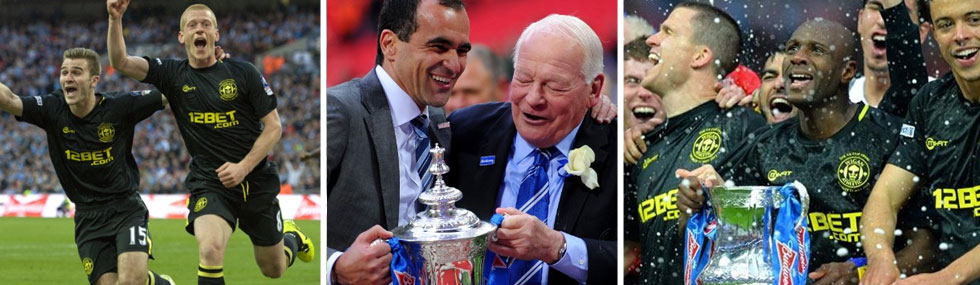
I was gobsmacked when I read the communique on the Wigan Athletic website about Shaun Maloney’s dismissal. My gut reaction was: how can they treat a man so badly, given the huge amount he has done over the last couple of years to keep the club afloat? The stories we have heard about him going way beyond the bounds of his role to help the club he has loved have been so heart-warming. It was a hellish two-year tenure for the FA Cup final hero who came back to help get the football side at the club back on track. He was constantly buffeted and stretched, but maintained a dignity that rose above it all.
The communique did, at least, recognise some of Maloney’s achievements:
“Shaun was appointed Wigan Athletic Manager in January 2023 during what would be an extremely turbulent period in the Club’s history. Whilst he could not prevent the Club’s relegation from the EFL Championship, Shaun ensured that the Club returned to the third tier with fighting spirit.
Furthermore, through a change of ownership in the summer of 2023, Shaun stuck by the Club and helped us overcome an eight-point deduction and a squad overhaul to retain our 2023/24 League One status comfortably with matches to spare.
During his tenure, Shaun and his young team have provided the Club and its supporters with some proud moments, including an Emirates FA Cup Third Round tie with Manchester United, as well as three memorable victories over rivals Bolton Wanderers, just to name a few.
Shaun has also helped develop a number of our young players, some of whom have moved on to further their careers to the mutual benefit of the Football Club.”
The manager’s sudden departure from Wigan Athletic has come at a critical time of the season. Latics sit 6 points above the League 1 relegation zone with 13 matches left. Why did Mike Danson decide to dispense with the service of Maloney and his assistant, Max Rogers, with such odd timing?
It has been a particularly frustrating season for us Latics fans. As can be expected fans’ frustrations have been vented at the manager and the owner of the club. Some of the more vocal fans constantly attacked Maloney’s style of football as being sterile and over-defensive. Others suggested that Danson is a rugby man, unwilling to put the money in to enable the football club to regain its place in the Championship. The distilled view from such fans was that Maloney was not the man to ultimately provide success on the pitch. However, the manager had to shed key players due to Danson’s sustainability focus, replacing them with inferior players on lower salaries, who are just not good enough. Did the unrest among this portion of the fan base contribute to Danson’s decision?
“However, it cannot be overlooked that the current League One campaign has clearly not progressed as anticipated. Home results and performances, in particular, have been disappointing and below the standard at which our supporters expect. For this reason, the Board felt that it was time for a change.” (communique)
Wigan’s home form this season puts them in 17th place in the division with a record of W5D4L8. However, it is the lack of goals this season at “The Brick” that has rankled the fans. In 17 home games they have scored just 16 goals, the lowest in the division. However, they have only conceded 20. So many games this season have been dull and uninspiring, offering minimal entertainment to paying customers.
But then again this was always going to be a transition season, as the budget constraints kicked in. Maloney was forced to bring in bargain basement signings and a host of loan players over the summer. The permanent signings were focused on players in their early 20s whose asset values could increase, given good coaching. The exception was the signing of Will Aimson, an experienced centre back, to replace the outgoing Charlie Hughes. However, there was a need to bring in loan players as has been the custom over previous years. They were all young players in a squad that already lacking experience. In January, Maloney was given the opportunity to jettison some underperforming loan players to bring in experienced loanees, Owen Dale (25) and Ollie Norburn (32). Fees were paid for the experienced Jon Mellish (27), Joe Hungbo (25), Ronan Darcy (24) plus Josh Robinson (20) from Arsenal U21s.
Over the course of the season so far Latics have used 28 players in League 1 matches. Fans expected part of the fees received for the outgoing transfers of Charlie Hughes and Thelo Aasgaard (total around £6m-£7m), to bring in new players. Fees paid out in summer and January have not been disclosed, but can be estimated around £1m-£2m.
The departure of leading scorer Aasgaard was a blow for Maloney and the results from January have been disappointing. However, it has taken time for the new players from January to settle in, although recently the team has started to gel better, with Maloney making less changes in his starting lineups. It was ironic to see Maloney dismissed as he seemed to be making better progress with a hard-fought draw at 2nd placed Wycombe and a first half display against 4th placed Huddersfield that was the best of the season. It was no surprise that their performance was “flat” against the third promotion hopeful, Reading. What was a surprise was the timing of Maloney’s sacking, given the scenario. Was it because the Board already had another candidate lined up to take over at short notice to hopefully guide them to safety?
One can only hope that the Board are shrewd in their appointment. Whoever comes in will have players signed by Maloney on permanent contracts. They were signed to play the possession-based football that Maloney believes in. A shrewd appointment would be to bring in someone who can build on the good things that the Scot did, rather than one with a diametrically opposed philosophy of football.
One can only look back to Dave Whelan’s appointment of “long ball” Owen Coyle to replace Robert Martinez to know how disastrous some recruitment decisions can be.
Dion Rankine had probably his best game so far for Latics against Mansfield. Photo courtesy of Wigan Athletic.
Wide players played an important role in Shaun Maloney’s Wigan Athletic team last season. Martial Godo, Steven Humphrys, Jordan Jones, Callum McManaman and Jonny Smith made a total of 162 league appearances (starting + off the bench) between them, scoring 21 goals.
Over the summer Godo went back to his parent club, Fulham. Humphrys and Jones were offered new contracts but terms could not be agreed. Despite budget restrictions Maloney was able to sign four new wingers over the summer: Maleace Asamoah and Dion Rankine on permanent contracts for relatively small fees, with Michael Olakigbe and Silko Thomas coming in on loan. The average age of the four of them was less than 20.8 years.
After 12 games played in League 1 this season Latics have scored a paltry 10 goals, only Stevenage having scored less (9). However, their defensive record of only 9 conceded is bettered only by Stockport and Wrexham (both 8). Maloney and his coaches have worked hard with the players on their performances “off the ball”. The wingers have certainly played their part in defending, but they have looked muted in attack.
Both Olakigbe and Smith missed several weeks in early season due to injury. Ironically it is the least experienced Thomas, without a previous first team appearance for any club, who has played the most minutes.
Age
Appearances
Starts
Total minutes
Silko Thomas (on loan)
20
10
10
726
Dion Rankine
22
11
9
705
Michael Olakigbe (on loan)
20
6
2
259
Callum McManaman
33
9
2
253
Jonny Smith
27
3
0
84
Maleace Asamoah
21
1
0
19
Thomas was signed on loan from Leicester. A product of the Chelsea Academy he joined the Foxes in the summer of 2023 and played in their U21 side. An inverted winger he has been a regular starter on the left.
Dion Rankine is also a product of the Chelsea Academy. After making 33 appearances on loan at Exeter in League 1 last season, he signed for Latics for a fee reported to be around £300,000. Rankine has been a regular starter as a “natural” right winger.
Michael Olakigbe, born in Nigeria, is a former England youth international who passed through the Fulham and Queens Park Rangers academies. He signed for Brentford in July 2022. Olakigbe made 8 Premier League substitute appearances for the Bees last season before being loaned out to Peterborough in January. He made only two league starts with 8 appearances off the bench for The Posh, his opportunities being hampered by injuries and suspension.
Callum McManaman was a key player last season in his ability to stretch opposition defences in the second half of a game. So often he was able to energise a style of play that was flat, lacking in energy and incisive play. However, he had less impact on matches when he was in the starting lineup. He has only started in two league matches this season, being largely employed as a “impact sub”.
Jonny Smith was dogged by injury last year and has made only three appearances this season. Still only 27, he had played at 7 different clubs before establishing himself at Burton Albion where he played for two and a half seasons, making 77 appearances, scoring 9 goals. At his best he shows lightning pace and can provide a goal threat cutting inside from the right to use his left foot.
Maleace Asamoah was signed from Fleetwood for a small fee. He is the son of former Ghana international Derek Asamoah. A product of the Reading Academy he was at Cheshunt before making a handful of appearances for Kalamata, Olimpiacos Velos and New Salamis in Greece. On his return to England last season, he made two League 1 appearances for Fleetwood before going to Waterford in the League of Ireland where he established himself as a regular starter. Asamoah was clearly signed on potential and has only made one league appearance for Latics this season as a substitute.
Apart from McManaman the other wingers have had less than auspicious starts to the season. In so many games they have seemed static and lacking in dynamism and the willingness to take on opposition defences. What has been the underlying reasons for that?
Maloney’s critics would say that his constant rotation of players between and during games has meant that only Sam Tickle and the two centre backs, Will Aimson and Jason Kerr, have played the regular 90+ minutes. Partnerships between individuals have not developed as they might have. The net result has been a conservative, static way of play where the ball is constantly played to feet rather than into space.
Silko Thomas is a young player who plays with enthusiasm and works hard for the team. In the Mansfield game he once again received the ball with a defender tightly marking him. The net result was Thomas making a 30-yard pass back to the defence which indirectly led to a Mansfield goal. Dion Rankine too has struggled to breach opposition defences. However, Rankine has his best game this season because the ball was more frequently placed into space for him to run on to. In previous games the norm was for him to receive the ball to feet or even behind him.
Of the six wingers in the senior squad only Jonny Smith is a natural left footer and he is employed as an inverted role. Over the course of the season so far it would not be ridiculous to suggest that Wigan’s most effective wide attacker has been the left full back, Luke Chambers. The injury to Chambers is a hammer blow for Maloney, having not only so often been the only left-footer on the pitch but in his all-round play.
The understanding between full backs and wingers is crucial in developing plays along the flanks. The interplay between the two can help unlock tight defences. Unlike Chambers, James Carragher does not have the range of attacking skills possessed by a specialist full back like Chambers. Playing Carragher at right back has certainly helped the defence. He is good in the air and reads the game well. Carragher has done so well overcoming injury and establishing himself as a senior squad player. However, playing a natural central defender at full back is not helping the attack, the right winger in particular.
The bottom line is that Latics’ passing this season has so often been predictable with players making the easy pass to feet rather than playing “sin miedo” by putting it into space for a teammate to run on to. The ability to receive the ball in tight situations is a key part of the game, but in Wigan’s case it so infrequently has led to the ball moving forward, the necessary support play being lacking.
Players have suffered from the lack of imagination and vision in the team’s passing. The wingers have been particularly hard done by. If they are to be more effective, they need to work in tandem with the full backs, both offensively and defensively. Up to this point they have been more successful in the latter area.
We have seen so many awful performances over the years from Latics in the EFL Trophy. What we saw on Tuesday night ranks among the most frustrating of them. The opponents, Morecambe, had not won a competitive match in Wigan since 1963 and currently lie in 24th position in League 2 with zero points and zero goals scored in their first four matches. A 2-1 win was a wonderful result for them.
The post-match reaction from Wigan Athletic fans, who saw the game either at the ground or on television, was in most cases, predictably damning.
The EFL Trophy competition first started in 1981. Apart from the closing stages, particularly a Wembley final, attendances are woefully low. The attendance of 1,702 and adult admission at £5 per head for this game would hardly have sufficed in covering the expenses incurred in opening up the Brick Community Stadium for the game. Why does the competition continue to run in such an overcrowded calendar in Leagues 1 and 2?
Last season competing clubs received a £20,000 participation fee, plus £10,000 per victory and £5,000 per draw in the group stage, and increasing prizes for the knockout matches up to £100,000 for winning the final. Wigan Athletic won it in 1985 and 1999. Some clubs are more serious than others about reaching the later stages , with a showcase final at Wembley. But for all it provides an opportunity to test out younger players in a sterner scenario than that of U21 football.
Like other clubs Wigan Athletic usually field weakened lineups in the early stages of the competition. Shaun Maloney had made seven changes from the lineup that started at Birmingham. Latics dominated play with 80%+ possession, but could not put away their chances, other than the penalty scored by Joe Hugill. Morecambe’s goals came from a breakaway with Wigan players caught up field in disarray, together with an error from Toby Sibbick, gifting the away side with a goalscoring opportunity.
It has been a difficult start to the season for Latics with one win in six including this game. Football managers are judged by results and it is no surprise that Shaun Maloney’s tactical approach has been under attack. Moreover, many fans consider that the comings and goings over the summer have left the manager with a disjointed squad lacking in experience and striking power up front. The football on display has so often been painfully slow, offering poor entertainment for the paying spectators.
Mike Danson saved the club from extinction in June 2023, paying off a £17m debt, followed by supporting a bloated budget last season with underperforming players remaining on long term contracts with inflated salaries. This year’s budget is reputed to be around £3.6m: mid-table as far as League 1 is concerned. But even then, with such a budget the only way the club will make a profit is through more transfer money coming in than going out.
Even in the heady days of Dave Whelan’s sponsorship Latics were always going to sell if the right bid were to come in for a player. Charlie Hughes’ transfer to Hull City was a body-blow to the fans, even though it was seemingly inevitable. When the transfer was completed, fans called for Mike Danson to reinvest the money in the squad. A portion of that cash was allotted to the recruitment team who used it to sign Jensen Weir and Maleace Asamoah. Prior to Hughes’ departure Latics had already shelled a figure probably around £850,000 for the signings of Will Aimson, Dion Rankine and Toby Sibbick. A small fee was most likely involved in the transfer of Sean Clare to Leyton Orient, but at least £1m has likely been spent on transfer fees over summer.
The recruitment policy over summer was largely based on finding young players with potential. Too often in the past experienced players were brought in on relatively high salaries who had minimal sell-on value. Summer recruitment was looking at the long-term and the only players aged 30 or over to be signed were Paul Aimson and goalkeeping/player-coach, Andy Lonergan.
However, with a poor start of the season we have not seen new recruits at their best and some are sceptical whether they are ample replacements for the six senior squad players who have departed as free agents. Latics did offer a new contract to Jordan Jones, but were unable to agree terms. However, neither he nor Ben Amos, Stephen Humphrys, Josh Magennis, Tom Pearce or Charlie Wyke were regulars in the starting lineups for league matches over the course of the season. Humphrys made the most starts (23), Ben Amos none.
An important factor in summer recruitment was that all the new signings had prior experience in the EFL, SPL, or overseas leagues. Four were signed from clubs in the EPL and two from League 1 clubs.
Port Vale, Blackpool, Morecambe, Cambridge U, Brighton, Wigan
All six of the loan signings were signed from Premier League clubs. They are particularly young: five of them are 20 years old, Calvin Ramsay being 21. All have previously played on loan in the EFL with the exception of Silko Thomas. Dale Taylor is the most experienced, having 62 EFL appearances at Wycombe Wanderers and Burton Albion, although still only 20.
There has been a reduction in the average age within the senior squad over the summer. Jason Kerr and Jonny Smith are 27, Will Aimson 30, Callum McManaman 33. The remainder of the squad are less than 25 years old.
The low proportion of highly experienced pros in the squad is a concern cited by many fans. But there is also considerable concern about the changes in the coaching staff over summer. Losing both Graham Barrow and Stephen Crainey was a huge blow for Maloney. Not only does he have major changes in his playing squad, but also in his coaching support. The manager faces a difficult period with a relative lack of experience in both areas.
Maloney has been looking to sign players who can fit into his preferred style of play. Given financial constraints he has missed out on a range of players who could have added quality to his squad. Moreover, the new players coming in have been met by a much-changed coaching team. Fan concerns focus not only on the quality of the new players who have come into the squad, but also their ability to adapt to the style of football the manager prefers to play.
The fan reaction to a poor start of the season has been strong. Some call for the manager’s head. Others express their concerns about the static, repetitive nature of the football offered up to this point. So many sideways and backwards passes, a lack of tempo in the play, too many players preferring to pass the buck rather than take a risk and go forward. Others cite the lack of a combative midfielder in the style of Sam Morsy and a centre forward who can consistently challenge the central defenders, hold the ball up and be a danger from set pieces.
Chairman, Ben Goodburn, put out a welcome communique to fans yesterday, stating:
“On the field, we’ve shown real promise with strong performances against Charlton Athletic, and most recently, Birmingham City. While the results haven’t always matched our positive displays, I believe we are heading in the right direction. The performance against Morecambe wasn’t what Shaun or his staff wanted to see, but I am confident the hard work and determination of the players and coaching staff will pay off as we continue through the season. “
As always, when results are not going well, there is pressure on the manager and his staff to improve them. There is a long season ahead, with time for the team to gel and play the to the level of football that Maloney seeks. The manager perhaps shot himself in the foot by suggesting that a club with an average budget could reach the playoffs at the end of the season. However, he cannot be faulted for his ambition and what he has done for the club since he took over.
Despite so much sterile football during Maloney’s reign, with so few players being “brave on the ball”, there have been flashes of excellence. He and his coaches must insist that all players take full responsibility for the football on display and make it more dynamic. This is not to suggest that we go back to the long ball game that was preferred by previous management, which is outmoded these days. “Bravery on the ball” is what is paramount to improvement and must be stressed.
For the near future Maloney must take a more pragmatic approach to his style of play. Seeing too many players struggling to adapt to his tactical variations it would be wise to simplify his systems of play. Inverting the full backs might work with a start-studded Guardiola team, but has not worked too well up to this point with lower league players. Put it on the back-burner and keep things simple. When that system does not work and possession is lost it leads to chaos at the back.
Mike Danson has been a terrific custodian for the club during his brief time as owner. There is no lack of ambition, but he is not willing to put the club in severe financial jeopardy, as previous owners have done. There is a brave, bold long-term recruitment plan that can serve to guarantee the club’s future sustainability. Yes, there is a relative shortage of senior pros in the squad, but how many of those in the past became a financial millstone round the club’s necks?
Despite the club’s considerable debts Danson provided Maloney with funds to sign new players over summer. It is a sign of faith in a manager who deserves it for what he has done and will continue to do at the club. Danson will continue to back Maloney, History has shown that changes of manager at Wigan during the course of a season can have disastrous effects.
In the meantime, Maloney needs the full backing of his coaches to ensure that his brand of possession football develops in a more positive way, with players playing “sin miedo”, playing as a unit where the whole becomes greater than the sum of the parts.
The low proportion of highly experienced pros in the squad is a concern cited by many fans. But there is also considerable concern about the changes in the coaching staff over summer. Losing both Graham Barrow and Stephen Crainey was a blow for Maloney. Not only does he have major changes in his playing squad, but also in his coaching support. The manager faces a difficult period with a relative lack of experience in both areas.
Maloney has clearly been looking to sign players who can fit into his preferred style of play. Given financial constraints he will have certainly missed out on a range of players who could have added more quality to his squad. Moreover, the new players coming in have been met by a much-changed coaching team. Fan concerns focus not only on the quality of the new players who have come into the squad, but also their ability to adapt to the style of football the manager prefers to play.
The fan reaction to a poor start of the season has been strong. Some call for the manager’s head. Others express their concerns about the static, repetitive nature of the football offered up to this point. So many sideways and backwards passes, a lack of tempo in the play, too many players preferring to pass the buck rather than take a risk and go forward. Others cite the lack of a combative midfielder in the style of Sam Morsy and a centre forward who can consistently challenge the central defenders, hold the ball up and be a danger from set pieces.
Chairman, Ben Woodburn, put out a welcome communique to fans today stating:
“On the field, we’ve shown real promise with strong performances against Charlton Athletic, and most recently, Birmingham City. While the results haven’t always matched our positive displays, I believe we are heading in the right direction. The performance against Morecambe wasn’t what Shaun or his staff wanted to see, but I am confident the hard work and determination of the players and coaching staff will pay off as we continue through the season. “
As always, when results are not going well, there is pressure on the manager and his staff to improve them. There is a long season ahead, with time for the team to gel and play the to the level of football that Maloney seeks. The manager possibly shot himself in the foot by suggesting that a club with an average budget could reach the playoffs at the end of the season. However, he cannot be faulted for his ambition and what he has done for the club since he took over.
Despite so much sterile football during Maloney’s reign, with so few players being “brave on the ball”, there have been flashes of excellence. He and his coaches must insist that all players take full responsibility for the football on display and make it more dynamic. This is not to suggest that we go back to the long ball game that was preferred by previous management, which is outmoded these days. “Bravery on the ball” is paramount to improvement and must be stressed.
For the near future Maloney needs to take a more pragmatic approach to his style of play. Seeing too many players struggling to adapt to his tactical variations it would be wise to simplify his systems of play. Inverting the full backs might work with a start-studded Guardiola team, but has not worked so well up to this point with lower league players. Put it on the back-burner and keep things simple. When that system does not work and possession is lost it leads to chaos at the back.
Mike Danson has been a terrific custodian for the club during his brief time as owner. There is no lack of ambition, but he is not willing to put the club in severe financial jeopardy, as previous owners have done. There is a brave, bold long-term recruitment plan that can serve to guarantee the club’s future sustainability. Yes, there is a relative shortage of senior pros in the squad, but how many of those in the past became a financial millstone round the club’s necks?
Despite the club’s considerable debts Danson provided Maloney with funds to sign new players over summer. It is a sign of faith in a manager who deserves it for what he has done and will continue to do at the club. Danson will continue to back Maloney, History has shown that changes of manager at Wigan during the course of a season can have disastrous effects.
In the meantime, Maloney needs the full backing of his coaches to ensure that his brand of possession football develops in a more positive way, with players playing “sin miedo”, playing as a unit where the whole becomes greater than the sum of the parts.
Matt Smith: a key player in “Maloneyball” (photo courtesy of Wigan Athtletic)
“We’ve pushed really hard to get him and he’s very important to how we are looking to play this year”
It was Shaun Maloney commenting on signing Matt Smith on a free transfer from Arsenal.
The 23-year-old Smith was hardly a “marquee signing”, having spent the past three seasons on loan at Swindon, Charlton and Doncaster. But he had been at Arsenal since he was seven and was steeped in the footballing style of the north London club. Why is Smith so important to the way Maloney wants his team to play this season?
Wigan Athletic’s early season form was a revelation. It was characterised by a possession-based style of football diametrically opposed to the long-ball approach that had been the norm over the past five years at the club. In true “Maloneyball” players get lots of touches of the ball, being required to create space for themselves in order to receive it. It is a purposeful style of football, based upon opening up the opposition, rather than merely retaining possession for possession’s sake.
Matt Smith played a pivotal role in excellent team performances in August. He constantly made himself available in tight situations, to receive the ball from defenders, rarely wasting a pass. Latics gained 10 points from their first four games in League 1, including wins at Bolton and Derby, both among the bookmakers’ favourites for promotion.
After a series of outstanding performances in August, Smith’s form dwindled. He was not able to stamp the same kind of authority on the play. In the first week of October Maloney revealed that Smith had been playing through pain caused by a hernia injury. He would receive surgery and would be out of action for up to six weeks.
The manager added:” I don’t know how these injuries happened; he was wrestling with his stomach. He was the ideal type of No. 6 or No. 8 I needed this summer, as seen by his performances against Derby, Carlisle, and Bolton.” Maloney also stated his expectation that other players would step up to cover Smith’s absence.
Sadly, Latics’ performances and results have taken a dive since August. They have lost their last four league games and the 8-point deduction means that they are in 23rd place with 5 points. Dire refereeing has played its part in the decline: controversial red cards and penalty decisions have hit Latics hard. The low point of the season was a 4-1 defeat at Bristol Rovers, followed by narrow defeats to Portsmouth, Burton Albion and Stevenage.
The praise that Maloney was receiving from fans in August has now veered towards heavy criticism as the results have nosedived. Among the many complaints are those that there seems little method in the way the team has been playing, a far cry from early in the season where the style of play was well-defined and the players clearly knew their roles. Team selection has also come under fire, some saying there has been too much squad rotation. The midfield, which was excellent in early season, has not provided sufficient protection for the defence, nor has it linked up well with the attack. It needs a hard man in the style of Sam Morsy in midfield. There have been too many changes in defence in particular. The inverted full back system has limited the attacking scope of the full backs. Maloney has been too loyal to some players over others. The cynics say that Maloney does not know his best starting X1.
At the start of the season Maloney named Josh Magennis as club captain and Callum Lang as vice-captain. Charlie Wyke has established himself as the first-choice centre forward, with Magennis as back up. Lang had an awful time last season in the Championship and his nightmare has continued in League 1, where the player had excelled a couple of seasons ago. Despite his woeful form Lang has featured in all 11 league games, in the majority of which he was a starter. The manager has continued to believe in the player, but with capable backups in the squad his preference for Lang has been questionable. Magennis has neither the goal scoring talent of Wyke, nor his ability to play as the target man role. With Wyke suspended, Maloney started the game at Burton with with a front three of Lang (one goal in his last 46 league games), Magennis (one goal in 44 league games) and Callum McManaman who scored a great goal against Northampton, but was never a prolific goal scorer.
With the international break Maloney has been afforded time to ponder over his options. Team selections and tactics have to be right. With Wyke suspended he has the option of playing Steven Humphrys at centre forward or to give the 19-year-old Josh Stones a league debut. Without Matt Smith we can expect less inter-passing between defence and midfield, unless Liam Shaw can play such a role. It is important to have a consistency in the centre of defence. Charlie Hughes will start, but who will play alongside him? Liam Morrison was excellent in early season, but has fallen out of favour. Omar Rekik and Kell Watts have been disappointing, although the former has had to play at full back at times. Lang has been mainly playing in the number 10 role, putting in lots of energy, but with close to zero end-product. Thelo Aasgaard is a natural number 10 but has been very disappointing so far. Humphrys might also be tried there.
Ideally Maloney would have Latics play that brand of football we saw in August, but Latics are in a relegation dog fight. Perhaps when Matt Smith returns to action, they will be in a healthier position to revert to that silky football we saw at the start of the season. Smith’s injury certainly had an effect on performances but it is not the sole reason that Latics have fallen down the table.
Maloney is still a relatively inexperienced football manager, but he is bright and talented and has shown real commitment towards the club. He has a young squad, operating on a quarter of the budget of last season. There is sufficient talent in the squad for Latics to avoid relegation and establish themselves in the division. Such is the youth of this squad that we can expect ups and downs along the road. It could be a bumpy ride until the season ends.



 LOS THREE AMIGOS