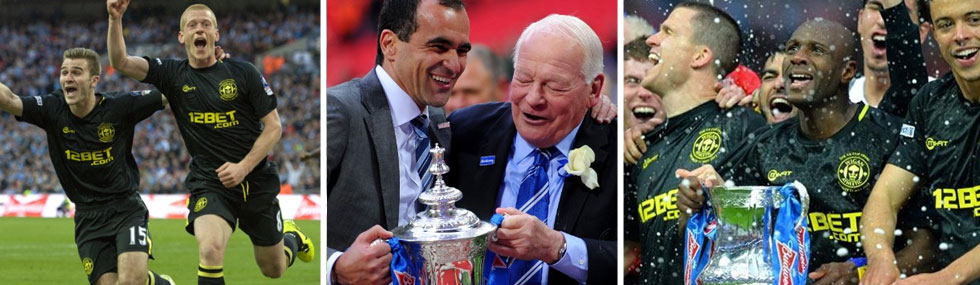
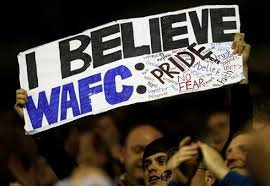
Time to “Believe” Again? Wigan Athletic, loyalty and the road ahead.

Photo courtesy of fansonline.net

“I’m not sure I’ll renew my season ticket this year.”

It’s a sentence quite a few Latics supporters have uttered over the past few weeks.

Some will have said it after another disappointing season. Others because the uncertainty surrounding the proposed sale of the club makes it difficult to know what the future holds.

For many, it’s simply the feeling that, after years of stability, progress has stalled. We’ve waited patiently for signs that the club is ready to move forward again, but the next step has proved frustratingly elusive.

Whether everyone who voices those doubts actually follows through is another matter.

Football supporters are emotional. The disappointment of May has a habit of giving way to the optimism of July. A couple of encouraging signings, a decent pre-season performance and suddenly the fixture list can’t arrive quickly enough.

But the debate itself matters.

Not simply because of the money.

Because of what it represents.

Whenever I hear those words, “I’m not sure I’ll renew,” I find myself thinking about someone who walked through the turnstiles for Latics’ very first league match in 1932.

Latics’ team for their debut match in 1932 against Port Vale Reserves,
Thanks to Ron Hunt and WiganWorld for photo.

I’ll come back to him later.

More Than a Season Ticket

A season ticket/card is far more than a guaranteed seat for twenty-three home league matches. It represents a commitment to the club and a belief that, despite the frustrations, the journey is still worth taking. For many supporters, renewing isn’t simply buying football. It’s saying,

“This is still my club.”

From the club’s perspective, season ticket holders remain its financial backbone. They provide guaranteed income before the season begins, create the atmosphere that makes the Brick Community Stadium feel like home and continue to support the club throughout the year by buying food, drink and merchandise.

Supporters living further afield, some overseas, continue to play their part too. Many still buy shirts, follow every development and renew their Latics TV subscriptions because distance has never diminished their affection for the club. Their loyalty is every bit as genuine, even if season tickets remain the club’s single biggest source of supporter income.

Unlike pay-on-the-day receipts, season ticket money arrives before a ball has been kicked. It gives the club certainty, improves cash flow and allows budgets to be planned with greater confidence. No manager signs a player because one extra season ticket has been sold, but a successful renewal campaign gives the club a stronger financial platform from which to operate.

The loss of a few hundred renewals would not threaten the club’s future.

The loss of confidence behind those renewals would be far more significant.

Every season ticket sends a message to the club, potential investors and prospective sponsors:

The supporters still believe.

A Loyalty Few Clubs Can Match

That belief is easy to overlook because, like so many things in football, we quickly start taking it for granted.

Think back over the last decade.

Administration, ownership crises, points deductions, relegations, a succession of managers and years spent in League One have tested the patience and loyalty of every supporter. Many clubs would have watched their crowds steadily decline under those circumstances.

Latics haven’t.

To continue attracting around 10,000 supporters after everything the club has endured is no small achievement. It says far more about the people in the stands than it does about league tables.

We often describe the academy, the training ground and the continued use of a 25,000 capacity = stadium as the club’s greatest assets.

Perhaps we’ve been overlooking another one.

The supporters themselves.

That loyalty deserves appreciation, but it also deserves progress.

Where It All Began

The supporter I mentioned earlier was my father.

Regular readers may remember an article I wrote some years ago about him.

His first Latics match wasn’t simply his first game; it was the club’s first ever league fixture in 1932.

From that afternoon onwards he followed Wigan Athletic for the rest of his life. Without ever intending to, he ensured that I would do exactly the same.
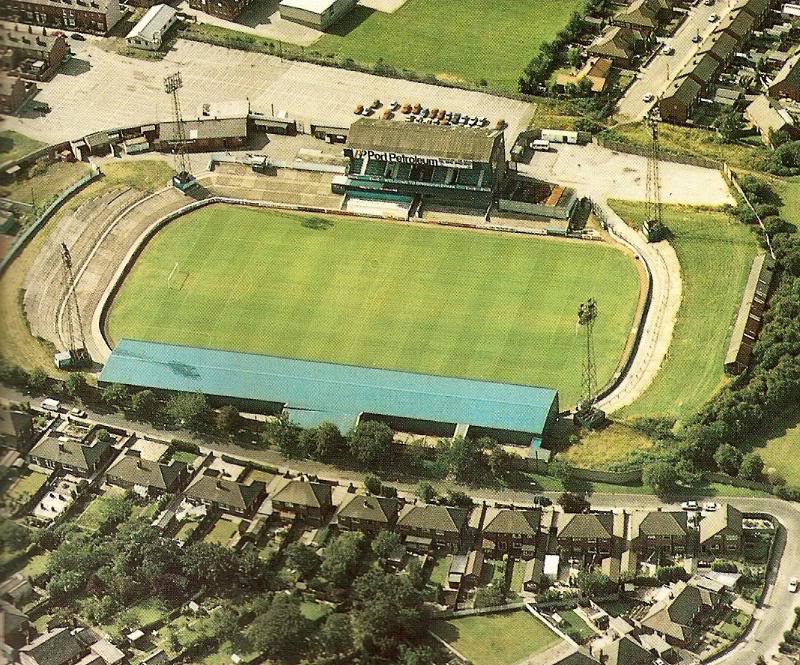
My own earliest memories are from Springfield Park in the early 1960s. They aren’t dominated by league tables or results. They are filled with the atmosphere that surrounded a Saturday afternoon. The smell of meat pies drifting across the ground. The marching band before kick-off. Standing in the paddock waiting for the familiar clip-clop of the players’ boots as they emerged from the tunnel. Even the unmistakable smell of oil of wintergreen as the players came out of the tunnel on to the pitch.

Those memories have stayed with me for more than sixty years.

I can still remember discussing the team with my dad before kick-off. Would Johnny Ball pick the experienced Peter Higham or the young Harry Lyon at centre forward? At the time it felt like the biggest decision in football. Looking back, the conversation itself mattered far more than who actually wore the number nine shirt.

The result of those matches has largely faded from memory.

Those afternoons never have.

Perhaps that’s what football really gives us. Not just results or league tables, but memories that become woven into our lives. Somewhere along the way the club stops being something we watch and becomes part of who we are.

Supporting Latics has never been the easy option.

Hope has always been part of the deal.

From Survival to Sustainability

When Mike Danson took control, the priority wasn’t promotion.

It was survival.

Without financial stability, nothing else mattered.

Since then, he has advanced around £30 million to keep Latics operating, funding the losses that are common throughout League One.

Crucially, that funding has come from the owner rather than banks or commercial lenders.

That distinction matters. Bank borrowing comes with interest, repayment schedules and pressure. Owner funding has provided breathing space while the club rebuilt and has allowed Latics to emerge from years of financial uncertainty.

Of course, those loans don’t simply disappear. Any future sale will inevitably involve discussions about how they are treated. Add to that the fact that Mike Danson also owns the Brick Community Stadium and it becomes clear why selling the club is more complicated than many supporters appreciate. Modern football increasingly relies on hospitality, conferencing and other non-matchday income, making the relationship between club and stadium an important part of any investment.

None of this makes Latics unattractive.

It simply makes them more complex.

The important point is that the conversation has changed. Not long ago supporters were wondering whether the club would survive.

Today we’re asking how it can grow.

That is progress

The Next Step

Growth, however, isn’t just about what happens between three o’clock and five o’clock on a Saturday afternoon.

Winning football matches will always be the biggest driver of attendances, commercial income and optimism. Nothing replaces success on the pitch.

But football has changed dramatically over the last two decades. Clubs are no longer judged solely by league position. They are media businesses, community organisations and brands. The most successful clubs build relationships with supporters every day of the week, not just on matchdays.

Commercial income has become increasingly important. Sponsorship, hospitality, conferencing, retail, digital advertising, partnerships with local businesses and community events all contribute to a club’s financial strength. Every additional pound earned commercially is another pound that can be invested in the football operation.

Success undoubtedly makes that easier.

But it’s not the whole story.

A club’s image matters too.

Potential sponsors want to be associated with organisations that are visible, ambitious and professionally presented. Supporters want to feel connected. Prospective investors look for evidence of momentum both on and off the pitch. In today’s football world, a strong digital presence has become almost as important as the experience inside the stadium.

This is one area where many supporters feel Latics still have room to improve.

That isn’t meant as criticism of the staff, many of whom may work incredibly hard with limited resources. Rather, it reflects how expectations have changed. Modern supporters expect behind-the-scenes content, academy features, player interviews, podcasts, videos and stories that keep them engaged throughout the week.

These things don’t replace winning football.

They reinforce it.

Every engaging video, every well-told story, every community initiative that is properly promoted strengthens the club’s reputation. It gives sponsors greater value, encourages businesses to become involved and reminds potential investors that this is a club moving forward.

Football clubs don’t just build financial capital.

They build reputational capital too.

That reputation takes years to create, but it can become one of a club’s greatest assets.

Reasons to Believe

It is easy, particularly after a disappointing season, to focus on what Latics lack.

Sometimes it’s worth reminding ourselves what the club already has.

  • The use of a modern stadium and a more than adequate training ground.
  • A productive academy.
  • An FA Cup-winning history and eight seasons in the Premier League
  • A loyal supporter base that many League One clubs would envy.
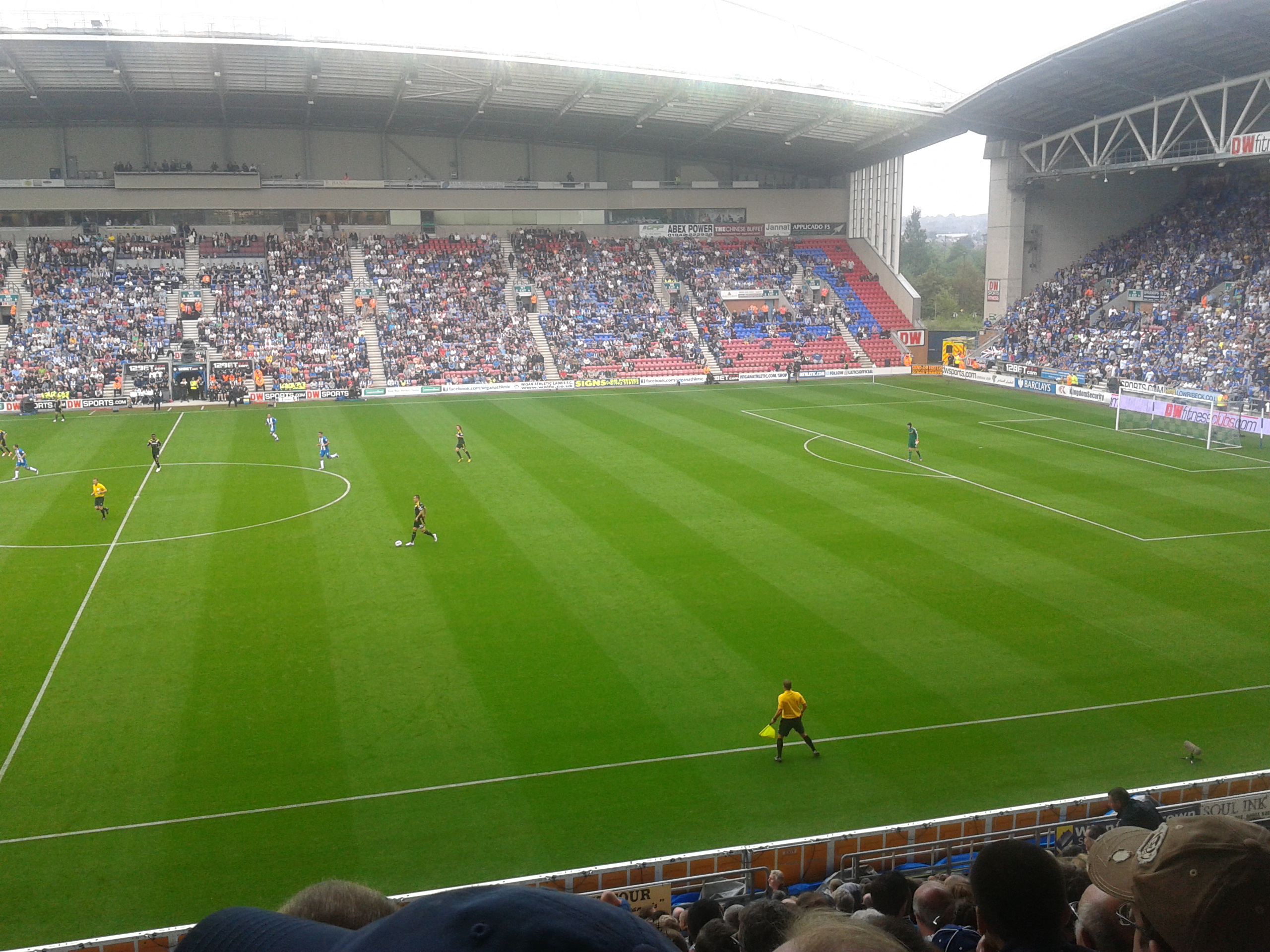
Those are solid foundations.

The challenge now is building upon them.

The Choice

Every supporter will make their own decision this summer.

Some won’t renew. Many who currently say they won’t probably will.

That’s football.

No one should feel guilty for making the decision that is right for them or their family. Football has become an expensive pastime, and supporters are entitled to expect value for their money.

But perhaps this year’s decision is about more than buying another season ticket.

Perhaps it’s about recognising that, after years spent securing the club’s future, the next chapter must be about fulfilling its potential.

Promotion will depend on the players, recruitment and good decisions in the boardroom. Commercial growth will depend on ambition, imagination and presenting Latics as the progressive football club we all know it can become.

But every successful chapter in the club’s history has begun with supporters who believed before everyone else did.

When my father walked through the turnstiles for Latics’ first ever Football League match in 1932, he couldn’t possibly have imagined where the journey would lead. Promotions and relegations. Springfield Park and the Brick Community Stadium. The Premier League. Wembley. The greatest day in the club’s history. Administration. Survival. Recovery.

Through all of it, I have never stopped believing there would be another season worth looking forward to.

Looking back, I realise that some of my happiest memories were never just about the football. They were about Saturday afternoons spent with my dad, sharing hopes, disappointments and conversations that have stayed with me for a lifetime.

The scorelines have blurred.

Those memories never have.

Perhaps that’s why supporting Latics has never been just about results.

It’s about belonging.

A season ticket doesn’t guarantee promotion.

It doesn’t even guarantee a good season.

What it represents is hope.

The future isn’t guaranteed.

It never has been.

But for the first time in a long while, there are genuine reasons to look forward.

Perhaps it’s time to “believe” again
Matt Smith’s Return: Boosting Wigan Athletic’s Midfield Options

Photo courtesy of Wigan Athletic

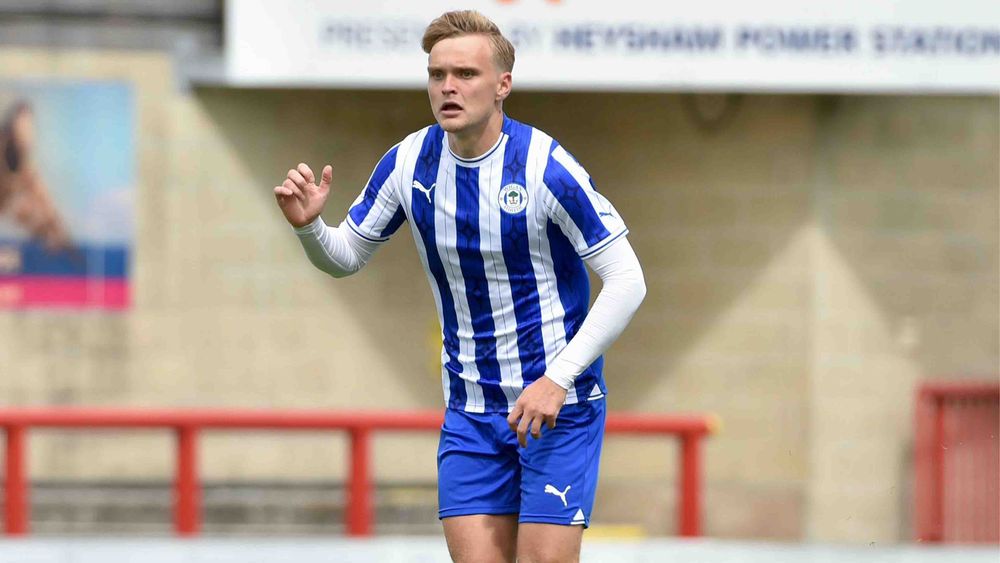
Matt Smith was a key player in Shaun Maloney’s tenure as Wigan Athletic manager. If any player was almost irreplaceable in the Latics legend’s system, it was he. Maloney favoured a brand of possession football where moves are patiently built up from the back. Smith played the role of pivot in front of the central defenders, providing both extra defensive stability and creativity going forward. His serious hamstring injury near the end of December was a hammer blow to a manager who was struggling to impose his style of play on a young squad.

The Maloney era was one which helped stabilise a club that had come so close to going out of existence. The Scot had to operate on a much-reduced budget than his predecessors and aim towards making the club sustainable though the development of young players. Sadly, he is largely remembered for lacklustre home displays last season that provided scant entertainment for the fans. However, there were moments in his two-year spell where it looked like the manager’s vision might eventually come to fruition. Matt Smith was the catalyst who enabled those glimpses of skilful, flowing football.

Smith is still only 24 years old. An ex-Arsenal youth and under-21 team captain, he spent loan spells at Charlton, Swindon and Doncaster before Maloney signed him on a free transfer in July 2023. Although Maloney used him solely in the pivot role, he had shown himself to be an all-round midfielder in his Gunners days where he notched 7 goals and 22 assists in 94 appearances for the Gunners age group teams  His attacking skills were also prominent in his stay at Doncaster.

In last night’s League Cup victory over Stockport County, he was employed in the #6 role in front of the defence, Baba Adeeko and Tobias Brenan playing further forward as #8s. However, Tyrese Francois has looked comfortable this season in the #6 role, which is also Adeeko’s best position. It leaves Ryan Lowe with options on how to utilise his midfielders. Both Smith and Francois have the skills necessary to play the #8 position. Adeeko’s strength lies in his ability to close down the opposition and protect the defence. Creativity is not his forte.

The return of Matt Smith was a welcome sight last night. Latics fans have not seen enough of him in his two years at the club.  A groin injury in his first season and hamstring injury in his second meant that he has was available for selection for only half the time he has been at the club. Providing he can stay fit he can play a major role in Ryan Lowe’s plans.  

Wigan Athletic: what profile of manager is needed to take Shaun Maloney’s legacy forward?

I was gobsmacked when I read the communique on the Wigan Athletic website about Shaun Maloney’s dismissal. My gut reaction was: how can they treat a man so badly, given the huge amount he has done over the last couple of years to keep the club afloat? The stories we have heard about him going way beyond the bounds of his role to help the club he has loved have been so heart-warming. It was a hellish two-year tenure for the FA Cup final hero who came back to help get the football side at the club back on track. He was constantly buffeted and stretched, but maintained a dignity that rose above it all.

The communique did, at least, recognise some of Maloney’s achievements:

“Shaun was appointed Wigan Athletic Manager in January 2023 during what would be an extremely turbulent period in the Club’s history. Whilst he could not prevent the Club’s relegation from the EFL Championship, Shaun ensured that the Club returned to the third tier with fighting spirit.

Furthermore, through a change of ownership in the summer of 2023, Shaun stuck by the Club and helped us overcome an eight-point deduction and a squad overhaul to retain our 2023/24 League One status comfortably with matches to spare.

During his tenure, Shaun and his young team have provided the Club and its supporters with some proud moments, including an Emirates FA Cup Third Round tie with Manchester United, as well as three memorable victories over rivals Bolton Wanderers, just to name a few.

Shaun has also helped develop a number of our young players, some of whom have moved on to further their careers to the mutual benefit of the Football Club.”

The manager’s sudden departure from Wigan Athletic has come at a critical time of the season. Latics sit 6 points above the League 1 relegation zone with 13 matches left. Why did Mike Danson decide to dispense with the service of Maloney and his assistant, Max Rogers, with such odd timing?

It has been a particularly frustrating season for us Latics fans. As can be expected fans’ frustrations have been vented at the manager and the owner of the club. Some of the more vocal fans constantly attacked Maloney’s style of football as being sterile and over-defensive. Others suggested that Danson is a rugby man, unwilling to put the money in to enable the football club to regain its place in the Championship.  The distilled view from such fans was that Maloney was not the man to ultimately provide success on the pitch. However, the manager had to shed key players due to Danson’s sustainability focus, replacing them with inferior players on lower salaries, who are just not good enough. Did the unrest among this portion of the fan base contribute to Danson’s decision?

“However, it cannot be overlooked that the current League One campaign has clearly not progressed as anticipated. Home results and performances, in particular, have been disappointing and below the standard at which our supporters expect. For this reason, the Board felt that it was time for a change.” (communique)

Wigan’s home form this season puts them in 17th place in the division with a record of W5D4L8. However, it is the lack of goals this season at “The Brick” that has rankled the fans. In 17 home games they have scored just 16 goals, the lowest in the division. However, they have only conceded 20. So many games this season have been dull and uninspiring, offering minimal entertainment to paying customers.

But then again this was always going to be a transition season, as the budget constraints kicked in. Maloney was forced to bring in bargain basement signings and a host of loan players over the summer. The permanent signings were focused on players in their early 20s whose asset values could increase, given good coaching. The exception was the signing of Will Aimson, an experienced centre back, to replace the outgoing Charlie Hughes. However, there was a need to bring in loan players as has been the custom over previous years. They were all young players in a squad that already lacking experience. In January, Maloney was given the opportunity to jettison some underperforming loan players to bring in experienced loanees, Owen Dale (25) and Ollie Norburn (32). Fees were paid for the experienced Jon Mellish (27), Joe Hungbo (25), Ronan Darcy (24) plus Josh Robinson (20) from Arsenal U21s.

Over the course of the season so far Latics have used 28 players in League 1 matches.  Fans expected part of the fees received for the outgoing transfers of Charlie Hughes and Thelo Aasgaard (total around £6m-£7m), to bring in new players. Fees paid out in summer and January have not been disclosed, but can be estimated around £1m-£2m.

The departure of leading scorer Aasgaard was a blow for Maloney and the results from January have been disappointing. However, it has taken time for the new players from January to settle in, although recently the team has started to gel better, with Maloney making less changes in his starting lineups. It was ironic to see Maloney dismissed as he seemed to be making better progress with a hard-fought draw at 2nd placed Wycombe and a first half display against 4th placed Huddersfield that was the best of the season. It was no surprise that their performance was “flat” against the third promotion hopeful, Reading. What was a surprise was the timing of Maloney’s sacking, given the scenario. Was it because the Board already had another candidate lined up to take over at short notice to hopefully guide them to safety?

One can only hope that the Board are shrewd in their appointment. Whoever comes in will have players signed by Maloney on permanent contracts. They were signed to play the possession-based football that Maloney believes in. A shrewd appointment would be to bring in someone who can build on the good things that the Scot did, rather than one with a diametrically opposed philosophy of football.

One can only look back to Dave Whelan’s appointment of “long ball” Owen Coyle to replace Robert Martinez to know how disastrous some recruitment decisions can be.

Does Rosler want promotion this season?

Uwe Rösler. Thanks to Beesotted Brentford for photo.

Another defeat to a mediocre team, say the cynics. They say that Latics don’t really want promotion this year – they are not ready. Give it another year and Rosler will have his own players playing in the style he seeks. Better to build up a nucleus of players who can serve us for years to come.

The 1-0 defeat at Huddersfield has opened up old wounds. Uwe Rosler’s honeymoon period at the club is nearing its end. Around 1,500 supporters made the trip across the Pennines yesterday in foul weather, but many must have come back disgruntled. The German’s team selection was puzzling.  Most people had expected him to play the wing duo of Callum McManaman and James McClean, but it was to be Martyn Waghorn and Jean Beausejour. Moreover with the wind behind them in the first half Latics did not utilize it to the same degree that Huddersfield were to in the second half.

But this was only Latics’ second league defeat in ten games since Rosler arrived, during which they have amassed 18 points. If they continue at that rate until the end of the season they will equal the 72 attained by Crystal Palace last year to reach sixth place and to go on to win the play-offs. In the two years prior to that the sixth place gathered 75 points. Wigan currently have 40 points from 28 matches. Rosler has mentioned the need to average 2 points per game. Were Latics to be able to do that until the end of the season it would leave them with 76 points.

There are fans who do not want Wigan Athletic to go up this season or next. They have seen Latics struggle to survive in the ‘Greed League’, year after year, against the odds. Seeing your team lose 9-1 and 8-0 can be depressing, as can having to sell your best players to keep financially afloat. The more senior of those fans might even remember the non-league days and the excitement of getting into the Football League in 1978. They have seen the club come so far but no longer yearn for higher things. Some talk of Latics having a slot in the lower divisions, playing against more humble opposition, but at least on an even keel.

But then again Wigan Athletic have a firm fan base of younger people who had known nothing but Premier League football until relegation last May. They want to see teams like Arsenal and Manchester United come to Wigan with their superstar players.  The sooner Latics get back into the Premier League the better for most young fans.

When a new manager comes in he tends to bring in his own players. Rosler brought in four loan signings and another on a short term contract over the January transfer window. It looks like Tyias Browning, signed on a one month loan, is going back to Everton.  Rosler will be hoping to get ex-Rochdale player Craig Dawson from West Bromwich Albion, as another loan signing over the coming week, which would be much to the chagrin of Bolton fans.  Dawson clearly made a very positive impression when playing at the Reebok last season. Rosler has not been afraid to give new loanees Nicky Maynard, Josh McEachran and Martyn Waghorn playing time. He could not include new signing Markus Holgersson in the squad for yesterday’s match because of illness.

There are fans who are less than impressed with Rosler’s signings and foresee the departure of more Martinez men in summer. They are not convinced that Rosler is making a serious push for promotion, not having brought in a high profile central striker during the transfer window. Latics just cannot convert enough chances into goals. Maynard is still trying to get back to fitness after a serious knee injury. Waghorn is being released by rivals Leicester when his contract expires in summer. Neither seems to fit the bill. These fans foresee losing technically gifted players from the Martinez era and them being replaced by players of inferior technique, with little or no Premier League experience.  Many of the players brought in by Owen Coyle are not good enough for the Premier League, but will be staying.

Rosler fans say he is looking for players with the right attitude who will fit into his style of play. Too many of the Martinez men did not have the right attitude and the struggles they went through in the Premier League left them with a losers mentality. Rosler is initially signing players on loan, but with a view towards signing them permanently if they fit the part. Too many times over the years the club paid big money for players who were not to succeed. The high tempo style that Rosler has in mind is very appealing. Seeing Brentford currently topping League 1 is a testament to the firm foundation the German left behind there.

Rosler is clearly hedging his bets. When he arrived at Wigan the club was in the lower part of the league table with a record of W6 D4 L8. They are now sitting in mid-table, having won more matches than they have lost. Like Coyle he has had to deal with fixture congestion and has regularly rotated his squad. He is not afraid to try different tactical formations and require the players to adjust accordingly. More than anything else he has eschewed the long-ball tactics of his predecessor and brought the concept of good football back to Wigan.

Rosler will be hoping that Latics can gradually ease their way into a play-off spot, knowing that time is tight and it is going to be difficult for his new players to settle in to the club and his style of play in a short period. If he does succeed in winning promotion this season he will be in a position to persuade players whose contracts are at an end, to stay on at the club with Premier League salaries. Moreover he can consider offering permanent contracts to loanees who have impressed.

If promotion does not happen this season Rosler will have nevertheless instilled a style of play upon those who remain after a considerable summer exodus. Prized assets will be sold off, but with Dave Whelan’s support, the funds will be reinvested into bargain buys.

Rosler is certainly looking at a return to the Premier League for Wigan Athletic. The question is whether it will be this season or the next.

Like us on Facebook, or follow us on twitter here.

Wigan Athletic 0 Swansea City 2: Martinez under pressure as former club out-Roberto’s him

Dark days at the DW as Roberto Martinez’s Wigan were outdone by a side he assembled and styled, but couldn’t break down. It was a painful, if strangely comforting realization that while Swansea are currently much better at executing the Spaniard’s footballing vision, at least they are living proof that it can actually work.

This fixture had been seen by most Latics supporters as a must-win — indeed three points would have boosted the side out of the relegation zone. It was one of three winnable fixtures before the terrifying weeks ahead involving trips to Stamford Bridge, Anfield, the Emirates, and the visit of Manchester United. Swansea, while a respectable side, had a poor away record, and we had deserved to win the reverse fixture. The mood before kickoff was optimistic.

Of course, it all went wrong. Martinez’s team selection has been criticized by just about everyone including Dave Whelan, who took issue with the absence of “three quality players” in the starting lineup — presumably Mo Diame, Hugo Rodallega and Victor Moses. The manager has since attributed their omissions to the effects of travel from the international break, with one player arriving late Friday night ahead of the Saturday afternoon kickoff. While this was true of Diame and Moses, both in Africa on international duty, it was not so of Hugo Rodallega, who has long lost his place in the Colombian national squad.

The biggest surprise was the inclusion of Conor Sammon at centre-forward, while Franco Di Santo would take over the free role traditionally reserved for Victor Moses. The pair delivered their weakest performances for the club, with Sammon making a mess of the single promising breakaway he was involved in and Di Santo completely lost in a position he was clearly not familiar with. Jean Beausejour was again lively in the first half, but neither Sammon nor Di Santo ever looked like tucking away his crosses. Emmerson Boyce went closest with a far post header.

Swansea had threatened on several occasions, with Ali Al-Habsi looking sharp and Gary Caldwell clearing off the line. They got their reward just before half-time, when Gylfi Sigurdsson was allowed to take two touches before curling an excellent shot past Al-Habsi from outside the box.

Martinez made two half-time changes, introducing Victor Moses and Mo Diame for James McArthur and Conor Sammon — almost to immediate effect. But just as a Latics equalizer looked possible, Sigurdsson struck again — this time from a direct free-kick. His two strikes were the kind of quality Latics have lacked this season that Charles N’Zogbia provided last time around. Jordi Gomez, one of the few in the side capable of shooting like that, has simply not done it.

He did, however, get himself fouled and Nathan Dyer received a red card to give Latics some hope. Hugo Rodallega’s introduction added a bit of movement to the attack moments later, but Michel Vorm was excellent and Wigan’s finishing was uninspired.

The Good:

Not much. Beausejour’s first half (his second was poor). Sustained pressure and a series of half chances in the second half. Rodallega when he came on.

The Bad:

This is a troublesome result. We can still survive, results elsewhere have been kind. But the club needs points urgently. If we fail to get at least 4 points from the next two matches, we could be cut adrift going into the final stretch. Roberto is hosting a Q&A with fans as I type. He needs to regain their support, and motivate his team for the crucial next two matches.

A Neutral Would Say

Latics improved dramatically with the introductions of Moses, Diame and Rodallega. But the finishing was poor. Swansea deserved the points.

Player Ratings

Al Al-Habsi: 7 —  Takes some blame for the second goal, but was otherwise outstanding, making a number of crucial saves.

Antolin Alcaraz: 6 — Not at fault for the goals.

Gary Caldwell: 6 — Was enjoying a decent performance with a couple key tackles/clearances. And then the goals flew in.

Maynor Figueroa: 6 — Struggled with Dyer. Ironically one of Latics best attacking players when he got forward — delivered two of the best crosses all match.

Emmerson Boyce: 6 — Did not contribute much going forward, and had trouble with Sinclair.

Jean Beausejour: 6 — Very good in first half, poor in second. It is becoming a pattern for him — lack of match fitness?

James McArthur: 6 — Worked hard but lost the midfield battle in the first half. Substituted in second.

James McCarthy: 6 — See James McArthur for first half. A bit more possession in second but no cutting edge.

Jordi Gomez: 5 — Did not produce.

Franco Di Santo: 5 — Looked lost and finished poorly, his weakest performance in some time.

Conor Sammon: 4 — Like a fish out of water.

Subs:

Hugo Rodallega: 7 — Looked far more likely to score when he came on than anyone else.

Mo Diame: 6 — His finishing was poor, but good attacking intent and skill to create openings.

Victor Moses: 6 — Bright start that faded after Swansea’s second, and the sending off.