Why Wigan Athletic Must Back Lowe and Rioch

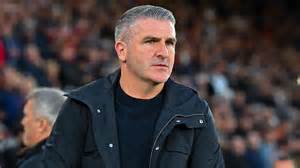
Image courtesy of WiganToday

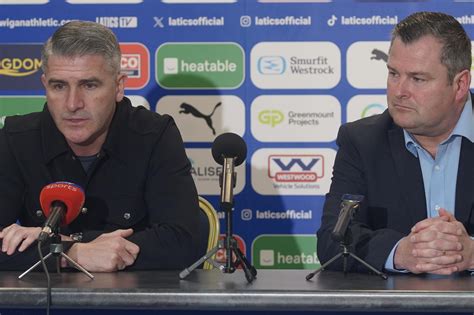
Why are so many Wigan Athletic supporters increasingly unhappy with both the head coach and the sporting director? For some, frustration has already tipped into calls for both to be sacked. But while the anger is understandable, removing either now would risk compounding the very problems that have led to this situation.

Saturday’s defeat to a Blackpool side sitting second from bottom of League One crystallised those frustrations. The Tangerines scored twice after poor defending from a back line missing captain and defensive lynchpin Jason Kerr through injury. Despite having far more shots, Wigan rarely looked like scoring. In a derby where intensity and commitment were expected as a minimum, the performance felt flat and uninspiring.

Latics currently sit 14th with a record of W6 D8 L6, having scored 22 and conceded 23. Given that the club’s staffing budget is reportedly within the top ten in League One, this position feels underwhelming. That perception has driven criticism beyond Ryan Lowe and towards sporting director Gregor Rioch. Yet this is where context matters.

Lowe’s tenure began with genuine promise. There was attacking intent, early momentum and real belief that a play-off challenge might be possible. That optimism unravelled after a limp 4–1 defeat at Bolton. Since then, performances have become more cautious and conservative, with the team focused on grinding out results rather than playing with freedom or flair. Lowe has also damaged goodwill by publicly criticising players and suggesting that supporter expectations “might need to be lowered”. In a club still healing from years of upheaval, those comments landed badly.

But the growing criticism of Rioch deserves closer examination. Supporters questioning recruitment, squad balance and identity are not wrong to ask those questions. However, they are often aimed at a role whose responsibilities and authority are poorly understood from the outside.

Rioch has been at Wigan since December 2013, initially as academy manager. During a decade marked by ownership chaos, financial collapse and administration, the academy was one of the few constants. Under his leadership, Wigan regained EPPP Category Two status and, crucially, continued producing first-team players when the club could not afford to buy them. Those graduates were not a luxury; they were a necessity.

That track record is precisely why Rioch’s promotion to sporting director in August 2023 made sense. It was not just a reward for loyalty, but an attempt to embed long-term thinking at a club that desperately needed stability. His expanded remit — recruitment, first team, academy and overall football strategy — was designed to ensure alignment and avoid the costly stop-start cycles that had plagued Wigan for years.

The logic was sound. With limited funds, Wigan needed clarity: a shared footballing identity, smart recruitment and a seamless pathway from academy to first team. The sporting director role existed to protect that coherence.

The appointment of Ryan Lowe in March 2025 complicated that vision. Lowe arrived with experience and a clear tactical identity, but one fundamentally different from Shaun Maloney’s. Maloney favoured structured possession and patient build-up; Lowe’s approach is more direct, physical and vertical. Neither is inherently wrong, but switching between them under tight financial constraints was always going to carry risk.

This is where frustration has hardened into distrust. Players recruited or developed for one system suddenly looked ill-suited to another. Recruitment had to pivot again without significant resources. Academy players were asked to adapt quickly to new demands. To supporters, it felt like another reset — another change of direction before anything had been allowed to settle.

That sense of drift is what has put Rioch under scrutiny. A sporting director should play a key role in managerial appointments precisely to avoid this kind of misalignment. That does not mean blocking ambition or dictating tactics, but it does mean ensuring that change does not undo years of planning. Whether Rioch had sufficient authority in Lowe’s appointment is unclear. If he did not, the issue lies higher up. If he did, then the long-term consequences were underestimated. Either way, the result has been a perception of poor recruitment that is as much structural as individual.

Seen through that lens, this is not a story about one manager or one transfer window. It is about whether Wigan have truly empowered the sporting director role to do what it was designed to do: provide continuity, limit waste and protect the club from constant reinvention. Without that authority, even the most competent operator will eventually take the blame.

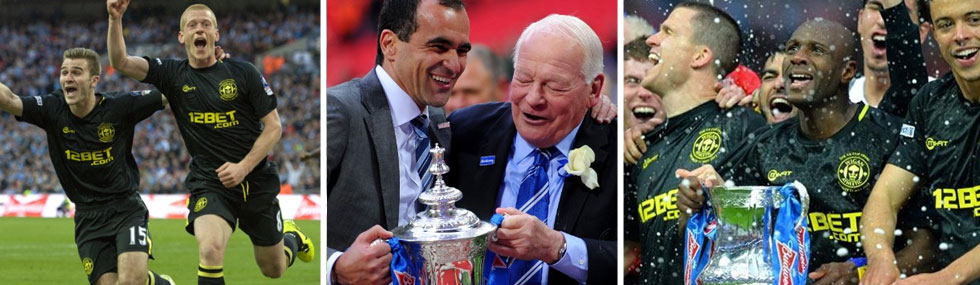
Supporter reaction has been predictably polarised. Some point to recruitment missteps and a lack of ambition; others urge patience, reminding fans just how restricted Wigan’s finances remain. What is often overlooked is that the era of Whelan-level spending is gone. Sustainable progress now depends on youth development, intelligent recruitment and strategic patience — not nostalgia.

Wigan’s predicament is far from unique. Across League One and the wider EFL, clubs face limited budgets, ownership uncertainty and frequent managerial churn. Those that succeed do so not by spending their way out of trouble, but by committing to a clear, consistent strategy.

For Latics, that means rejecting the temptation to “spend to go up”. That route has repeatedly ended in financial disaster for others. The smarter path is to build a repeatable promotion-and-survival model, where managerial changes are evolutionary rather than disruptive. Recent months have shown how damaging the alternative can be.

Budget constraints explain much of the current frustration. Blackpool’s second goal, scored by former Wigan favourite Dale Taylor, was a stark reminder. Blackpool paid Nottingham Forest £1 million for him — a fee entirely beyond Wigan’s reach. Instead, Latics spent around £500,000 in total on Dara Costelloe and Christian Saydee. That is not a lack of ambition; it is financial reality.

On the pitch, the transition between Maloney and Lowe has been anything but smooth. Lowe initially deployed wingers as wing-backs, a role unfamiliar to them. None of the four main strikers has delivered consistently. Since Ryan Trevitt’s injury, creativity in attacking midfield has been lacking, leaving forwards isolated and ineffective.

Given those circumstances, criticism of recruitment is inevitable. Responsibility lies with both Lowe and Rioch, but so do the constraints. Lowe speaks of needing more “quality”, yet his commitment to a back three and wing-backs has required clearing out players while leaving key positions under-resourced. That is a structural issue, not simply a recruitment failure.

This is precisely why stability matters now. After years of turmoil, sacking either Lowe or Rioch would almost certainly set the club back further. The decision to replace Maloney with a stylistically opposite coach was flawed, even if Lowe’s past record suggested he could overachieve. Whether that choice was driven by Rioch, ownership or both is now less important than what happens next.

The priority must be clarity. A defined footballing identity, a realistic recruitment plan and visible alignment between board, sporting director and head coach. January’s transfer window will be critical, not just for additions, but for demonstrating that Wigan are acting proactively rather than lurching from problem to problem.

Frustration is justified. Panic is not. Wigan’s problems will not be solved by another reset — only by finally committing to a clear and consistent path forward.

Wigan Athletic Under Ryan Lowe: From Grit to Something Greater?

Wigan Athletic’s time under Ryan Lowe has really been one built on grit. In football, “grinding out results” basically means doing whatever you need to get points, even if it’s a slog. It’s about being organised, disciplined, and prepared to battle for everything. In a league as tight and physical as League One, that kind of mentality often matters more than pretty football. Managers want players who stay switched on, stick to the plan, and don’t fall apart under pressure. It’s not always thrilling to watch, but it turns bad days into draws and half-chances into big wins.

When Lowe arrived in March 2025, Wigan were in a lower mid-table position and seriously struggling for goals — bottom of the league in that department. They weren’t heading straight for relegation, but the season had drifted. Lowe’s arrival felt like a reset — new ideas, fresh energy, and a chance to stabilise things.

Before long, the team leaned fully into that scrappy, hard-working identity. They finished the season in 15th, mostly because they became tougher mentally and harder to beat. They clawed back deficits, held onto narrow leads, and looked like a side willing to dig in. Not glamorous, but effective.

Over the summer, Lowe shaped the squad to fit his preferred 3-1-4-2. That system relies heavily on wing-backs, and the opening game of the new season showed exactly why. Joe Hungbo and Fraser Murray were excellent in the 3-1 win over Northampton — a scoreline that honestly could’ve been bigger. The first 20 minutes were messy and disjointed, but Murray’s goal around the half-hour settled everyone down and suddenly the team looked much more like a unit.

Of course, settling into a new shape and integrating new signings takes time. The early weeks were a mix of positives and frustrations: solid performances, some good results, but also draws where Wigan should’ve taken more. Opposition managers quickly figured out how dangerous the wing-backs were, so Hungbo and Murray started getting much more attention defensively. That’s League One — once you show a threat, everyone finds a way to make life difficult.

After eight league games, Wigan were sitting at W3 D3 L2 with 13 goals scored and 9 conceded — decent, but clearly still a work in progress. Then came Bolton. Wigan had enjoyed a strong record against them recently, and fans saw it as a genuine benchmark of their progress.

But Bolton, led by Steven Schumacher, were flying. They went with two natural wingers and caused Wigan’s wing-backs all sorts of problems. Latics were second best throughout, losing 4-1, and the fans were furious. They felt the team didn’t show enough fight and that Lowe hadn’t treated the derby with the importance it deserved. They even pointed out the lack of cards — Wigan picked up one yellow, Bolton none — which raised questions about the passion and intensity on display.

It did feel like Lowe misjudged the moment. Derbies aren’t just about points; they’re about pride and emotion. If that wasn’t fully communicated to the players, it could explain the flat performance. And once fans start questioning desire, the pressure ramps right up.

The Bolton defeat hit confidence hard. The football tightened up, became more cautious, and the spark in the final third faded. Lowe leaned further into defence-first thinking, which made sense in the moment but dulled the attacking edge even more. The injury to Ryan Trevitt made things worse — without their most creative midfielder, Wigan lacked imagination. The wing-backs also had to focus more on defending, meaning they weren’t getting forward as freely.

All of this made Wigan more solid, but not exactly entertaining. The challenge now is finding the right balance — keeping that grit without switching off the creativity.

As it stands, Latics sit 11th with a record of W6 D7 L5. They’re definitely harder to beat, and while fans still daydream about a run toward the Championship, Lowe has sensibly played that down, treating promotion as a long-term aim rather than something immediate. His popularity has dipped during the rough spells — some fans have even called for him to be sacked, others are simply bored by the football. But given how many managers Wigan have chewed through over the past decade, stability is badly needed. Lowe deserves the time to build something properly.

His spell at Preston is a useful comparison. In his first full Championship season there, they started with a 0-0 at the DW — one of FIVE goalless draws in their first six games. They had one of the smallest budgets in the league, yet still finished 12th. Not spectacular, but quietly impressive.

This season, Wigan reportedly have a top-ten League One budget. So can Lowe get them punching above their weight and pushing into the play-off conversation? A lot will hinge on the January transfer window.

With his commitment to 3-1-4-2, he needs proper wing-backs. He couldn’t sign any specialists in the summer and ended up using Hungbo and Murray — talented players, but natural wingers. Two real wing-backs surely top the shopping list, unless K’Marni Miller returns ready to step up. He also needs more creativity in midfield and better service for the strikers, who simply haven’t scored enough.

And that’s the big question hanging over everything: if the supply improves, will the forwards finally deliver the goals Latics need?

Wigan Athletic 1 Notts County 0: disjointed Latics limp to victory

Wigan Athletic’s recent record in the Football League Cup has been far from impressive. In fact, this is the first time in the last four years that they have qualified for the second round.

“I want to go as far as we can” was Ryan Lowe’s prior comment on the club’s ambitions in the competition, but on the basis of this performance they might not even go beyond the second round. Good football was in short supply in this match for the sparse crowd that attended.

Lowe sprung a surprise in his starting lineup with Jensen Weir at right centre back, Luke Robinson coming in on the left to join Jason Kerr in centre of the back three. Callum Wright and Ryan Trevitt started in central midfield, with Tobias Brenan in the #6 role behind them. Isaac Abaya and Joe Hungbo were the wing backs, Maleace Asamoah and Paul Mullin the twin strikers.

Latics go off to an early lead after 10 minutes, Mullin blasting home a soft penalty awarded after Asamoah went down in the box. However, their play that followed was cumbersome and disjointed. There was certainly effort from the players but little cohesion, the opposition dominating possession.

Injuries have been a major problem in recent years for Latics and they continue to be so. A serious-looking leg injury to Mabaya saw him stretchered off after 29 minutes, Fraser Murray replacing him. Although Lowe had made six changes in this starting lineup the faces of Joe Adams, Baba Adeeko, Callum McManaman, K’Marni Miller, Matt Smith, Jonny Smith and Chris Sze have not been seen since the season-proper started. We await word on the injury to Jamie Carragher at Leyton on Saturday.

A key feature of that promising season start against Northampton was the effectiveness of the wing backs. However, with them being neutralised at Leyton and in this game, there has been reduced creativity. Murray’s sparkling debut against Northampton was a joy to watch, but the realities of playing in League 1 mean he could come in for some heavy marking by opposition defences as the season progresses. Moreover, Mabaya’s injury leaves Lowe short of options at right wing back.

Notts County enjoyed 64% of the possession in this game, with Latics struggling to find their men with their passes. They were fortunate that the visitors could not translate their possession into goals, although Notts could count themselves unlucky in the closing minutes as Sam Tickle and a resolute back three were key in putting their bodies on the line to keep their team ahead.

With the 3-1-4-2 formation and the influx of new players, Latics were always going to need time to adjust and gel as a unit in early season. The fine display against a Northampton side possibly heading towards the bottom of the table may seem like a false dawn after what we have seen since then. However, there is enough talent and experience in the squad to ensure a finish in the top ten of League 1.

In the meantime, one can only hope that Lowe can provide us with a passing game that can match the kind of effort that he expects from his players. A return for Matt Smith could be the kind of catalyst that is needed to cut down on wasted long passes and ensure a better build-up from defence.

Leyton Orient 2 Wigan Athletic 0: low-energy Latics fall to defeat

“We didn’t compete enough – we’ll address it on Monday morning, but the fact of the matter is, if you don’t compete, you’re not going to win.”

So said Ryan Lowe following an abject performance by his team.

Wigan’s performance was predictably dire. Predictable because Orient were wounded after losing their opening game, and Latics were probably made to look a bit better than they are against Northampton. The Carragher injury probem didn’t help. It was a bit if a nightmare for Sessegnon too.

Orient were far superior on the day. Lots of professional fouls to interrupt Latics, but with a fluid and dangerous front four. The Lowe version of hoofball – pass it back to Tickle so he can punt it as long as he can – will be frustrating against decent teams that can cope with it. But it’s percentage football and it could be enough to get Latics in contention for playoffs.

In January 2007 Denny Landzaat made a memorable comment reported by the Dutch press about Latics’ style of football under Steve Bruce:

 “Some matches the long ball is the only kind we play… It quickly turns into lottery football… I often think that as I’m not getting the ball played to me, I might as well run to get on the end of it when it drops from the sky.”

The ball went over the heads of Wigan’s central midfielders yesterday too. The 19-year-old Tobias Brenan had made a promising debut against Northampton, but looked a passenger in the first half. It would be fascinating to see him in a more possession-based team because he looks skilful. Moreover, most of the balls that had reached Dara Costelloe and Christian Saydee up front could be described as “hoofballs”, as opposed to accurately aimed long balls.

Jamie Carragher’s knee injury after four minutes of play was a bitter blow for Lowe. Already deprived of the combative Will Aimson through suspension the manager had to resort to a back three that had not previously played together as a unit. Jon Melliish was moved to left centre back, with the hapless Sessegnon moved to the right. Mellish did not perform at all badly and he showed an energy that many of his teammates were devoid of on the day. New signing Morgan Fox was not on the bench yesterday but will stake a strong claim to the left central defensive possession when fully fit.

Lowe has an opportunity to give other members of his squad a try in Tuesday’s Carabao Cup game at home to Notts County. He will be looking to re-energise his team for Saturday’s League 1 home tie against Peterborough.

Stats courtesy of WhoScored.com