Attendances and finances at Wigan Athletic

2012-moneyball

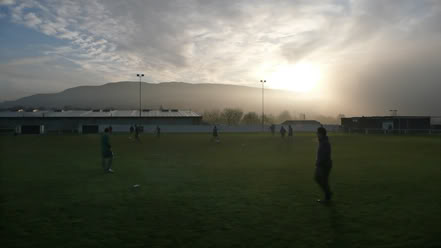
“There was nothing like it. Running down the tunnel and hearing the roar of a 3,000 crowd. Springfield Park was the best place in the world for me.”

Meeting Harry Lyon in the early 1980s was like a dream come true. It had been a chance encounter with the man for whom the title “legend” would be an understatement for me.

My father had continued to live in the south of Wigan, then rugby league territory, so the pubs around us were steeped in that kind of nostalgia. One of those was ‘The Waterwheel’, run by ex-Great Britain rugby player, John Stopford. Although he never played for Wigan RLFC, Stopford would draw rugby enthusiasts to his pub. We mostly avoided such places, preferring to walk further afield to pubs that were more salubrious for Wigan Athletic supporters.

But one rainy night we succumbed, and tried ‘The Waterwheel’. Upon opening the door and the sight of the scrum surrounding the bar we started to think twice about it. There were some burly men there, faces like boxers, some with arms in slings. We were just about to walk out when my father said “Look it’s Harry Lyon over there.” It was indeed my hero from my teenage years. Chatting with Harry was easy. He just made you feel comfortable talking with him. Although he had left the club a decade before it was obvious that Wigan Athletic was his first love. He remains the club’s leading scorer of all time, with 243 goals to his credit.

Harry’s quote was straight from the heart, but the reality was that a 3,000 crowd was not the norm at the time. True, Latics had the best home attendances in the Cheshire League and their traveling support would so often ensure that clubs like Oswestry and Stalybridge would get their best crowds of the season. But for clubs at that level of English football it was a hand to mouth existence, but somehow most clubs survived.

Gate receipts were the main source of revenue, which gave Latics an advantage, given their stronger support. But the reality was that most of the time the attendances were not a lot above the 2,000 mark. The club survived through the efforts of the Supporters Club and the Board of Directors dipping into their pockets.

Financial survival has never been easy for Latics. In their inaugural season in the Football League, 1978-79, they averaged a healthy 6,701. The club’s attendances the season before, their final one in the Northern Premier League, had dropped to an alarming 1,334. The move up clearly had a major impact upon the town.

Since then Latics’ highest average league attendance was 20,160 in their first season in the Premier League. Ironically their second highest was 19,345 in the relegation season of 2012-13. But the gloss was to wear off and Latics slumped to their lowest attendance levels of their Football League era with just 1,748 in 1994-95.

If it had not been for the arrival of Dave Whelan in 1995 where would Wigan Athletic have been now? Attendances had been woefully inadequate and the club was sinking into a seemingly inexorable financial quagmire.

But ten years later Latics were playing in the Premier League against Chelsea and a crowd of 23,575 was present despite the game being broadcast. It was a taste of things to come as the club’s attendances eclipsed those of the local rugby club that season and have done ever since, even last season despite relegation to the Championship.

Football season Rugby season Wigan Athletic Wigan Warriors
2005-2006 2006 20,160 14,464
2006-2007 2007 18,159 16,040
2007-2008 2008 19,045 13,995
2008-2009 2009 18,350 14,080
2009-2010 2010 17,848 15,181
2010-2011 2011 16,976 16,125
2011-2012 2012 18,634 16,043
2012-2013 2013 19,375 13,556
2013-2014 2014 15,176 14,102

Latics’ gate money in the Premier League days was always dwarfed by the TV revenues they were receiving and from a purely financial viewpoint attendances were not much of an issue. In their last season in the Premier League match day revenues covered no more than 10% of total revenue of £56.4m. Without the television revenues, the club could never have seriously competed for eight long seasons in the elite division.

In my article Finances, FFP and the long term future of Wigan Athletic, published in May 2014, I put forward figures needed to stay afloat in the Championship. To keep a team in mid-table would typically involve a wage bill in excess of £20 million. Whereas to get into the top six would cost around £30 million, which is precisely what it cost Latics last season.

With a significant drop in parachute payments to be received this season it looked likely that the club would start to trim its wage bill. The departures of ex-Premier League players Jean Beausejour, Jordi Gomez and James McArthur must have helped. However, manager Uwe Rosler was to bring in nine new players over the summer. Although some were younger players, probably not on relatively high earning contracts, the competition in the transfer market forced the club to offer more tempting salaries to the rest. The result was a squad that was larger than the club needed with a wage bill close to that £30 million of last year.

Dave Whelan clearly had promotion within his sights when he released some £8-9 million in transfer fees for Oriol Riera, Andy Delort, Emyr Huws and Adam Forshaw. Much of the outlay was covered by the fee received from Crystal Palace for James McArthur, but their arrivals put more pressure on the wage bill.

It was a gamble which was to fail, but Whelan is the shrewdest of businessmen and he knows if you don’t take risks you are likely to stand still. Huws was constantly bothered by an ankle injury and never reached top form, despite having moments of showing his true potential. He remains one for the future, despite being sidelined for the rest of the season with another ankle injury. Sadly Delort and Riera have been dispatched to their home countries on loan and Forshaw has been sold cut-price to Middlesbrough.

Whelan had made the gamble, backing a manager who had performed admirably in the previous season. After being criticised by fans for hoarding the cash from the James McCarthy transfer the season before he had stuck his neck out in allowing Rosler to bring in so many players and run the risk of expenses heavily outweighing revenue.

Following the departure of Rosler and the continuing downturn in results under Malky Mackay, the club made huge strides in getting its financial situation back on an even keel during the month of January. Just a few months before no one could have anticipated the fire sale that was to occur. Ten players were to leave, four of whom were members of the team that won the FA Cup Final.

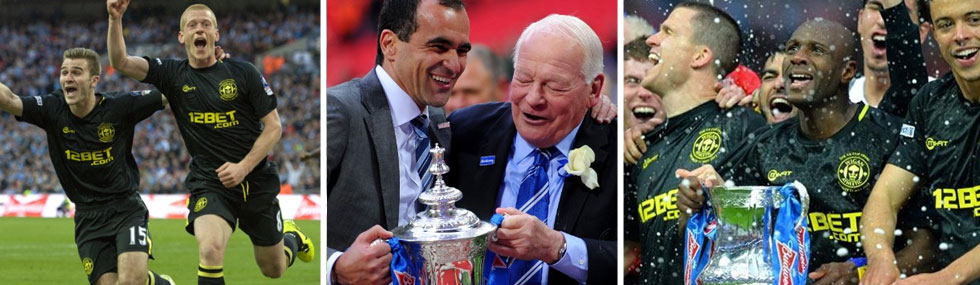
That famous cup final man of the match, Callum McManaman, went to West Bromwich Albion for around £4.5 million. Putting back the clock, what might have happened if he had not injured his ankle in the Arsenal match that followed the Cup Final and put Latics down? Following his Wembley display he could well have gone to a big club for some £15 million, if he had been fit. Sadly it did not happen and the ankle injury had a major impact on his fitness the next season. The rest is history.

Such a fire sale would have brought huge protests from the fans under normal circumstances. But the “hatchet man” Mackay was able to do it with hardly a whimper from supporters who were thoroughly disillusioned with the lack of commitment shown by players whom many viewed as overpaid and overrated.

The fire sale has put Latics back on track financially. Apart from the transfer fees received they have cut the wage bill down significantly, to probably around £20 million on an annual basis. Mackay paid transfer fees for two players – Billy Mackay and Jason Pearce – but the outlay for the two was less than £1 million. The rest of his acquisitions are loanees or players on short term contracts.

For the coming season – no matter what division they are in – Latics will receive £8 million in parachute payments, plus around £2.5 million from TV money. The rest will need to come from gate receipts and commercial revenue.

The latter has not been a major factor over these years, so gate revenue becomes increasingly important.

Should they stay in the Championship, crowds of around 12,000 would most likely be the order of the day. That is providing a squad that will cost considerably less to maintain than those of the past two seasons can hold its own. Relegation would almost certainly mean a decrease in attendances, even if the team were to do well. Revenue from the visiting support would most likely nosedive.

Gate money will clearly play a more major role for Latics next year than it has for more than a decade. Put simply it is going to be a more proportionate part of revenue than it has been.

But then again, for Latics gate money does not correlate with attendance in the same way that it does for most clubs. The club had wisely kept admission prices relatively low during its most successful years and they remain so. It helped them compete for support within the town and build up a level of hard-core support that the club had never previously enjoyed. However, continuing the policy is not necessarily the right ploy for the club. At some time in the future it is going to have to start moving its prices more in line with that of its competitors, at the risk of losing some support.

For the coming season the revenue and spending numbers need to add up. A £20 million wage bill is out of the question. Austerity will be the order of the day, no matter which division the club is in.

However, the good news is that the club has become a model for others to follow in its financial management, which serves to safeguard its long term future. A profit of £2.6 million was announced for the 2013-14 season, following two previous campaigns in the black.

The big question regarding revenue streams is whether Latics will be able to afford to run the Charnock Richard facility, assuming it will be completed. If it dies a death it will be much harder for Latics to put in place an Academy that providesthe first team with players, the best of whom can be sold off to keep the club afloat. Should Latics suffer relegation it could be one of the cut backs.

Much will depend on the ability of Mackay’s current team to avoid relegation. If they can the outlook will be brighter.

Attendances and revenue remain inextricably linked, even if not as strongly as they were during the Harry Lyon era.

Playing for Malky

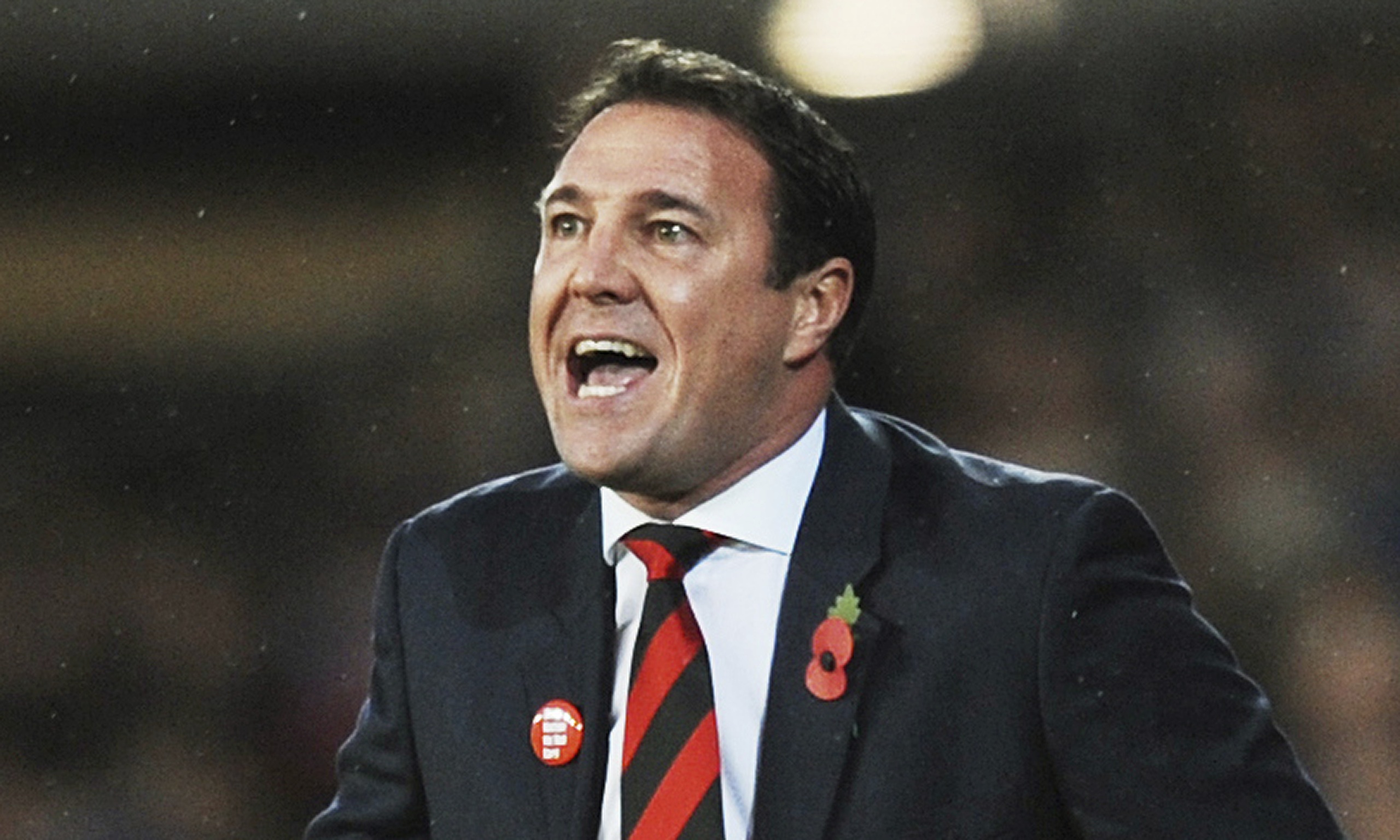
Will Mackay's appointment  prove to be worth the baggage that came with it?

Will Mackay’s appointment prove to be worth the baggage that came with it?

Despite the emotional and divisive effect Mackay’s candidacy and then appointment had amongst club’s supporters, there seemed to be a general feeling among backers and protesters, and even the media, that his arrival would probably still give the team the “new manager” boost on the pitch.

What is surprising to me is that although there has been plenty written about dressing room trouble, which we knew plenty about well before Mackay’s arrival, few have written or spoken about how much further damage his appointment might have inflicted it in a young, multicultural squad. (No matter what forced public statements of support the captains GC/EB gave at the time). If one of the biggest problems under Uwe was dressing room unity, he was surely the most ill-suited appointment possible, given how divisive his own public debacle was and continues to be.

Many of the stronger voices of dissent on #wafc forums and social media were those of younger supporters, some foreign. Your average footballer might not be the most involved with social or political issues, and yes, the language on the training ground and “in football” is far from “politically correct” and therefore it is unlikely many of the players were shocked at the content of Mackay’s texts. But their generation is far more likely than previous ones to want no part in what his texts, and his appointment, represent.

Many of the more experienced influential players – Al-Habsi, Maloney, Boyce, Watson, Espinoza, Ramis – were brought in at a time when the club had a very strong ethos of family values and doing things the right way. It was a source of pride, was my sense, for players and supporters alike.

I’ll always be grateful to Whelan for all that he has done, and personally hope he acts to put things right. But this mistake looks costly on just about every front other than the actual money spent, which was probably DW’s priority. Mackay is hardly Mourinho. Just not worth the risk. Someone else could have gotten us out of the bottom three. And even if still Mackay does, and there is plenty of time for him to do so, would it really be worth the baggage?

Malky’s January Fire Sale

firesale2

What is critical……is to eliminate problem personalities – or what he calls the “s—-” – from the dressing room. It’s not just the 11 who play, If you have half a dozen s—- around you’ve no chance. You can’t win. They’ll contaminate the rest of them and bring the whole club down. They’ll be negative everywhere, getting in to good lads and bringing them down to their level. If you walk in and see one or two s—- then you’re watching them, watching who they talk to and what they are doing. They suck as much energy out of you as anything.”

These revealing Harry Redknapp quotes come from an article on the Daily Telegraph site on the key to survival in the Premier League.

Malky Mackay would be wise to listen to Redknapp’s words. He will be aware of what happened to his predecessor at Wigan. He has the January transfer window as a means of moving some of those elements on.

Mackay hardly had a positive arrival at the club and has yet to stamp his mark on the style of play. What we saw on Saturday against Norwich was players going through the motions. A spiritless and gutless performance. It is not the first of that type that we have seen this season, but one expects a new manager to inject new energy and change the style of play. Why has Mackay not had more effect on the performances up to this point? What can we expect any changes over the coming weeks?

Mackay has now been in charge for three matches. His record is D1 L2. The 1-1 home draw with Middlesbrough was the best performance of the three, not only in the result but in the way the team played. Mackay had brought in the “old guard”, only two players signed by Uwe Rosler making the starting lineup. Not surprisingly there was more cohesion and the team played with more spirit than of late. He continued to rely on the old guard in the losses to Sheffield Wednesday and Norwich, but the response was poor.

It could be said that Mackay has used his most experienced players in a time of crisis. The conspiracy theorist will say that he has given players who undermined Rosler the chance to show their mettle. Interestingly the lineup against Norwich included nine players who were born or raised in the British Isles. Moreover the two from overseas- Figueroa and Fortune- have been in England for a long time.

The upcoming game at Watford will surely provide an indication of Mackay’s future plans. Given the continuation of poor results he is not in a position where he can continue with the old guard. Confidence is low and even good players are looking poor at the moment. However, Mackay clearly has to shuffle his pack since the players he has used so far have largely let him down.

Mackay recently mentioned ten players being out of contract for Latics at the end of the season, suggesting they will be trying to impress him enough to be offered a new contract. However, the reality is that likes of Ali Al-Habsi, Shaun Maloney and Ivan Ramis are likely to be lured by other clubs who can offer them better deals. Most of those players are in their late twenties or in their thirties and will demand relatively high salaries, which Latics will find hard to afford with a drop of £9m in parachute payments next season.

It is not only the out of contract players who could depart in January. Dave Whelan has always said that any player can go if the price is right, but the realities of an unsuccessful season and an upcoming drop in revenues could well mean that players go at bargain prices.

One of the reasons cited for Rosler’s lack of success this season was that his squad was too large, leading to too much squad rotation and dissatisfied players who were not getting playing time. Mackay has already acknowledged that the squad is large. However, stats from the transfermarkt site suggest that Latics’ squad is around average size for the division. Its average age of 27.6 years is the second highest behind the squad of Millwall at 28.9 years.

However, this is not to suggest the squad is not too large. Too many clubs in the Championship are spending well over what they should be on player salaries, given the revenues they are receiving. Whelan will be keen to cut down the squad to a financially more manageable size, probably around 23-24 players.

We can expect a fire sale in January. If what ‘Arry was referring to has been the case at Latics then it might take until February for the passion to return to Latics’ play.

Let’s hope this is not the case.

Seeing through the gloom – the way ahead for Latics

Gloom

They say that you have to experience the lows in life to truly appreciate its highs.

It is certainly a low time for Wigan Athletic. They stand second from bottom of the Championship after 19 matches, having won only three. Moreover the positions of both the new manager and the chairman are precarious, pending the results of FA investigations. The last manager was undone by player power and the new manager has failed to win either of his first two games.

Who will be running the club six months from now? How many players and staff will be gone by then? Will Latics still be in the Championship division? Will the financial future of the club be safeguarded?

It is indeed a time of doom and gloom, amid a prevailing air of uncertainty.

It is in such times that negativity and pessimism come to the fore. Fans are justifiably disillusioned with a squad of players that have let the club down up to this point. Indeed one of the Latics fan forums is currently running a thread entitled “Who would you get shut of?”

But despite the frustrations, pointing the finger at individual players is not going to help matters. Despite his rotation policy and mesmerizing team selections, Uwe Rosler put together a squad good enough to challenge for promotion. What has happened since the season started in August is now water under the bridge, but it has left the players in a crisis of confidence.

Good players have not become bad ones over these three months. It is not so much that individuals have played so badly, but more to do with their ability to play as a unit. The sum has been much less than aggregation of  its parts.

Dave Whelan has taken flak for his appointment of Malky Mackay, not just from the national media but from Latics fans. At times it has seemed that Whelan made a big error of judgment. Fans have been frustrated by the lack of goals, but Whelan has appointed a manager whose teams have not been known for their flowing, attacking football. There is more unsettling gossip in the media about Latics bringing in Ryan Giggs as manager should Mackay be suspended by the FA.

However, there exists the possibility that Whelan did know what he was doing. Mackay knows the environment of the Championship division. He is also reputed to be a motivational manager. Mackay has also had lots of experience in dealing with significant turnovers of players at the end of their contracts. Could it be that Mackay has been brought in to clear out the bad eggs in the Latics dressing room?

Mackay wisely turned to the old guard in his first match in charge. He needs them behind him if he is going to create stability and raise morale in the dressing room. Moreover in times of adversity managers typically rely on their most experienced players. The starting eleven against Middlesbrough contained five players from the Roberto Martinez era and four signed by Owen Coyle. The average age of the back four was thirty plus. Just two of the eleven players signed by Uwe Rosler – Adam Forshaw and Andrew Taylor – started in that game and the next one at Sheffield Wednesday.

No fewer than ten players have contracts which finish at the end of the season.  Most of those are approaching 30 or are on the wrong side of it. Eight of them – Al Habsi (32 years old), Boyce (35), Caldwell (32), Espinoza (28), Maloney (31), Nicholls (22), Ramis (30) and Watson (29) – remain from the Martinez era. The other two are Fortune (33), signed by Coyle, and Kvist (29) brought in on a one year contract by Rosler.

Given that Latics have only 17 points from their first 19 matches, Mackay will be looking at consolidation rather than promotion. Financial considerations will increasingly come into play.

Mackay recently stated that “This is a business, and after we’ve assessed the situation. There will be players moving out as well as coming in. After two or three weeks you get to know every player, how they train, their strengths and weaknesses. It will take two or three transfer windows for it to be ‘my team’, for the team to be sufficiently tweaked.”

His remarks indicate that the merry-go-round of players that we have seen over the past year will continue. Coyle brought in ten new players and Rosler signed eleven.

Since the summer of 2013 Latics have made a profit in the transfer market. The fees recouped through the sales of cup final winners McCarthy, Kone and McArthur have more than compensated for the relatively small fees paid by Coyle for Barnett, Holt, McClean and Perch plus the more considerable sums spent by Rosler on Delort, Forshaw, Huws and Riera. The flip side is that Latics lost quality when McCarthy and co left the club. Even more quality was lost as Beausejour and Gomez left at the end of last season as free agents.

In order to bring in his own players Rosler allowed the senior squad to swell beyond 30 players. He had clearly been keen to transfer out higher salary earners such as Al Habsi, Holt and Ramis but was unable to do so. Moreover the signing of Figueroa on loan meant that Latics had not only four left backs on their books, but had enlarged a squad that was already bloated.

Next year the club’s parachute payments will halve to £9m. Not only will Mackay have to follow in the footsteps of Coyle and Rosler by staying in the black in the transfer market, but he will have to make significant cuts in the wage bill. He will need to shed higher wage earners and considerably reduce the size of the squad.

Latics are clearly going to lose more quality players by the end of the season. They could well start the 2015-16 season without any of the players that played in that magical FA Cup final of 2013. The moment of Watson’s famous header will stay etched in the minds of Latics supporters for the rest of their lives. But somehow it needs to be put out of mind for a period of time as Latics adjust to a new reality.

Dave Whelan backed Uwe Rosler and Latics got within touching distance of the Premier League last season, but could not quite make it in the playoffs. He continued to back Rosler this season in bringing in new players. It all looked so promising, but it just did not happen.

A significant proportion of Latics fans remain critical of Rosler’s signings, whose performances up to this point have been less than eye-catching. Adam Forshaw has not yet lived up to his transfer fee and the hype he received at Brentford and the form of overseas strikers Andy Delort and Oriel Riera has been below par. Martyn Waghorn, signed last season, has fallen under the radar. Andrew Taylor has shown flashes of his best, but does not yet convince. However, Mackay had taken both Taylor and Don Cowie with him from Watford to Cardiff and we can expect them to feature regularly.

Cowie is already under criticism from a section of fans, but he is the kind of unspectacular “water carrier” that a Championship team often needs in midfield. William Kvist is Denmark’s captain and can surely do a job as a holding midfield player. Emyr Huws is an exciting young talent, who has all the skills needed to play at the highest level. What he lacks is experience and he will find that hard to get now, given the competition for midfield places. James Tavernier is one for the future, his quality crossing and delivery from set pieces a real asset, even if he is not yet up to par defensively. Young left back Aaron Taylor-Sinclair has yet to step on the pitch in a league game.

It may be that Rosler’s signings will come good with time. They came into a struggling side, with a manager who had lost the plot. Latics made major investments in the signings of young players. Forshaw is  23 years old, as is Delort. Huws is 21. Only time will tell if Rosler picked up free transfer bargains in the 23 year olds, Tavernier and Taylor-Sinclair, and the 24 year old Waghorn.

Coyle will be remembered more than anything else for the signings of the then 32 year old strikers, Grant Holt and Marc-Antoine Fortune. However, in Leon Barnett, Scott Carson, James Perch and Chris McCann he signed experienced practioners who will most likely form the  backbone of Mackay’s team.

If there is a cancer within the playing staff then Mackay will deal with it. Rosler had a clear view of the style of football he wanted but the players were apparently unable or unwilling to deliver it. Did Rosler just did not have the credibility with the players that he needed to motivate them to deliver his vision?

Mackay will need to be tough in cutting out any cancer that might be there. He will also have to show the kind of fortitude that we saw in Martinez, insisting on his preferred style of play and not bowing to fan pressure. He will need to show the door to certain players, even if some are popular with supporters.

It remains to be seen what will happen with the FA charge against Whelan. However, at 78 years of age the chairman will surely be looking at handing over the reins in any case. If the FA decision causes him to resign as chairman he will remain the owner of the club and will surely continue to pull the strings behind the scenes. With his home base in Barbados, Whelan has been devolving authority to the Chief Executive, Jonathan Jackson to run the club’s daily business.

No matter what happens on the pitch this season the club is likely to be in a far superior position financially than most in the Championship division. Latics’ balance sheet for the 2013-14 season is due to be published shortly and it will make interesting reading. Whelan has insisted on prudent financial management and it will be a surprise if the club went into the red last season after receiving parachute payments and gaining extra revenue from its Europa League campaign and reaching the semifinal of the FA Cup.

Yesterday was the deadline for clubs to submit their accounts for the 2013-14 season to the Football League. Any club breaking FFP rules will have a transfer embargo imposed until it turns itself around to meet them again. A fascinating study by Ed Thompson suggests that Birmingham, Blackburn, Bolton, Bournemouth, Middlesbrough and Nottingham Forest are ‘very likely’ to fall into that category. Latics fall into the category of ‘very unlikely’ to receive a transfer ban.

ffptableWigan Athletic’s sustainability in the long term will partly depend on their ability to develop young talent. An article on the club’s official site yesterday highlighted the under-18 side being undefeated in 11 matches. Coach Peter Atherton quoted that: “Things are heading in the right direction, Gregor Rioch has come in as Academy Manager and he’s implemented a lot of changes to put us on that correct track…….. The success has come sooner than we probably expected, but we’re not getting carried away.  The lads will continue to work just as hard. We should be at the top of this league and we’re aiming higher up the Academy pyramid.  We’re happy with the direction we’re heading in and what we’re achieving.”

To be heading a division of the Football League Youth Alliance largely composed of clubs from League 1 and 2 would not appear such an achievement, but it is a sign of the improvement shown at academy level. The new facility at Charnock Richard is due to be completed by 2016 and it is clear that Latics are ramping up their youth programme aiming for a Category One Academy.

A year from now Malky Mackay may or may not be the manager, Dave Whelan may or may not be the chairman. A swathe of players will have departed, possibly backroom staff too.  But the club will be financially stable and well run.

The squad will not have the quality to which we have grown accustomed. Most of the household names will have departed. But Latics will have a team that is hungry for success, with a nucleus of capable and experienced pros together with exciting young talent.

Latics will have bucked the trend of overspending as has been the wont of so many other clubs .

Then there is the prospect of a Category One Academy and long-term sustainability.

Things might seem gloomy at the moment, but there is light at the end of the tunnel.


Related articles on Amigos:

Finances, FFP and the long term future for Wigan Athletic

FFP and Latics – should Whelan splash the cash?


What Mackay can do for Latics


Photo courtesy of Sky Sports.

Photo courtesy of Sky Sports.

If you believe what some of the media tell you, Wigan Athletic have gone from being so many peoples’ second favourite football team to their least favourite. All in the space of a couple of weeks.

The furore surrounding Malky Mackay’s appointment and the roasting of Dave Whelan by the national media has changed the view of the club in the eyes of the public.

Without going into the moral rights and wrongs of the broader issues, it is clear that Whelan could have avoided this happening from the start.

Why did he choose Mackay over other candidates with good track records whose recruitment would not have caused such waves? Did Whelan have an inkling of the repercussions that Mackay’s appointment would cause?

If he had anticipated what might follow he must have believed that Mackay stood head and shoulders above the other candidates – that he was the right man to get Latics back to the Premier League. However, the fact that Whelan put a clause in Mackay’s contract “protecting the club” against possible FA action suggests that he had more than an inkling of what was going to happen and made a calculated gamble in the Scot’s appointment.

So what is it about Mackay that made Whelan take the risk to appoint him? Providing FA sanctions do not prevent him continuing at the club, can Mackay lead Latics back to the Promised Land?

Born in Bellshill, some ten miles from the Glasgow city centre, Mackay passed through the youth ranks at Queens Park where he made 70 first team appearances over a three year period. At the age of 21 the powerful young centre half joined Celtic. However, during a five year stay he struggled to command a regular place at Parkhead. In September 1998 he joined Norwich City for £350,000 and he went on to make 212 appearances for the Canaries over a period of six years.

Mackay went on to a one year stint at West Ham, followed by three years at Watford. In his first season playing for the Hornets he achieved the remarkable distinction of being promoted to the Premier League for the third time in three years.

Midway through his first season as a Premier League player in 2006-07, Mackay was appointed first team coach at Vicarage Road. He took over as caretaker manager in November 2008, following the departure of Aidy Boothroyd.  But it proved to be only for five games with Brendan Rodgers being brought in from Chelsea.

However, Rodgers’ reign proved to be short-lived and Mackay was to take over in the summer of 2009. His first season was a struggle. With just five games to go, Watford were in 21st position, but an end of season rally saw them finish in 16th place. Several players on higher salaries left the club over the summer of 2010 and Mackay eventually steered the Hornets into 14th place in the 2010-11 season.

In June 2011 Mackay joined Cardiff City, where he was to enjoy a successful first season. The Welsh club reached the League Cup final, only to be beaten 3-2 by Liverpool on penalties. They reached the Championship playoffs, only to be beaten by West Ham.

The 2012-13 season saw Cardiff win the Championship and Mackay receive the League Managers Association ‘Championship Manager of the Year’ award. However, Mackay and Cardiff owner, Vincent Tan, clearly did not see eye to eye. Being unhappy about Mackay’s transfer dealings over the summer, and with concerns about poor results and the style of play, Tan sacked Mackay in December 2013. The national press has kept us well aware of what happened between Tan and Mackay since then.

Mackay has certainly had his ups and downs in football. As a player he was released by two clubs after he had helped them get promotion to the Premier League. As a manager at Watford he had to deal with the departure of key players for financial reasons and fight against relegation. In his first two seasons at Cardiff he enjoyed considerable success, even if the style of play was not the most exciting to watch. Mackay knows the Championship division as well as any manager could.

Over the coming weeks we can expect Mackay to focus on making Latics a team that is hard to beat. As an ex-centre half he will demand a tight defence. To get goals he is not likely to flood the opposition penalty area with attackers, but will rely on set pieces and on his “flair players” delivering the goods.

With Latics currently second from bottom, Mackay has a task on his hands. However, he knows that he has enough quality in the squad to challenge the best in the division. Latics will surely rise out of the relegation zone, but it is more a question of how quickly they can do it. Promotion this year is not out of the question, but is a long way off at the moment.

Mackay will take things a step at a time and if promotion does not happen this season, he will be planning towards the next. He will surely be aware of the “player power” that helped dislodge his two predecessors at Wigan. He will look at downsizing the squad in the January transfer window and there could be some surprise names exiting the club.

Once again Wigan Athletic are at a turning point. Dave Whelan will be hoping he made the right move in appointing Malky Mackay.

Only time will tell if that is to be the case.

Like us on Facebook, or follow us on twitter here.