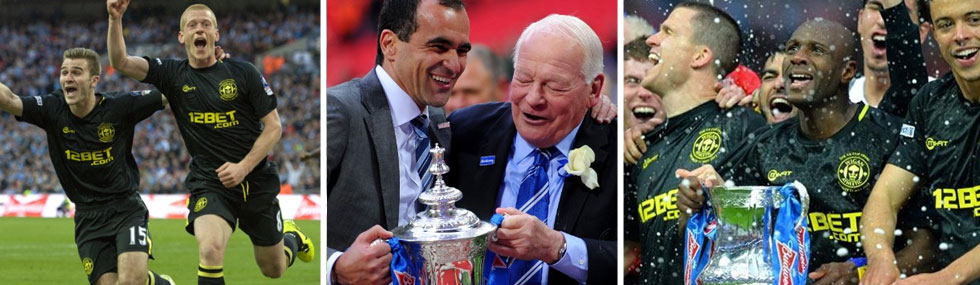
Dave makes the right decision, but can he get the next one right?

Whelan

“Following the incredible achievements of last season, I felt it was the right thing to do that he should be given more time. However, the situation we find ourselves in at the moment, and the run of results in recent months, really has been alarming. Something is clearly not working. For whatever reason, the team is not gelling, despite substantial financial backing in the summer and the dressing room being blessed with a huge amount of quality. Therefore, I have now come to the reluctant conclusion that for the long term good of the club, we need a change.”

Dave Whelan’s words signaled the end of another era at Wigan Athletic. Uwe Rosler departing after only eleven months at the helm. The club is going to have its third manager in a period of a year.

Given only three victories in seventeen league games it seemed like a matter of time before Rosler would be shown the door. It was a sad end to an era in which Rosler had enjoyed a meteoric rise to fame. He took over a team in 14th place and got them into the playoffs, only to be narrowly beaten by QPR. Moreover the stunning win at the Etihad against the to-be Premier League champions in the FA Cup sixth round will stick in the memory for years to come. So will the semifinal, taking Arsenal to a penalty shootout.

Sadly things went pear-shaped for Rosler in the second half of his reign. The rot had set in near the end of last season. The confidence that had been generated through a long string of good results started to wane. The new season saw the team coming back from pre-season training in Germany in poor physical shape, with second half collapses being the order of the day. Moreover Rosler had made nine new signings since the summer, all in need of  a settling in period. But their arrival had swelled the first team squad to over thirty, the end result being Rosler having to deal with disgruntled players not getting a regular game. Sadly we never saw Rosler’s dream of high pressure, high tempo football come to fruition. The players just did not seem capable of delivering it.

One hopes that Rosler will be remembered with some degree of affection among Latics fans. Serious injuries to midfield lynchpins Chris McCann and Ben Watson were a cruel blow when his team was doing so well. Moreover Nick Powell’s form had dipped at the wrong time, with the playoffs within reach. The team’s form wavered as the end of season approached, the loan players brought in during January being largely disappointing. However, despite the playoff disappointment fans remained supportive of Rosler and looked forward to the coming season when he could bring in his own signings and play the high tempo football he sought.

However, Rosler was to face a difficult task in the transfer market. In Jean Beausejour and Jordi Gomez he lost two skillful, quality players who would be difficult to replace. But the biggest blow was the departure of James McArthur on the transfer deadline day. Latics have only won one game since he left. Rosler had to fill the void left by the three who had oodles of Premier League experience.

There has been a lot of criticism of Rosler’s new signings. It would probably be fair to say that none of them have yet reached their best form. However, Rosler should be commended for his acquisition of young players with exciting technical skills, who will surely make their mark with more experience. Whelan backed the manager by forking out significant transfer fees for Adam Forshaw and Emyr Huws, who could prove to be the lynchpins of the midfield in the future. James Tavernier was acquired from Newcastle for a modest fee and the quality his crossing and set piece deliveries make him a threat to opposition defences. Left back Aaron Taylor-Sinclair has yet to appear in a league game. Bringing in the experience of Don Cowie, William Kvist and Andrew Taylor on free transfers made sound sense and all three will have a part to play as the season progresses. Sadly the two new central strikers, Andy Delort and Oriel Riera, in whom Whelan made a significant investment, just have not clicked up to this point.

Whelan did what was necessary by removing Rosler as manager. He now seeks to appoint a manager who can get the best out of the players, in a manner that eluded Rosler over these months. Moreover the squad is unnecessarily large and the new man will surely release a number of players in the January transfer window.

Rumours continue to fly around that some of the senior players within the squad were undermining Rosler. Similar stories were in the wind when Owen Coyle was dismissed last December. Like any football club, Latics prefer to clean their dirty washing in private, so one can but surmise that this has been happening. But it will be interesting to see who does leave in January.

The squad contains players signed by Roberto Martinez, Coyle and Rosler and all three managers had different preferences in terms of style of play. Sadly the flowing football of the FA Cup winning side is becoming an increasingly distant memory, but fans will hope that the new manager will be able to produce that, in addition to getting results. Perhaps it is too much to ask for a new manager coming in with morale at low ebb.

Once again Latics are back in the managerial merry-go-round. A new manager coming in from outside is likely to want to bring in his own right hand men and there could well be a cull of coaching and backroom staff. Or would Whelan insist that current staffing be maintained as he did when Rosler was appointed?

A valid alternative for Whelan would be to appoint from within. The name of Eric Black immediately comes to mind. The costs of hiring and firing will surely play a part in Whelan’s decision, with the financial fair play framework hovering above him.

Once again Dave Whelan has to make a key decision. Like anyone else in the football business he is by no means infallible. His big mistake in recent years was in not replacing Martinez with someone with a similar footballing philosophy. It is in the first year in the Championship that teams who have been relegated from the Premier League have the best chance of returning. Whelan blew it by appointing a manager whose teams more often than not reverted to route one, poles apart from the Martinez era. However, he deserves credit for appointing Rosler who really did lift the club, although in the end he could not maintain it.

Let’s hope Dave gets it right this time.
Like us on Facebook, or follow us on twitter here.

Will it be 4-4-2, 4-3-3 or 3-5-2 for Latics?

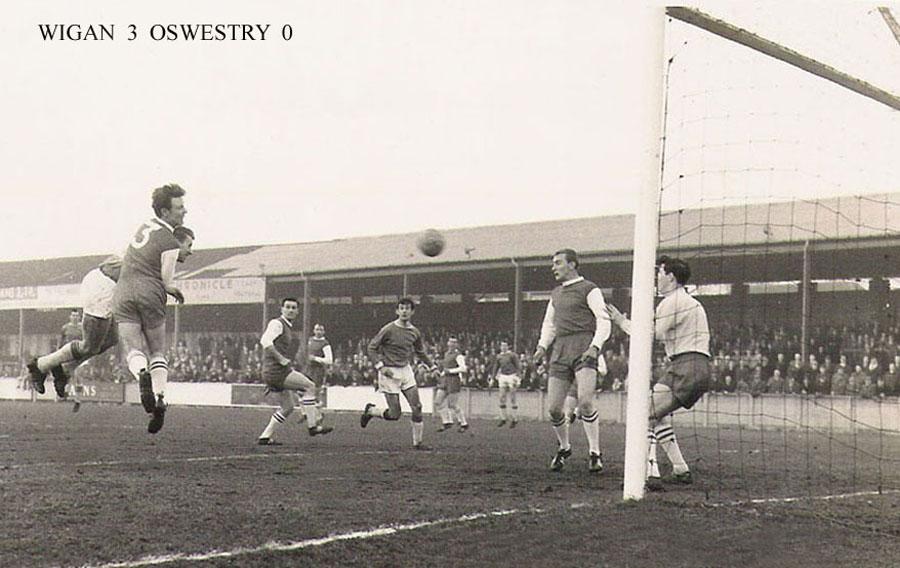
Harry Lyon latches on to a Walter Stanley (third from right) cross. Carl Davenport lurks for any rebounds.  Photo courtesy of WiganWorld.

Harry Lyon latches on to a Walter Stanley (third from right) cross. Carl Davenport lurks for any rebounds.
Photo courtesy of WiganWorld.

In the mid 1960’s Allan Brown’s Wigan Athletic team played the kind of football fans liked to watch. There were two excellent wingers, Les Campbell and Walter Stanley, who would put over a stream of tantalizing crosses for the twin strikers to feed on. No wonder that Latics scored 121 goals in the 1964-65 season, when they won the Cheshire County League. Harry Lyon led the scoring with 67 goals in all competitions.

Football was an attacking game in those days, with 4-2-4 prevalent.

Then came England’s World Cup victory in 1966. Alf Ramsey’s team played without wingers, the ‘wingless wonders’ . They packed the midfield with four players, leaving just Geoff Hurst and Roger Hunt up front. With the rugged Nobby Stiles playing the role of  ball winner in front of a back four marshaled by the superb Bobby Moore, England were a very difficult team to play against. Ramsey’s success was based on solid defence, but he also had a superb midfield general and match winner in Bobby Charlton to help generate goals. 4-4-2 was to become the norm for years to come.

Fads come and go, especially football formations. Putting labels on formations is always tricky, as would be the case in Paul Jewell’s side that won promotion to the Premier League in 2005. Dave Whelan had forked out what was a lot of money at the time for twin strikers who would both score more than 20 goals that season.The names of Nathan Ellington and Jason Roberts are etched into the history of the club.

They were fed from the right wing by Gary Teale, as Campbell and Stanley had supplied Lyon and Davenport some forty years before. However, on the left flank was converted centre forward Lee McCulloch. McCulloch could not in any way be called a winger – his role was to bolster the midfield and ghost in at the far post to poach goals, with the opposition defence being occupied in coping with ‘The Duke’ and ‘JR’. The formation they played was usually referred to as 4-4-2, but it could be argued that 4-3-3 was a better descriptor.

Wingers are back in fashion in modern football, although they are expected to play their part in defensive duties too. But many managers shun the idea of playing with twin strikers, preferring to deploy a lone centre forward with support coming through from midfield. Up against two central defenders the lone centre forward has a difficult job. He is not only expected to hold-up the ball when he is almost always outnumbered, but also to score goals. Inevitably the goalscoring ratio of the modern centre forward, in terms of goals per game, has dropped over the years.

In terms of holding up the ball Marc-Antoine Fortune is the best centre forward that Latics currently have. However, his goalscoring ratio for Latics is low even for a modern day lone centre forward – a meagre 1 per 10 games. Although Fortune’s career average is higher – almost 1 in 5 – it is bettered by those of Andy Delort (1 in 3.4) and Oriel Riera (1 in 4). How much longer will Rosler continue to play Fortune at the expense of the other two?

If one trawls the social media and fan forums there are lots of supporters who advocate the kind of attacking approach that uses two wingers with two central strikers. Many refer to it as playing 4-4-2 although it is probably more akin to the older 4-2-4. Over these pasts weeks several fans have advocated starting lineups that include Callum McManaman and James McClean on the wings and Delort and Riera as twin strikers. It brings back memories of the days of Allan Brown.

But it is something that is unlikely under Uwe Rosler or any manager who might succeed him. Most prefer the security of a packed midfield rather than risk putting too many players far forward. Were Rosler to suddenly have a paradigm shift and choose such an attacking formation the reality on the pitch would be something different, with players having to drop back to help a beleaguered midfield?

Some managers like to stick to a set formation and recruit players who can fit into it. Rosler is not one of those. His players are expected to adapt to whatever formation he decides upon, which in turn can often depend on the opposition his team is to face. Having a set formation has its advantages. Roles are clearly defined and players can slot seamlessly into the system. However, it also makes it easier for the opposition to plan their strategy well in advance.

So far this season we have seen formations that can be broadly labeled as 3-5-2, 4-3-3 and 4-4-2. In recent games Rosler has operated a modified 4-4-2. He has deployed three central midfield players, with Roger Espinoza playing further forward than the other two. He has used Don Cowie in right midfield to provide cover for the attacking runs of James Tavernier from the full back position. Fortune has played the target man role with Callum McManaman in a more fluid attacking role.

From time to time Rosler has used a 4-3-3 system with two genuine wingers in McManaman and McClean. The formation offers balance, together with a direct threat to the opposition defence coming from both sides of the pitch. However, both McManaman and McClean need to see a lot of the ball to be effective and this has not always happened. An alternative would be to use Shaun Maloney and Martyn Waghorn in wide positions, with a tendency to move inside. Both have been more consistent goalscorers than McManaman and McClean.

There are those who do not like the 3-5-2 system. They say that it often reverts to 5-3-2 with the wing backs not supporting the forwards. But when properly put into practice it can yield good results. Moreover the squad is well stocked with good quality central defenders and Rosler has lots of options when choosing a back three. He has the aerial power of Leon Barnett and Thomas Rogne to counter those teams who rely on route one football. In Emmerson Boyce and Ivan Ramis he has players who have proved themselves to be as good as any central defender in the division.

Some players thrive more in some tactical formations more than others. James Perch is a solid and dependable right back who has worked hard when pressed into action as a wing back. His attacking play has undergone a significant improvement over the last year. Perch is a fine athlete with good lungs, as evidenced by goals he has scored through getting into positions where he would not have been expected to show up. However, Tavernier has more to offer going forward. His delivery is so often of real quality. But he needs to work hard on the defensive aspects of his game.

One recalls the promise of Ronnie Stam going forward, but he just did not have enough defensively, even as a wing back. At this stage Tavernier looks a good possibility as a wing back or as an attacking option at full back later in a game. Perch remains the best option at right full back.

With three games in less than a week Rosler has already made it known that he will be rotating his squad for the away games at Brighton tomorrow and Bolton on Friday. Delort and Rogne made appearances for the development squad last week and are likely to feature in at least one match. It is to be hoped that Maloney‘s goal against Fulham will help to kick-start his season, which has been disappointing up to this point. Waghorn was a key element of Rosler’s system last season, but has seen little action up to this point. Riera too has seen little playing time over recent weeks and is overdue to return.

Latics have looked at their best this season when they have been able to deliver the high pressing game that the manager espouses. The ability to do that seems to outweigh the tactical formation he chooses to adopt.

Like us on Facebook, or follow us on twitter here.

Espinoza return will energize a problematic midfield

espinoza

“Roger has trained very well for the last couple of weeks, he is in good spirits and he will be in the squad.”

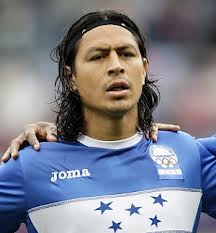
Does that statement suggest that Uwe Rosler has welcomed Roger Espinoza back into the fold? The American/Honduran has played only 12 minutes of Championship football this season, coming after 78 minutes at Charlton. That was more than two months ago.

Curiously another statement from Rosler about Espinoza preceded the above in the media. In an interview with the BBC Rosler is quoted as saying that “Roger came twice to me and wanted to leave the club. He wanted to go back to Kansas. I think after he came back after the World Cup he struggled to find an appetite for football. His family is in the States, it was very difficult.

There had been rumours in the press about Espinoza going back to Kansas City, but is this the real reason why he has been given so little playing time, first by Coyle, then by Rosler? Admittedly he did undergo a hernia operation early this year, but he recovered quickly and was soon back in training.

Was Espinoza snubbed for so long because he did not perform well enough in training or was it that he was missing his family? Given the way Espinoza plays could he truly have lost his appetite for football or has he been disillusioned by the lack of opportunity given him by Rosler?

If anything has been Latics’ weak point this season it is the midfield. They have collectively struggled to do their job – to protect their defence and provide service to the forwards. There have been so many occasions this season when the midfield has needed an injection of energy and passion. That is something Espinoza has always had in abundance.

Apart from the return of Espinoza to the squad – and hopefully a place in the starting lineup – the other good news this week is of the returns of Chris McCann and Ben Watson from injury. However, following a broken knee cap and a double fracture of the leg respectively, neither player is likely to be match fit for some time. Sometimes an under pressure manager can bring key players back too soon after injury. Let’s hope that it will not be the case with McCann and Watson. Around the Christmas period would seem to be a realistic time frame for their return to first team action, following games for the development squad.

For the moment, Rosler has injury problems to deal with. It could be for that very reason that he is bringing Espinoza back into the match day squad.

Let’s hope that is not the case and that the German is going to give Espinoza a genuine chance, through a run of games in the team.

Like us on Facebook, or follow us on twitter here.


Reading Rosler

sardine_psychologist_779205

I think I have options but players have to realise that I can only give them so many chances because we’re a top club in the Championship and, with the personnel we have, it can’t take you ten games to find your form.”

Quotes from football managers can be misinterpreted or taken out of context. Uwe Rosler has come out with some gems in recent weeks that have had people thinking. What is he really trying to say? How does it fit in with how the team has been playing? What goes on in his head when he is  picking a team?

Latics fans learned that Rosler’s team selections can be perplexing during his early days at the club. Having a reputation as a serial rotator the German continued in the same vein last season. From his first game in charge in December to the end of season playoffs he used 29 players. Faced with extreme fixture congestion a degree of team rotation was certainly necessary. In fact his predecessor, Owen Coyle, also felt the necessity to rotate his squad. But with Rosler it was not so much the rotation that fans questioned, but the way in which it was being done. Sometimes there would be wholesale changes resulting in lineups lacking in cohesion.

At times it might be easier to predict the winner of the Grand National than guess a Rosler starting lineup. Are his choices linked to a tactical approach or are they influenced by the players’ attitudes and their levels of commitment in training?

So far this season Rosler has used nineteen players in eleven league games. However, nine players have started in almost 90% of those matches. Put simply Rosler has stuck by a basic core of players, with others used sparingly as starters or substitutes. Is Rosler sending a warning to that nuclear core of players that if they don’t perform they will be replaced? Or is he referring to the new players who have taken time to settle in? Has he shown favouritism towards them at the expense of those recruited by previous managers?

The critics will say that Rosler has his favourites and his management style involves a “My way or the highway approach”. Grant Holt has clearly never met the manager’s approval and has now been sent away on another loan spell. Moreover Roger Espinoza, Fraser Fyvie, Lee Nicholls and Thomas Rogne have disappeared off the radar. Not so long ago Rosler was talking about sending players out on loan, with the inference that it could include those who had played in a recent development team fixture. They were Espinoza, Fyvie and Marc-Antoine Fortune. Since all three are in the final year of their contracts his remarks seemed to signal to those players that their time at the club was coming to an end. However, Fortune now finds himself back in favour with the manager.

Fortune is a player who has his critics, rightly so given his woeful goalscoring record. However, even they would acknowledge his ability to be effective in the target man role. Fortune is strong and hard to knock off the ball. Apart from his goalscoring he has fitted well into the Rosler machine. The big French Guianian would have surely realized his place would be threatened with the arrival of Oriel Riera and Andy Delort. In fact Rosler recently stated: “Marc-Antoine Fortune was told by me at the beginning of the season that the new strikers would be preferred at the beginning to get their chance.”

Fortune was on the bench for the season opener against Reading, with Riera leading the attack. He started in the next game, the League Cup debacle at Burton Albion. Riera was to go on to start in four consecutive league games. His form was hardly electrifying, but he scored a well taken winner against Blackpool and played reasonably well in the 4-0 home defeat of Birmingham. However, the arrival of Andy Delort meant that he was surprisingly relegated to the bench. Delort was to start in three consecutive games without really impressing. However, the names of neither Delort nor Riera appeared in the starting lineup at Bournemouth. Fans were flabbergasted when Fortune was named ahead of them both. Delort returned in the next match at home to Ipswich, only for Fortune to come back for the 2-2 draw at Wolves last Saturday.

Rosler has been full of praise for Fortune, following his fine performance at Molineux, which included a well taken goal. “Marco has been an exceptional pro. He’s never let himself down or us down. He’s continued to work hard and kept himself in good shape mentally and physically.  In the situation we’re in we need more Championship experience and Marco gives us that, he knows the Championship in and out. He has the physicality to cope with that and he takes the pressure off our new players because they need to adapt a little bit more.”

Rosler’s supporters will say that he is wise to bring in Fortune to allow Delort and Riera more time to adapt. Moving to a new country is a challenge in its own right, let alone being thrust into the physicality of Championship football.

However, critics would say that Rosler left Riera out of the lineup at exactly the wrong time, after he had started to show that he was adjusting to the pace of English football. Moreover Delort was immediately thrust into the deep end, rather than having a settling in period and a gradual introduction into the team. Both Delort and Riera came to the club following successful seasons with their clubs as central strikers who scored more than their fair share of goals. However, the poor service from midfield up to this point would have made it difficult for any Latics striker to get goals. Neither player could be accused of wasting valuable opportunities – the necessary level of service just has not been there.

Midfield was a strong point for Latics last season. However, the departures of Jordi Gomez and James McArthur and the long term injuries to Chris McCann and Ben Watson have hit Latics hard. Rosler clearly had to build a new midfield. In Latics’ three games of the season McArthur made up the midfield trio together with Don Cowie and Emyr Huws.

When McArthur left for Crystal Palace, Rosler had the option of bringing in Espinoza, Fyvie or youngster Tim Chow who had impressed in pre-season. However, it was William Kvist, newly signed just before the transfer window closed who was to claim McArthur’s spot in the next match at Blackburn. Fitness levels of Latics’ squad at the time were low and once again they caved in during the second half. However, having recently played a couple of games for Denmark, Kvist’s fitness level was possibly better than some. Moreover Kvist played for Fulham in the second part of last season, so his adaption was not as difficult as that of Delort and Riera.

Allegations that Rosler has shown favouritism to players he has recruited are hard to substantiate. He had little choice than to bring in new central strikers, midfield players and left backs. In fact, Rosler has signed ten players in his tenure at the club, but only four made the starting lineup for the Wolves match. Don Cowie has played in every league game so far, and Emyr Huws and Andrew Taylor in all but one. The experienced Kvist has already staked a claim to a regular place. Of the remainder Martyn Waghorn has started in only two games, as has Adam Forshaw. James Tavernier has been limited to appearances off the bench and Aaron Taylor-Sinclair has not featured at all.

Rosler has brought in a mixture of youth and experience. Delort, Forshaw, Huws, Tavernier, Taylor-Sinclair and Waghorn are in their early twenties and all are excellent prospects for the future. In Cowie, Kvist, Riera and Taylor he has players with proven experience. However, as new players come in others can be expected to depart. Espinoza and Fyvie may well be sent out on loan. Latics could well be open to bids for Ali Al-Habsi in the January transfer window. In the meantime Nicholls could be sent out on short term loan.

Having a new midfield has hampered Latics’ possibilities of getting off to a good start this season. However, the overriding factor that has contributed to only two wins in eleven league games has been a lack of fitness. Latics have so often wilted in the second half, losing the initiative against teams that could not be able to compete with them in terms of quality. The run of bad results has led to a crisis of confidence among the squad that has affected all players, new and old.

On top of that Rosler’s team selections have been surprising to say the least. However. the overdue return of Leon Barnett will help provide more defensive solidity. Fitness levels have improved and both Adam Forshaw and Shaun Maloney will be available to provide the kind of service that Delort and Riera have so desperately lacked.

As fans we do not know what is going on behind the scenes at a football club. If we did maybe we could better understand the reasons for some of Uwe Rosler’s more puzzling decisions.

Like us on Facebook, or follow us on twitter here.

Five things Rosler must get right

keyboard-warrior

It is less than a year ago since Owen Coyle left Wigan Athletic. The Scot was on a hiding to nothing when he took the job in July 2013. Not only was he an ex-Bolton manager, but he was expected to get Latics back into the Premier League in the space of one season. Expectations were high after the FA Cup triumph, following eight years in the Premier League. With their parachute payment, Latics had a clear financial advantage over most of the clubs in the division, plus a residue of players with a wealth of Premier League experience.

With the expectations of the fans and the owner weighing heavily on his back, it was a difficult time for Coyle. Results had not been meeting expectations and they were to get worse in December, when there was widespread disgruntlement among fans, fuelled by keyboard warriors on the social media. Successive defeats to Brighton and Zulte Waregem in late November were followed by a debacle against Derby County, soon after which Coyle’s departure was announced.

Some nine months on and the keyboard warriors are lively again. This time their disgruntlement is aimed at Uwe Rosler. It might be hard to believe after what Rosler has already achieved at the club, but some are starting to question if he is the right man for the job.

Following Coyle’s uncomfortable reign at Wigan, Rosler was to become viewed as the saviour. He took over a team that had been drifting towards the lower reaches of the Championship table and galvanized them into reaching not only the playoffs, but also the FA Cup semi-final. It was a remarkable achievement and it brought him widespread acclaim from fans.

However, within the space of six weeks Rosler’s star has waned. Latics are currently in those same lower reaches of the Championship table, where they were when he took over. They have won only six of their last twenty four matches.

Rosler has brought in nine new players over summer, none of whom have yet performed at their optimum. New players always take time to settle in, but many have been thrust into the starting lineup despite lacking match fitness. Moreover the pre-season training programme failed to provide the level of  preparation necessary for the squad  to compete at least on an even keel in the very physical environment of the Championship. .

Latics have so far amassed 8 points from 8 league games. At the same stage last season, Coyle’s team had 11 points.

With another 38 games Latics have time to turn things around. Physical fitness levels are improving and the new players are gradually settling in. Confidence is low at the moment, but Rosler has shown in the past that he can lift a team low on confidence. Rosler is a very capable manager who has a long term view. Like all managers, he makes mistakes, but he is honest and open and willing to reflect.

Wigan Athletic cannot even contemplate looking for another manager at this moment in time, as some of the more extreme keyboard warriors might infer. Dave Whelan would be wise to let supporters know that the German has his backing, despite the adverse results of late. The continued support of the fans will be needed to help things turn around.

Here are five things that Rosler must do if he is to lift Latics out of their current malaise and make them into genuine promotion contenders:

1) Build a team based on solid defence.

Rosler has a wealth of quality defenders at his disposal. Following his arrival last year Latics went on an unbeaten run of 6 league games, when they conceded only 3 goals, with four clean sheets. That is what is needed in the matches coming up.

Up to this point James Perch and Rob Kiernan have been ever present. Emmerson Boyce, Ivan Ramis and Andrew Taylor have played in 7 out of the 8 games. Latics have conceded only 10 goals in the 8 games so far, but the defence has looked ragged at times. On the 3 occasions when they have played with a back four they have conceded 6 goals. They have conceded only 4 goals on the 5 occasions where they have played 3-5-2.

Leon Barnett, a pillar in defence for most of last season, has appeared in only one game so far, coming on at half time against Birmingham. Neither Gary Caldwell nor Thomas Rogne have featured.

Rosler needs to decide whether he has the right blend in the centre of defence. The admirable Boyce has had a disappointing season so far, not looking like the player he has been in the past. Kiernan has had the ups and downs that can be expected of a young player playing in a key defensive position.

Given that so many Championship teams rely on aerial bombardment for a source of their goals it has been a surprise that the two best headers of the ball – Barnett and Rogne – have not made the starting lineup so far.

Rosler’s tactic of defending from the front through high pressing has not worked effectively up to this point, largely down to the lack of physical fitness of the players. Moreover he has a totally new midfield this season that has yet to gel. The end result has been more pressure on the back line.

2) Keep up squad morale

Rosler has built up a capable and well balanced squad of 29 players. Three or four of those are likely to be sent out on loan, which will give them more chance of playing time and reduce running costs. That still leaves him with a squad of around 25.

Rosler is an adherent to the concept of squad rotation, which he employed last season to a large degree. It was not universally popular with the fans. His critics would say that Rosler made too many changes from game to game, that he himself did not know what his best starting eleven was. However, the sheer volume of games that Latics had to play made a certain degree of squad rotation necessary. Moreover it meant that all players in the squad had a chance of getting on the pitch. This in turn produced keen competition for places and raised the morale of those who might not have been involved.

There are few automatic starters in the current squad. Goalkeeper Scott Carson has started in all the league games so far, but faces strong competition from Ali Al-Habsi. Callum McManaman has been in fine form this season and rightly has started in all eight league games. James Perch and Emmerson Boyce were regular starters last year and have remained so. Ivan Ramis seems to have shaken off his injury worries and is likely to be a regular starter.

However, fans have questioned Rosler’s willingness to give all squad players a fair crack of the whip. Fraser Fyvie had a good pre-season and has played well for the development squad, but has not played a single minute of Championship football this season. FA Cup Final hero and fan favourite Roger Espinoza has made just one appearance off the bench. It seems that they, together with Marc-Antoine Fortune, are to be sent out on loan, a signal that their careers at Latics are nearing an end since they are in the last years of their contracts.

The case of Grant Holt continues to give cause for concern. One of Rosler’s first moves when he arrived was to leave Holt out of the squad that travelled to Slovenia to play Maribor. Then in January the player was sent on loan to Aston Villa until the end of the season. Since he has come back he has been consigned to training with the development squad and he has not been given a squad number. Moreover his face was conspicuously absent from the squad photograph taken a few days ago.

Holt has become fair game to those who want to take a pot shot at him on the social media. Much of it has been over his weight, but many fans have also perceived that the player never made enough effort to succeed at the club. By all accounts the player has shed his excess weight, but it appears that Rosler is unwilling to welcome him back into the fold. Holt is reputedly one of the club’s best paid players and is only in the second year of a three year contract.

The best case scenario would be for another club to sign Holt, but who is going to sign a 33 year old player that does not even train with the senior squad? It is a Catch-22 situation that Rosler needs to find some way to resolve. It certainly cannot help morale within the club.

3) Provide support for the centre forward

Like Roberto Martinez before him, Rosler prefers to play with one central striker rather than two. His systems rely on the wide players and midfielders providing support the “lone” centre forward. Up to this point Andy Delort, Marc-Antoine Fortune and Oriel Riera have all failed to receive the necessary support. The service from the midfield to the centre forward has been poor. Both Delort and Riera had good goal scoring records at their clubs last year, but unless there is a change in the way Latics play they are unlikely to score many goals at Wigan. Only one of Latics ten goals has come from a centre forward, that being Riera’s goal against Blackpool.

Both teams that achieved automatic promotion last year played with two strikers. Danny Ings got 21 league goals for Burnley last season, his partner Sam Vokes getting 20. For Leicester, David Nugent scored 22 and Jamie Vardy 16.

Many fans still hanker for the 4-4-2 of the days of Jewell and Bruce where striking partnerships such as that of Ellington and Roberts were the blueprint for success. But the days of 4-4-2 are largely over, with managers preferring to have three players in central midfield.

Rosler’s favoured formations are 4-3-3 and 3-5-2. In 4-3-3 the two wide players are expected to get goals as well as provide them. In the 3-5-2 system operated by Rosler he tends to play a target man centre forward up front, together with a twin striker.

4) Insist on quality football

Rosler’s vision of Latics playing a high pressing, high tempo game with rapid counterattacking seems a long way off at this moment in time. However, that is not to say that it cannot happen someday. It took Martinez some two and a half years for him to see his vision materialize in spectacular fashion when Latics started beating the elite. Martinez received his share of animosity from sections of the crowd through sticking to his guns and insisting that his teams try to play football in the style that he espoused.

Like Martinez, Rosler needs to show courage in sticking to his footballing principles and to continue to work towards his stated vision. Martinez was under the constant pressure of keeping Latics afloat in the Premier League, whereas the pressure upon Rosler could be even greater given the need for promotion before the parachute payments run out.

Rosler recently stated that Latics are a team that plays possession football. Given the hoofing we have seen on occasions it was reassuring to hear him say this. Martinez and Rosler have different visions of how football should be played, but both clearly agree that quality possession football is the way forward.

It is to be hoped that the hoof is a thing of the past, except in cases of dire emergency.

5) Utilise players in their best positions

Rosler’s team selection against Ipswich left Latics with an unbalanced look. There was not a single naturally left footed player in the starting lineup. A right footed left back linking up with a right footed left winger stymied the attack on that side of the field. The problem was caused by Rosler switching Perch from right to left back. He had Andrew Taylor – a natural left footed full back – and James McClean – a natural left footed winger – sitting on the bench.

Perch is a fine defender who has made a significant improvement to the attacking side of his game under Rosler. His strength is on the right hand side of the field.

Shaun Maloney’s best position has always been in the centre of midfield, although during the Martinez era he would often start on the left, but move inside. At 31 years of age and having had so many problems with injury, the Scot is not likely to thrive on the left wing.

In the latter part of the second half against Ipswich, Adam Forshaw was moved into the centre of midfield, where he looked a different player. Forshaw could prove to be the playmaker that Latics have sorely missed up to this point.

Callum McManaman has the ability to be one of the best wingers in the country. However, the lack of protection he receives from referees in the Championship makes one wonder when he is going to pick up a serious injury. Playing him wide on the wing makes him an easy target for unscrupulous defenders. This season he has revelled in the free role he is afforded when Latics play 3-5-2. Not only does it make him harder to mark, but it gives him more opportunities on goal. If he were to play in that position and stay clear of injuries he could well become the 20 goal per season striker that Latics have been missing. But then again is Rosler willing to stick to a 3-5-2 formation on a regular basis?


Like us on Facebook, or follow us on twitter here.