Latics in a quagmire

Mud

Rugby League has never really appealed to me. In my pre-adolescent days Wigan RLFC used to have a good deal for kids. You could go and watch the famous Cherry and Whites for threepence in the ‘hen pen’ behind the goals. I did it twice, once when they beat Hull and finally when Ryan Giggs’ father, Danny Wilson, inspired Salford to victory there.

Central Park was just five minutes’ walk from where I lived, right next to the town centre. So when my dad asked me if I would like to make the longer crosstown walk over to Springfield Park on a rainy day I had to think twice about it. But from the moment I watched Latics that first time, as an eleven year old, there was no way I was going back to the hen pen.

I have maintained little interest in watching the local rugby team playing a sport that I have rarely found entertaining. But on Saturday I tuned into the second half of the World Club Challenge game between the Warriors and the Brisbane Broncos. The commentators were waxing lyrically about what a good game it was, but all I could see was the Warriors penned into their own half, unable to move forward on a quagmire of a pitch. It was dull stuff until they surprisingly broke away from their own half and equalized near the end of the game. By that time the pitch was totally ruined, so a little bit more punishment caused by the game going into extra time was not going to make that much difference.

It is the first rugby league game I have watched for ten years and a similar time period could elapse before I watch another. The pitch clearly made things difficult for both teams. It made me wonder if the Warriors would have been able to hold the Broncos to such a tight margin if the pitch had been better. Then my thoughts turned to the Cardiff match. Could it be that the quagmire pitch might actually help Latics?

The term ‘quagmire’ can be used to describe not only the DW Stadium pitch, but also the current plight of Wigan Athletic. They are stuck in a quagmire in their fight to avoid relegation. Most of the more skilful players in the squad have deserted a sinking ship and the manager has the most unenviable record in the Football League of W2 D3 L10. Moreover Malky Mackay’s plans have been hit by long term injuries to Emyr Huws, Chris Herd and Leon Clarke, plus a two week absence for William Kvist who has been the team’s most consistent performer over recent weeks. Having shipped the likes of Delort, Kiernan, Riera and Tavernier off on loan he is left with a squad that is starting to look threadbare.

Mackay and Latics are certainly in a quagmire and there appears no way out of it. The manager has dismantled the old squad, brought in new players, but performances continue to be well below par. Latics have got worse, not better, during Mackay’s tenure. Dave Whelan is back in town and clearly worried about results. If Latics do not beat Cardiff tonight will he be showing Mackay the door?

Cardiff City’s form has also slumped over the past couple of months, so Latics will face another side low on confidence like themselves. It would appear to be a real opportunity to pick up three precious points, but over recent weeks Latics have thrown away games against teams in similar situations. The home defeats to struggling Rotherham and Charlton sides were a bitter pill to swallow. But can they actually win tonight playing on that quagmire of a pitch?

The critics would say that good football has not been evident since Mackay’s arrival, with goals from set pieces the order of the day. The pitch could stifle any attacking moves from the opposition and a goal from a set piece could win it. Mackay will rue the absence of Kvist, with his long throw-ins.

It is likely to be a grim night for lovers of good football tonight at the DW Stadium. But it is the result that is paramount. A win for Latics would provide at least a ray of hope for the future. Less than that will surely bog them down even more in the quagmire that Mackay finds himself in.

Attendances and finances at Wigan Athletic

2012-moneyball

“There was nothing like it. Running down the tunnel and hearing the roar of a 3,000 crowd. Springfield Park was the best place in the world for me.”

Meeting Harry Lyon in the early 1980s was like a dream come true. It had been a chance encounter with the man for whom the title “legend” would be an understatement for me.

My father had continued to live in the south of Wigan, then rugby league territory, so the pubs around us were steeped in that kind of nostalgia. One of those was ‘The Waterwheel’, run by ex-Great Britain rugby player, John Stopford. Although he never played for Wigan RLFC, Stopford would draw rugby enthusiasts to his pub. We mostly avoided such places, preferring to walk further afield to pubs that were more salubrious for Wigan Athletic supporters.

But one rainy night we succumbed, and tried ‘The Waterwheel’. Upon opening the door and the sight of the scrum surrounding the bar we started to think twice about it. There were some burly men there, faces like boxers, some with arms in slings. We were just about to walk out when my father said “Look it’s Harry Lyon over there.” It was indeed my hero from my teenage years. Chatting with Harry was easy. He just made you feel comfortable talking with him. Although he had left the club a decade before it was obvious that Wigan Athletic was his first love. He remains the club’s leading scorer of all time, with 243 goals to his credit.

Harry’s quote was straight from the heart, but the reality was that a 3,000 crowd was not the norm at the time. True, Latics had the best home attendances in the Cheshire League and their traveling support would so often ensure that clubs like Oswestry and Stalybridge would get their best crowds of the season. But for clubs at that level of English football it was a hand to mouth existence, but somehow most clubs survived.

Gate receipts were the main source of revenue, which gave Latics an advantage, given their stronger support. But the reality was that most of the time the attendances were not a lot above the 2,000 mark. The club survived through the efforts of the Supporters Club and the Board of Directors dipping into their pockets.

Financial survival has never been easy for Latics. In their inaugural season in the Football League, 1978-79, they averaged a healthy 6,701. The club’s attendances the season before, their final one in the Northern Premier League, had dropped to an alarming 1,334. The move up clearly had a major impact upon the town.

Since then Latics’ highest average league attendance was 20,160 in their first season in the Premier League. Ironically their second highest was 19,345 in the relegation season of 2012-13. But the gloss was to wear off and Latics slumped to their lowest attendance levels of their Football League era with just 1,748 in 1994-95.

If it had not been for the arrival of Dave Whelan in 1995 where would Wigan Athletic have been now? Attendances had been woefully inadequate and the club was sinking into a seemingly inexorable financial quagmire.

But ten years later Latics were playing in the Premier League against Chelsea and a crowd of 23,575 was present despite the game being broadcast. It was a taste of things to come as the club’s attendances eclipsed those of the local rugby club that season and have done ever since, even last season despite relegation to the Championship.

Football season Rugby season Wigan Athletic Wigan Warriors
2005-2006 2006 20,160 14,464
2006-2007 2007 18,159 16,040
2007-2008 2008 19,045 13,995
2008-2009 2009 18,350 14,080
2009-2010 2010 17,848 15,181
2010-2011 2011 16,976 16,125
2011-2012 2012 18,634 16,043
2012-2013 2013 19,375 13,556
2013-2014 2014 15,176 14,102

Latics’ gate money in the Premier League days was always dwarfed by the TV revenues they were receiving and from a purely financial viewpoint attendances were not much of an issue. In their last season in the Premier League match day revenues covered no more than 10% of total revenue of £56.4m. Without the television revenues, the club could never have seriously competed for eight long seasons in the elite division.

In my article Finances, FFP and the long term future of Wigan Athletic, published in May 2014, I put forward figures needed to stay afloat in the Championship. To keep a team in mid-table would typically involve a wage bill in excess of £20 million. Whereas to get into the top six would cost around £30 million, which is precisely what it cost Latics last season.

With a significant drop in parachute payments to be received this season it looked likely that the club would start to trim its wage bill. The departures of ex-Premier League players Jean Beausejour, Jordi Gomez and James McArthur must have helped. However, manager Uwe Rosler was to bring in nine new players over the summer. Although some were younger players, probably not on relatively high earning contracts, the competition in the transfer market forced the club to offer more tempting salaries to the rest. The result was a squad that was larger than the club needed with a wage bill close to that £30 million of last year.

Dave Whelan clearly had promotion within his sights when he released some £8-9 million in transfer fees for Oriol Riera, Andy Delort, Emyr Huws and Adam Forshaw. Much of the outlay was covered by the fee received from Crystal Palace for James McArthur, but their arrivals put more pressure on the wage bill.

It was a gamble which was to fail, but Whelan is the shrewdest of businessmen and he knows if you don’t take risks you are likely to stand still. Huws was constantly bothered by an ankle injury and never reached top form, despite having moments of showing his true potential. He remains one for the future, despite being sidelined for the rest of the season with another ankle injury. Sadly Delort and Riera have been dispatched to their home countries on loan and Forshaw has been sold cut-price to Middlesbrough.

Whelan had made the gamble, backing a manager who had performed admirably in the previous season. After being criticised by fans for hoarding the cash from the James McCarthy transfer the season before he had stuck his neck out in allowing Rosler to bring in so many players and run the risk of expenses heavily outweighing revenue.

Following the departure of Rosler and the continuing downturn in results under Malky Mackay, the club made huge strides in getting its financial situation back on an even keel during the month of January. Just a few months before no one could have anticipated the fire sale that was to occur. Ten players were to leave, four of whom were members of the team that won the FA Cup Final.

That famous cup final man of the match, Callum McManaman, went to West Bromwich Albion for around £4.5 million. Putting back the clock, what might have happened if he had not injured his ankle in the Arsenal match that followed the Cup Final and put Latics down? Following his Wembley display he could well have gone to a big club for some £15 million, if he had been fit. Sadly it did not happen and the ankle injury had a major impact on his fitness the next season. The rest is history.

Such a fire sale would have brought huge protests from the fans under normal circumstances. But the “hatchet man” Mackay was able to do it with hardly a whimper from supporters who were thoroughly disillusioned with the lack of commitment shown by players whom many viewed as overpaid and overrated.

The fire sale has put Latics back on track financially. Apart from the transfer fees received they have cut the wage bill down significantly, to probably around £20 million on an annual basis. Mackay paid transfer fees for two players – Billy Mackay and Jason Pearce – but the outlay for the two was less than £1 million. The rest of his acquisitions are loanees or players on short term contracts.

For the coming season – no matter what division they are in – Latics will receive £8 million in parachute payments, plus around £2.5 million from TV money. The rest will need to come from gate receipts and commercial revenue.

The latter has not been a major factor over these years, so gate revenue becomes increasingly important.

Should they stay in the Championship, crowds of around 12,000 would most likely be the order of the day. That is providing a squad that will cost considerably less to maintain than those of the past two seasons can hold its own. Relegation would almost certainly mean a decrease in attendances, even if the team were to do well. Revenue from the visiting support would most likely nosedive.

Gate money will clearly play a more major role for Latics next year than it has for more than a decade. Put simply it is going to be a more proportionate part of revenue than it has been.

But then again, for Latics gate money does not correlate with attendance in the same way that it does for most clubs. The club had wisely kept admission prices relatively low during its most successful years and they remain so. It helped them compete for support within the town and build up a level of hard-core support that the club had never previously enjoyed. However, continuing the policy is not necessarily the right ploy for the club. At some time in the future it is going to have to start moving its prices more in line with that of its competitors, at the risk of losing some support.

For the coming season the revenue and spending numbers need to add up. A £20 million wage bill is out of the question. Austerity will be the order of the day, no matter which division the club is in.

However, the good news is that the club has become a model for others to follow in its financial management, which serves to safeguard its long term future. A profit of £2.6 million was announced for the 2013-14 season, following two previous campaigns in the black.

The big question regarding revenue streams is whether Latics will be able to afford to run the Charnock Richard facility, assuming it will be completed. If it dies a death it will be much harder for Latics to put in place an Academy that providesthe first team with players, the best of whom can be sold off to keep the club afloat. Should Latics suffer relegation it could be one of the cut backs.

Much will depend on the ability of Mackay’s current team to avoid relegation. If they can the outlook will be brighter.

Attendances and revenue remain inextricably linked, even if not as strongly as they were during the Harry Lyon era.
Can we “Believe” under Mackay?

Mackay's record makes sad reading: W1 D3 L10.   Photo courtesy of Sky Sports.

Mackay’s record makes sad reading: W1 D3 L10.
Photo courtesy of Sky Sports.

“Certainly off the back of tonight’s performance, there is going to be a couple of changes. It’s back to the training ground, we’ve got another few players into the club over the last couple of weeks so they’ll certainly be players getting their chances.”

So said Malky Mackay after arguably the worst performance of a depressing season, a 3-0 loss at Nottingham Forest.

Mackay had chosen a team with one change from that which lost against Bournemouth. Chris Herd came in for the injured Chris McCann. Billy McKay remained on the bench.

Mackay clearly had a plan to smother Forest’s fire by playing ugly. With Leon Clarke playing a lone centre forward role there was clearly going to be little goal threat from Latics unless the midfield trio of Cowie, Kvist and Herd got up to support him. With all three being defence-minded players that was unlikely to happen. Somehow Latics scrapped it out for 33 minutes until Britt Assombalomba opened the scoring, heralding a disintegration of order within the Wigan side. The only surprise is that Forest scored only two more.

One win in the last 16 league matches is the most dire of statistics. Moreover there is little likelihood of it changing soon as Mackay is likely to  bring in more players who have never played together before, some of whom will be lacking match fitness as has been the case with Herd and Kim Bo Kyung in the past couple of games.

The loss of Emyr Huws for the rest of the season is a hammer blow for Mackay. Moreover the absence of Chris McCann last night left him desperately short of midfield cover.

Looking at the Wigan lineup before the game gave one a sense of foreboding. There just was not the talent in the starting eleven that we have become accustomed to over these years. The family silver was sold off and the side is now desperately short on quality.

Mackay has signed in only two new players on permanent contracts, Billy McKay and Jason Pearce. Clarke – who has played for 14 clubs – and Herd are players whose contracts expire at the end of the season, coming to Wigan on loan, unlikely to be offered extensions by their parent clubs at the end of the season. Kim’s contract at Cardiff was cancelled, as was Gaetan Bong’s at Olympiakos. They are on short term deals until the end of the season. Harry Maguire and Sheyi Ojo are young players coming from Premier League clubs, the former having minimal experience of Championship football, tghe latter none.

Ironically the two players who have been signed on permanent terms have been low on the totem pole.

Pearce is yet to appear, despite the poor form showed by Leon Barnett, who now looks a mere shadow of the player he was a year ago. Mackay once again persisted in a back four of Perch, Barnett, Ridgewell and Taylor. One would have expected that that quartet would have built up some mutual understanding following several games as a unit, but the way Forest were able to slice them open suggests that was not the case.

Mackay will be forced to change his back four in the next game at Reading, with Liam Ridgewell returning to Portland. Andrew Taylor is another whose form has been below par and he might well be replaced by Gaetan Bong. The most likely formation at Reading will be Perch, Pearce, Maguire and Bong. Not an ideal situation at this time of the season to have a new team of back four players.

McKay sadly seems to be following in the footsteps of Andy Delort, having come on last night after 88 minutes, although he did play the full second half against Bournemouth. Despite scoring 10 goals in 23 Scottish Premier League games his manager does not deem him necessary in the starting lineup. Let’s hope he will be better treated at the club than the Frenchman, who is now back at Tours, the rumours being that Latics continue to pay his wages.

Both Kim and Herd arrived at the club short of match fitness. Kim played the first 45 minutes on Saturday and only 9 minutes more last night. Herd’s stats are 59 minutes and 63 minutes respectively. Putting in unfit players when the team is struggling is hardly ideal.

However, with an absence of technically skilled players in the squad Mackay probably felt Kim was worth the risk. Ojo showed his skills on Saturday, but is unproven at this level. Can he put those skills into effect over a whole game? Mackay was forced to play Herd at right back against Bournemouth in the absence of Perch. Last night he was pushed in to shore up the midfield.

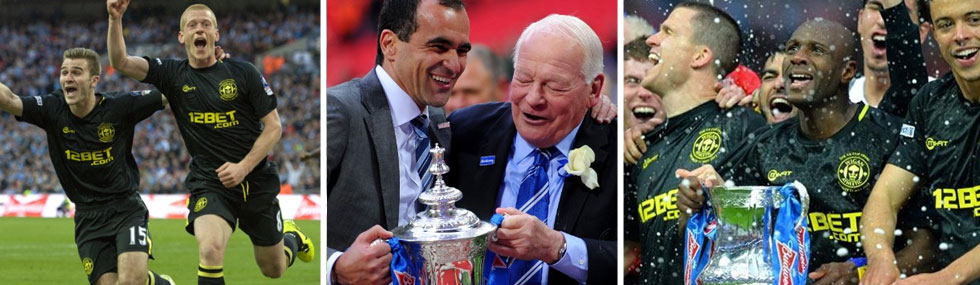
In the days of Roberto Martinez the “Believe” motto became the standard that raised the team into achieving against the odds. The manager himself had clear belief in his players and they responded on the pitch.

Under Mackay “believing” is much harder for us fans. His record up to this point as Latics manager is unbelievably bad. Will Dave Whelan pull the plug and bring in someone else to try to salvage the season, or is he already resigned to the club being in League 1 next year?

The likelihood is that Mackay will stay at least until the end of the season. He has come in as a hatchet man, chopping away at the squad, but he has not been allowed to bring in hordes of new players on long term contracts.

If Mackay stays next season, albeit in League 1, what can we expect?

The Scot is clearly a better manager than his results at Wigan suggest. His record at both Watford and Cardiff stands close scrutiny in terms of team performances. However, his teams have not been known for their entertainment value. Attendances will plummet, but the club will be cushioned by a continuing parachute payment of some £9 million. The pragmatists would continue to support him providing he got the results good enough to bring the club back upmto the Championship. If the results did not come then his situation woukd become untenable.

it is a bleak near future that lies ahead for Wigan Athletic. Will we ever get back to the point where we can “believe” again?


Kvist – the best of Rosler’s signings


He is among the most eloquent of footballers, a real professional and an inspiration in Wigan Athletic’s fight against relegation. William Kvist finally got the recognition he deserved on Saturday, when he was named captain of the team that lined up against league leaders Bournemouth.

But why did it take so long for Kvist to get a regular place in the starting lineup? What was in the minds of managers Uwe Rosler and Malky Mackay in leaving him out for so long? The Denmark captain has played in the Bundesliga and the Premier League, let alone making 53 appearances for his country over the past eight years.

The cynics might say that Mackay has brought the Dane in from the cold mainly because of his ability to launch long throws. But Kvist is much more than that. He brings stability to a midfield that had struggled to maintain possession. You will invariably see him as the last man in front of the back four, strong in the tackle and his reading of the game allowing him to make important interceptions. Kvist is not the kind of player who will play box-to-box and it is rare that he scores a goal. He keeps things simple, organizing the midfield from behind, rarely wasting the ball.

Kvist has been part of the rollercoaster ride that has characterized Wigan Athletic’s season. His signing at the end of the summer transfer window was overshadowed by those of Andy Delort and Adam Forshaw, plus the announcement of Emyr Huws being signed on a permanent basis. However, it looked like Rosler had done a good job in the transfer market and hopes of promotion were once again on the table.

Five months on and Latics are in a dire situation. Second from bottom and seven points adrift of safety. Many fans blame Rosler’s signings for what has happened. After all, last season’s team was good enough to reach the FA Cup semi-final and the Championship playoffs. Surely it was the arrival of Rosler’s new men that brought the club down?

There may well be some truth in their assertion. Rosler had inherited players from the Martinez and Coyle eras, who had adopted his “high pressing” philosophy to some degree. Latics took a lot of teams by surprise last season by that tactic, even if they weren’t able to hold it for more than the first thirty minutes in most games. It was often enough to get ahead in the first half and hold on to that lead by the skin of their teeth. But it produced results, at least until the other teams got wise to it.

Ironically Rosler brought in ten players of his own, but neither they nor the others seemed willing to buy into the high pressing approach. In the absence of high pressing there was little else remaining as Latics were then lacking a consistency in approach. Bouts of nervy defenders playing the ball across the back were interceded by hoofs from the goalkeeper to the lone front man.

Sadly Rosler’s new men did not appear to be supporting him on the field. Many of those from previous managerial regimes at Wigan certainly weren’t.

Many of those fans who blame Latics’ current demise on Rosler’s signings will say that most of them simply were not good enough. Delort, Forshaw, Oriol Riera and James Tavernier have all gone, having been unable to establish themselves in the starting lineup. Huws is out injured for the rest of the season. Aaron Taylor-Sinclair has been injured for some time and it looks like he is now way down on the totem pole with the arrival of Gaetan Bong. Martyn Waghorn has been only on the fringes, despite having made a good impression last season.

But Andrew Taylor has started in 25 of the 29 league matches this season, and Don Cowie in 21. The cynics will say that the two are automatic choices for Mackay, having played under him at Cardiff and Watford. Neither has a high popularity rating with the DW crowd.

That is not the case with William Kvist. His recent all-action performances, together with his leadership skills and positivity about Latics getting out of their current predicament, are making him into the kind of player that fans really appreciate.

If Latics do avoid relegation then they would do well in securing a contract extension for the Dane, who clearly has much to offer.

At this point in time he looks like the best of Rosler’s signings.


Other Amigos articles on William Kvist:

Kvist is back – but for how long?

A Danish fan’s view of William Kvist


A Leeds United fan’s view of Jason Pearce


Photo courtesy of football365.com

Photo courtesy of football365.com

For some time now the Wigan Athletic defence has looked in need of a leader with physical presence, someone who can outmuscle those big strikers that so many Championship clubs have.

Malky Mackay obviously recognized that by initially bringing in the combative Liam Ridgewell on loan, but now he has acquired another rugged central defender, this one on a permanent contract.

The 27 year old Jason Pearce started his career as an apprentice at Portsmouth in 2004. Over his three years at Pompey he did not make a first team appearance but had loan spells at Bognor Regis and Woking. As a 20 year old he joined Bournemouth, where he was to make 162 appearances in four years. In his third season he had helped the Cherries get promotion to League 1, being named captain midway through the season. The following season Bournemouth reached the playoffs, when Pearce was sent off in a match they eventually lost on penalties to Huddersfield. Despite his expulsion in that crucial game, Pearce was named Player of the Year for that 2009-10 season.

Strangely enough Pearce was resigned by Portsmouth in June 2011. He made 43 appearances that season, taking over as captain in March and gaining the Player of the Year award. However, due to their dire financial position Portsmouth had to sell him and he joined Leeds United in May 2012. He made 41 appearances for Leeds in the Championship the following season, then 49 in 2013-14.

In order to find out more about Pearce’s time at Leeds we reached out to a couple of fan sites. We were happy to receive submissions from both Kevin of Leeds United Mad @LeedsUnited_MAD) and Adam of the Marching on Together site forum (@motforum).

Thanks to Kevin and his site for the post below:

Jason Pearce was former United manager Neil Warnock’s first long-term signing in May 2012 when he joined the club from Portsmouth. He was highly-rated at the time and it was considered a coup that he joined the Whites.

Pearce, who started his career at Fratton Park as a trainee before moving along the coast to Bournemouth, was named Portsmouth’s Player of the Year in 2011/12 and won seven of the nine supporters’ awards.

The player had gained his reputation at Bournemouth, where he spent four years, skippering the side, before returning to Pompey at the start of the 2011/12 season in a £500,000 deal.

Initially his tough-tackling no-nonsense nature was a big hit with the Elland Road support but lately his indecision at times was a frustration, even though he was made skipper at the start of the season.

Therefore, when Liam Cooper and the erratic Giuseppe Bellusci forged a partnership when Pearce was suspended, it was generally thought it was better for the United defence. The signing of Sol Bamba seemed to be a suggestion that Pearce was no longer required and a move away seemed to be the logical conclusion for a player with a year left on his contract.

In short, capable when on form and marking a bog-standard centre forward but weaknesses appear when he is up against a more skilful opponent.

Thanks to Adam and his site for this fan’s view:

Signed in 2012 from Portsmouth Pearce was at the heart of Neil Warnock’s squad rebuilding. You cannot question Jason Pearce’s commitment, there can’t be many harder working players out there prepared to but their body on the line for the cause. He will fling himself in front of any ball, foot, man, post to deny a goal with little regard for himself. He will play on bloody and bruised with his head bandaged up. As captain of both Portsmouth and Leeds he was prepared to take responsibility, go get players going, he is a leader.

For all his commitment and strength he is a limited player though. Leeds major deficiency over the past few seasons had been our defence and Pearce has been at the heart of that. His positioning has a lot to be desired and he has a habit of panicking under pressure and slicing the ball straight to an opposition player. For all the points he saved us by heroically throwing himself in front of the ball he probably cost us just as many with his mishaps.

Pearce has slipped down the order at Leeds following the signings of Giuseppe Bellusci and Liam Cooper and with Sol Bamba coming in on load this week his opportunities for the latter part of the season would have been limited. Leeds fans love Pearce for his commitment but I can’t say many will miss him for his footballing ability. Mind you we said the same about Tom Lees and he’s gone on to be one of Sheffield Wednesday’s best players this season since we sold him to them back in August.